Whether a Burmese Answers Back When You Talk to It
Burmese cat vocalizations include distinctive rasps, rumbles, and chirps that allow them to hold real conversations with owners.
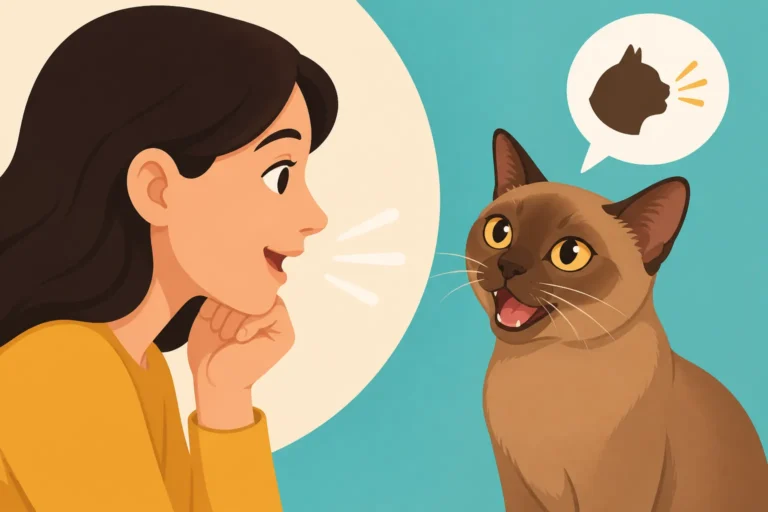
Burmese cat vocalizations include distinctive rasps, rumbles, and chirps that allow them to hold real conversations with owners.
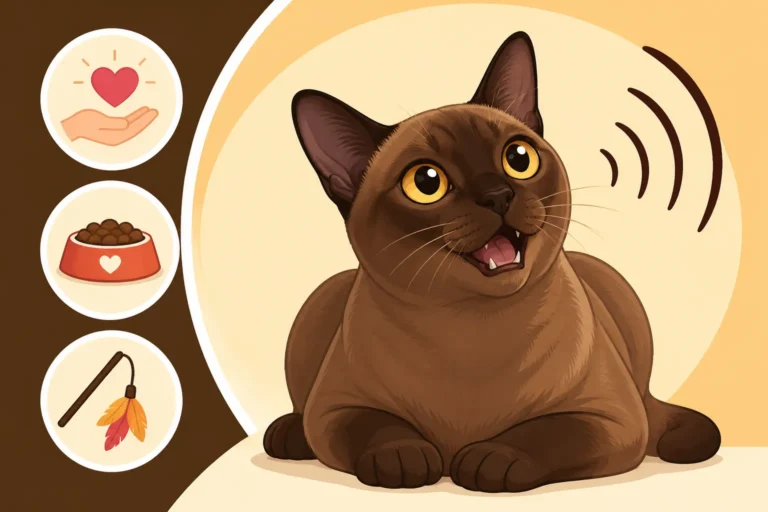
The Burmese rumble reveals a cat demanding attention, seeking constant interaction, and expressing affection toward human owners.
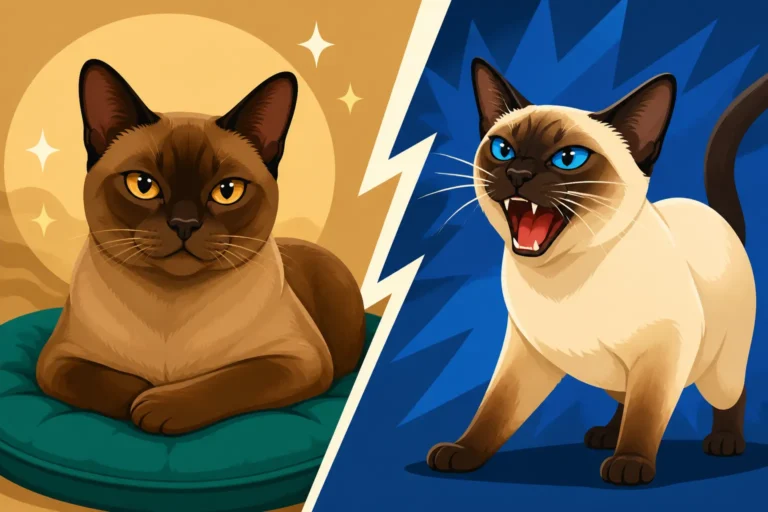
Burmese cat vocalizations feature a deep rumble and gentle trill instead of the loud piercing cries produced by Siamese cats.
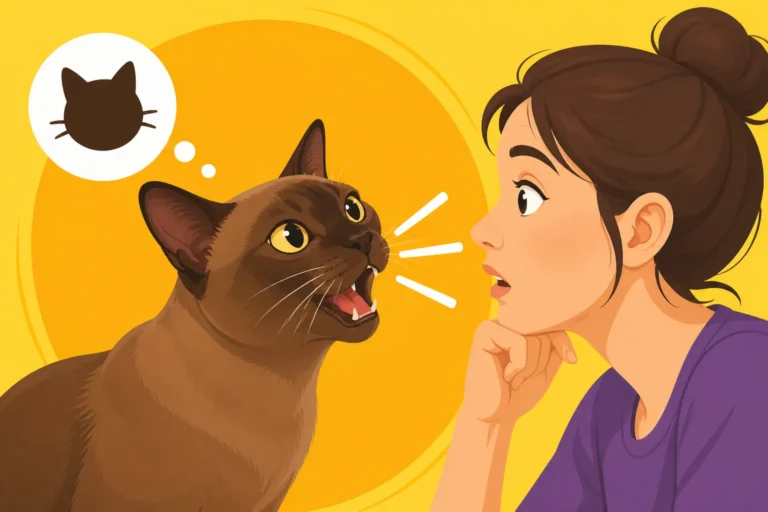
The Burmese cat rasp is a distinctive throaty rumble used for constant communication and close quarters interaction with humans.
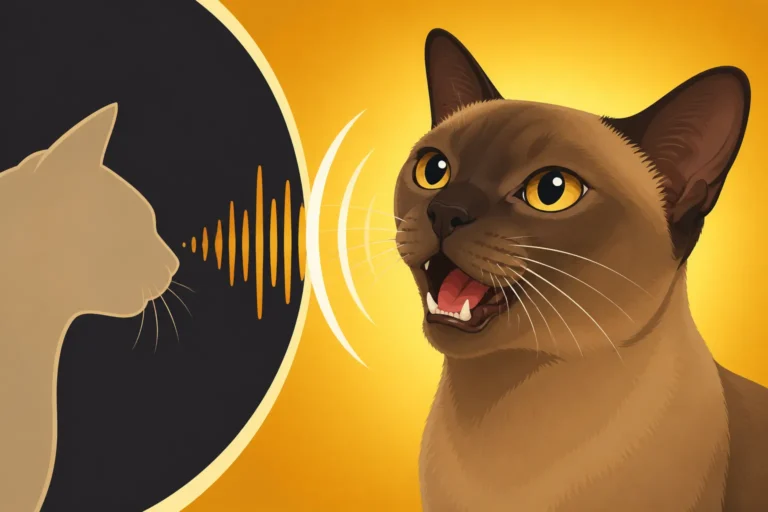
Burmese cats make a throaty, guttural sound somewhere between a purr, a murmur and a gentle growl, unlike a standard meow or the piercing wail of a Siamese.
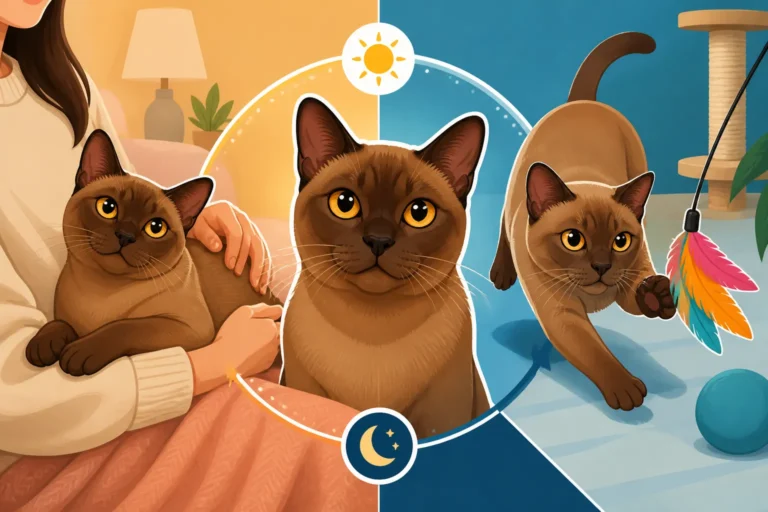
The Burmese cat daily schedule balances intense human companionship and physical closeness with vigorous, kitten-like play.
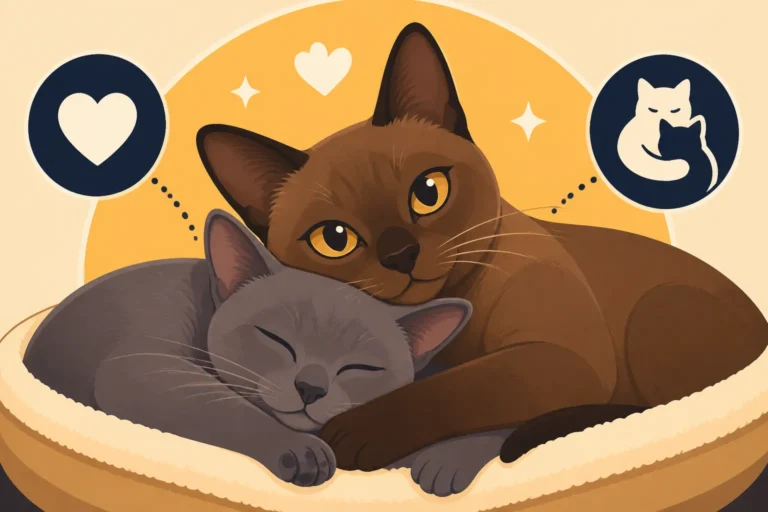
Burmese cats sleeping piled with another feline explains their strong social instinct, need for warmth, and thin satin coats.
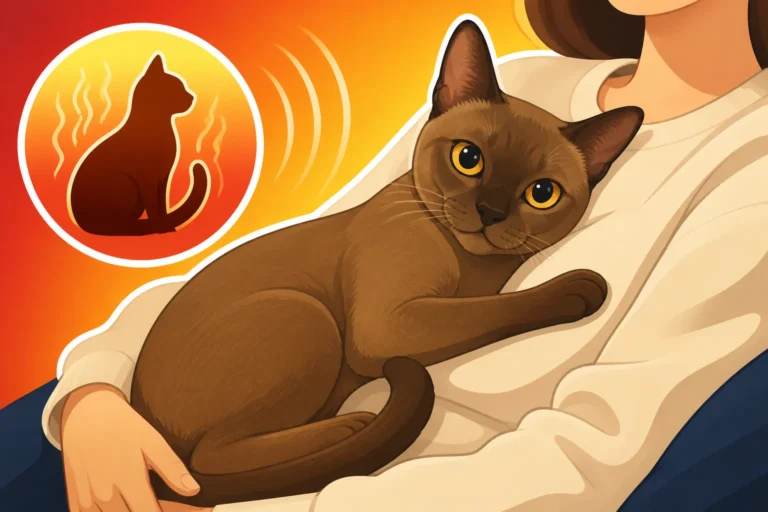
Burmese cat body heat needs and unique single layer fur explain why the affectionate feline constantly seeks warm spots.
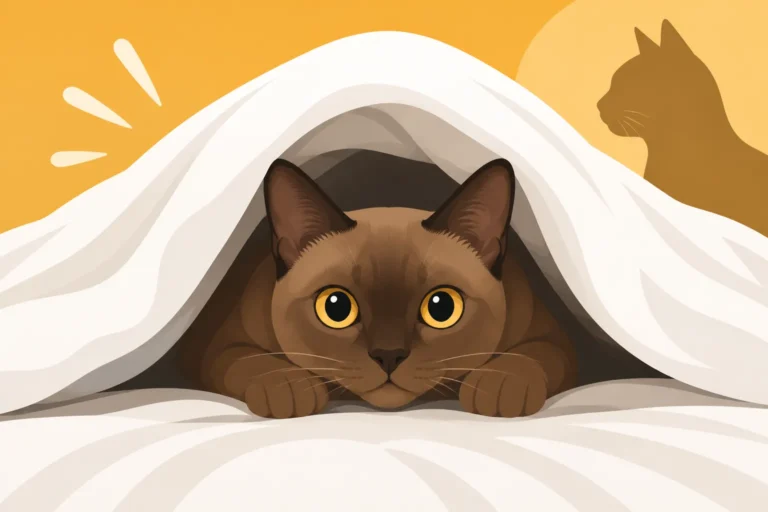
Burmese cat coat genetics and lack of an insulating undercoat explain why this specific breed burrows under duvets for warmth.
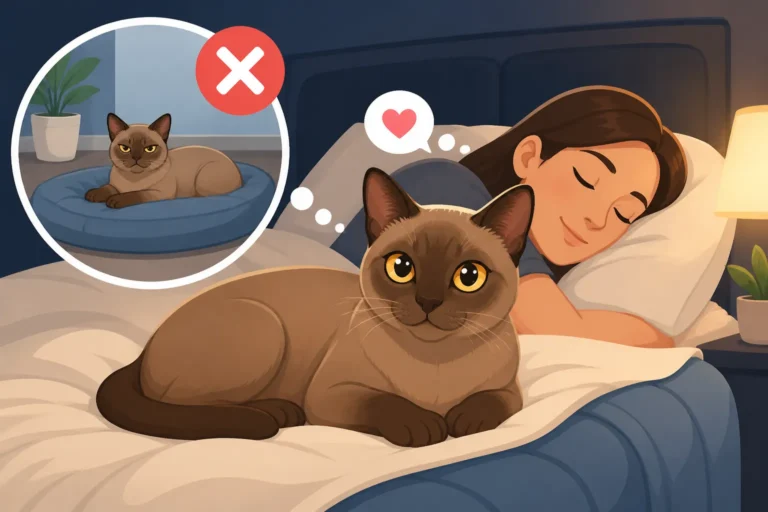
Burmese cats share your bed to find body heat, security, and constant affection because of their short, fine coats and social personalities.