Where Thompson Acquired the First Burmese
For many of us who adore the Burmese, there's an almost mythical quality to its origin story. We know the breed sprang from a single, remarkable cat, but the precise details of her journey – how she landed in America, and exactly where Dr. Joseph Thompson acquired her – often get lost in the mists of time. It's a fascinating piece of feline history, and understanding it helps us appreciate the unique genetic heritage of our beloved companions. This guide will take you back to the beginning, tracing the steps of Wong Mau, the foundational queen, and Dr. Thompson's pivotal role in bringing her to the attention of the cat fancy.
The Mysterious Arrival of Wong Mau
The story of the Burmese cat doesn't begin in an ancient temple, as some legends might suggest, but with a brown cat from Southeast Asia who made a long journey across the Pacific. Her arrival in America marked the true genesis of the breed we know and love today. It's a tale that involves sailors, scientific curiosity, and a fortunate encounter that changed feline history forever.
From Southeast Asia to San Francisco: The Initial Journey
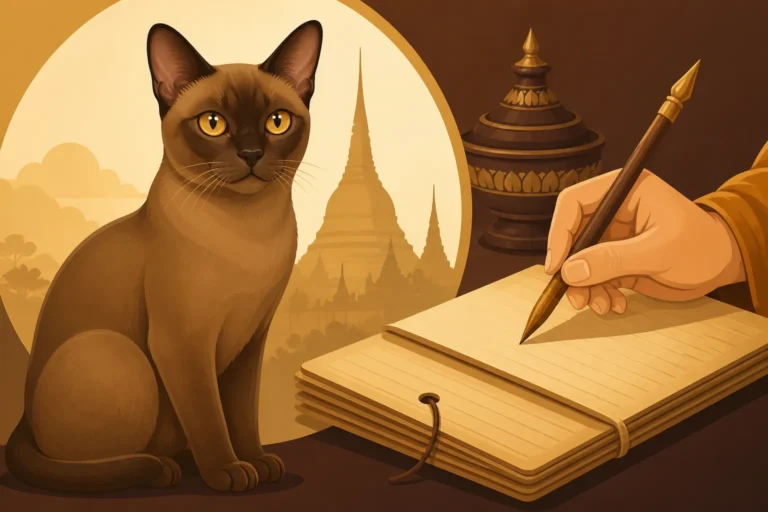
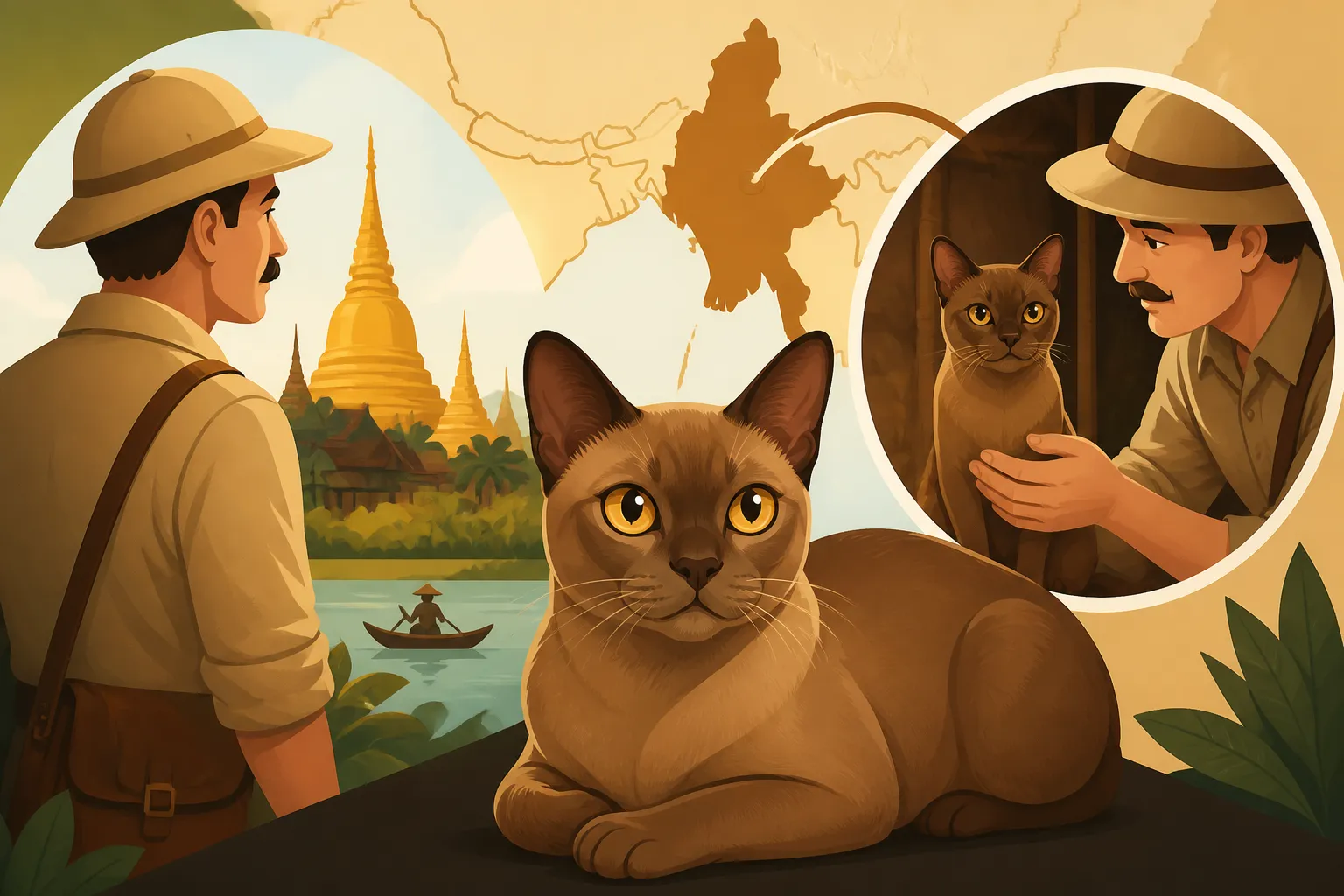
Our journey starts in what was then known as Burma, now Myanmar, or possibly Thailand or Malaysia. Records suggest that in the late 1920s or early 1930s, a striking brown cat caught the eye of a sailor or a traveler. This cat, later named Wong Mau, was unusual. She wasn't a sleek, pointed Siamese, nor was she a solid black or tabby domestic short-hair. She possessed a rich, warm brown coat that was slightly darker on her extremities, a feature that would become a hallmark of the Burmese breed. Imagine the bustling ports of the time, the exotic sights and sounds, and a lone cat embarking on an incredible voyage. She was likely just one of many "ship's cats" from the region, but her destiny was far grander. Her journey across the ocean, tucked away on a ship, brought her to the vibrant port city of San Francisco, California. This moment, The Year the First Burmese Reached San Francisco, was unassuming, yet it laid the groundwork for a new chapter in the cat world.
She arrived, a small, yet muscular cat, perhaps a little disoriented by the long trip, but certainly distinctive. The cat fancy at the time was much smaller, with fewer recognized breeds, and most exotic cats came from distinct geographical regions. Wong Mau was different. Her appearance hinted at something novel, something that didn't quite fit the existing classifications. She represented a living puzzle, a unique genetic combination waiting to be deciphered. Without the keen eye of someone with scientific curiosity, she might have lived out her days as a lovely but otherwise unknown feline, her unique genetic code lost to history.
The Sailor's Role in a Cat's Destiny
While the exact name of the sailor who brought Wong Mau to America is lost to time, their role was absolutely crucial. They weren't a cat breeder or a geneticist; they were simply someone who saw an interesting cat in a foreign land and decided to bring her home. This act of bringing a curious feline specimen across continents is not as uncommon as one might think in maritime history. Sailors often picked up animals as companions or curiosities. In Wong Mau's case, this seemingly simple act had profound consequences. The sailor eventually found himself in San Francisco, where the cat's unique appearance drew attention. It's a testament to the charm and distinctiveness of these early cats that they captured human imagination so completely, leading to their transport across vast distances.
It wasn't a calculated mission to import a new breed; it was more akin to a happy accident. This sailor, upon arriving in San Francisco, found a way to share his unusual feline companion with others, perhaps through word of mouth or through connections in the burgeoning cat enthusiast community. This led to the fateful introduction to Dr. Joseph Thompson, a man whose scientific background and passion for cats would transform Wong Mau from a unique individual into the matriarch of an entire breed. Without that initial, uncalculated journey and the sailor's decision to bring her to the US, the Burmese breed as we know it might never have existed.
Dr. Joseph Thompson's Vision and Acquisition
The arrival of Wong Mau in San Francisco was merely the prelude. The real story of the Burmese breed's foundation begins with Dr. Joseph Thompson, a U.S. Navy medical officer, who possessed an insatiable curiosity about feline genetics. His acquisition of Wong Mau wasn't just about getting a new pet; it was about solving a genetic mystery and, ultimately, creating a legacy.
A Feline Geneticist's Curiosity
Dr. Joseph Thompson, known to many as the "father of the Burmese breed," was not just a cat lover; he was a serious student of feline genetics. He had a particular interest in the genetic mechanisms behind coat color and type. When he encountered Wong Mau in San Francisco in 1930, he immediately recognized that she was something special. She didn't fit the established descriptions of a Siamese, nor was she a domestic alley cat. Her rich, dark brown coat, which was noticeably lighter on her belly and darker on her points (face, ears, legs, tail), was unlike anything he had seen. This unique phenotype ignited his scientific curiosity, leading him to acquire her with the specific intent of studying her genetic makeup. He wasn't just looking for a pretty cat; he was looking for answers. This dedicated approach to understanding feline inheritance is why we credit him with the breed's establishment, as detailed in Dr Joseph Thompson and the Burmese He Bought in 1930.
Thompson theorized that Wong Mau might be a hybrid of some sort, perhaps a partial Siamese, or even a completely new genetic variant. He understood that to unlock her secrets, he would need to embark on a controlled breeding program. This wasn't a task for an amateur; it required careful documentation, meticulous observation, and a solid understanding of Mendelian genetics. He wasn't just making educated guesses; he was applying scientific principles to the fascinating world of cat breeding. For a cat enthusiast today, getting into feline genetics is much easier, with resources available online and through specialized vets. Even major pet suppliers like Chewy provide information on breed-specific traits that can help owners understand their pets better.
The Unique Appearance of Wong Mau
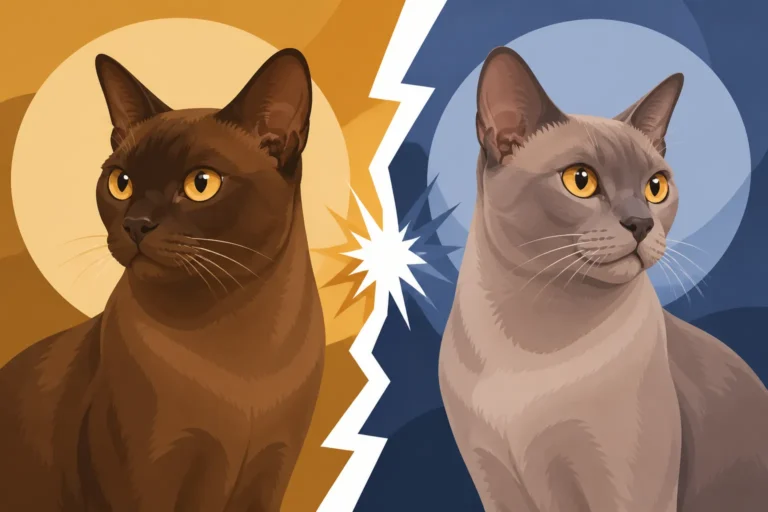
When Dr. Thompson first laid eyes on Wong Mau, her appearance stood out significantly from other cats of the era. As discussed, she wasn't a pure Siamese, yet she carried some traits reminiscent of them, particularly the darker points. However, her overall body color was a deep, rich brown, contrasting with the pale cream or white bodies of traditional Siamese cats. This distinct coloration was later identified as the "Burmese Restriction" gene, or the cb allele, which modifies the full color gene (C). It creates a partial temperature-sensitive albinism, resulting in a brown cat with darker brown points, rather than a cream cat with darker points like the Siamese. What the First Burmese Looked Like provides a deeper dive into her specific characteristics.
Her body type was also notable. She was described as compact, muscular, and surprisingly heavy for her size—a characteristic that would later lead to the breed being affectionately called "bricks wrapped in silk." Her eyes were a stunning golden-yellow, a warm complement to her deep brown coat. These combined traits made her truly unique and captivated Dr. Thompson's scientific mind. He recognized that this cat was not simply a variant of an existing breed, but potentially the progenitor of something entirely new. His meticulous notes on her physical attributes, even before any breeding took place, were crucial in establishing the initial breed standard later on.
Wong Mau's Impact and Legacy
Wong Mau wasn't just a pretty face; she was a genetic powerhouse, the foundation from which an entire breed sprung. Dr. Thompson's systematic approach to breeding her not only confirmed his genetic theories but also established the unique characteristics that would define the Burmese for generations to come. Her legacy extends far beyond her immediate offspring, shaping the modern cat fancy in profound ways.
The Breeding Program That Started a Breed
Upon acquiring Wong Mau, Dr. Thompson wasted no time in setting up a careful breeding program to understand her genetics. His initial and most famous pairing was with a seal point Siamese named Tai Maut. This was a critical decision, as it allowed him to observe how Wong Mau's unique color gene interacted with the well-understood Siamese point gene. The first litter from this pairing was revelatory. It contained three distinct types of kittens: some resembled Siamese (carrying two copies of the Siamese gene, cs/cs), some were solid brown (later called Burmese, carrying two copies of Wong Mau's gene, cb/cb), and others were an intermediate color, a lighter sepia brown with distinct darker points (later known as Tonkinese, carrying one copy of each gene, cb/cs). This proved Thompson's hypothesis that Wong Mau was not a pure Siamese, but carried a new, distinct gene for coat color. You can read more about this foundational pairing in Why the First Burmese Was Bred to a Siamese and what the resulting kittens revealed in What the First Burmese Litter Told Thompson.
This scientific approach, breeding to understand genetic inheritance rather than just produce pretty kittens, was groundbreaking in the cat world. It moved cat breeding from a purely aesthetic pursuit to a more scientific endeavor. The outcomes of this program demonstrated the recessive nature of Wong Mau's gene and how it expressed itself when combined with other color genes. It wasn't long before Thompson, along with other enthusiastic breeders and geneticists, recognized the potential for a new breed: the Burmese, a solid-looking brown cat derived from Wong Mau's unique genetic code. His work highlighted the importance of careful record-keeping and a structured breeding plan, practices that remain crucial for responsible breeders today.
Documenting a New Feline Phenotype
Dr. Thompson didn't just breed cats; he documented every step of the process with scientific precision. His detailed records, observations, and analyses were instrumental in formally describing Wong Mau's unique phenotype and proving her genetic contribution to what would become the Burmese breed. He collaborated with geneticists and other cat enthusiasts, ensuring that his findings were rigorously reviewed and published. This meticulous documentation was essential when presenting the new breed to cat registries like the Cat Fanciers' Association (CFA). For a while, there was confusion, as cats with a similar appearance but of mixed Siamese heritage were being registered as Burmese, leading to a temporary suspension of the breed by CFA in 1947. However, Thompson's early work and the subsequent efforts of dedicated breeders eventually led to the proper establishment and re-recognition of the Burmese. You can learn more about this period in When CFA First Recognized the Burmese.
The legacy of Wong Mau and Dr. Thompson is not just the beautiful Burmese cat itself, but the scientific rigor they brought to cat breeding. Today, when we talk about specific genetic traits like What the cb Allele Does to a Burmese's Color or how a Burmese is not a solid colored cat, we are building on the foundation they laid. This historical work underscores the importance of genetic testing and understanding lineage for ethical breeding practices, helping to ensure the health and integrity of the breed for future generations. The story of Wong Mau's acquisition is a testament to how a single, unique animal, combined with human curiosity and scientific dedication, can leave an indelible mark on the world.
| Event | Date/Period | Significance |
|---|---|---|
| Wong Mau's Arrival | Early 1930s | Brought from Southeast Asia to San Francisco by a sailor. |
| Acquisition by Thompson | 1930 | Dr. Joseph Thompson obtains Wong Mau for genetic study. |
| First Breeding | 1930s | Wong Mau bred to Siamese Tai Maut, revealing new genetics. |
| Recognition by CFA | 1936 | Burmese recognized as a distinct breed by CFA. |
| CFA Suspension | 1947 | Registration suspended due to confusion with Siamese hybrids. |
| Reinstatement by CFA | 1956 | Breed re-recognized after clear standards established. |
Disclaimer
This article is for general informational purposes only and does not constitute professional advice. Laws, prices and regulations vary by location and change over time. Consult a qualified professional for guidance on your specific situation.