How the American and European Burmese Split
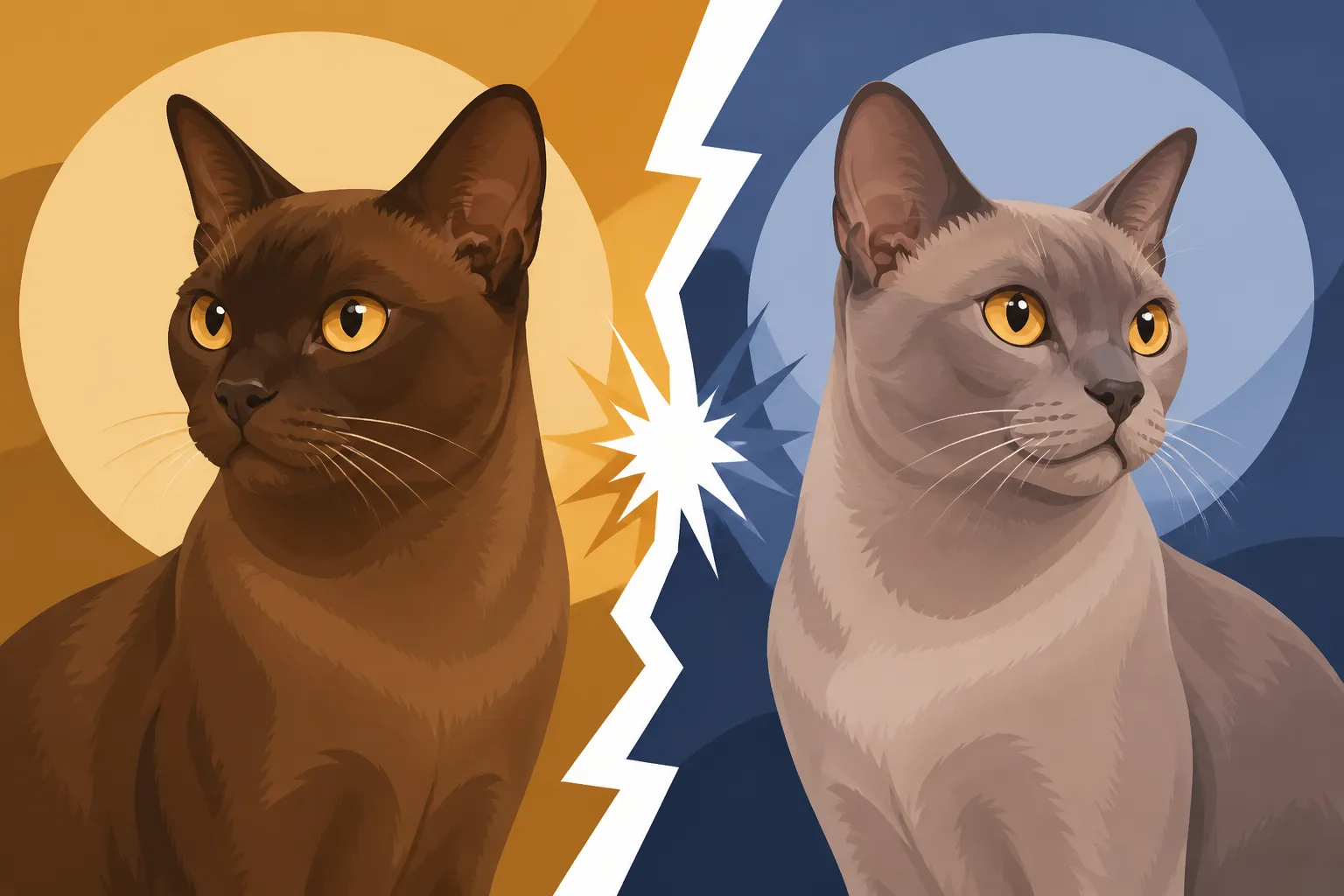
It's incredibly common for people to say, "Oh, I know a Burmese cat!" and picture a beautiful, cobby, round-headed feline, only to be completely surprised when they encounter another Burmese that looks distinctly different – perhaps sleeker, with a more wedge-shaped head and almond eyes. This isn't a trick of the light or a mixed breed; it's the fascinating story of how the Burmese breed, stemming from a single foundation cat, diverged into two recognized types: the American Burmese and the European Burmese. Many prospective owners or even long-time cat enthusiasts don't realize these two distinct standards exist, each with its own unique characteristics and history, leading to confusion and sometimes frustration when trying to understand the breed. This guide will walk you through the captivating journey of how these two types came to be, what makes them unique, and what it means for you as a potential owner.
A Tale of Two Continents: The Burmese's Early Journey
The story of the Burmese cat is a truly unique one, beginning with a single feline that captured the hearts and scientific curiosity of a nation. It's a foundational narrative that underpins everything we know about this affectionate breed, and without understanding its origins, the subsequent split into two distinct types wouldn't make much sense.
The Foundation in America: Wong Mau's Legacy
Our tale begins in 1930 when a dark brown female cat, named Wong Mau, arrived in San Francisco from Burma (now Myanmar). She was brought to the United States by Dr. Joseph C. Thompson, a U.S. Navy medical psychologist, who was immediately captivated by her distinctive appearance and charming personality. Wong Mau wasn't like the Siamese cats that were popular at the time; she was more compact, more muscular, and possessed a rich, warm brown coat that was darker than any Siamese points, yet lighter on her belly. This wasn't just another pretty cat; she was a genetic puzzle.
Dr. Thompson, being a scientist, quickly realized that Wong Mau represented something new and decided to embark on a breeding program to understand her unique genetics. He bred her to a Siamese cat named Tai Mau. The kittens from this initial pairing were instrumental in unraveling the genetic mystery. Some kittens looked like Siamese, with pale bodies and dark points, while others resembled Wong Mau, and a third group had an intermediate appearance, a color known today as mink, which we now recognize in the Tonkinese breed. This told Dr. Thompson that Wong Mau was not a purebred Siamese, nor was she what we would consider a "pure" Burmese in the modern sense. She carried both the full color gene (C) and the Siamese gene (cs), but also the unique Burmese gene (cb) that gave her that rich brown color. This groundbreaking work showcased the power of selective breeding and careful observation.
The scientific community was fascinated by Dr. Thompson's findings, marking a significant moment in the understanding of feline genetics. It effectively proved that Wong Mau was a hybrid of sorts, carrying genes for both the Siamese point pattern and a new, distinct brown factor. This initial genetic blueprint is what ultimately defined the Burmese breed, setting the stage for its global development. The meticulous records kept by Dr. Thompson and his collaborators laid the groundwork for future breeders to selectively breed for the specific traits that would become synonymous with the Burmese, emphasizing the full body color and robust build. The Burmese Began With One Cat Called Wong Mau is truly the starting point for everything.
The First Standard and Early Challenges
As more cats were bred from Wong Mau's descendants, breeders began to solidify the traits they wished to see consistently reproduced. In 1936, the Cat Fanciers' Association (CFA) recognized the Burmese breed and established its first official standard. This standard aimed to define the ideal Burmese cat, emphasizing its unique physical characteristics: a compact, muscular body, a round head, large, expressive golden eyes, and that distinctive rich, sable brown coat that darkened slightly at the points. The initial goal was clear: to create a consistently true-breeding line from Wong Mau's unique genetics.
However, the journey was not without its bumps. During the early years, the demand for these new, striking brown cats outstripped the supply of truly purebred Burmese. This led to a problematic practice where some breeders would use Siamese cats to introduce new bloodlines or simply to increase litter sizes, resulting in cats that were not genetically true Burmese. These cats often displayed more Siamese-like features or the intermediate Tonkinese coloration. The integrity of the breed was at risk, as cats with incomplete Burmese characteristics were being registered as purebreds.
The issue became so prevalent that in 1947, just eleven years after its initial recognition, the CFA actually suspended the registration of Burmese cats. This was a drastic but necessary step to protect the breed's authenticity. The CFA mandated that for a Burmese cat to be registered again, it had to have at least three generations of pure Burmese ancestry on both sides of its pedigree. This strict requirement forced breeders to be more diligent and ethical in their practices, ensuring that only cats truly embodying the Burmese standard were part of the breeding pool. By 1956, after nearly a decade of dedicated work by committed breeders, the Burmese breed was reinstated, stronger and more genetically sound, paving the way for its continued development, both in America and eventually abroad. This period was crucial in shaping CFA Suspended the Burmese in 1947 and Took It Back.
The Atlantic Divide: Where Paths Diverged
While the Burmese was finding its footing and solidifying its type in the United States, its journey was just beginning across the Atlantic. The cultural preferences, breeding philosophies, and even the available gene pools in Europe led to a distinctly different evolutionary path for the breed, eventually creating two visually separate but genetically linked feline populations.
British Preferences and the Post-War Influence
The Burmese cat made its way to Great Britain in the late 1940s, shortly after the breed had been stabilized in the United States. A few American Burmese were imported, forming the foundation of the British breeding program. However, post-World War II Britain faced unique challenges. The cat fancy in general was recovering, and resources, including available breeding stock, were limited. British breeders, while admiring the original Burmese charm, began to develop their own interpretation of the breed's ideal.
The British aesthetic for cats often favored more elegant, slender, and oriental-type lines, a preference that influenced the direction of the Burmese. Instead of emphasizing the cobby, rounded look that was becoming dominant in America, British breeders gravitated towards a cat with a slightly longer body, more elegant legs, and a less extreme head shape – still rounded, but with a more moderate muzzle and a less pronounced "stop" (the indentation between the eyes). They also allowed for a slightly wider range of acceptable eye shapes, including a more almond-shaped eye rather than the strictly round eye favored in America. This shift wasn't a conscious rejection of the American type, but rather an independent evolution influenced by available genetics and local preferences within the British cat fancy.
This distinct development meant that over time, the British Burmese (which would later become known as the European Burmese) began to look noticeably different from its American cousin. The limited initial gene pool in Britain, combined with these selective breeding choices, meant that the "type" quickly became entrenched. Breeders worked diligently to refine these characteristics, creating a cat that, while still undeniably Burmese in temperament and color, carried a more foreign or oriental silhouette. This divergence solidified the distinct "look" that would come to define the European Burmese. Why the British Burmese Went a Different Way is a story of independent evolution and adaptation.
American Ideals: A Cobby, Rounder Aesthetic
Meanwhile, back in the United States, breeders continued to refine and reinforce the traits initially established in Dr. Thompson's program and formalized in the CFA standard. The American ideal for the Burmese became even more pronounced: a cat of significant substance, often described as a "brick wrapped in silk." This meant a compact, heavy-boned, and incredibly muscular body, far from the dainty appearance of some other oriental breeds. The focus was on density and power, giving the cat a surprisingly heavy feel for its size.
The head type became a defining feature of the American Burmese. The standard called for a distinctly round head, full cheeks, a broad muzzle, and a clear "stop" or indentation at the bridge of the nose, often giving the cat a perpetually sweet and almost "squishy" expression. The eyes were expected to be large, round, and golden, adding to the endearing, open-faced look. These features were deliberately selected for and amplified through generations of careful breeding, creating a very specific and beloved silhouette. The consistent application of this standard across American catteries meant that the American Burmese developed a very homogeneous and recognizable look.
This concerted effort to maintain and enhance the original "Wong Mau" type, with its robust build and charmingly round features, effectively cemented the American Burmese's distinct identity. It wasn't just about color anymore; it was about the entire package – the powerful musculature, the rounded contours, and the warm, engaging expression. Breeders actively selected for these traits, ensuring that kittens consistently displayed the desired "type." This meant that when American and European Burmese were eventually compared side-by-side, the differences in their physical standards were undeniably striking. What an American Burmese's Head Should Look Like clearly illustrates this focus.
The Formal Recognition of Two Types
As the years passed and both American and European breeders continued to develop their Burmese lines, the visual differences became too significant to ignore. What started as subtle variations evolved into two distinct interpretations of the breed, necessitating separate standards and, eventually, a formal split in recognition by various cat registries around the world.
Different Standards, Different Judges
The divergence in physical appearance naturally led to the development of separate breed standards by different cat registries. In North America, organizations like the Cat Fanciers' Association (CFA) and The International Cat Association (TICA) primarily recognized and promoted the "American Burmese" type, with its signature round head, full cheeks, and cobby body. Their judges were trained to look for these specific characteristics, and cats that deviated too far from this robust ideal would not fare well in the show ring. The standard was a blueprint, and adherence to it was paramount for successful showing and breeding.
Conversely, in Europe, particularly in the UK and throughout the continent, registries like the Governing Council of the Cat Fancy (GCCF) in Britain, and later FIFe (Fédération Internationale Féline) in Europe, adopted standards that described the "European Burmese." This standard called for a more moderate, less extreme head shape, often described as a modified wedge with a visible, but not pronounced, stop. The eyes, while still golden, were often a more almond shape, and the body was to be elegant, well-muscled, but not as distinctly cobby or heavy-boned as its American counterpart. Judges in Europe looked for this sleeker, more oriental outline. This meant that a cat that might win Best in Show in London would likely be faulted in New York, and vice versa, simply because they were being judged against entirely different ideals of the same breed name.
This dual standard created a fascinating situation where the "Burmese cat" essentially encompassed two distinct breeds under one ancestral banner. Breeders had to choose which type they wished to pursue, and adhere strictly to that specific standard. For those passionate about the original American type, their focus remained on the compact, rounded ideal. For others, the elegance and slightly different proportions of the European type became their breeding goal. This formal recognition of two distinct standards solidified the split and gave each type its own identity within the global cat fancy, though the shared name continued to create some confusion for the uninitiated.
Why Crossing the Lines Became a No-Go
Once the two distinct standards for the American and European Burmese were established, the practice of interbreeding between the types became highly discouraged, and in many reputable circles, outright forbidden. The primary reason for this was to preserve the hard-won "type" that breeders on both continents had painstakingly developed over decades. If an American Burmese with its round head and cobby body were bred to a European Burmese with its wedge-shaped head and sleeker physique, the resulting kittens would likely be a mix of characteristics, fitting neither standard perfectly. They would be "type-less" in the eyes of the show ring and often undesirable for dedicated breeders aiming to consistently produce a specific look.
Beyond aesthetics, there were also concerns about maintaining genetic consistency and health lines. While both types share a common ancestor, their gene pools have been separated and refined for many generations. Introducing a different "type" could potentially dilute desirable traits or introduce genetic predispositions that were not present or managed in one line. For instance, the prevalence of certain health conditions, like diabetes, can sometimes differ between the European and American lines, with The Burmese Has the Highest Diabetes Rate of Any Cat Breed often being linked to specific bloodlines that developed more in the European sphere. Maintaining separate breeding programs allowed breeders to focus on specific health screenings pertinent to their lines.
Therefore, most responsible breeders today will adhere strictly to either the American or the European Burmese standard. You'll find that many registries, while recognizing both types, will list them separately (e.g., "Burmese" for American, and "European Burmese" or "Burmese (European Type)" for the other). This clear delineation is crucial for maintaining breed integrity and for ensuring that a buyer knows exactly what kind of Burmese they are getting. A contract from a reputable breeder, for example, will clearly state the type of Burmese being sold and may even explicitly forbid breeding to the other type. Why a Burmese Contract Bans Crossing the Two Types is a testament to the importance breeders place on preserving these distinct lines.
Key Physical Differences Between the American and European Burmese
When you see an American Burmese next to a European Burmese, the differences, once you know what to look for, are quite striking. It's like comparing two beautiful sculptures by different artists, both inspired by the same initial idea but executed with distinct visions.
Head and Eye Shape: The Most Striking Contrast
The head is arguably where the American and European Burmese most clearly part ways. The American Burmese possesses a distinctly round head. Imagine a perfect sphere, with full, well-developed cheeks that give it a sweet, almost cherubic appearance. When you look at an American Burmese from the front, the overall impression is one of gentle curves. The muzzle is broad and relatively short, often with a noticeable "stop" – that indentation where the bridge of the nose meets the forehead. This stop contributes to the characteristic rounded profile. Their eyes are large, set wide apart, and round, with a golden or yellow hue being the most desirable. The roundness of the eyes further enhances the overall rounded aesthetic of the head.
In contrast, the European Burmese showcases a more modified wedge-shaped head. This doesn't mean it's pointed like a traditional Siamese, but rather that it tapers gently from the broad cheekbones towards a slightly narrower, more moderate muzzle. The European type has less pronounced cheeks and a more gradual, less defined stop. The profile tends to be longer and straighter than the American type, giving it a more elegant, less "pushed-in" appearance. Their eyes are typically set a little further apart and are almond-shaped, rather than completely round. While still expressive and golden, the almond shape contributes to a more sophisticated and slightly oriental look, distinguishing them from the wide-eyed American version. This contrast is often the first thing people notice when comparing the two types side-by-side, truly highlighting What an American Burmese's Head Should Look Like versus What a European Burmese's Head Should Look Like.
Body Type and Size: "Brick" vs. "Sleek"
Beyond the head, the body conformation is another major differentiator. The American Burmese is often described as a "brick wrapped in silk," a phrase that perfectly encapsulates its powerful build. These cats are cobby and muscular, with a deceptively heavy feel for their size. They have a compact, well-knit body, broad chest, and short, sturdy legs. Their boning is substantial, contributing to their robust appearance. Even when at a healthy weight, an American Burmese feels dense and solid in your arms. This emphasis on a stocky, powerful build is a hallmark of the American standard, making them feel incredibly substantial and grounded. Why a Burmese Is Called a Brick Wrapped in Silk is truly apt for the American type.
The European Burmese, on the other hand, presents a more elegant and graceful silhouette. While still well-muscled and of good substance, their body is typically longer and more lithe than their American cousins. They have a moderately cobby body, but with more emphasis on overall length and slinkiness. Their legs are longer and more proportionate to their body, and their tail, while still medium in length, often appears slightly longer and more tapering than the American type. The European Burmese gives an impression of agility and athleticism rather than sheer power. They are still strong cats, but they carry their muscle differently, appearing sleek rather than chunky. Both types, however, share that incredibly short, fine, satin-like coat that lies close to the body, contributing to their smooth, polished appearance. Despite the visual differences, both types are surprisingly heavy for their size, a common trait that often leads to people underestimating their weight. Why a Burmese Is Heavier Than It Looks applies to both, even with their differing body types.
Temperamental Nuances: Are They Truly Different?
Given the distinct physical paths the American and European Burmese have taken, it's natural to wonder if their personalities have also diverged. While individual cats will always have their unique quirks, the core essence of the Burmese personality remains remarkably consistent across both types, much to the delight of their devoted owners.
The Core Burmese Personality Remains
At their heart, both the American and European Burmese are quintessential "Velcro cats." This isn't just a cute nickname; it’s a fundamental truth about the breed. They thrive on human companionship and will follow you from room to room, curl up on your lap the moment you sit down, and often insist on sleeping under the covers with you. This profound need for connection means they are not cats who do well being left alone for long periods. If you're looking for an independent feline that prefers its own company, the Burmese, regardless of its type, is probably not the right fit. The Burmese Is the Velcro Cat of the Cat Fancy truly defines them.
Both types are renowned for their playful and kittenish nature, which often persists well into their senior years. They love to play fetch, chase wand toys, and engage in interactive games. This isn't a breed that becomes a couch potato after its kittenhood; they retain a youthful exuberance that is infectious. Their vocalizations are also a shared characteristic: a distinct, rasping rumble or purr that is more conversational and less piercing than a Siamese's cry. They'll "talk" to you, expressing their desires and observations in a unique voice that quickly becomes endearing. The Rasping Rumble a Burmese Uses Instead of a Meow is a sound you'll grow to cherish.
This intense sociability extends beyond their primary human companions. Both American and European Burmese tend to be incredibly friendly towards strangers, other pets (including dogs), and even children. They view new faces not as threats, but as potential sources of attention and affection. This open, trusting nature is a hallmark of the breed, making them wonderful family pets for active households. They genuinely want to be involved in whatever you're doing, whether it's watching TV, cooking dinner, or working on your computer.
Subtle Variations and Owner Perceptions
While the core temperament is steadfast, some owners and breeders suggest there can be subtle nuances between the American and European types, though these are often anecdotal and can be influenced by individual cat personalities. Some believe the European Burmese might possess a slightly more energetic and agile disposition, perhaps a reflection of their sleeker build. They might be perceived as a touch more mischievous or prone to climbing due to their lighter frame. Owners might describe them as having a more "bouncy" energy, constantly exploring and interacting with their environment.
Conversely, the American Burmese, with its more cobby and robust build, is sometimes thought to be a slightly more laid-back or 'lap-cat' type, content to be a warm, purring presence. This doesn't mean they aren't playful; they certainly are, but perhaps with bursts of energy interspersed with longer periods of relaxed cuddles. It's important to remember, however, that these are generalizations. A European Burmese could be the ultimate couch potato, and an American Burmese could be a wild adventurer. Factors like individual genetics, early socialization, and the environment they grow up in will always play a much larger role in shaping a cat's personality than their specific breed type.
Ultimately, the most important takeaway is that both types embody the very best of the Burmese personality: affectionate, playful, social, and deeply devoted to their human families. When choosing a Burmese, focusing on the individual kitten's temperament, the breeder's practices, and your own lifestyle will likely be more impactful than agonizing over perceived subtle differences between the American and European lines. What truly defines a Burmese is its unwavering desire for companionship, making them a captivating and loving addition to any home.
Health Considerations and Genetic Divergence
While both American and European Burmese cats are generally healthy and robust, the divergence of their bloodlines over decades has led to some differences in health predispositions, particularly concerning certain genetic conditions. Understanding these variations is crucial for responsible ownership and breeding, ensuring a long and healthy life for these beloved felines.
Shared Predispositions and Breed-Specific Concerns
Regardless of type, Burmese cats share some common health considerations that owners should be aware of. One of the most prevalent is a propensity for dental disease. Their short muzzles and crowded teeth can make them more susceptible to tartar buildup, gingivitis, and ultimately, tooth loss if not managed properly. Regular dental care, including brushing at home and professional cleanings, is vital. Why a Burmese Is Prone to Gum Disease is a reality for both types, necessitating proactive care from kittenhood.
Another general consideration is their robust appetite. Burmese cats are known for being very food-motivated, which, coupled with their dense musculature, can make it easy for them to become overweight if not carefully managed. Obesity itself can lead to a host of health problems. Both types also generally have very easy-to-care-for coats, being extremely short and lying flat against the body, meaning minimal grooming is needed beyond a quick wipe with a chamois cloth to bring out their incredible shine.
However, the separated breeding pools have led to certain genetic conditions being more common or identified in one line over the other. This isn't to say one type is inherently "sicker" than the other, but rather that their genetic vulnerabilities have been refined in different ways. This is why a reputable breeder will always provide information on the health of their lines and specific genetic tests performed, as discussed in Which Diseases the Burmese Actually Carries. Some conditions, like Hypokalemia (Burmese Head Defect), can affect both, though specific mutations might be more prevalent in certain lines. What a Burmese Breeder Must Test Before Any Mating covers these crucial screenings.
The Diabetes Story: A Key Health Difference
Perhaps the most significant health difference observed between the two types, particularly concerning prevalence, is their predisposition to diabetes mellitus. While diabetes can affect any cat breed, studies have shown a significantly higher incidence in some Burmese lines, with European and Australian Burmese lines particularly noted for their heightened risk. The Burmese Has the Highest Diabetes Rate of Any Cat Breed highlights this concern, and Why a Burmese Is Four Times More Likely to Become Diabetic delves deeper into the genetic factors. This isn't an absolute, but a statistical predisposition that prospective owners should be acutely aware of.
The genetic factors contributing to this increased risk are complex, but it's understood that obesity and diet play a critical role in triggering the disease in genetically predisposed individuals. For both types of Burmese, and especially for those from lines with a known diabetes history, feeding a low-carbohydrate, high-protein diet is not just a preference, but a medical decision. Feeding a Burmese Is a Medical Decision, Not a Preference underscores this crucial point. Free-feeding dry kibble, which is often high in carbohydrates, is a recipe for disaster for a Burmese cat, increasing their risk exponentially.
Owners of either American or European Burmese should be vigilant about their cat's weight and water intake, as increased thirst and urination are early warning signs of diabetes. Regular veterinary check-ups, especially for senior cats, should include glucose monitoring. While insulin therapy can manage diabetes, preventing it through proper diet and weight control is always the best approach. Ensuring a healthy, active lifestyle and portion control from kittenhood can significantly mitigate this risk, even for cats from high-risk lines. This means choosing high-quality, wet food that is low in carbohydrates. Many owners find brands available at retailers like Chewy offer suitable options, making it easier to maintain a healthy diet.
Choosing Your Burmese: American or European?
Deciding between an American and European Burmese isn't just about aesthetics; it's about understanding the commitment involved and finding the right feline companion that fits your lifestyle. Both are incredible cats, but knowing the nuances can help you make an informed choice.
Understanding Breeder Practices and Availability
The availability of American versus European Burmese types can vary significantly depending on your geographical location. In North America, the American Burmese is by far the more prevalent and readily available type. You'll find more breeders dedicated to the American standard, and they are generally easier to locate through reputable cat registries like CFA and TICA. If you're in the US or Canada and simply ask for a "Burmese," you will almost certainly be offered an American type. Expect waitlists, as good breeders often have them, but the process of finding one is generally straightforward.
The European Burmese is less common in North America. While there are some dedicated breeders who have imported lines, they are fewer in number, and you might have a longer search or even need to consider importing a kitten yourself, which comes with additional costs and complexities. In Europe, the situation is reversed; the European Burmese is the dominant type, and finding an American Burmese would require specific searching for imported lines. When you're looking for a kitten, always ensure the breeder clearly specifies which type they are breeding. Ask to see the parents, look at their pedigrees, and understand the specific standard they adhere to. A responsible breeder will be transparent about their lines and the traits they prioritize. Don't be shy about asking about the lineage and the specific characteristics you can expect.
What to Consider Beyond Appearance
While the striking physical differences might initially draw you to one type over the other, it's crucial to consider other factors that will impact your life with your new feline family member. Both American and European Burmese share the core "Velcro cat" personality, meaning they both crave immense companionship. This is why Why Burmese Breeders Sell Them in Pairs is such common advice – two Burmese cats will keep each other company, especially if you work long hours, reducing the risk of separation anxiety and destructive behaviors. This is a critical consideration; a lonely Burmese is an unhappy Burmese.
Beyond companionship, think about the potential health predispositions. If you're considering a European Burmese, you might want to delve deeper into the family lines' history regarding diabetes and prioritize a breeder who is diligent with health screening and offers strong guarantees. For all Burmese, a healthy diet is paramount. Many owners find it convenient to purchase specialized low-carb wet food from online retailers like Chewy to ensure their cats receive the best nutrition for diabetes prevention. Remember, What a Burmese Costs Over Sixteen Years is a significant commitment, and health considerations play a huge role in that lifetime budget.
Ultimately, choosing between an American and European Burmese should come down to personal preference for their distinct looks, the availability of reputable breeders in your area, and your preparedness for their shared needs, particularly their intense social drive and careful dietary management. Both types offer incredible affection, intelligence, and playful energy, making them truly captivating companions for the right home.
Comparative Overview: American vs. European Burmese
To help clarify the distinctions, here's a handy overview of the primary differences you might observe when comparing the American and European Burmese.
| Feature | American Burmese | European Burmese |
|---|---|---|
| Head Shape | Distinctly round, full cheeks, broad muzzle, clear stop | Modified wedge, tapers gently, less pronounced stop |
| Eye Shape | Large, round, expressive, set wide apart | Almond-shaped, slightly more widely set |
| Body Type | Cobby, compact, heavy-boned, very muscular ("brick wrapped in silk") | Elegant, moderately cobby, well-muscled, sleeker, longer body |
| Legs | Short, sturdy, proportionate to body | Longer, more slender, proportionate to body |
| Tail | Medium length, proportionate to cobby body | Medium length, often appearing longer and more tapering |
| Profile | Rounded profile, distinct stop at nose | Longer, straighter profile, less defined stop |
| Overall Impression | Robust, powerful, sweet-faced, substantial feel | Elegant, graceful, athletic, refined |
| Common Colors | Sable (brown), Champagne (chocolate), Blue, Platinum (lilac) | Sable (brown), Blue, Chocolate, Lilac, Red, Cream, Tortie variations |
| Prevalence in N. America | Very common | Less common, fewer breeders |
| Known Health Risks | Diabetes, dental disease (both) | Higher diabetes predisposition, dental disease (both) |
Disclaimer
This article is for general informational purposes only and does not constitute professional advice. Laws, prices and regulations vary by location and change over time. Consult a qualified professional for guidance on your specific situation.