Why a Burmese Kitten Darkens as It Grows
A Burmese kitten can look surprisingly pale at first, then develop a deeper, richer coat over the next months. That change can make new owners wonder whether the kitten’s color is settling normally or something is wrong. Here’s why Burmese coats darken with age, what influences the shade, when it tends to stabilize, and how to tell ordinary color development from a skin or coat problem.
Why a Burmese kitten’s coat darkens
The color gene responds to temperature
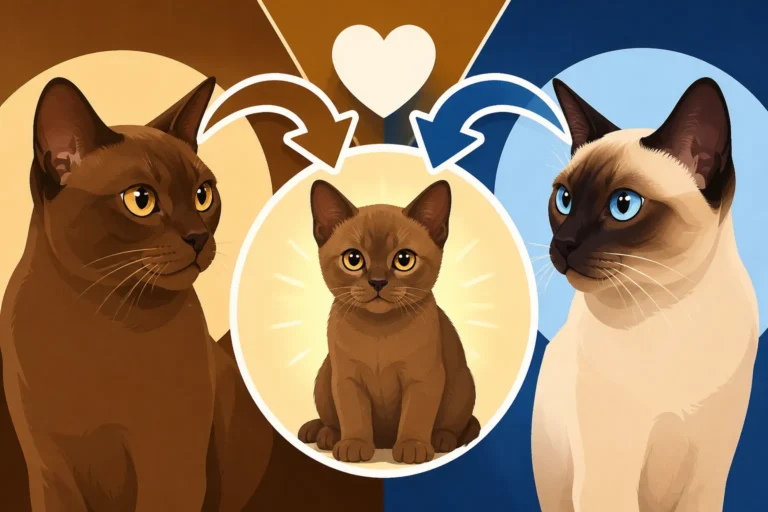
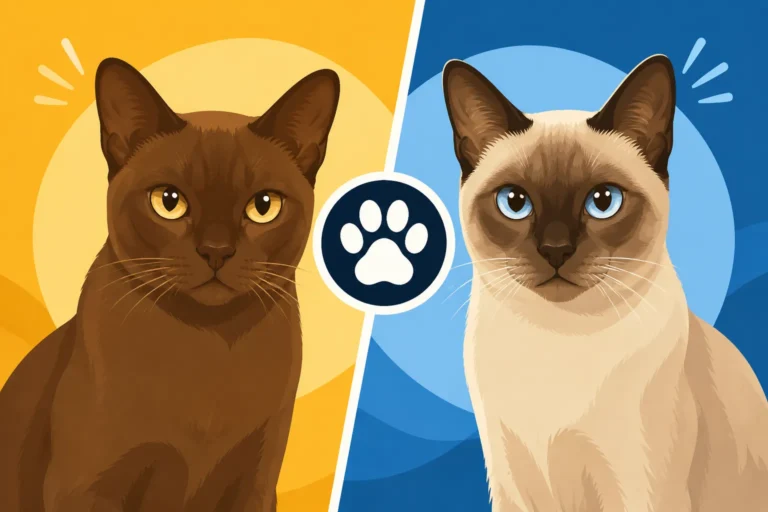
Burmese coat color is influenced by a temperature-sensitive form of the color gene. The pigment-producing process works differently in warmer and cooler parts of the body, so the coat can gradually become darker as a kitten grows. This is why Burmese coloring often has a soft, shaded look rather than the sharp contrast of a pointed Siamese coat.
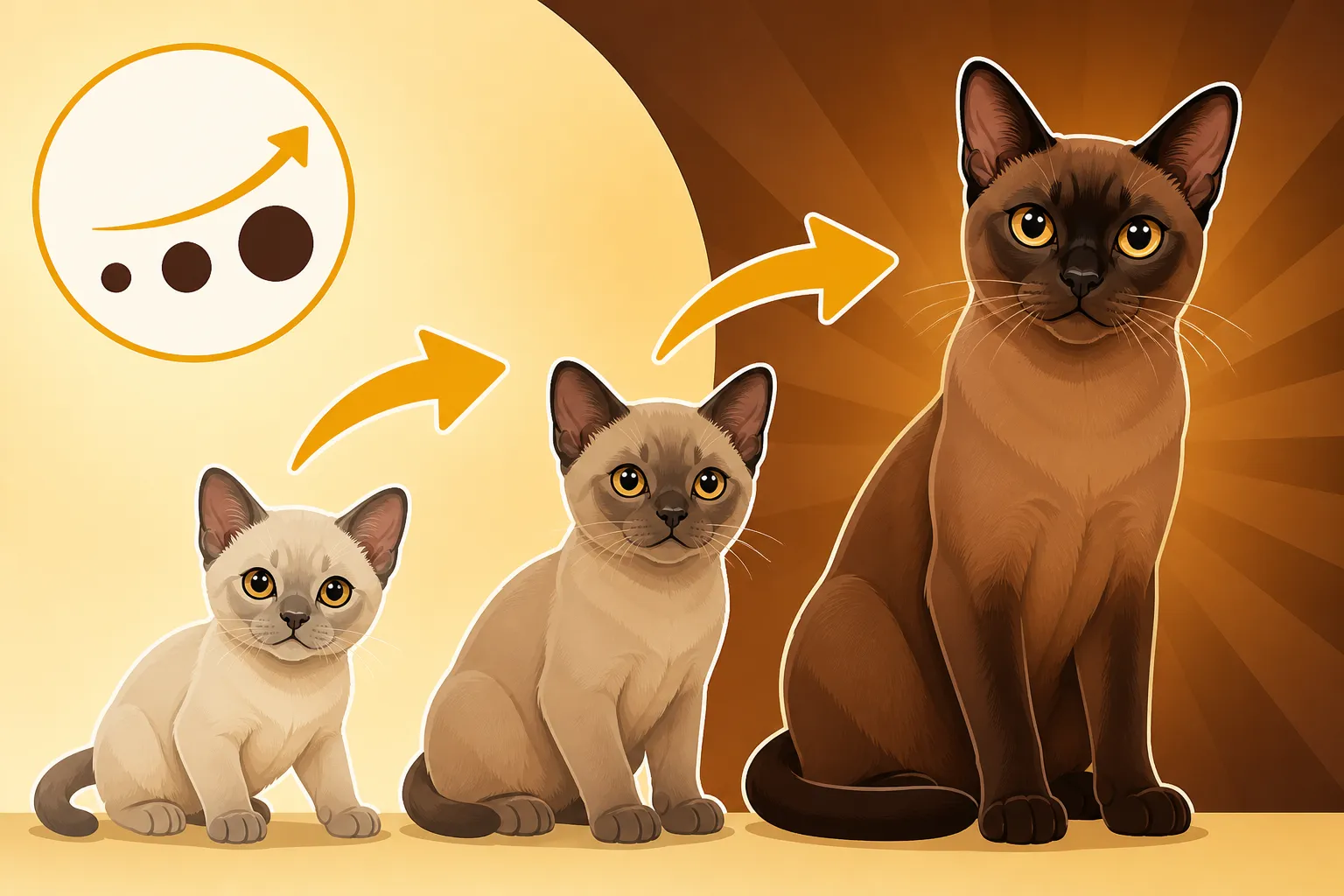
A kitten develops in the warmth of its mother’s womb, so it is typically born much paler than it will become. After birth, its body is exposed to a cooler environment, and pigment begins to develop more visibly. The change is gradual: owners may notice it in photographs taken weeks apart rather than seeing a dramatic shift overnight.
The gene involved is commonly called the Burmese color allele, written as cb. It affects how pigment appears across the coat, and its interaction with temperature helps explain both the kitten’s early pale coloring and the darker areas that emerge later. For a closer look at the genetics, see What the cb Allele Does to a Burmese's Color.
Cooler areas tend to become darker
A Burmese’s cooler body parts may develop more pigment than its warmer central body. The face, ears, paws, and tail can therefore appear darker than the torso, although the degree of contrast varies from cat to cat. The effect is usually subtler than the classic pointed pattern people associate with Siamese cats.
A kitten’s environment can play a part in how the shade develops, but it does not let an owner precisely control the final color. Individual genetics, age, and temperature all contribute. A cool room will not transform a kitten into a different color variety, and keeping a cat unusually warm is not a sensible way to manage its coat.
This temperature-related pattern is one reason a Burmese may look darker at the extremities. The change is part of the breed’s characteristic coloring, not a sign that the coat is dirty or that the kitten has been exposed to something harmful. The related guide Why a Burmese Is Darker at the Extremities explains this pattern in more detail.
What color change looks like as a Burmese grows
A kitten’s shade develops in stages
Burmese kittens are not always born with the rich, even-looking coat people picture when they think of an adult cat. Early on, the coat may appear pale, muted, or less clearly defined. As the kitten matures, the base color deepens and the overall coat becomes easier to identify.
The pace and appearance of the change differ between kittens. One kitten may show darker ears and tail early, while another develops a more even-looking coat first. Natural light, indoor lighting, camera settings, and the angle of a photograph can also make the same coat look lighter or darker from one day to the next.
It helps to compare pictures taken in similar lighting rather than relying on memory. A photo by a sunny window can make a coat appear warmer and brighter; an evening snapshot under a yellow lamp may make it look darker or more brown. The color gene’s temperature response is real, but a single photograph is not a reliable way to judge how much a coat has changed. For the broader explanation, see How a Burmese's Color Gene Reacts to Temperature.
Breed color and individual variation both matter
The recognized Burmese colors depend on the registry and the type of Burmese being discussed. In the American Burmese, the familiar colors include sable, champagne, blue, and platinum. Each has its own tone, and kittens within the same color group can still vary in how light or dark they appear as they mature.
Sable Burmese kittens may develop a particularly noticeable shift from a paler early coat to a deeper brown adult shade. Champagne kittens tend to have a warmer beige-brown appearance, while blue and platinum coats have cooler, softer tones. These descriptions are useful guides, not promises that every kitten will match a particular photograph exactly. See What a Sable Burmese Looks Like and What a Champagne Burmese Looks Like for more on those colors.
It is also helpful to remember that Burmese coats are not simply one flat color from root to tip. Shading can be present even when the coat looks nearly uniform at a casual glance. The guide Why a Burmese Is Not a Solid Colored Cat explores why that distinction matters.
| What you notice | Common explanation | What to do |
|---|---|---|
| The kitten looks paler than an adult Burmese | Young kittens often begin with a lighter coat that deepens with growth | Compare clear photos over time |
| The ears, face, paws, or tail look darker | Cooler areas can develop more pigment | Note whether the change is gradual and even |
| The coat looks different in different photos | Lighting, camera settings, and surroundings affect appearance | Take comparison photos in similar light |
| A patch changes suddenly or looks irritated | A localized skin or coat problem may be involved | Ask a veterinarian for advice |
| The coat changes gradually across months | Normal color development is likely | Keep observing and mention it at routine checkups |
When Burmese coat color usually settles
The change is gradual, not a deadline
There is no single birthday when every Burmese kitten’s color is “finished.” Coat development happens over time, and a young cat may continue to look different as it matures. The age at which the color seems settled can vary according to the cat’s genetics, its starting shade, and how closely someone is observing.
This can be confusing if you are choosing a kitten based on photographs. A picture of a litter at a young age may not show the adult depth or balance of color clearly. If the eventual shade matters to you, ask the breeder what they have observed in the kitten’s parents and older relatives, while remembering that family resemblance is informative rather than a guarantee.
Keep in mind that a kitten’s appearance in a photograph may not match what you see in person. If you are comparing a kitten’s coat over time, use the same room and similar daylight where possible. When a Burmese Kitten's Color Settles offers a related discussion of how owners can think about this gradual process.
Adult coats can still vary with conditions
Even when a Burmese has reached adulthood, its coat may not look exactly the same throughout the year or in every setting. Temperature can influence the expression of the color pattern, while lighting and seasonal changes in the home can alter what the eye perceives. Those effects do not mean the cat is repeatedly changing its underlying color variety.
Age can influence coat appearance, too. A cat’s coat may become less glossy or change in texture as it gets older, and health or nutrition can affect its condition. That is different from the slow, even deepening seen as a kitten develops. If a coat seems dull or unkempt alongside other changes in appetite, energy, or weight, it is worth discussing with a veterinarian rather than assuming it is just color maturation.
A Burmese’s pattern is also more subtle than the pointed pattern of a Siamese. Both breeds can show temperature-related color effects, but their overall appearance differs. For a useful comparison, read How a Burmese's Coat Differs From a Siamese's.
How to tell normal darkening from a coat problem
Look for gradual, even changes
Ordinary Burmese color development tends to be gradual. You may notice a general deepening across the coat or darker coloring at the extremities, but the skin should not look sore simply because the fur is changing shade. A sequence of photos can help you see whether the change has happened over time rather than suddenly.
Check the coat gently when your kitten is relaxed. Look for thinning, bald patches, scabs, redness, excessive scratching, or areas that seem painful. A change in pigment by itself is not the same as hair loss or inflamed skin. If the kitten is otherwise comfortable and the coat change is slow and even, it is often part of normal development.
If you use a grooming mitt or soft cloth to get your kitten accustomed to gentle handling, keep the routine calm and brief. Retailers such as Chewy may be one place owners compare basic grooming supplies, but the tool should be soft and appropriate for a short-coated cat. A Burmese coat generally does not need vigorous brushing to encourage color or make it darken.
Call a veterinarian when the change is sudden or paired with symptoms
A coat that changes quickly in one isolated area deserves more attention than a gradual overall shift. Skin irritation, parasites, infection, allergies, or overgrooming can affect the appearance of the fur. These issues cannot be diagnosed from color alone, so a veterinarian is the right person to assess a sudden patch, persistent itching, or visible skin changes.
Pay attention to the whole kitten, not just the coat. Reduced appetite, unusual tiredness, repeated scratching, discomfort when touched, or changes in behavior can help you decide whether to seek advice promptly. Take a few clear photos and note when you first noticed the change; that information can help explain the timeline at an appointment.
There is no need to bathe a healthy Burmese kitten just because its coat seems too pale or too dark. Washing will not change its genetics, and unnecessary bathing can cause stress or dry the skin. If you are considering a grooming product, Chewy or another pet-supply retailer may list options, but ask your veterinarian before using a medicated shampoo or any product intended to treat a skin problem. For routine care, a gentle hand and occasional coat check are usually more useful than adding products.
Helping your kitten’s coat look its best
Keep care simple and watch the overall pattern
A Burmese’s short coat is relatively straightforward to maintain. Gentle handling and occasional grooming can remove loose hairs and help your kitten become comfortable with being touched. There is no brush, diet, or coat treatment that can reliably speed up the natural color change, so avoid products that promise to alter or enhance the shade.
A soft grooming glove can be useful if your kitten enjoys being stroked, but stop if the kitten becomes uncomfortable or tries to move away. Chewy is one of several places where owners might compare grooming accessories; focus on a gentle fit and simple materials rather than specialized tools. In most cases, the goal is comfort and familiarity, not intensive coat care.
Good general health supports a healthy-looking coat, but coat color is not a direct measure of whether a kitten is thriving. Keep up with routine veterinary care and feed an age-appropriate diet. If your kitten’s fur becomes dull, breaks easily, or changes alongside other signs of illness, ask for veterinary guidance instead of trying to correct the appearance with supplements or frequent bathing.
Take useful photos and ask the breeder about family coloring
If you want to follow your kitten’s development, take a photo every few weeks in the same spot, preferably in natural daylight. Include the face, body, paws, and tail so you can compare both the overall shade and the darker areas. This makes it easier to separate a genuine change from the effects of lighting or camera exposure.
A breeder familiar with the kitten’s line may be able to describe how its parents’ coats developed and whether the kitten’s early coloring is typical for that family. Ask about the kitten’s registered color and the expected adult appearance, but treat any prediction as an estimate. Burmese coat color matures naturally, and the adult result belongs to that individual cat.
The main thing to remember is that a pale Burmese kitten is not necessarily the color it will remain. A gradual deepening, especially at cooler areas of the body, is a normal part of how Burmese coloring develops. If the change is abrupt, patchy, itchy, or accompanied by other health concerns, get the kitten checked rather than attributing everything to its coat-color gene.
Disclaimer
This article is for general informational purposes only and does not constitute professional advice. Laws, prices and regulations vary by location and change over time. Consult a qualified professional for guidance on your specific situation.