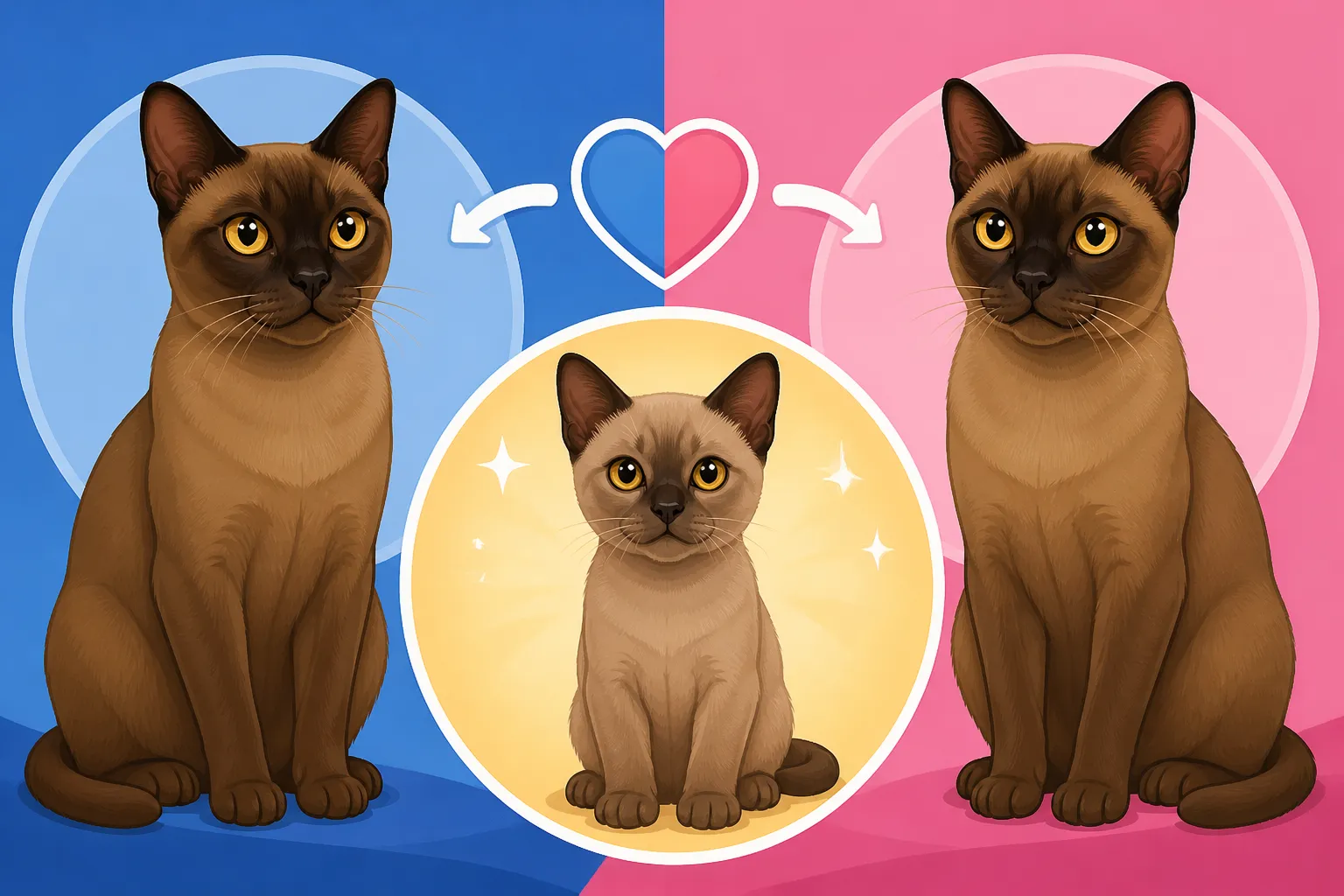
What Two Copies of cb Produce in a Burmese
A Burmese kitten’s coat can change dramatically as it grows, and a brown-looking cat is not necessarily carrying the genes you might assume. The key is the Burmese color allele, written cb. This guide explains what two copies produce, why the coat is darker in cooler areas, how other genes affect the final shade, and what the result does—and does not—tell you about a cat’s ancestry.
What two copies of cb mean
The cb/cb genotype in plain English
A cat with two copies of the Burmese allele has the genotype cb/cb. It inherited one cb copy from each parent, making it homozygous for that allele. The allele affects tyrosinase, an enzyme involved in producing pigment, and changes how fully pigment develops in the coat.
In practical terms, cb/cb usually produces the Burmese color pattern: pigment is present across the body, but its intensity is influenced by temperature. The coat is not evenly colored in the same way as a typical full-color cat. Cooler parts of the body tend to develop deeper pigment, while warmer areas tend to remain lighter.
The term “Burmese color” describes this temperature-influenced pattern, not one specific shade. A Burmese-patterned cat may be sable, blue, champagne, or platinum in the American Burmese color system. Other registries recognize additional colors. The exact shade depends on other genes as well as the two copies of cb.
For a broader explanation of how the allele affects coat appearance, see What the cb Allele Does to a Burmese's Color.
Why the Burmese coat is darker at the extremities
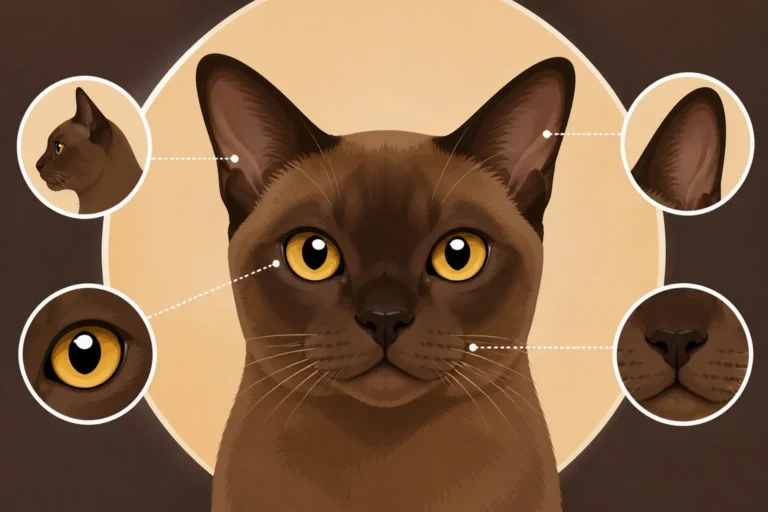
The cb allele is temperature-sensitive: pigment production is affected by the temperature of the skin where each hair grows. The ears, face, paws, and tail are often cooler than the torso, so these areas can appear darker. The contrast is usually softer than the sharply defined points of a Siamese cat.
This effect does not mean the cat’s extremities are a different color gene or that the coat is changing because of dirt or poor grooming. It is a normal feature of the color pattern. How noticeable it is can vary with the cat’s genetics, age, coat shade, and environment.
Temperature is only one part of the picture, and it does not create a perfectly predictable paint-by-numbers pattern. Two Burmese cats can both be cb/cb yet show different degrees of contrast. The coat’s overall appearance also depends on the other pigment genes the cat inherited. More detail is available in Why a Burmese Is Darker at the Extremities and How a Burmese's Color Gene Reacts to Temperature.
Two copies do not mean “brown only”
It is easy to see a dark sable Burmese and assume that two copies of cb always produce brown fur. They do not. The cb/cb genotype affects the pattern of pigment, while other genes influence which pigment and shade are produced.
For example, dilution genes can soften a darker pigment into a paler shade. Other pigment genes can also alter the visible color. This is why Burmese coat color is best understood as a combination: cb/cb helps establish the Burmese pattern; other inherited variants contribute to the particular color.
The names for colors can differ between registries, which can make descriptions confusing when comparing cats from different countries or breeding programs. A pedigree or registry standard can help clarify how a particular shade is labeled. For an example of the classic dark shade, see What a Sable Burmese Looks Like.
How two cb copies affect appearance and inheritance
What the coat may look like as a kitten grows
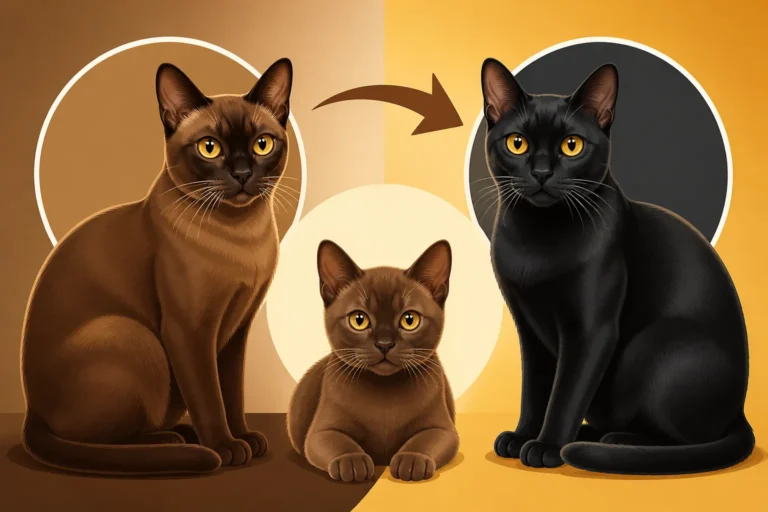
Burmese kittens are often paler at birth than they will be as adults. Their coat can deepen as they mature, and the change may be gradual rather than a sudden shift. The cooler extremities can become more visibly shaded, while the body coat develops its characteristic color.
That gradual change can surprise new owners. A kitten that looks very light in early photographs may later have a noticeably richer coat, and the change can make it tempting to wonder whether the cat’s color was described incorrectly. A lighter kitten coat by itself does not establish a different genotype.
Age is not the only influence. Temperature and the cat’s other inherited color genes can affect the appearance too, so there is no single adult shade that every cb/cb kitten will reach. See Why a Burmese Kitten Darkens as It Grows for more on this normal development.
Coat color is also not a reliable way to judge general health. If a cat’s fur becomes dull, patchy, or changes alongside weight loss, reduced appetite, or unusual behavior, that is different from ordinary color development and is worth discussing with a veterinarian. Keeping routine notes about weight and food can help put a coat change in context. Some owners look to retailers such as Chewy when sourcing everyday weighing or feeding supplies, but supplies cannot replace a veterinary assessment when a change seems abnormal.
What different pairings can produce
A kitten receives one relevant allele from each parent. If both parents’ genotypes are known, the possible outcomes can be mapped. These examples assume the stated genotypes are accurate and focus only on the C-series color allele; other genes still influence the kittens’ final shades.
| Parent pairing | Possible kitten genotypes at this locus | Usual color-pattern implication |
|---|---|---|
| cb/cb × cb/cb | All cb/cb | All kittens inherit the Burmese pattern allele from both parents |
| cb/cb × C/cb | About half cb/cb and half C/cb | Some kittens may show Burmese pattern; others may carry cb without showing it |
| cb/cb × C/C | All C/cb | Kittens carry cb but usually show full color rather than the Burmese pattern |
| cb/cb × cs/cs | All cb/cs | Kittens inherit one Burmese allele and one Siamese allele, often producing an intermediate Tonkinese pattern |
These are inheritance probabilities, not promises about litter size or a guarantee that a particular kitten will have a particular visible shade. In a small litter, the actual number of kittens with each genotype may differ from the expected proportion. And because coat-color genetics involves more than one gene, knowing the cb result alone does not reveal every detail of a kitten’s appearance.
The combination of Burmese and Siamese color alleles is especially useful for understanding why related-looking cats can have different patterns. See What Happens When Burmese and Siamese Genes Meet and Why a Burmese Is Brown and a Siamese Is Pointed.
What a DNA result can and cannot establish
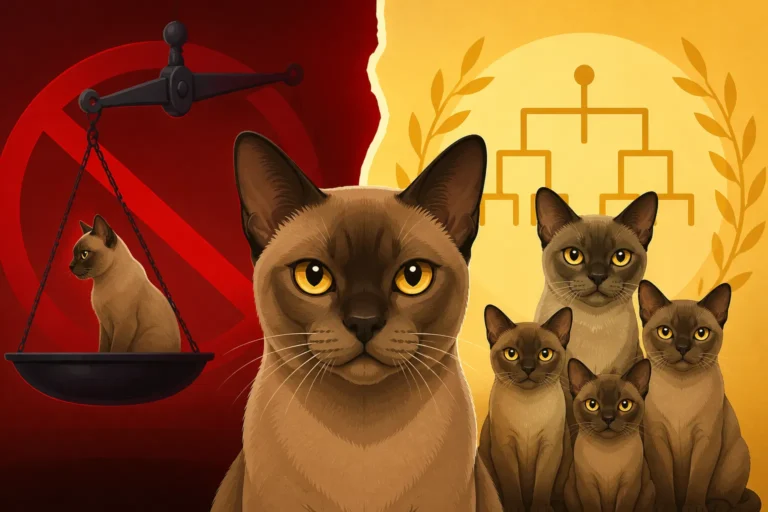
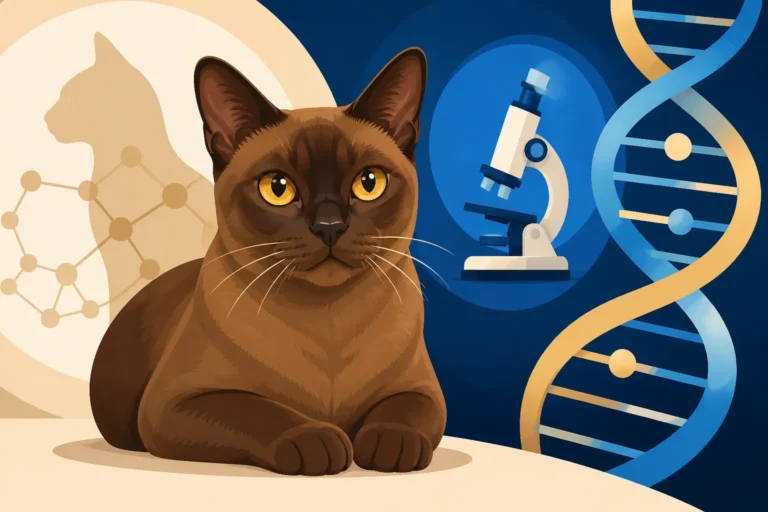
A genetic test can help identify whether a cat has cb, but it should be interpreted as one piece of information. A result showing cb/cb supports the expectation of a Burmese color pattern. It does not, on its own, prove that a cat is a registered Burmese, establish its full pedigree, or identify every gene affecting its coat.
Likewise, a cat with one copy of cb may carry the allele without showing the typical Burmese pattern. A visible coat can offer clues, but appearance alone is not a dependable substitute for a properly interpreted genetic result when the distinction matters for breeding or pedigree questions.
If the result is being used to make breeding decisions, ask the veterinarian, testing laboratory, or qualified breeder to explain the report and its limits. Confirm that the sample belongs to the cat in question, and keep the result with the animal’s other records. A color result is not a health clearance, and it should not be treated as one.
Common misconceptions about cb/cb Burmese cats
“Two copies make every Burmese look the same”
Two copies establish the Burmese color pattern, not a single universal coat. Burmese cats can vary in shade, intensity, and contrast. A sable cat and a blue cat may both be cb/cb while looking strikingly different because other inherited color genes modify the pigment.
Even cats with similar color labels can differ in how dark their points appear or how much contrast shows between the body and extremities. Age and temperature can contribute to those differences. That is why coat photographs, especially of young kittens, should not be treated as a precise prediction of adult color.
When comparing descriptions, check which registry or breed standard is being used. Color names do not always line up perfectly across standards, and a breeder’s informal description may not use the same terminology as a registry. If you want to understand the larger distinction between the American and European Burmese, How the American and European Burmese Split explains why type and standards can matter when interpreting breed descriptions.
“A brown coat proves the cat is cb/cb”
A brown or warm-toned coat is not enough to determine genotype. Some cats can look similar while carrying different combinations of color alleles. Conversely, a Burmese-patterned cat can be a color other than sable because other genes affect the shade.
This is particularly important when someone is trying to identify a cat’s ancestry from a photograph or a brief description. Lighting, camera settings, age, and coat condition all affect how color appears in pictures. A kitten photographed beside a window can look different from the same kitten in indoor light, without its genes changing.
For a pet owner, the distinction may simply be interesting background. For a breeder, rescue, or person checking pedigree records, it may be important to get the genotype and paperwork interpreted together. The coat gives you a useful clue, but it does not tell the whole genetic story.
“A color result tells me the cat is healthy”
The cb allele is associated with coat color, not a general health assessment. A cb/cb result does not confirm that a cat is free of inherited diseases, and it does not predict whether the cat will develop a health problem. Those questions require appropriate veterinary care and, where relevant, specific health testing.
A responsible breeder should be able to explain which tests are relevant to the lines involved and provide records that are separate from coat-color information. Owners should also keep up with routine examinations and mention any changes in drinking, appetite, weight, energy, or behavior. A color test should never be used as a shortcut for that care.
For everyday care, consistent feeding and body-condition checks are more useful than trying to infer health from coat shade. If a food transition is needed, change it thoughtfully and ask a veterinarian for guidance if the cat has a medical condition. Chewy is one retailer owners may use when comparing everyday food and feeding supplies, but food choices should still be based on the individual cat’s needs rather than its cb result. Chewy may also be a convenient place to look for routine supplies, while a veterinarian remains the right person to interpret symptoms or test results.
Disclaimer
This article is for general informational purposes only and does not constitute professional advice. Laws, prices and regulations vary by location and change over time. Consult a qualified professional for guidance on your specific situation.