Why a Burmese Is Brown and a Siamese Is Pointed
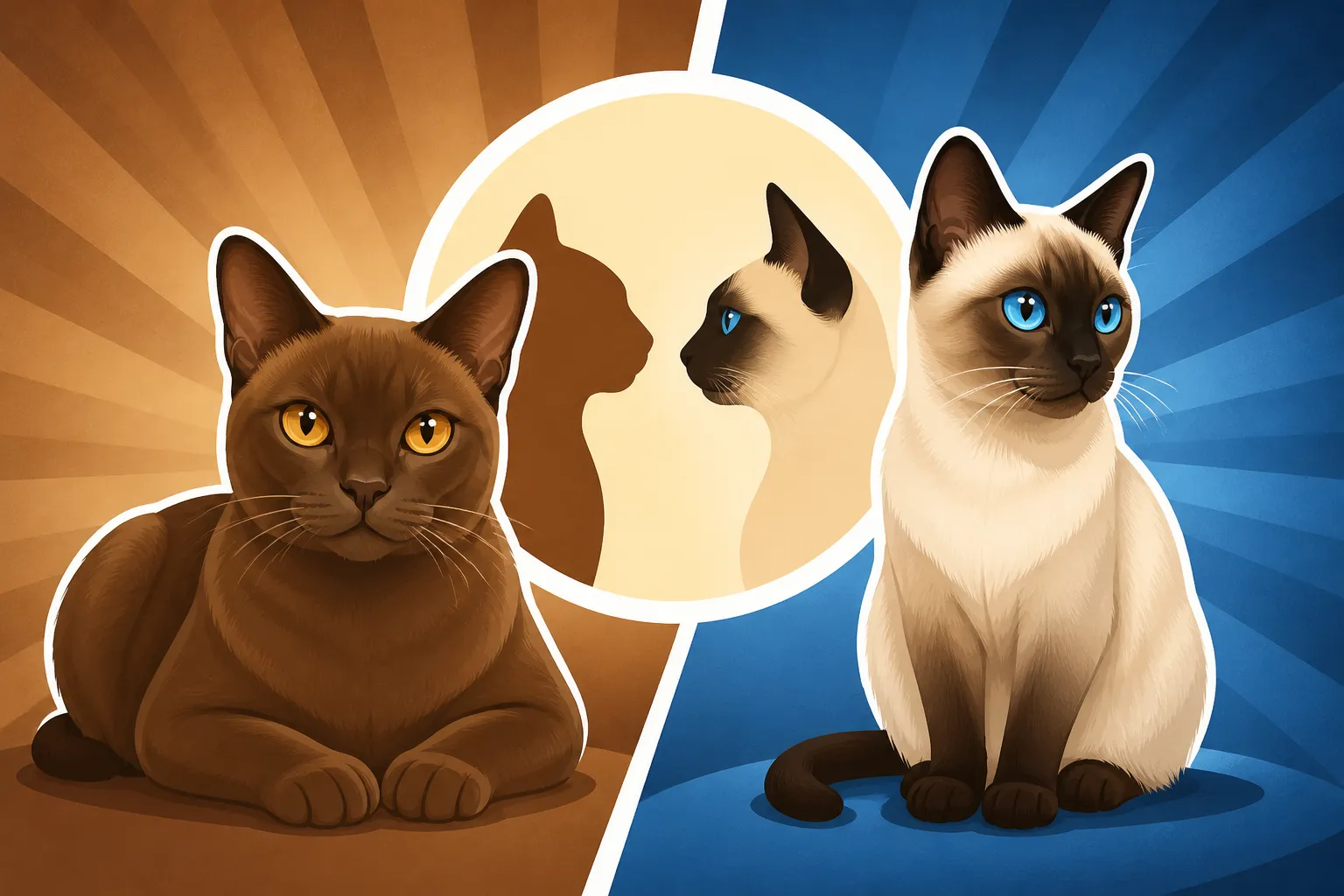
It’s a common moment for cat lovers, often leading to a puzzled frown: how can a beautiful Burmese be a solid, rich brown, while a sleek Siamese showcases those incredibly distinct darker "points" on its face, ears, paws, and tail? They both have a similar, almost regal air, but their coloration is miles apart. If you've ever wondered about the genetic magic behind these striking differences, you're in the right place. This guide will take a deep dive into the fascinating genetic history that explains why a Burmese is brown and a Siamese is pointed, unveiling the scientific reasons for their unique, yet intertwined, appearances.
The Shared Ancestry: A Tale of Two Colors
The story of the Burmese cat, and in turn, the explanation for its rich brown coat compared to the Siamese's points, actually begins with a single cat and a keen scientific mind. Understanding this origin story is crucial to grasping the genetic interplay that led to these distinct appearances. It’s not just a matter of different breeds; it’s a story rooted in shared lineage and careful observation.
The Genesis of the Burmese: Wong Mau and Dr. Thompson
Imagine a time when the cat fancy was still relatively young, and genetic understanding was just beginning to take hold in breeding programs. Into this world stepped a truly remarkable feline named Wong Mau. She arrived in San Francisco in 1930, brought from Burma by a retired U.S. Navy psychologist, Dr. Joseph C. Thompson. Wong Mau wasn't just any cat; she was described as a distinct walnut-brown with darker points, a phenotype that truly intrigued Dr. Thompson. She was smaller and more compact than the slender Siamese cats popular at the time, and her head shape was notably rounder.
Dr. Thompson’s genius lay in his meticulous observation. He immediately recognized that Wong Mau was unique. She wasn't a Siamese, despite sharing some superficial similarities in her darker extremities, and she wasn't a domestic short-hair. He suspected she held a key to a new genetic color combination. His dedication to understanding her unique characteristics set the stage for the entire Burmese breed, and indeed, helped unravel complex feline genetics that influence coat color to this day. His detailed work truly laid the foundation for recognizing this beautiful new type of cat. The Burmese Began With One Cat Called Wong Mau is a testament to the singular origin of this entire breed, all thanks to this one special feline.
The Pivotal Cross: Breeding Wong Mau to a Siamese
To confirm his suspicions about Wong Mau's genetic makeup, Dr. Thompson embarked on a deliberate breeding program. This wasn't a random pairing; it was a scientific experiment designed to unlock the secrets held within Wong Mau's genes. He decided to breed her to a seal point Siamese, a cat whose genetics for point coloration were well-understood. This pivotal cross was an inspired choice, providing clear genetic markers to trace back to Wong Mau.
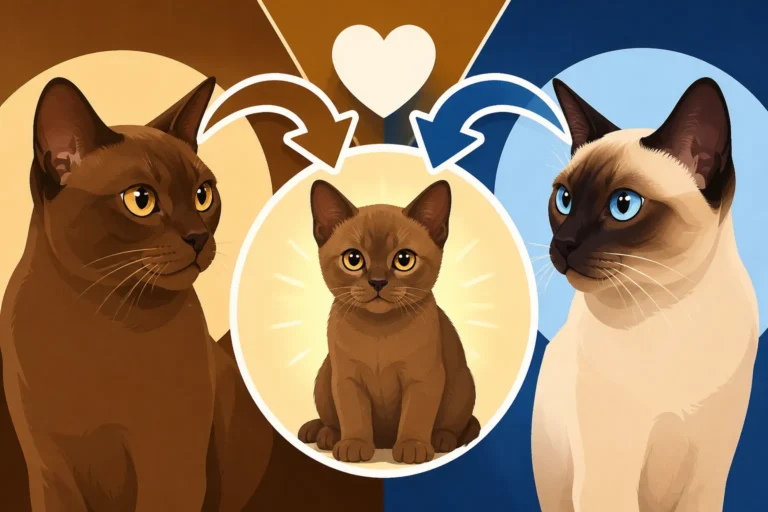
The resulting litter was nothing short of revelatory. It didn't just produce more cats; it produced a genetic roadmap. The kittens from this pairing exhibited three distinct color patterns: some were classic Siamese seal points, some looked like Wong Mau herself (walnut brown with darker points), and a third group displayed an intermediate coloration, which we now know as "mink" – a sort of warm, soft brown body with darker, but not sharply contrasting, points. This outcome proved definitively that Wong Mau was not a purebred Siamese, nor was she a solid-colored cat. Instead, she carried a unique genetic factor that, when combined with the Siamese gene, created these varied offspring. Why the First Burmese Was Bred to a Siamese showcases the intentionality behind this historic breeding, forever linking the two breeds genetically. This careful breeding demonstrated that Wong Mau herself was a carrier for what would become known as the Burmese color gene, and that she produced distinct variations when bred with a full colorpoint Siamese.
Unpacking the Genetics: The cb Allele Explained
At the heart of the Burmese's brown coat and the Siamese's pointed pattern lies a fascinating genetic story centered around a single gene. This isn't some obscure, complex interaction; it's a beautifully clear example of how different versions of one gene can lead to dramatically different physical appearances in our feline friends. Understanding this gene, often referred to as the colorpoint gene, is the key to unlocking the mystery of these two iconic breeds.
The Colorpoint Gene: A Spectrum of Expression
The specific gene responsible for both Siamese point coloration and Burmese brown is the Tyrosinase (TYR) gene, which plays a crucial role in producing melanin, the pigment responsible for coat color. Within this gene, there are different versions, or alleles, that dictate how much pigment is produced and where it's deposited on the cat's body. The standard full-color allele is represented as 'C', allowing for full pigmentation across the entire coat.
However, it's the mutations on this gene that create the magic of the Siamese and Burmese. The Siamese allele, cs (for colorpoint Siamese), and the Burmese allele, cb (for Burmese), are both recessive to the full-color 'C' gene. What makes them unique is that they are also temperature-sensitive. This means the enzyme responsible for producing pigment doesn't work effectively at normal body temperatures, only in cooler areas. The difference between cs and cb lies in their degree of temperature sensitivity, leading to their distinct appearances. Both breeds are essentially variations on a 'partial albinism' theme, where color production is hindered, but to different extents, directly impacting how much color you see and where it appears. The cb Allele Is What Makes a Burmese Brown directly addresses the core genetic factor at play here.
How the cb Allele Creates Burmese Brown
For a cat to be a true Burmese color, it must inherit two copies of the cb allele – one from each parent. This genetic combination is written as cb/cb. When a cat is homozygous for the cb allele, meaning it has two identical copies, it expresses the characteristic Burmese coloration. This coloring is a rich, saturated shade that appears quite uniform across the cat's body, often described as a deep, warm brown (known as sable in the American standard). However, even with the cb/cb genotype, there's a subtle hint of the temperature sensitivity at play.
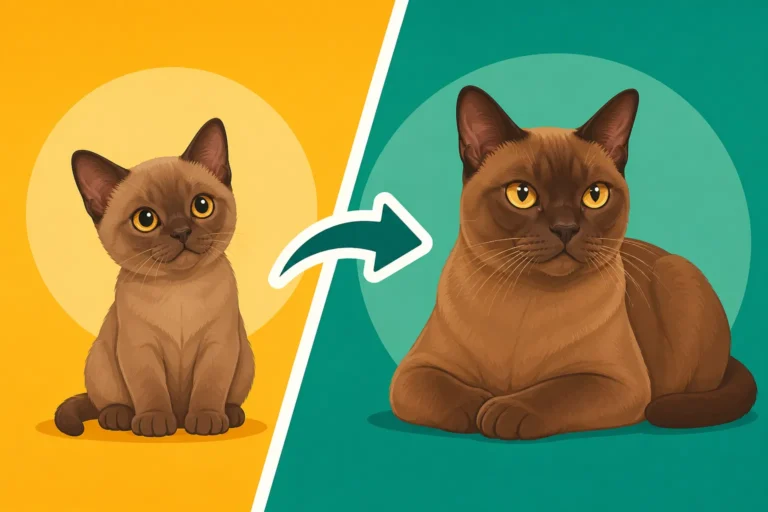
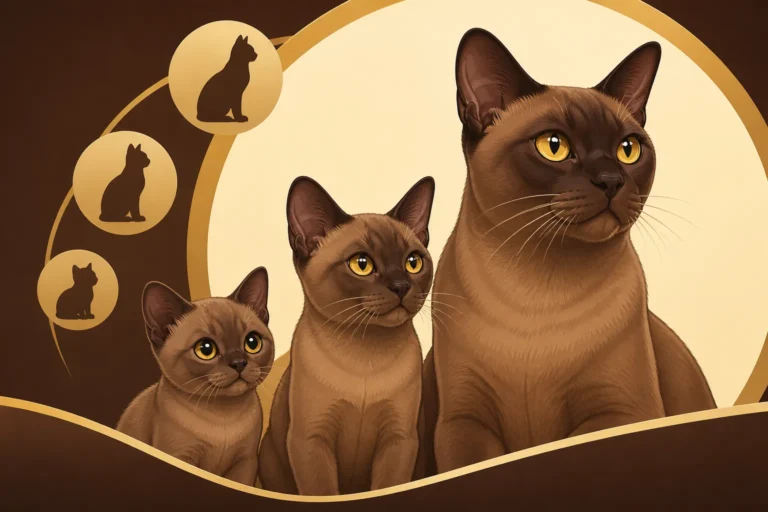
The enzyme that produces pigment is still slightly inhibited at warmer body temperatures, but nowhere near as much as in a Siamese. This results in the Burmese having a generally solid appearance, but with the extremities (ears, mask, paws, tail) often appearing a touch darker than the main body. It’s a nuanced difference, not the stark contrast seen in a Siamese. As a Burmese kitten grows and its body temperature regulates, its coat will deepen in color. A tiny kitten might appear lighter, only for its coat to gradually darken to the full, rich sable over its first few months. This slight difference in shading at the points is a subtle nod to its colorpoint heritage, even though its overall impression is one of solid color. What the cb Allele Does to a Burmese's Color goes into further detail about this specific genetic expression.
Temperature's Touch: How the Environment Shapes Color
The environment, specifically temperature, plays a surprisingly significant role in how the cb and cs alleles manifest their beautiful effects on a cat's coat. It's a fascinating biological mechanism that illustrates why nature creates such incredible diversity from very similar genetic foundations. This environmental influence is precisely what separates the striking points of a Siamese from the uniform richness of a Burmese.
Why the Siamese Is "Pointed"
When we look at a Siamese cat, those iconic dark points on their ears, face, paws, and tail are immediately recognizable. This distinct pattern is a direct result of the cs allele, which is highly temperature-sensitive. In a cat with two copies of the cs allele (cs/cs), the enzyme responsible for producing pigment is largely inactive at normal body temperatures (around 100-102°F or 38-39°C). This means that pigment cannot be produced in the warmer parts of the body, leading to a pale, often cream or white, torso.
However, the enzyme does become active in the cooler extremities of the body. Think about the tips of the ears, the muzzle, the paws, and the tail – these areas are naturally a few degrees cooler than the core body temperature. In these cooler zones, the enzyme can function, allowing melanin production to occur, resulting in the dark "points." This isn't just a random pattern; it's a visible map of where the cat's body temperature is lowest. It's why a Siamese born into a very warm environment might have lighter points than one born in a cooler climate, or why an injured area that heals at a slightly different temperature can grow back a patch of different colored fur. Why a Burmese Is Darker at the Extremities can also be seen as a milder form of this temperature-dependent pigmentation, showing a common genetic thread between the two.
The Burmese's More Uniform Hue
In stark contrast to the Siamese, the Burmese exhibits a much more uniform, saturated body color, whether it's the classic sable, a soft blue, a warm champagne, or a delicate platinum. This is because the cb allele, while still technically temperature-sensitive, is significantly less sensitive than its cs counterpart. For a Burmese (cb/cb), the pigment-producing enzyme is only mildly inhibited by body heat. This means that melanin can be produced across most of the body, leading to a much fuller and richer coloration from head to tail.
While the Burmese still shows a slight darkening at the points, it's a subtle gradient rather than a sharp contrast. The overall impression is one of a richly colored, solid cat. You might notice that a Burmese cat kept in a cooler environment, especially as a kitten, might develop a slightly deeper overall color than one living in a consistently warmer climate. This subtle shift is a beautiful demonstration of the cb allele's unique properties. This is also why a Burmese kitten is often born lighter and gradually darkens over its first few months, as its pigment production matures and stabilizes. It’s a slower, more even process compared to the dramatic development of Siamese points. Why a Burmese's Color Gene Reacts to Temperature and Why a Burmese Kitten Darkens as It Grows both highlight this fascinating interaction between genetics and ambient conditions.
Beyond the Brown: Other Distinguishing Features
While coat color is undoubtedly the most striking difference between a Burmese and a Siamese, these two magnificent breeds possess many other distinguishing physical characteristics. Their genetic divergence hasn't just affected their fur; it has sculpted their entire physical presence, from the shape of their heads to the intensity of their gaze. Understanding these broader differences helps appreciate each breed for its unique attributes, beyond just a shade of brown or a pattern of points.
Body and Head Differences
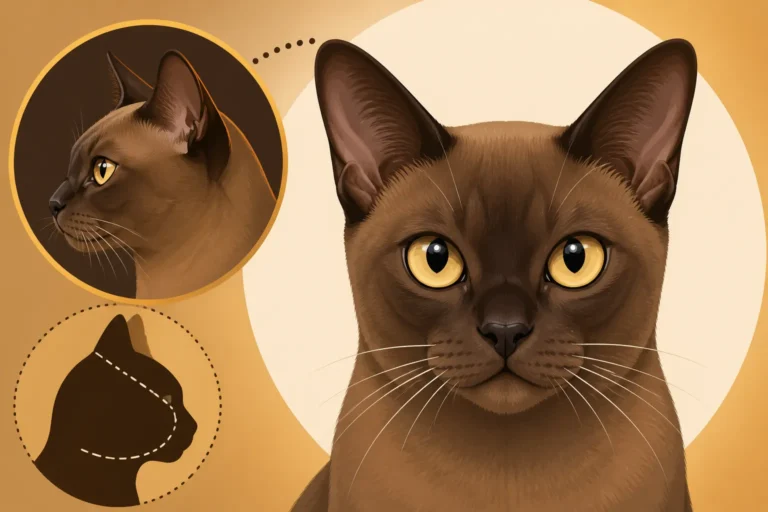
The overall body type of the Burmese is often described as "a brick wrapped in silk." This vivid phrase perfectly encapsulates their compact, muscular, and surprisingly heavy build. They are substantial cats, with a powerful, solid feel that belies their relatively medium size. Their chest is broad and well-developed, and they have a short, dense, and incredibly soft coat that truly feels like satin. When you pick up a Burmese, you are often surprised by their unexpected weight for their stature. In terms of head shape, the American Burmese typically has a distinctly rounded head, a full face, and a short, blunt muzzle. The ears are medium-sized and set well apart, contributing to their sweet, open expression. The European Burmese, while still possessing a strong build, has a slightly more modified wedge-shaped head, leaning a bit closer to the Siamese in that specific aspect, but still retaining a softer, less extreme appearance than its pointed cousin.
In contrast, the Siamese is renowned for its svelte, elegant, and athletic physique. They are long, lean, and tubular, with fine bones and a graceful posture. Everything about a Siamese speaks of refinement and agility. Their legs are long and slender, and their tail is often very long and tapering. The Siamese head is a distinct wedge shape, forming a perfect triangle from the ears to the tip of the nose. Their ears are notably large, wide at the base, and set to continue the lines of the wedge. This stark contrast in body and head shape is immediately apparent, even before you factor in their coat colors. What a Burmese Looks Like Against the Standard provides an excellent deep dive into the specific physical traits desired in a show-quality Burmese.
Eye Color and Expression
Another beautifully distinct feature that sets the Burmese and Siamese apart is their eye color and the overall expression of their eyes. In the Burmese, you'll find eyes that range from a luminous gold to a rich, deep amber. These expressive, round eyes contribute significantly to the Burmese's endearing and often mischievous facial expression. The warmth of their eye color perfectly complements their rich, warm coat tones, creating a harmonious and captivating look. The intensity and depth of their gaze are often commented upon by owners, reflecting their intelligent and affectionate personalities.
The Siamese, on the other hand, is famous for its piercing, vivid blue eyes. This striking blue coloration is not just a preference; it is intrinsically linked to the same colorpoint gene that dictates their coat pattern. The cs allele, by limiting pigment production, also affects the amount of pigment in the iris, resulting in those characteristic sapphire-blue eyes. The eyes of a Siamese are typically almond-shaped and set at a slight slant, contributing to their exotic and often enigmatic appearance. The contrast of the dark points and brilliant blue eyes is a hallmark of the breed. This difference in eye color is a consistent and reliable way to distinguish between the two breeds, even if you were somehow momentarily confused by their body types or coat shades.
Breeding for Color: Understanding the Outcomes
The understanding of the cb and cs alleles has not only clarified the origins of the Burmese and Siamese but has also empowered breeders to intentionally create new variations and even entirely new breeds. It’s a testament to the power of selective breeding guided by genetic knowledge. The genetic interplay between these two alleles provides a spectrum of possibilities, allowing for the beautiful diversity we see in the cat fancy today.
The Tonkinese Connection
One of the most fascinating outcomes of the genetic relationship between the Burmese and the Siamese is the creation of the Tonkinese breed. As mentioned in the historical context, Dr. Thompson's initial cross of Wong Mau (cb/cb) with a Siamese (cs/cs) produced kittens with an intermediate coloration. These 'hybrid' kittens possessed one cb allele and one cs allele, making their genotype cb/cs. This heterozygous combination results in what is known as the "mink" pattern.
Mink coloration is characterized by a body color that is darker than a Siamese but lighter than a Burmese, with points that are distinct but blend more smoothly into the body color than the sharp contrast of a Siamese. The eyes of a Tonkinese are typically a mesmerizing aqua, a unique blend of the Burmese's gold/amber and the Siamese's blue. The Tonkinese truly represents the best of both worlds, inheriting the intelligence and vocal nature of the Siamese with the playful affection and robustness of the Burmese. It is now a well-established and recognized breed in its own right, a living bridge between its two ancestral breeds. How the Tonkinese Was Made From a Burmese explains the intentional breeding process that established this lovely cat. For those weighing options, How a Burmese Differs From a Tonkinese offers a great comparison, helping owners decide which breed's unique blend of traits is right for them. When looking for food and supplies for a Tonkinese, much like a Burmese, checking online retailers like Chewy can simplify the search for specific dietary needs or enriching toys designed for active, intelligent cats.
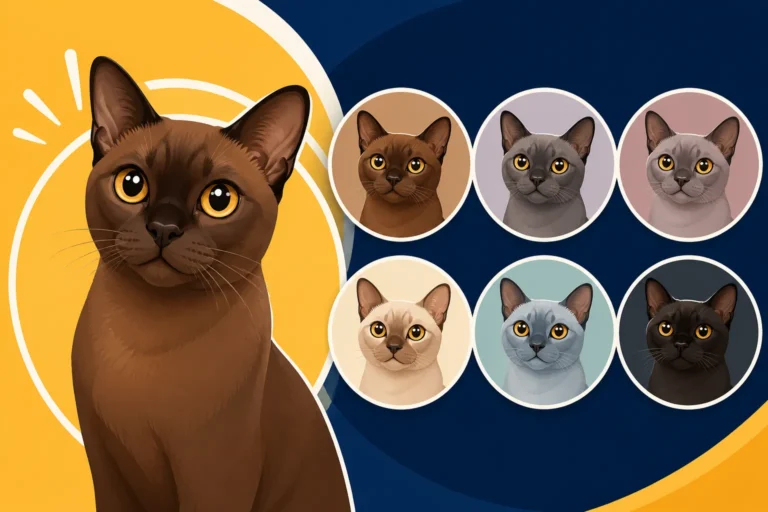
The Four Accepted Burmese Colors
While the original Burmese was the rich, warm sable brown, the breed's genetic potential extends beyond this single color. Through careful breeding and the introduction of other color dilution genes, four primary colors are now recognized in the American Burmese standard, all stemming from the cb allele. These colors are all variations of the underlying Burmese colorpoint gene, modified by other genetic factors.
- Sable (Brown): This is the classic, original Burmese color. It's a rich, dark sepia brown, often with a warmer undertone. The points are slightly darker, creating a subtle contrast. This is the color that started it all, giving the Burmese its iconic look.
- Champagne (Dilute Brown): This is the dilute version of sable. Genetically, it's a sable Burmese that also carries the dilute gene. Champagne Burmese have a warm, honey-beige body with milk-chocolate points. It's a softer, lighter version of the sable, but still maintains that characteristic Burmese saturation.
- Blue (Dilute Black): Blue Burmese are the dilute version of a black Burmese (though pure black Burmese are not recognized). They have a medium gray body with slate-gray points. The blue is a soft, warm tone, not a stark, cold gray.
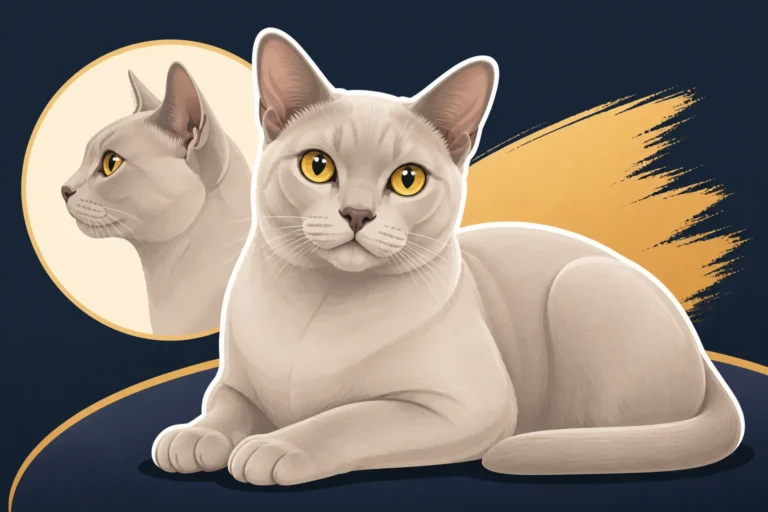
- Platinum (Dilute Champagne): This is the dilute version of champagne, resulting in a pale, silvery-gray body with darker, silvery-lilac points. Platinum is the lightest of the four recognized colors, possessing an ethereal quality.
All these colors, whether rich sable or delicate platinum, maintain the Burmese's characteristic saturated, relatively uniform body color with only subtle point differentiation, as dictated by the cb allele. Each color offers a unique aesthetic while preserving the quintessential Burmese charm and personality. The Four Colors a Burmese Comes In provides a full overview of these stunning variations. Even if you're exploring the nuances of What a Sable Burmese Looks Like, remember that all these colors share the same affectionate, people-oriented temperament that defines the breed. When stocking up on specialized food or cozy beds for any of these beautiful colors, a visit to Chewy can offer a wide array of options to suit their unique needs and preferences.
Disclaimer
This article is for general informational purposes only and does not constitute professional advice. Laws, prices and regulations vary by location and change over time. Consult a qualified professional for guidance on your specific situation.