What a Burmese Looks Like Against the Standard
Understanding what a Burmese cat should look like according to the official breed standard can feel a bit overwhelming, especially when you're just trying to appreciate their undeniable charm. It’s not just about aesthetics; these standards serve as a blueprint for maintaining the health, temperament, and unique physical characteristics that make the Burmese so special. This guide will help you navigate the nuances of the American and European Burmese standards, breaking down everything from their iconic "brick wrapped in silk" build to their soulful golden eyes, so you can truly appreciate these magnificent felines.
The Purpose of a Breed Standard: More Than Just Pretty Pictures
When you look at a show cat, it's easy to think the breed standard is simply about creating an animal that wins ribbons. While that's certainly part of the competition, the underlying purpose is far more profound. A breed standard is essentially a written description of the ideal cat for that particular breed, serving as a guide for breeders to maintain consistency and preserve the unique traits of the breed for generations to come. It's about ensuring that what we recognize as a Burmese today will still be recognizable as a Burmese decades from now.
Why Standards Exist for the Burmese Cat
For the Burmese, these standards are vital because the breed itself originated from a single cat, Wong Mau, in the 1930s. Without a clear standard, breeders might have diverged significantly, leading to a loss of the distinct characteristics that define the Burmese. The standard acts as a conservation tool, safeguarding the health, structural integrity, and temperament that Dr. Joseph Thompson and subsequent breeders worked so hard to establish. It helps prevent extreme interpretations that could lead to health issues or a diluted breed identity.
It also serves as an educational tool for prospective owners, giving them a clear idea of what to expect from a well-bred Burmese kitten. Knowing the standard helps you understand why a certain look or behavior is desirable, and why some traits are considered faults. It’s about more than just a pretty face; it’s about understanding the heritage and the blueprint that guides responsible breeding practices. When you meet a Burmese with that distinct, stocky build and incredibly soft coat, you're seeing decades of dedicated breeding guided by these very standards.
The Difference Between American and European Standards
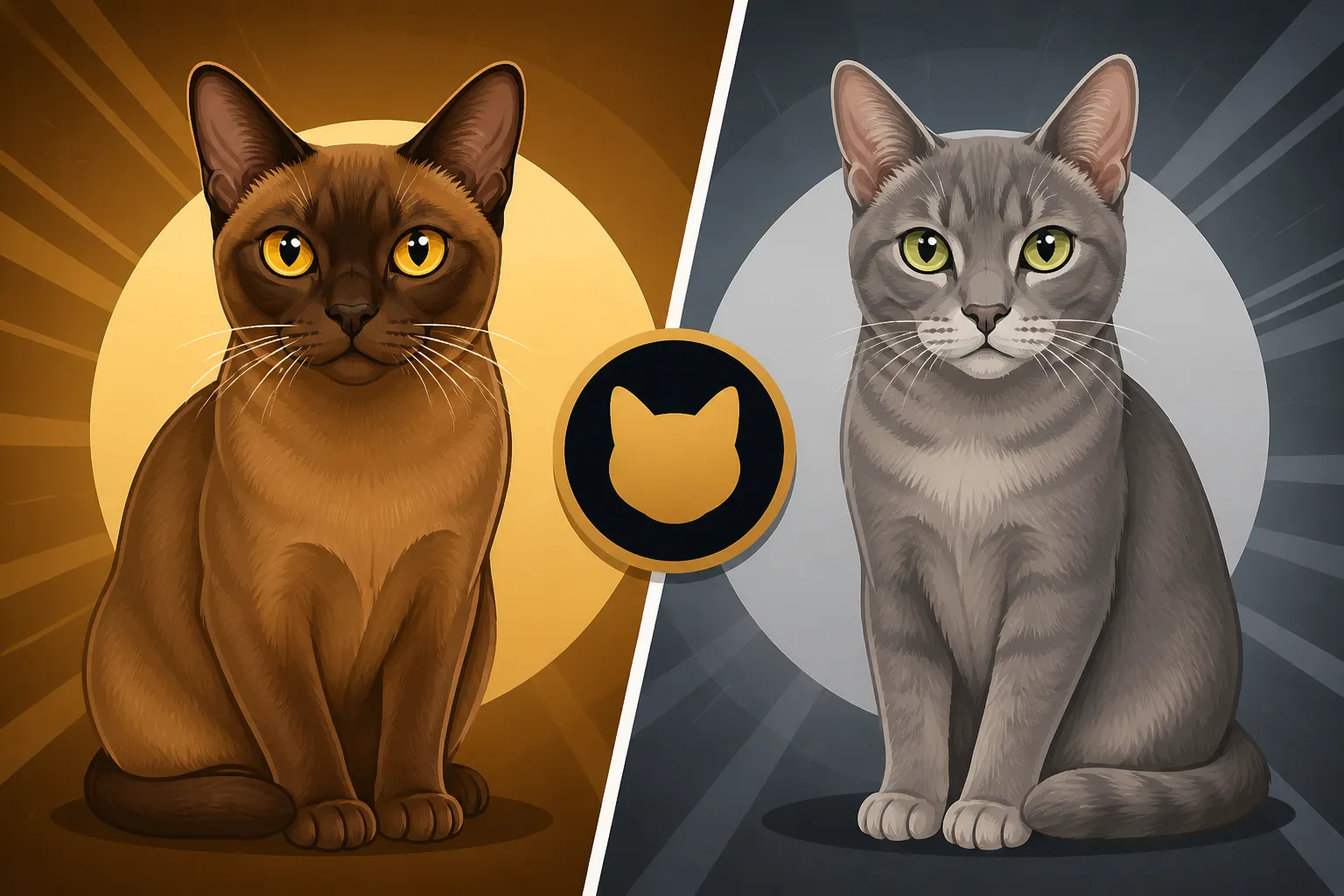
One of the most fascinating aspects of the Burmese breed is that it actually split into two distinct types: the American Burmese and the European Burmese. This happened largely due to differing breeding goals and preferences on either side of the Atlantic. While both types share a common ancestor and the core Burmese charm, their respective standards describe cats with noticeably different appearances. It's not just a subtle variation; if you place an American and a European Burmese side-by-side, the differences are quite striking. You can delve more into this fascinating divergence by reading How the American and European Burmese Split.
The American Burmese standard generally describes a cat with a more compact, cobby body, a noticeably rounder head, and shorter muzzle. Think of a slightly more "pushed-in" face, almost doll-like, with full cheeks. Their eyes are large and round, giving them a perpetually sweet and innocent expression. On the other hand, the European Burmese standard leans towards a more elegant, moderate physique. Their heads are less round, often described as a modified wedge, with a longer muzzle and ears that are set slightly higher. Their eyes are typically more oriental in shape, ranging from round to almond, and often have a more expressive, captivating gaze. These differences are intentional and reflect the aesthetic preferences that developed in their respective regions over many years.
Head and Facial Features: The Expressive Burmese Face
The Burmese cat's head is arguably its most distinctive feature, embodying much of the breed's character and charm. Whether you're looking at the rounded contours of an American Burmese or the more refined lines of a European, the face is what often captivates people first. It's full of expression, reflecting their intelligent and affectionate nature.
The Distinctive Head Shape and Size
For the American Burmese, the standard calls for a head that is "pleasingly rounded" with considerable breadth between the ears. Imagine a soft, full circle when viewed from the front. Their cheekbones are full and well-developed, giving them that characteristic "chubby cheek" look that so many adore. The muzzle, while not flat, is noticeably short and broad, with a definite stop (a slight indentation) at the nose. This roundness extends to the chin, which should also be full and strong. The overall impression is one of gentle softness and a somewhat innocent, wide-eyed appeal. What an American Burmese's Head Should Look Like really emphasizes these rounded qualities.
In contrast, the European Burmese showcases a head that is still rounded but with a different emphasis. The European standard describes a "modified wedge" head that is slightly longer than it is broad, with a gentle curve from the top of the head to the nose. While the cheeks are still full, they don't have the extreme roundness of their American counterparts. The muzzle is medium in length, with a slight, gentle dip rather than a distinct stop. The chin is firm and in line with the nose. This gives the European Burmese a more refined, almost elegant, profile. What a European Burmese's Head Should Look Like helps visualize these subtle but important distinctions.
Eye Color and Expression
No matter the type, the Burmese cat's eyes are always a focal point. Both standards agree that the eyes should be large, expressive, and have a captivating golden hue. For the American Burmese, the eyes are typically described as round and set well apart, giving them a wide-open, almost surprised look. The color should be brilliant gold or yellow, a vibrant contrast to their rich coat color. This round shape and luminous color contribute greatly to their sweet and appealing expression, often described as "innocent" or "soulful."
The European Burmese, while still demanding large, expressive eyes, allows for a bit more variation in shape. Their eyes can range from round to oriental (almond-shaped), but they should always be set well apart and possess that characteristic brilliant gold to yellow color. The intensity of the gold is key, ensuring it stands out against the dark fur. The overall expression tends to be slightly less innocent and more intelligent or discerning, matching their generally more moderate features. A Burmese with pale or dull eye color, or any hint of green, would be considered a fault in both types, as that rich golden glow is a hallmark of the breed.
Ears and Muzzle Proportions
The ears are another crucial element in defining the Burmese head. Both American and European standards call for medium-sized ears, set well apart, and broad at the base, tapering slightly to a rounded tip. They should be tilted slightly forward, as if listening intently, contributing to their alert and intelligent appearance. However, the placement and overall proportion can differ subtly.
For the American Burmese, because of the very round head, the ears often appear to be set a little lower and further apart, blending smoothly with the rounded contour of the skull. The shorter, broader muzzle complements this roundness, making the head look very compact. The European Burmese, with its modified wedge head, tends to have ears set slightly higher and more proportionally balanced with its longer muzzle, creating a more elegant and less extreme profile. The proportion of the muzzle to the rest of the head is critical; a muzzle that is too long or too pointed would be a serious deviation from either standard.
Body and Build: The "Brick Wrapped in Silk"
The phrase "a brick wrapped in silk" is often used to describe the Burmese, and it perfectly captures their unique physique. Despite their medium size and sleek, short coats, they are surprisingly heavy and muscular, giving them a substantial feel when you pick them up. This robust build is a hallmark of the breed, speaking to their strong genetics and active nature.
Musculature and Weight Distribution
Both American and European Burmese standards emphasize a compact, muscular body, but with different degrees of emphasis. The American Burmese standard describes a cat that is "cobby and compact," meaning short-bodied and stocky, with a well-rounded chest and a strong, level back. Their musculature is dense and firm, contributing to their unexpected weight. When you hold an American Burmese, you're often surprised by how heavy they feel for their size, hence the "brick" analogy. This dense muscle mass is distributed evenly, giving them a powerful, athletic appearance despite their compact frame. They are never delicate or fine-boned; strength and solidity are key.
The European Burmese also boasts a muscular and compact body, but their standard calls for a slightly longer, more elegant body than their American cousins. While still substantial and surprisingly heavy, they are not quite as "cobby." Their chest is broad, and their back is straight, leading to powerful hindquarters. The overall impression is one of athletic grace combined with considerable strength. Regardless of type, a well-conditioned Burmese should feel solid, with no excess fat masking their firm musculature. This is why Why a Burmese Weighs More Than It Looks is so often true – it's all muscle!
Leg Length and Paws
The legs and paws of the Burmese are perfectly in proportion with their powerful bodies, providing both strength and agility. For the American Burmese, the legs are medium in length, with solid bone structure and strong muscles. They should be in proportion to the body, neither too short nor too long, contributing to their compact, balanced appearance. The paws are rounded and compact, with five toes in front and four in the back. These strong legs and paws allow them to move with a surprising swiftness and grace, despite their weighty build.
The European Burmese also has medium-length legs, but they tend to be slightly more slender yet still well-muscled and proportionate to their slightly longer bodies. Their bone structure is solid, and their paws are neat and oval. The emphasis is on elegance and athleticism. Both types should have legs that appear firm and straight, without any bowing or weakness. The paws should be tightly knit, never splayed, and should match the overall color of the body, though the paw pads themselves can be a slightly darker shade. Any signs of weakness or disproportion in the legs would be considered a fault, as it impacts their movement and overall health.
Tail Characteristics
The tail is the finishing touch on the Burmese silhouette, and both standards outline specific characteristics for this appendage. For both American and European Burmese, the tail should be of medium length, tapering to a rounded or slightly blunt tip. It should be proportionate to the body, not excessively long or short. It’s typically carried with a gentle upward curve, reflecting their confident and alert nature.
The American Burmese tends to have a tail that is slightly thicker at the base and tapers smoothly, completing the rounded, solid look of the cat. The European Burmese's tail might be a fraction more slender, but still with a smooth taper. In both cases, kinks, knots, or abnormal shortness in the tail are considered faults. The tail should be free of any visible deformities, presenting a clean line. A healthy Burmese will carry its tail proudly, often using it to express its mood, whether it's held high in curiosity or gently draped over its human companion.
The Signature Satin Coat: Color, Texture, and Maintenance
The Burmese coat is truly one of a kind. It's often described as "satin" or "silk" for a reason – it's incredibly short, fine, and lies close to the body, feeling remarkably soft and smooth to the touch. This distinctive coat is a key identifier of the breed and plays a significant role in their overall appeal.
The Four Accepted Colors and Their Nuances
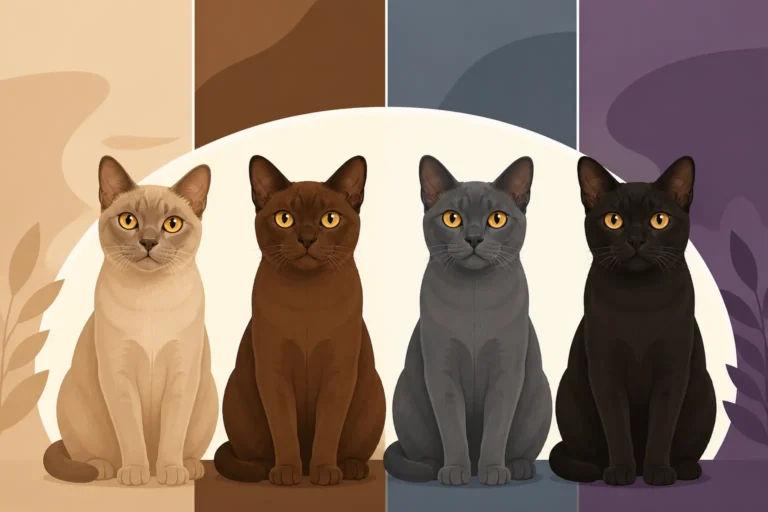
Traditionally, the Burmese breed is recognized in four primary colors, though some registries and European lines may acknowledge additional variations. These four classic colors are Sable, Champagne, Blue, and Platinum. Sable, often called brown in European standards, is the original and most common color. It’s a rich, warm, dark brown, almost black, but with subtle hints of red or gold, especially in sunlight. What a Sable Burmese Looks Like captures this beautifully.
Champagne is a warmer, lighter brown, often described as a warm beige or honey color. It has a delightful creamy undertone, making it look incredibly soft. Blue Burmese are a stunning medium blue-grey, with a subtle silvery sheen that makes their coat shimmer. Finally, Platinum is the lightest of the four, a delicate pale grey or lilac color, often with a slight pinkish cast. All these colors have a "pointed" gene at play, meaning the points (ears, face, paws, tail) are slightly darker than the body, though the contrast is much softer than in a Siamese. This is because How a Burmese's Color Gene Reacts to Temperature means the gene doesn't express as strongly. The depth and evenness of these colors are crucial to the standard, with clear, rich tones preferred. You can explore all these beautiful shades in The Four Colors a Burmese Comes In.
The Unique Texture and Lack of Undercoat
The Burmese coat is renowned for its unique texture: it’s incredibly short, fine, and has practically no undercoat. This is what gives it that characteristic "satin" or "silk" feel when you run your hand over it. Unlike many cat breeds with dense, fluffy fur, the Burmese coat lies exceptionally close to the body, accentuating their muscular contours. This lack of undercoat is also why they are surprisingly low-shedding compared to many other breeds, which is often a pleasant surprise for owners.
The absence of a thick undercoat means that the Burmese can feel the cold more keenly than other cats, and you'll often find them snuggled deep under blankets or seeking out the warmest spot in the house (or on your lap!). This smooth, almost painted-on quality of their coat is not just about aesthetics; it’s a direct result of their genetic makeup and is a defining characteristic of the breed. Any coat that is long, rough, or has a noticeable undercoat would be a significant fault against the standard.
Seasonal Color Changes and Maintenance Needs
Interestingly, a Burmese cat's coat color can subtly change with temperature and age. Kittens are typically born lighter and darken as they mature, with their true adult color settling in by around a year or two. Additionally, living in a cooler environment can cause their points to darken slightly, making the contrast a bit more pronounced, while warmer temperatures might lighten their overall hue. This natural variation is part of their charm and is perfectly acceptable within the breed standard.
When it comes to maintenance, the Burmese coat is wonderfully low-fuss. Their short, sleek fur requires minimal grooming. A weekly wipe-down with a soft chamois cloth or a grooming glove is usually all that’s needed to remove loose hairs and enhance their natural sheen. This simple routine also doubles as a bonding experience, which most Burmese absolutely adore, seeing it as more attention! You can easily find suitable grooming products at pet stores or online retailers like Chewy. Beyond that, occasional nail trims and dental care are important, but their coat itself is remarkably self-maintaining.
Movement and Temperament: Beyond the Physical Traits
While breed standards often focus on physical attributes, the way a Burmese moves and its inherent temperament are equally, if not more, important to the breed's identity. A Burmese should not just look the part; it should act the part, embodying the lively, affectionate, and intelligent spirit that defines them.
The Graceful Gait of a Burmese
A well-constructed Burmese cat moves with a distinctive elegance and power that belies its compact form. Their gait should be fluid, graceful, and athletic, reflecting their strong musculature and balanced body. When they walk, their steps are deliberate and confident, their bodies moving as one cohesive unit. They carry themselves with an alert dignity, but always ready to spring into action.
Observe a Burmese in motion, and you'll notice how easily they glide, demonstrating impressive agility and coordination. Whether they are gracefully leaping onto a high shelf or darting across the room in pursuit of a toy, their movements are a testament to their athletic build. They are never clumsy or awkward; instead, they exhibit a powerful, lithe quality that is a joy to behold. This combination of strength and grace in movement is an important, though often unwritten, part of what makes a Burmese truly conform to its standard.
How Temperament Is 'Judged' Informally by the Standard's Intent
While a cat's personality isn't something judges can score on a rubric, the breed standard implicitly values a certain temperament. For the Burmese, this means a cat that is outgoing, affectionate, and incredibly people-oriented. They are famous for their "dog-like" personalities, often referred to as "Velcro cats" because they stick so close to their human companions. They thrive on interaction and attention, and a shy or aloof Burmese would be considered highly uncharacteristic of the breed. This is why Why the Burmese Is Called a Dog in a Cat's Body is such a common descriptor.
A well-bred Burmese should be confident and friendly, readily engaging with strangers and showing curiosity rather than fear. They are known for their playful nature, remaining kittenish well into their senior years. This vibrant, engaging personality is not just a pleasant bonus; it's deeply ingrained in the breed's history and genetic makeup. A Burmese that hides under the furniture or is aggressive would not only be a poor representative of the breed but would also indicate a possible issue with breeding or socialization.
The Importance of a Well-Socialized Burmese
Part of achieving the ideal Burmese temperament is ensuring proper socialization from a young age. A reputable breeder will handle kittens frequently, expose them to various sights, sounds, and people, and raise them in a stimulating home environment. This early socialization is crucial for developing the confident, outgoing nature that is expected of the breed. A Burmese kitten that has been properly socialized will grow into an adult that is not just tolerant of human interaction, but actively seeks it out.
They love being involved in family life, often "helping" with chores or simply observing from a comfortable perch on a shoulder or lap. Their trusting and affectionate disposition means they generally get along well with children and even friendly dogs, often forming strong bonds with other household pets. This sociable nature is a key part of their appeal and a testament to their well-rounded character. An unsocialized Burmese, no matter how physically perfect, would be missing a fundamental aspect of the breed's standard. They really are the "Velcro cat" of the cat fancy, thriving on constant companionship.
Common Faults and Disqualifications: What Breeders Strive to Avoid
Breed standards aren't just about listing desirable traits; they also clearly define what constitutes a fault or a disqualification. These guidelines are crucial for breeders to prevent undesirable characteristics from becoming prevalent within the gene pool, helping to maintain the health and integrity of the breed.
Deviations in Color and Pattern
Color is a significant part of the Burmese standard, and deviations can range from minor faults to outright disqualifications. For instance, any color outside the accepted Sable (Brown), Champagne, Blue, or Platinum would be a fault or disqualification, depending on the registry. Red or cream markings, or an unapproved pattern like tabby stripes (except for very faint "ghost" markings in kittens), are generally not accepted. The distinct pointing pattern, while subtle in the Burmese, should still be discernible, with a slightly darker mask, ears, feet, and tail compared to the body.
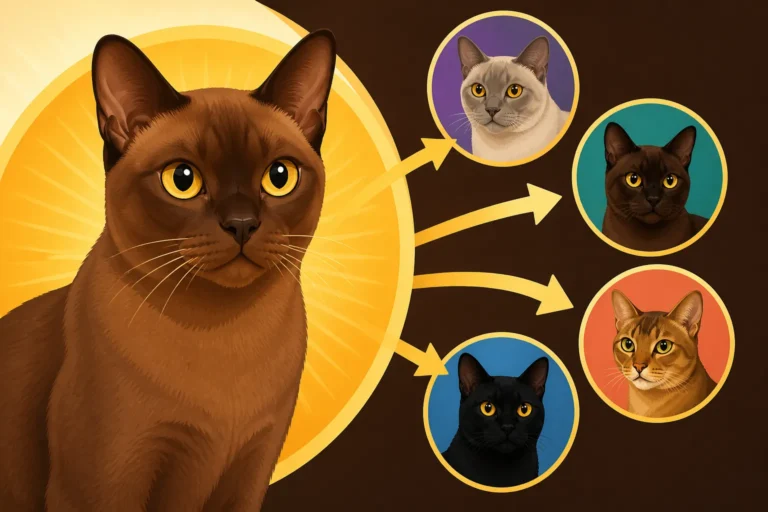
The clarity and depth of color are also important. A washed-out or muddy color, or uneven shading (aside from the natural pointing), would be considered a fault. For example, a Sable Burmese should have a rich, warm brown, not a dull grey-brown. Any white spots or lockets on the body (other than small patches on the chin or chest that some standards tolerate to a minimal degree) are typically considered disqualifying. These strict color guidelines ensure that the Burmese maintains its unique and beautiful coat presentation.
Structural Imperfections
Structural faults relate to any physical characteristic that deviates from the ideal body type, head shape, or proportions. These can include a head that is too long or too narrow, a muzzle that is excessively pointed or too flat, or eyes that are small, close-set, or of an incorrect color (green eyes are a definite fault). Ears that are too large, too small, or incorrectly set on the head would also be considered structural imperfections.
On the body, a Burmese that is too slender, delicate, or lacking in the characteristic musculature and compact feel would be faulted. Issues with the tail, such as kinks, knots, or an abnormal shortness, are also clear faults. More severe structural problems, like severe deformities of the spine or limbs, or an obvious underbite or overbite, would lead to disqualification. Breeders meticulously check these details in their kittens and breeding cats to ensure they are producing healthy, well-structured animals that conform to the breed's physical ideal.
Health Concerns Related to Standard Conformance
Beyond purely aesthetic faults, some deviations from the standard can also be indicative of underlying health concerns. For instance, extreme features, such as an overly flattened muzzle, could potentially lead to breathing difficulties, though this is less common in the Burmese than in some other brachycephalic breeds. However, responsible breeders are always mindful of the potential for health issues linked to extreme interpretations of the standard.
Genetic conditions are also a critical area where breeders strive for conformance away from a "standard" of disease. Certain inherited conditions, like hypokalemia or Burmese Head Defect, are present in the breed, and ethical breeders use DNA testing to avoid perpetuating these problems. While not directly a "fault" in appearance, ensuring that a cat is genetically clear of these diseases is paramount to maintaining the health standard of the breed. This is why a breeder must be transparent about their testing protocols. You can find more information on these crucial health checks in Which Tests Belong on a Burmese DNA Panel and What a Burmese Breeder Must Test Before Any Mating.
Finding a Reputable Breeder: Ensuring Standard-Compliant Kittens
When you decide to welcome a Burmese into your home, finding a reputable breeder is the most critical step. A good breeder doesn't just produce kittens; they dedicate themselves to preserving the breed's health, temperament, and adherence to the established standards. They are passionate advocates for the Burmese, and their practices reflect a deep understanding and respect for the breed.
Questions to Ask About Pedigree and Parentage
A reputable breeder will be transparent and proud to discuss the pedigree and parentage of their kittens. Don't be shy about asking questions! You should inquire about the lineage of both the mother (queen) and father (stud), specifically looking at how many generations are listed in the pedigree and whether any known health issues appear in the lines. A good breeder will be able to talk about the physical traits and temperaments of the parents and even grandparents, showing how they align with the breed standard.
Ask to see the parents, if possible. Observing the breeding cats will give you a direct insight into the physical characteristics and demeanor that their kittens are likely to inherit. A breeder committed to the standard will prioritize breeding cats that not only meet the aesthetic requirements but also possess excellent health and the classic Burmese outgoing personality. They should also be able to explain how their breeding choices aim to improve the breed, not just produce more kittens.
Understanding Health Guarantees and Genetic Testing
This is where a reputable breeder truly stands out. They will be proactive about genetic testing for known Burmese health conditions. Crucially, this includes testing for conditions such as Hypokalemia, Feline GM2 Gangliosidosis, and sometimes even cardiac screening for HCM. They should readily provide documentation of these tests for both parent cats. A breeder who dismisses genetic testing or claims their lines are "clear" without proof is a red flag. Health guarantees are also a hallmark of an ethical breeder. They typically offer a health guarantee for a certain period against congenital or hereditary diseases. This isn't just a legal document; it's a testament to their confidence in the health of their kittens and their commitment to the welfare of the breed. You should also understand what a Burmese contract bans, for instance, What a Burmese Contract Bans Crossing the Two Types, which helps maintain the integrity of the two types.
It's vital to discuss what this guarantee covers and what steps you would need to take if a health issue arises. This shows their dedication to placing healthy kittens in loving homes. Remember, the goal is not just a beautiful cat, but a healthy companion that will share many years with you. Some breeders even provide a kitten starter pack, which might include samples of the food the kitten is accustomed to, often from quality brands available at retailers like Chewy, ensuring a smooth transition.
Observing the Cattery Environment
The environment where the kittens are raised speaks volumes about a breeder's practices. A reputable breeder will have a clean, safe, and stimulating home environment where the kittens are an integral part of the family. Kittens should be raised underfoot, not isolated in cages or separate rooms. This exposure to normal household sights and sounds is crucial for developing the confident, sociable temperament that defines the Burmese.
When you visit (or conduct a virtual tour if distance is a factor), observe the cats and kittens. Are they clean, well-fed, and playful? Do they appear healthy and alert? Are they comfortable interacting with the breeder and with you? A good cattery should not smell strongly of cat urine, and the cats should not appear fearful or overly shy. The breeder should also ask you plenty of questions – about your living situation, your experience with cats, and your ability to provide a loving home. This reciprocal questioning is a sign of a responsible breeder who cares deeply about where their kittens are placed. This attention to detail in their living conditions ensures that the kittens are well-adjusted and ready for their new homes.
Comparing American and European Burmese Standards
Understanding the nuances between the American and European Burmese standards is key to appreciating the diversity within this beloved breed. While they share a common ancestor and many fundamental traits, their divergence has led to distinct physical ideals.
| Feature | American Burmese Standard | European Burmese Standard |
|---|---|---|
| Head Shape | Distinctly rounded, broad between ears, full cheeks. | Modified wedge, slightly longer than broad, gentle curve. |
| Muzzle | Short and broad with a definite stop. | Medium length with a gentle dip, proportional. |
| Eyes | Large, round, set far apart, brilliant gold/yellow. | Large, ranging from round to oriental, brilliant gold/yellow. |
| Body Type | Compact, cobby, very muscular, "brick wrapped in silk." | Moderate length, athletic, well-muscled, elegant. |
| Bone Structure | Substantial, heavy. | Solid but can appear more refined. |
| Legs | Medium length, well-boned, proportionate to cobby body. | Medium length, strong, proportionate to moderate body. |
| Tail | Medium length, thick at base, tapers to rounded tip. | Medium length, tapers to rounded or blunt tip. |
| Accepted Colors | Sable, Champagne, Blue, Platinum. | Brown (Sable), Blue, Chocolate (Champagne), Lilac (Platinum), Red, Cream, Tortie variations. |
This table provides a snapshot of the primary differences, highlighting how each standard guides breeders toward a specific aesthetic, even while maintaining the core Burmese essence of affection and vibrancy.
Disclaimer
This article is for general informational purposes only and does not constitute professional advice. Laws, prices and regulations vary by location and change over time. Consult a qualified professional for guidance on your specific situation.