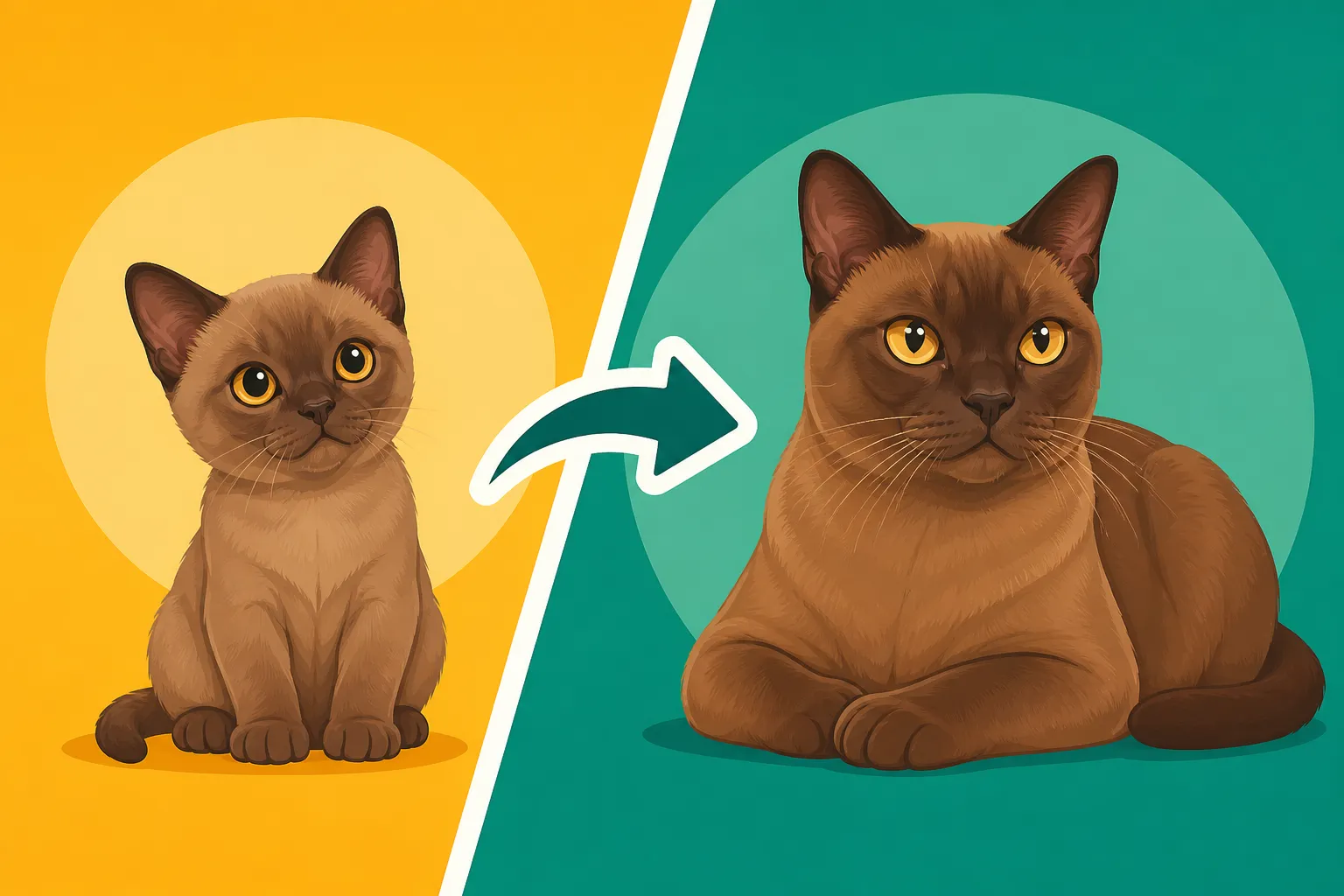
When a Burmese Stops Growing
A Burmese kitten can look nearly grown long before its body has finished filling out, which makes it easy to wonder whether growth has stalled—or whether a naturally compact cat is simply developing at its own pace. This guide explains when Burmese cats usually reach adult size, what changes afterward, and how to track healthy growth without relying on the scale alone.
When a Burmese cat usually stops growing
Height and length often settle before body condition does
Most Burmese cats reach close to their adult height and length around their first birthday. That doesn’t mean every part of the cat is finished developing on the same schedule. During the following months, a young Burmese may continue to gain muscle, broaden through the chest, and develop the sturdy, substantial feel the breed is known for.
That gradual filling-out can be confusing if you expect a kitten to grow steadily in every direction. A Burmese may seem to stop getting taller, then look a little more solid as its frame matures. The timing varies from cat to cat, and males may take longer than females to finish developing. The best answer to When a Burmese Reaches Full Size is therefore a general window, not a birthday when every Burmese suddenly becomes fully grown.
Burmese cats are often described as compact or medium-sized, but their bodies can feel heavier than their appearance suggests. They are muscular, and a short, close-lying coat makes their shape easy to see. A young cat that looks sleek and small can still be growing into its adult frame. For a closer look at the breed’s build, see How Big an Adult Burmese Gets.
Muscle and maturity may continue after the first year
Many Burmese cats continue to mature after their first birthday, with their adult proportions becoming more apparent over the next several months. Some may keep filling out until around 18 months or even close to two years. This does not mean they should keep gaining weight continuously. A healthy adult should settle into a stable body condition rather than become progressively heavier simply because the calendar says it is still young.
Think of a cat named Miso who is one year old and still looks narrow beside an older Burmese in the household. If Miso eats normally, plays, maintains a healthy coat, and grows gradually, that difference alone may not signal a problem. A kitten’s family history, sex, diet, health, and individual development all influence how quickly it reaches its mature shape.
Growth is also not the same thing as weight gain. A kitten can become longer and more muscular while its weight changes only modestly. Conversely, a cat can gain weight without growing in a healthy way. That is why a scale reading needs to be considered alongside body shape, muscle, appetite, and activity—not treated as a verdict by itself.
How to tell growth from weight gain
Read body shape as well as the number on the scale
Because Burmese cats are muscular, their weight can surprise people who assume a cat of that size should weigh less. The number alone cannot tell you whether your cat is lean, growing, or carrying excess fat. Look at the whole body: you should generally be able to feel the ribs under a light layer of tissue, and the waist should be visible when you look down from above. A belly pouch can be normal, but a steadily expanding abdomen deserves attention.
This is where owners can get caught between two understandable worries: underfeeding a growing kitten or overfeeding a cat that is already nearing adult size. A vet can assess body condition and help interpret weight in light of your cat’s frame. For more on why size can be misleading, read Why a Burmese Weighs More Than It Looks and Why a Burmese Feels Heavier Than It Looks.
A useful record is more informative than an occasional guess. Weigh your Burmese consistently, ideally on the same scale and at a similar time of day. For a small kitten, weigh yourself while holding the cat, then weigh yourself alone and subtract the difference. Record the date and result. If you use a pet or kitchen scale, choose one that reads small changes reliably and place it on a hard, level surface.
Use a growth record, not a breed-average target
There is no single adult weight that every Burmese should reach. Sex, body frame, ancestry, neuter status, and individual muscle development all matter. A healthy female may be smaller than a healthy male, while two cats of the same sex can still have different natural builds. Breed averages can be useful background, but they should not be used as a strict target for an individual cat.
| What to track | What it can tell you | What to do with the information |
|---|---|---|
| Weight over time | Whether growth is steady, stalled, or unexpectedly rapid | Share the trend with your vet rather than judging one reading |
| Waist and rib feel | Whether your cat is becoming leaner or carrying extra fat | Ask your vet to assess body condition if you are unsure |
| Appetite and energy | Whether your cat seems well and active during development | Note sudden changes, especially alongside weight changes |
| Meal amounts and treats | Whether daily intake has shifted as growth slows | Measure portions and review them with your vet |
| Vomiting, diarrhea, or other symptoms | Whether illness could be affecting growth or weight | Contact your vet if symptoms persist or your cat seems unwell |
A monthly weigh-in is often easier to interpret than checking every day, since normal hydration and meals can cause small fluctuations. For kittens, your vet may recommend more frequent monitoring, particularly if the kitten is very young, small, or recovering from illness. If a steady record shows a sudden drop, a prolonged plateau in a kitten, or rapid gain, contact the clinic and ask whether an examination is appropriate.
Feeding a Burmese as growth slows
Revisit portions when kitten growth tapers off
A young kitten’s energy needs change as it matures. The portions that suited a rapidly growing kitten may become too generous once growth slows, so don’t assume the feeding amount should stay unchanged indefinitely. At the same time, don’t sharply reduce food just because your Burmese looks nearly adult. Growth, activity, body condition, and health all affect what an individual cat needs.
Measure food rather than estimating it by eye. A scoop can deliver different amounts depending on its shape, the food, and how full it is. Weighing portions makes it easier to see what your cat actually eats and to make small, sensible adjustments with veterinary guidance. The article Why a Burmese's Portion Is Weighed, Not Scooped explains why a consistent measure is more useful than repeatedly topping up a bowl.
Treats count too. A cat may seem to eat only its usual meals while small extras from family members add up across the day. If you order food or feeding supplies from Chewy, keep the packaging so you can check the feeding guidance and ingredient information, then confirm the right amount with your vet. Product labels are a starting point, not a personalized growth plan.
Avoid trying to make a cat reach a preferred size
Burmese cats naturally vary in size, and feeding extra food will not make a cat taller once its frame has matured. It can, however, encourage unhealthy weight gain. Likewise, restricting a growing kitten’s food to create a smaller adult cat is not a safe approach. Kittens need appropriate nutrition for development, and changes to their diet should be gradual and guided by a veterinary professional.
If your cat lives with another pet, separate meals may help you know how much each one eats. A Burmese that finishes another cat’s bowl can appear to have a normal appetite while quietly taking in much more than intended. Make a note of the portions, treats, and any food theft before discussing weight with your vet. If you use Chewy to replenish supplies, keeping a simple feeding log alongside your order notes can make it easier to notice when a food or portion changed.
Switching from kitten food to adult food is another point where owners can feel unsure. There is no need to change foods solely because the cat has reached a particular weight. Ask your vet when the transition makes sense for your cat’s age, condition, and diet. Change foods gradually, and watch for a refusal to eat or digestive upset. If your Burmese has a medical condition or a history of poor growth, follow the clinic’s specific plan rather than a general feeding guide.
When a growth concern needs a vet
Know the difference between a normal pause and a problem
A short pause in visible growth is not automatically a sign of illness. Kittens do not grow in a perfectly even line, and an adult Burmese may maintain a stable weight while becoming more muscular or changing body shape. What matters is the pattern and whether your cat is otherwise acting normally.
Call your vet if a kitten stops gaining over a period when it should still be growing, loses weight, seems unusually tired, eats less, or has ongoing vomiting or diarrhea. A sudden increase in thirst or urination, a noticeably enlarged belly, difficulty chewing, or a clear change in play and movement also deserves attention. These signs do not point to one specific cause, but they are reasons to get professional advice instead of adjusting food repeatedly at home.
Bring your weight record and a clear description of what has changed. Include the food, approximate daily amount, treats, appetite, stool changes, and when you first noticed the concern. If you have several weeks of measurements, that history can be more helpful than saying the cat “seems smaller” or “feels heavier.” Your vet can examine your Burmese and decide whether further checks are needed.
A simple routine makes growth easier to judge
You do not need a complicated monitoring system. Choose a regular day for weighing, write down the result, and occasionally check body shape and how the ribs feel. Keep the feeding amount consistent unless your vet recommends a change. For a kitten, bring the record to routine appointments so the vet can compare progress with the cat’s overall development.
If weighing at home is stressful, don’t turn it into a struggle. Try placing the scale in a familiar spot and rewarding calm behavior, or ask the clinic to weigh your cat during visits. A Chewy order may help you keep everyday feeding supplies on hand, but neither a product label nor a target weight can replace a veterinary assessment when growth seems unusual.
Most Burmese cats approach their adult height and length around a year old, then continue to mature and fill out afterward. The practical goal is not to make your cat match a number or a picture of the breed. It is to see steady development, maintain a healthy body condition, and notice meaningful changes early.
Disclaimer
This article is for general informational purposes only and does not constitute professional advice. Laws, prices and regulations vary by location and change over time. Consult a qualified professional for guidance on your specific situation.