What a Burmese Bred to a Siamese Produces
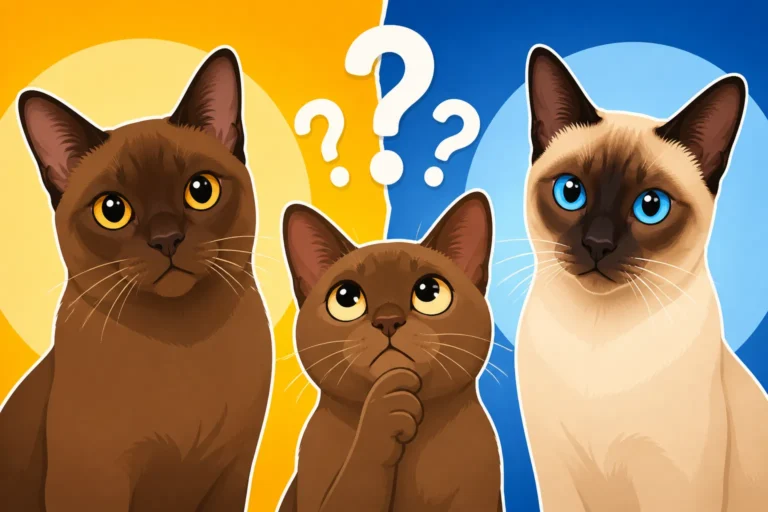
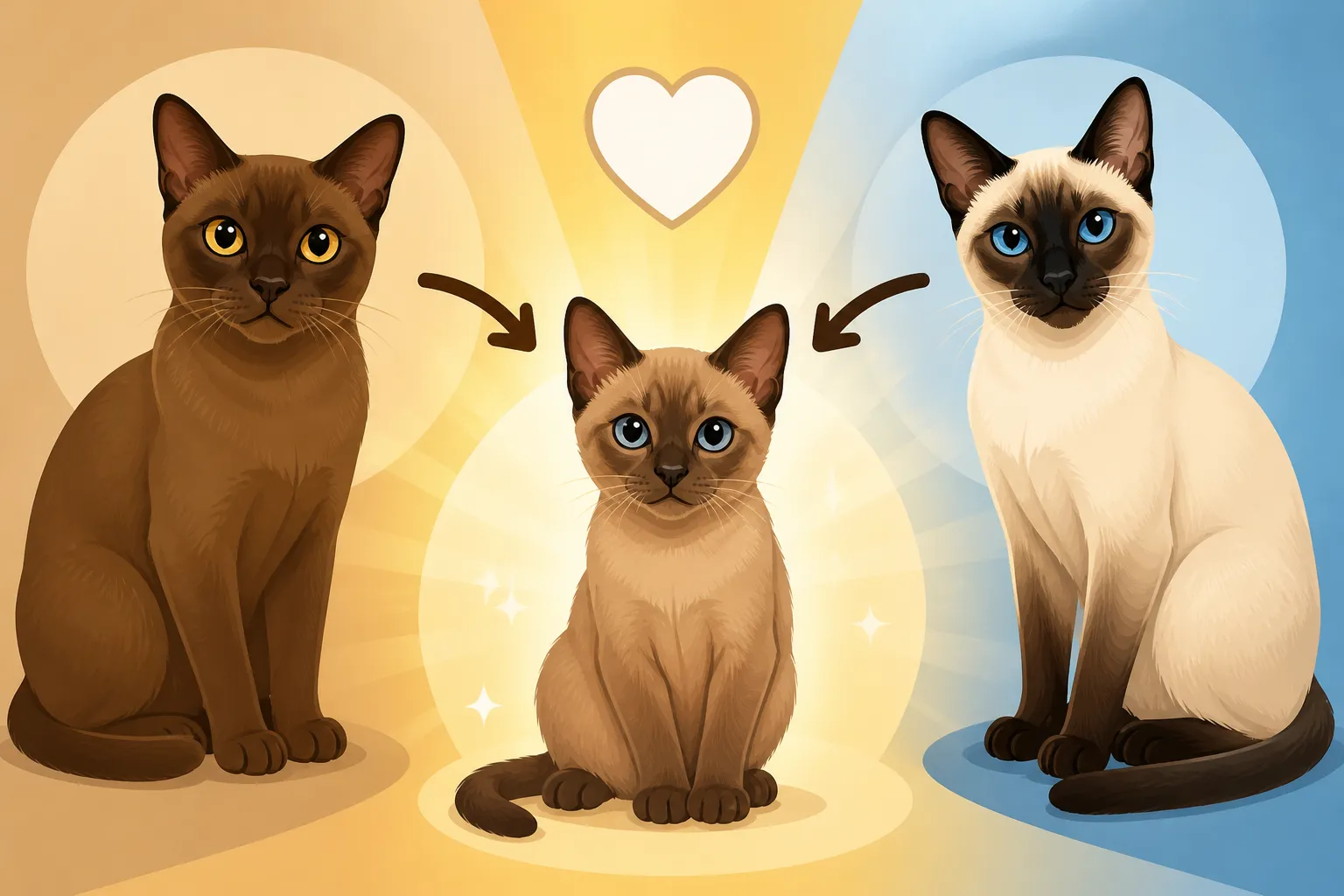
When a Burmese is bred to a Siamese, the kittens will usually inherit one Burmese color-point gene variant and one Siamese variant. That combination is known as mink and is the classic genetic pattern associated with the Tonkinese. Here’s what that means for coat color, eye color, kitten-to-kitten variation, and whether the kittens can be registered as a particular breed.
What a Burmese and Siamese cross usually produces
The short answer is a mink-patterned kitten
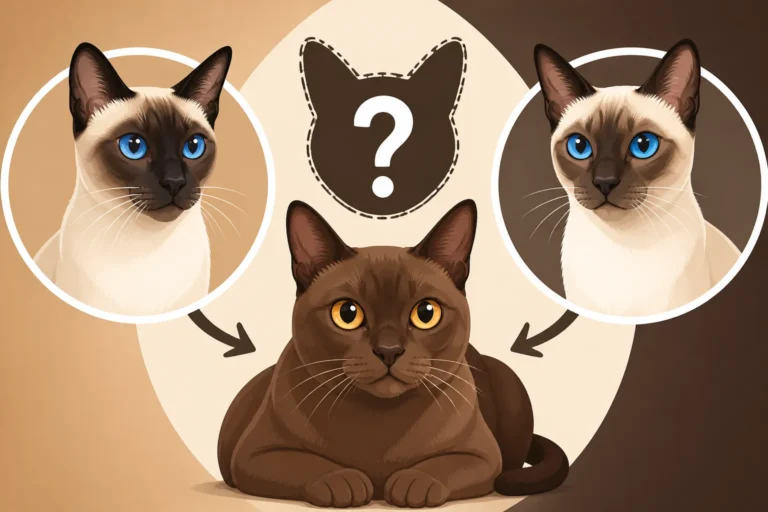
Burmese and Siamese cats carry different versions of a gene that affects how pigment develops in the coat. A Burmese typically has two Burmese variants, while a Siamese typically has two Siamese variants. Each parent passes one variant to each kitten.
If both parents have the expected genetic makeup, every kitten in the litter inherits one Burmese variant and one Siamese variant. This combination is called mink. It is the familiar intermediate pattern associated with Tonkinese cats: generally darker over the body than a typical Siamese, but not uniformly colored in the way a Burmese may appear.
That is the expected result at this particular color gene, not a promise that every kitten will look identical. Other genes influence coat color and shade, and kittens can still look quite different from one another. For a closer look at the genetics behind the combination, see What Happens When Burmese and Siamese Genes Meet.
Why the kittens are not simply half Burmese and half Siamese in appearance
It is tempting to imagine that the kittens will look halfway between their parents in every feature. Inheritance does not work like blending paint. The mink coat pattern comes from the specific combination of the Burmese and Siamese variants, while other traits—such as body shape, head shape, coat shade, and personality—are influenced by additional genes and by the cats’ wider family backgrounds.
A kitten may have a more Burmese-looking build or a more Siamese-looking face without changing its mink genotype. Likewise, a kitten’s coat may look darker or lighter than a littermate’s even though both inherited the same two variants at the relevant gene.
The word “mink” describes a genetic coat pattern. It does not mean every kitten will match a single ideal shade, and it does not by itself prove that a kitten has a registered Tonkinese pedigree.
How mink differs from Burmese and Siamese patterns
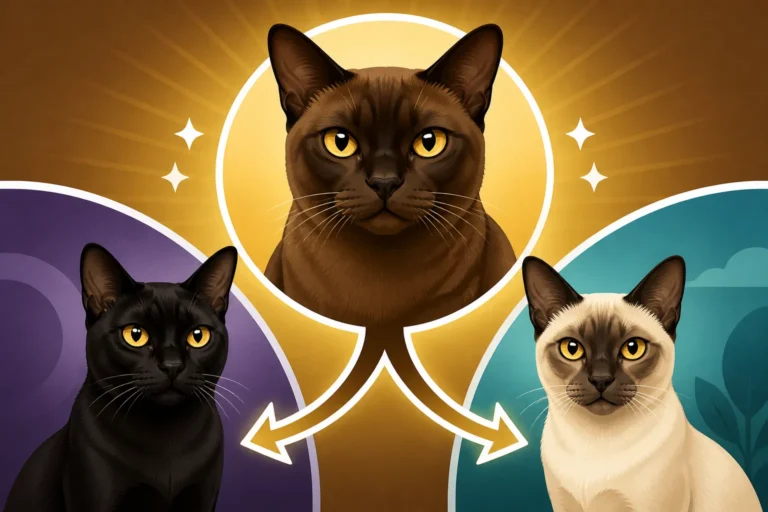
The coat patterns are related, but they are not interchangeable. A Burmese is generally more evenly colored across the body. A Siamese has more pronounced contrast between a lighter body and darker points on the face, ears, legs, and tail. Mink commonly falls between those appearances, with some body shading and less dramatic contrast than many Siamese cats.
Eye color can also help explain the difference. Mink cats are often associated with aqua or blue-green eyes, while Siamese cats are known for blue eyes and Burmese cats for yellow to gold eyes. There is natural variation, though, and appearance alone cannot establish a cat’s genetic makeup.
| Parent combination | Expected variants at the color gene | Common pattern description |
|---|---|---|
| Burmese × Siamese | One Burmese variant and one Siamese variant | Mink |
| Burmese × Burmese | Two Burmese variants | Burmese pattern |
| Siamese × Siamese | Two Siamese variants | Siamese pointed pattern |
This table describes the expected outcome when the parents’ genetic status is known and typical for their breed. A cat’s breed name alone is not a genetic test, so unusual ancestry or an uncertain pedigree can change what a litter inherits.
What the kittens may look like as they grow
Coat shade can shift with age
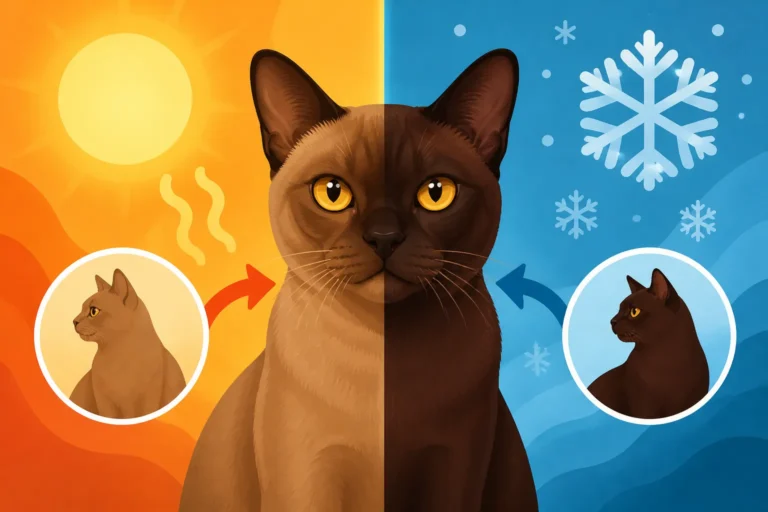
Burmese kittens are often born paler than the color they develop as adults, and mink kittens may also change in appearance as their coats mature. The final shade can take time to become clear. Temperature-sensitive color genes affect pigment development, so cooler areas of the body may become darker than warmer areas.
This can make early kitten photos misleading. A young kitten may seem almost uniformly pale, then develop more noticeable shading on its face, ears, paws, or tail as it grows. If you are comparing siblings, look at them in similar lighting and at similar ages rather than relying on a single photograph.
For more on how the Burmese color gene works, read The cb Allele Is What Makes a Burmese Brown and Why a Burmese Is Darker at the Extremities.
Littermates can still have different overall appearances
Even when all kittens inherit the same Burmese-Siamese combination at the color gene, they inherit different mixes of other genes from their parents. One kitten might have a darker coat, another a more contrasting pattern, and another a head shape or body type that seems to favor one side of the family.
That is why a breeder or seller should not claim that a kitten’s complete breed identity can be determined by its coat color alone. Photographs can help you see the kittens, but they cannot replace clear parentage information, records, and appropriate genetic testing where relevant. If you are looking at a cat described as a Burmese, a Siamese, or a Tonkinese, ask what its pedigree actually records.
A pointed-looking kitten is not automatically a Siamese
Some people see darker extremities on a mink kitten and call it “pointed.” That description can be useful informally, but it does not automatically make the kitten a Siamese. The inherited color combination matters, and a mink pattern is distinct from the typical Siamese pattern.
A breeder may also use familiar color words loosely in an advertisement. Ask whether the term is being used as a casual description of appearance or as a claim about pedigree and registration. The distinction matters if you are buying a kitten for a particular breed, planning to show it, or considering future breeding. See Whether a Burmese Can Produce a Pointed Kitten for more detail about how these patterns can be confused.
Are the kittens Tonkinese
Mink is associated with the Tonkinese, but registration is separate
The Burmese-Siamese combination is central to the history and appearance of the Tonkinese. In everyday conversation, people may describe a mink-patterned kitten from Burmese and Siamese parents as Tonkinese-type. But a particular kitten is not automatically a pedigreed or registrable Tonkinese just because it has a mink coat.
Breed registration depends on the parents’ documented pedigrees and the rules of the relevant registry. A registry may have specific requirements about which cats can be bred together and how offspring are recorded. Those requirements can differ, so anyone seeking a registered kitten should check the applicable registry’s current rules rather than relying on a seller’s label.
The Burmese has also contributed to other breeds, including the Tonkinese and the Bombay. The Bombay and the Tonkinese Came Out of the Burmese gives a broader overview of those breed histories.
Ask for records, not just a breed name
If someone says a litter is Burmese-Siamese, ask to see the parents’ paperwork and clarify how the kittens will be described in their records. Useful questions include:
- What breeds and registered names are listed for both parents?
- Can the breeder show the pedigrees or registration documents?
- How will the kittens be recorded with the relevant registry, if they are eligible?
- Has the breeder tested or confirmed the parents’ coat-color genetics?
- What health screening and veterinary care have the kittens received?
A thoughtful breeder should be able to explain the mating clearly and distinguish a kitten’s appearance from its formal pedigree status. If the answers are vague, or the seller treats “mink,” “Tonkinese,” and “half Burmese, half Siamese” as identical registration claims, pause and ask for clarification before making a decision.
The breed histories explain why the cross is familiar
The Burmese and Siamese have a long history of influencing one another and related breeds. Early breeding work involving Burmese-type and Siamese cats helped establish the genetic and visual distinction that people now associate with the Tonkinese. That history is interesting, but it should not be confused with a modern breeder’s documentation for a particular litter.
For historical context, The Burmese Began With One Cat Called Wong Mau and Why the First Burmese Was Bred to a Siamese explain how early breeding shaped the Burmese and related cats. The present-day American and European Burmese types also have their own breed histories and standards, as discussed in How the American and European Burmese Split.
What happens if the kittens are bred later
A mink cat bred back to a Burmese
If a mink cat with one Burmese variant and one Siamese variant is bred to a Burmese with two Burmese variants, each kitten gets a Burmese variant from the Burmese parent. From the mink parent, a kitten has a chance of receiving either the Burmese or Siamese variant.
Under those expected genetic assumptions, the litter could include kittens with two Burmese variants and kittens with one of each variant. In simple terms, the first group would be Burmese-patterned at that color gene, and the second would be mink. Other inherited traits and registry rules still matter, and this genetic prediction is not a complete description of breed eligibility.
A mink cat bred back to a Siamese
If the mink cat is bred to a Siamese with two Siamese variants, every kitten gets a Siamese variant from that parent. The mink parent can pass either its Burmese or Siamese variant, so the kittens may inherit either the mink combination or two Siamese variants.
Again, that is a prediction about one gene, not a guarantee about every aspect of appearance or registration. A cat that looks strongly Siamese is not necessarily a registered Siamese, and an appearance-based guess should not replace a documented pedigree or genetic result.
Two mink cats bred together
If both parents are confirmed to have one Burmese and one Siamese variant at the relevant gene, their kittens may inherit two Burmese variants, one of each, or two Siamese variants. The familiar expected proportions for this single gene are one quarter Burmese-patterned, one half mink, and one quarter Siamese-pointed.
Those proportions describe probabilities across many kittens, not a promise for a small litter. A litter of two or three kittens could easily have a different mix by chance. More importantly, a color-gene prediction is not a recommendation to breed. Planned matings need to take account of health, temperament, pedigree, genetic diversity, and the rules of the relevant registry.
Responsible breeding and choosing a kitten
Coat genetics are only one part of a responsible mating
A Burmese-Siamese cross can be genetically interesting, but coat color should not be the only reason to breed two cats. Breeders need to consider each cat’s health history, inherited risks, temperament, age, and suitability for breeding. A kitten’s attractive mink coat cannot compensate for missing health information or poor welfare practices.
If you are evaluating a breeder, ask what health checks are appropriate for the cats in that specific line and request records rather than accepting a general assurance that the parents are healthy. The Burmese breeding checklist in What a Burmese Breeder Must Test Before Any Mating is a useful starting point for understanding why testing and documentation matter.
Keep the kitten’s homecoming practical
Once you have confirmed the kitten’s records, prepare a calm space where it can settle and eat the food it is already used to. If you are buying supplies through a retailer such as Chewy or from a local pet shop, focus on useful basics: a secure carrier, familiar food, litter, bowls, scratching surfaces, and a quiet sleeping spot. The coat pattern does not call for special care simply because it is mink.
If the kitten will be joining other cats, plan a gradual introduction and give each cat room to eat and use the litter box without competition. Separate bowls and litter trays can make the transition easier to manage; retailers such as Chewy may be one place to compare ordinary household supplies, but the important part is setting up the space before the kitten arrives.
During the first days, avoid changing food abruptly just because the kitten has moved homes. Keep a note of what it eats and how it settles, and ask the breeder or veterinarian about any concerns. If you use Chewy or another retailer for food, match the kitten’s current diet first and make any later change gradually with veterinary guidance.
A clear answer to take away
When a typical Burmese is bred to a typical Siamese, the kittens are expected to inherit one Burmese color variant and one Siamese variant, producing the mink pattern associated with Tonkinese cats. Their exact shades and physical features can vary, and formal breed or registry status depends on documented parentage and registry rules—not coat appearance alone.
Disclaimer
This article is for general informational purposes only and does not constitute professional advice. Laws, prices and regulations vary by location and change over time. Consult a qualified professional for guidance on your specific situation.