Which Siamese the First Burmese Was Bred To
It's easy to look at the sleek, beautiful Burmese cat today and imagine it's always been a distinct breed, perfectly formed. But the truth is, the very existence of the Burmese is a fascinating story rooted in a crucial, deliberate breeding experiment involving one enigmatic cat and a specific Siamese. For those who love history and genetics, understanding this initial pairing is key to appreciating the foundation of this beloved breed. This guide will uncover which Siamese played this pivotal role in the Burmese's origin.
The Enigmatic Wong Mau and Dr. Thompson's Vision
The Arrival of Wong Mau
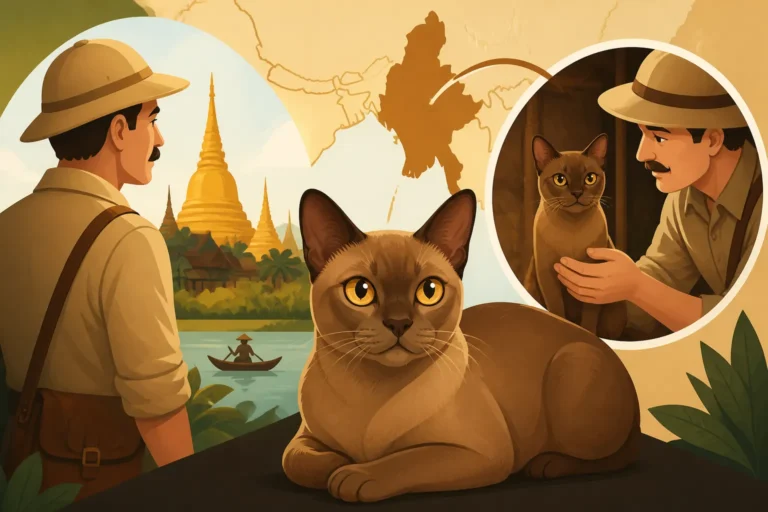
Imagine the cat world in the 1930s. Most "fancy" cats were distinctly known breeds like the Persian or the Siamese, with very clear characteristics. Then, a U.S. Navy doctor named Joseph Thompson returned from Rangoon, Burma, with a small, dark brown female cat unlike anything commonly seen. This cat, named Wong Mau, wasn't a Siamese, despite some superficial similarities in her lean build. Her coat was a rich, sable brown, darker on her back but with a noticeable, though subtle, lightening towards her belly and legs. Her eyes were a stunning gold. She was compact and muscular, feeling much heavier than her size suggested—a true "brick wrapped in silk," as the breed would later be called.
The problem was, what was she? People were used to the dramatic points of the Siamese, or the long, flowing coats of the Persians. Wong Mau was an enigma. Was she simply a darker variety of Siamese? A new mutation? Or something else entirely? Dr. Thompson, being a scientifically minded individual, knew that mere observation wouldn't be enough. He understood that to truly classify Wong Mau and determine if she represented a new breed, he needed to embark on a controlled breeding program. This wasn't about simply making more kittens; it was about unraveling a genetic mystery.
The Scientific Approach to Breeding
Dr. Thompson wasn't just a cat fancier; he approached Wong Mau's mystery with the rigor of a scientist. He enlisted the help of geneticists Dr. Clyde Keeler and Dr. Gordon Davis, along with fellow cat breeder Virginia Cobb. Their goal was clear: to systematically understand Wong Mau's genetic makeup. To do this, they needed to breed her to a cat whose genetics were already well-understood, acting as a control. The Siamese was the logical choice for this experiment.
Why the Siamese? Because the Siamese breed carried the well-known "colorpoint" gene (cs/cs), which results in a cat with pale body fur and dark points (ears, face, paws, tail). By breeding Wong Mau to a purebred Siamese, Thompson could observe how Wong Mau's unique color and physical traits were inherited, and crucially, how they interacted with the Siamese genes. This pioneering approach was groundbreaking, moving cat breeding from anecdotal selection to a more scientific, predictable process. It allowed them to ask specific questions about inheritance and get clear answers from the resulting litters. If Wong Mau carried a dominant gene for brown, all kittens would be brown. If recessive, different patterns would emerge. This careful planning was the cornerstone of establishing the Burmese breed. To learn more about this beginning, you can check out Dr Joseph Thompson and the Burmese He Bought in 1930 and The Burmese Began With One Cat Called Wong Mau.
The Crucial First Cross: Wong Mau and Siamese
Who Was Tai Mau? The Chosen Siamese Mate
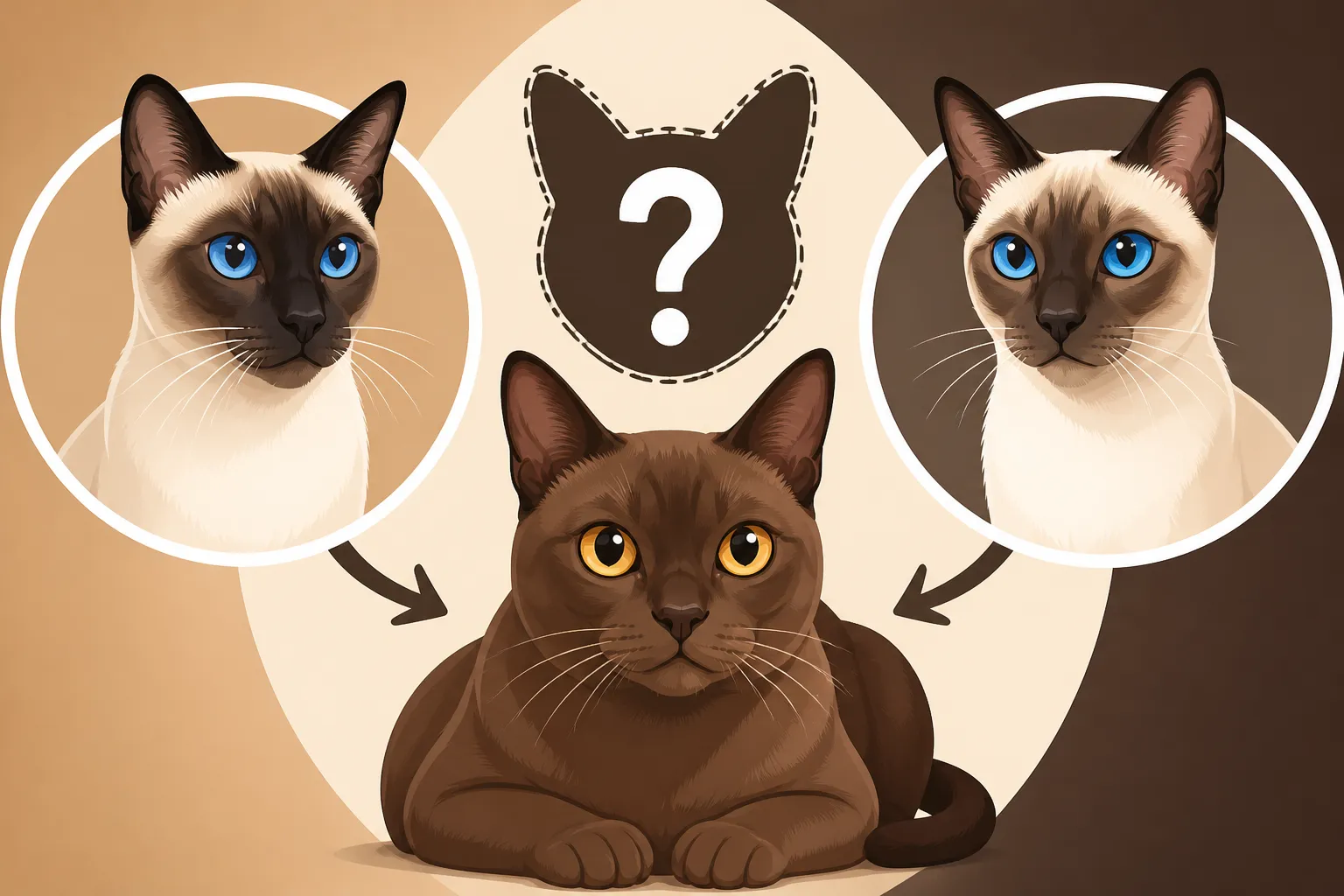
So, with the stage set for scientific inquiry, the question becomes: which specific Siamese cat was chosen for this historic pairing? The records show that Wong Mau was bred to a seal point Siamese named Tai Mau. Tai Mau was carefully selected because he was a prime example of the standard, established Siamese type of the era. He carried two copies of the "colorpoint" allele (cs/cs), meaning his genetics for coat color were a known quantity and would predictably produce seal point kittens if bred to another purebred Siamese.
This choice of Tai Mau was absolutely critical for Dr. Thompson's research. If he had used a Siamese with any hidden genetic variations or an unknown background, the results of the breeding would have been muddied, making it incredibly difficult to isolate Wong Mau's unique genetic contributions. Tai Mau's role, therefore, was to provide a pure, unadulterated "canvas" against which Wong Mau's genetics could be clearly observed. He was the control variable in a live genetic experiment. It's a testament to the foresight of Thompson and his colleagues that they understood the importance of this specific choice.
The Unveiling of the First Litter
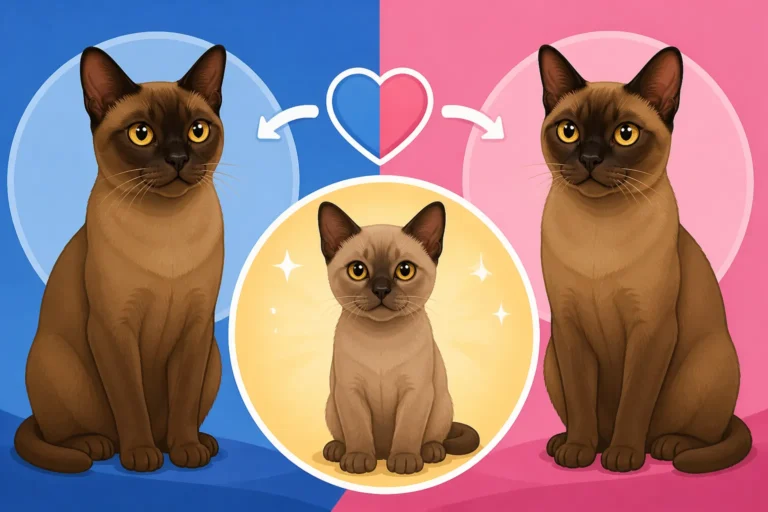
When Wong Mau and Tai Mau's first litter arrived, it was the moment of truth, and the results were nothing short of astonishing. The kittens were not all alike, nor were they simply a mix of Wong Mau and Tai Mau's appearances. Instead, the litter displayed three distinct phenotypes, or observable physical traits, for coat color:
- True Seal Point Siamese: Some kittens looked exactly like their father, Tai Mau, with the classic pale body and dark brown points of a Siamese. This confirmed that Wong Mau carried the Siamese colorpoint gene (cs) herself, even though she didn't express it as a full Siamese.
- Wong Mau Look-alikes: Other kittens in the litter resembled Wong Mau herself, displaying that unique, rich sable brown body with slightly darker extremities, the very look that Dr. Thompson found so captivating.
- Intermediate (Mink Pattern) Cats: A third group of kittens appeared, which were lighter than Wong Mau but darker than the seal point Siamese. These cats had a warm, muted brown body color with darker points, a pattern now famously known as "mink." These intermediate cats were a crucial piece of the puzzle, clearly demonstrating the interaction between the two parents' genetic contributions.
This remarkable outcome immediately told Dr. Thompson that Wong Mau was not a purebred Siamese, nor was she a cat with a completely dominant gene for brown. Instead, she was a carrier, a hybrid of sorts, carrying both the Siamese gene and a new, distinct gene responsible for her unique sable brown color. This litter, born from the union of Wong Mau and Tai Mau, was the living proof that a new breed was indeed possible. This fascinating revelation is further explored in What the First Burmese Litter Told Thompson and Why the First Burmese Was Bred to a Siamese.
The Genetic Breakthrough and the Birth of a Breed
The Discovery of the cb Allele
The observation of three distinct phenotypes in that first litter was a genetic goldmine. Dr. Thompson, alongside Keeler and Davis, meticulously analyzed the inheritance patterns. They deduced that Wong Mau was not homozygous (carrying two identical copies) for a single color gene, but rather was heterozygous, carrying one copy of the Siamese colorpoint gene (cs) and one copy of a new, previously unidentified allele. This new allele was responsible for her unique "sable" brown color and was officially named 'cb' – for Burmese.
So, genetically, Wong Mau was (cb/cs). When bred to Tai Mau, who was (cs/cs), the possible genetic combinations for their kittens were:
- cs/cs: (Siamese) – showing the full colorpoint pattern.
- cb/cs: (Like Wong Mau and the intermediate kittens) – exhibiting the "mink" pattern, where the color is darker than a Siamese but lighter than a true Burmese.
- cb/cb: (The true Burmese, solid sable brown) – This genotype wasn't seen in the first litter because Tai Mau didn't carry the 'cb' allele. To produce a true cb/cb Burmese, two (cb/cs) cats would need to be bred together.
This discovery of the 'cb' allele was a pivotal moment in feline genetics. It explained why the Burmese has such a rich, dark brown coat compared to the Siamese's pale body, and how the "mink" Tonkinese pattern sits perfectly in between. The 'cb' allele causes a form of temperature-sensitive albinism, similar to 'cs', but it's less restrictive, allowing for much more pigment to develop across the entire body, especially in warmer areas. This genetic mapping not only defined the Burmese but also provided a clear scientific basis for its continued development. You can dive deeper into this topic with The cb Allele Is What Makes a Burmese Brown and Why a Burmese Is Brown and a Siamese Is Pointed.
Defining the Burmese and Beyond
With the genetic blueprint in hand, the path to establishing the Burmese breed became clear. To produce true Burmese cats – those that were homozygous for the 'cb' allele (cb/cb) – breeders needed to take the Wong Mau-like cats (cb/cs, essentially the first Tonkinese) from that initial litter and breed them back to each other, or to Wong Mau herself. This selective breeding allowed for the consistent production of the deep, even sable brown color that defines the American Burmese. The meticulous record-keeping and scientific understanding ensured that the breed was founded on a strong, predictable genetic basis, rather than just on arbitrary appearance.
Moreover, this experiment didn't just give us the Burmese. The intermediate (cb/cs) cats, which look like a cross between a Siamese and a Burmese, eventually became recognized as a distinct breed themselves: the Tonkinese. This shows the incredible power of genetic research—one foundational cross, driven by scientific curiosity, led to the understanding and eventual establishment of two distinct and beloved breeds. It’s a powerful reminder that dedicated breeding, especially with a scientific approach, can truly enrich the cat fancy. The impact of this work was profound, and you can explore more about how it led to other breeds in Why the Founding Burmese Produced Two Breeds and Whether the First Burmese Was Really a Tonkinese.
The Lasting Legacy of the Initial Cross
Shaping the Modern Burmese Standard
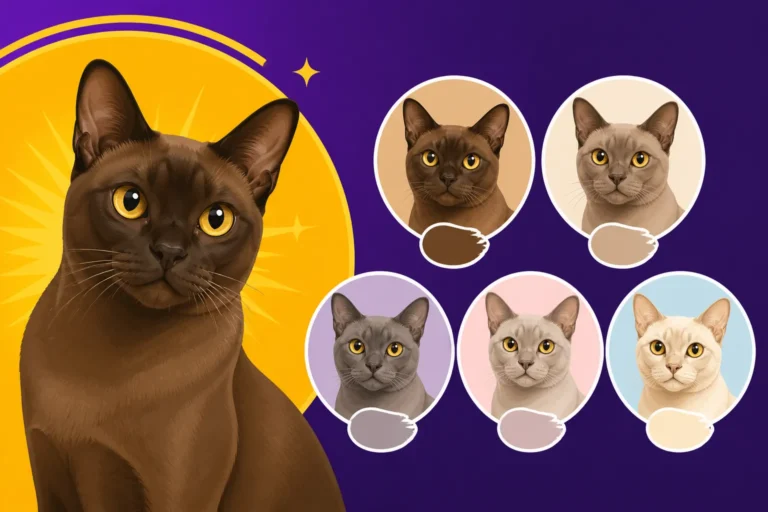
The genetic insights gained from Wong Mau's first cross with Tai Mau fundamentally shaped the breed standard for the Burmese. Breeders understood that the ideal Burmese would be a solid sable brown (or its dilutions), with brilliant gold eyes, and a distinct, muscular body type. This understanding allowed for a much more targeted breeding program, ensuring consistency in conformation and temperament. It wasn't just about what looked good, but what was genetically sound.
Today, this historical foundation is still critical. Responsible breeders meticulously study pedigrees, aiming for healthy, well-typed cats. Owners also rely on this knowledge, seeking specific traits and understanding the potential health considerations of the breed, like their propensity for diabetes. Many owners will carefully select high-quality food from retailers like Chewy, knowing that diet plays a huge role in keeping a Burmese healthy and preventing issues like obesity, which can exacerbate conditions like diabetes. This attention to detail, from breeding programs to daily care, is a direct legacy of Dr. Thompson's initial scientific curiosity. Learning about What Happens When Burmese and Siamese Genes Meet can provide additional context.
A Foundation for the Cat Fancy
The rigorous scientific methodology employed by Dr. Thompson, Keeler, Davis, and Cobb was revolutionary for its time. Their work established a precedent for genetic analysis in the world of cat breeding, moving it beyond mere visual selection. They proved that understanding the underlying genetics was paramount to truly establishing and maintaining a breed's integrity. This foundational work laid the groundwork for future genetic studies and continues to influence how new breeds are developed and recognized.
This commitment to scientific understanding ensures that current Burmese owners can expect a certain level of health and predictability from their cats, especially from reputable breeders. It underscores the importance of ongoing research into feline genetics, helping us understand inherited conditions and how to care for our beloved pets optimally. Whether it's choosing the right type of food to manage a sensitive stomach or finding enrichment toys, resources for responsible pet ownership are abundant. For example, many owners routinely buy their high-quality cat food from Chewy, focusing on specific formulations to support their Burmese's unique dietary needs. This historical approach, valuing scientific inquiry, continues to benefit every cat owner today. It's a testament to the dedication of those early pioneers that we can enjoy such a wonderful and well-understood breed. You can learn more about this historical impact by reading Why the Burmese Was the First Breed Studied by Geneticists.
Summary of Wong Mau's First Cross
| Feature | Wong Mau (The Founder) | Tai Mau (The Siamese Mate) | Offspring in First Litter | Genetic Outcome |
|---|---|---|---|---|
| Breed Status | Unknown (later identified as cb/cs) | Purebred Seal Point Siamese (cs/cs) | Varied (Siamese, Wong Mau-like, Intermediate) | Established Wong Mau as heterozygous for a new allele |
| Primary Goal | To genetically define Wong Mau's traits | To provide a known genetic baseline | To observe inheritance patterns | Identification of the 'cb' (Burmese) allele |
| Significance | Originator of the Burmese and Tonkinese | Crucial for genetic differentiation | Demonstrated Mendelian inheritance | Foundation for scientific cat breeding |
| Appearance | Sable brown, gold eyes | Pale body, dark points, blue eyes | Three distinct color types | Allowed for clear identification of new phenotypes |
Disclaimer
This article is for general informational purposes only and does not constitute professional advice. Laws, prices and regulations vary by location and change over time. Consult a qualified professional for guidance on your specific situation.