The cb Allele Is What Makes a Burmese Brown
Ever wonder why your Burmese cat has that absolutely stunning, rich brown coat that seems to shift in different lights? It’s not just a random genetic throw of the dice; it's all thanks to a very special, sometimes misunderstood, genetic factor known as the cb allele. If you've ever looked at your brown beauty and pondered the science behind her magnificent hue, you're in the right place. This guide will dive deep into the fascinating genetics that give the Burmese its signature color, helping you understand the unique processes at play and why it's so different from just any other brown cat.
Understanding the Basics of Cat Coat Genetics
Before we can truly appreciate the magic of the cb allele, it helps to have a foundational understanding of how cat coat colors and patterns are determined at a genetic level. It can seem like a complex maze of letters and scientific terms, but I promise, we’ll break it down into easy-to-digest pieces. Think of it as peeling back the layers of a particularly beautiful onion, each layer revealing more about your feline friend's charm.
Genes, Alleles, and Phenotypes: A Quick Primer
At the heart of every living creature, including our beloved Burmese cats, is DNA. This incredible blueprint contains all the instructions for building and operating an organism. Specific sections of this blueprint are called "genes," and they carry the codes for particular traits, like eye color, fur length, or, in our case, coat color. Now, it's rarely as simple as one gene, one trait. Genes often come in different versions, or variations, called "alleles." Think of a gene as a chapter in a book, and the alleles are different editions of that chapter, each with slightly different wording that leads to a different outcome.
These alleles are inherited from both parents, and how they interact determines what trait actually manifests. Some alleles are "dominant," meaning if present, their trait will show up, even if there's a different, "recessive" allele also present. Recessive traits only appear if two copies of the recessive allele are inherited. This interplay results in what we physically see – the "phenotype" – which is the observable characteristic, like that deep sable brown coat. The underlying genetic makeup, the specific combination of alleles, is called the "genotype." So, when we talk about the cb allele, we're talking about a specific version of a gene that, when inherited in a particular way, gives the Burmese its distinct look.
The "B" Locus and Basic Black/Brown Pigment
When it comes to the basic palette of cat colors, much of it revolves around a gene known as the "B" locus. This particular gene dictates whether a cat's primary pigment is black or brown. All cat colors, from the darkest black to the palest cream, start with one of two basic pigments: eumelanin (which creates black and brown colors) or pheomelanin (which creates red and cream colors). The "B" locus primarily controls eumelanin production.
At this "B" locus, there are a few key alleles. The dominant 'B' allele results in dense black pigment. If a cat inherits two copies of the recessive 'b' allele (bb), their black pigment is lightened to a rich chocolate brown. There’s also a 'b1' allele, which is even more recessive and produces a lighter cinnamon brown. So, a typical brown cat you might see, say a Havana Brown, gets its color from carrying two copies of the 'b' allele, turning its black pigment into a beautiful chocolate. However, the Burmese doesn't just have these basic 'B' locus alleles; it has something extra special that transforms the black pigment into its signature warm, sepia-toned brown. It's a key distinction that makes the Burmese truly unique in the feline world.
Introducing the cb Allele: The Burmese Secret
Now that we've touched on the fundamentals, let's get to the star of our show: the cb allele. This isn't just another color variant; it's a game-changer that sets the Burmese apart and gives it that captivating depth of color. Understanding the cb allele is crucial to appreciating why a Burmese looks the way it does and why it's so distinct from other brown cat breeds.
What is the cb Allele?
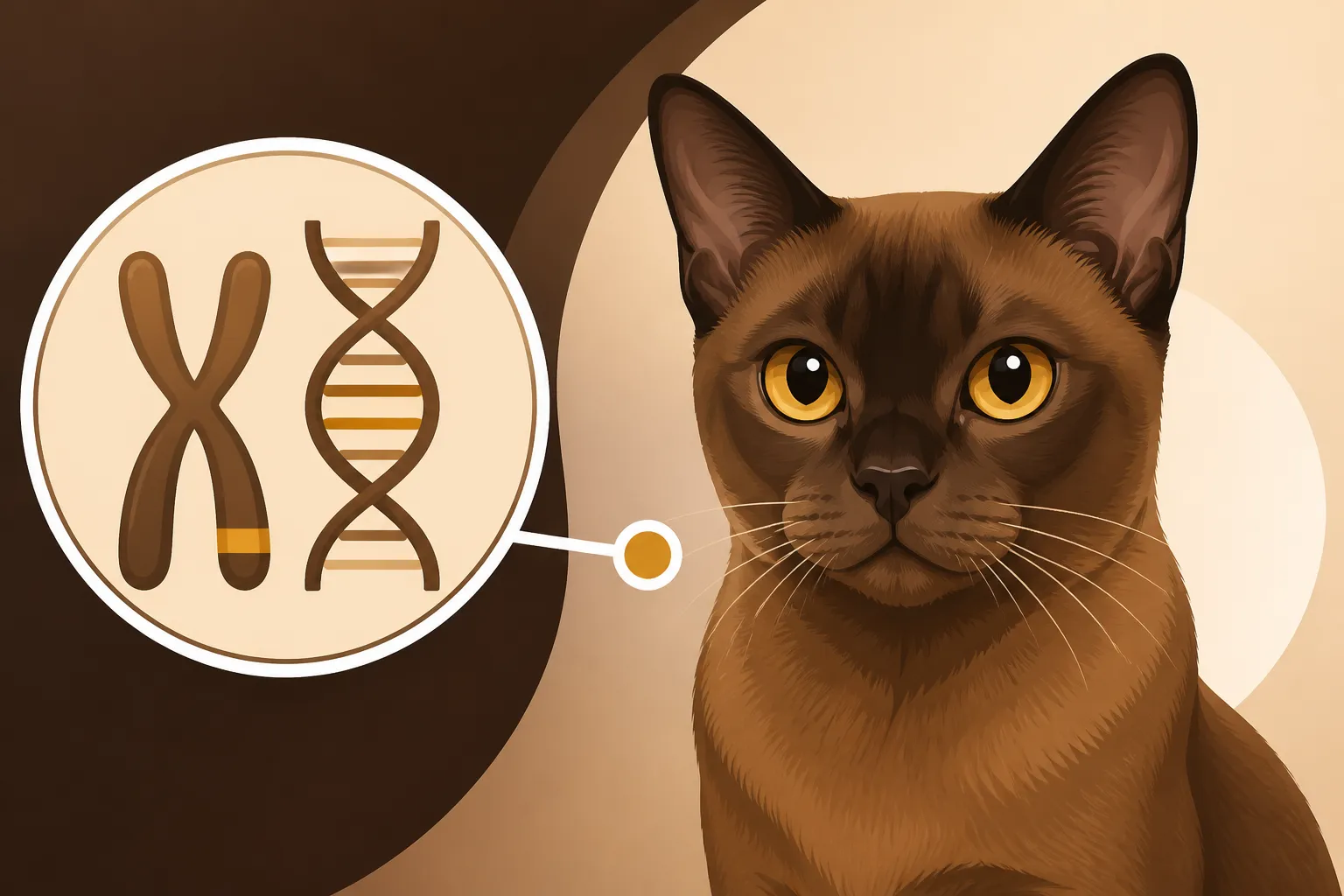
The 'cb' allele stands for "Burmese allele," and it's responsible for the unique "Burmese restriction" pattern. This allele is a specific mutation on the Tyrosinase (TYR) gene, which plays a vital role in producing melanin, the pigment that gives hair and skin its color. Unlike the standard 'C' allele (which allows full pigment expression) or even the 'cs' allele (which creates the Siamese point coloration), the 'cb' allele causes a partial reduction in pigment production. It's considered a form of temperature-sensitive albinism, but it's not full albinism. Instead, the enzyme that produces melanin works less efficiently, especially at warmer body temperatures.
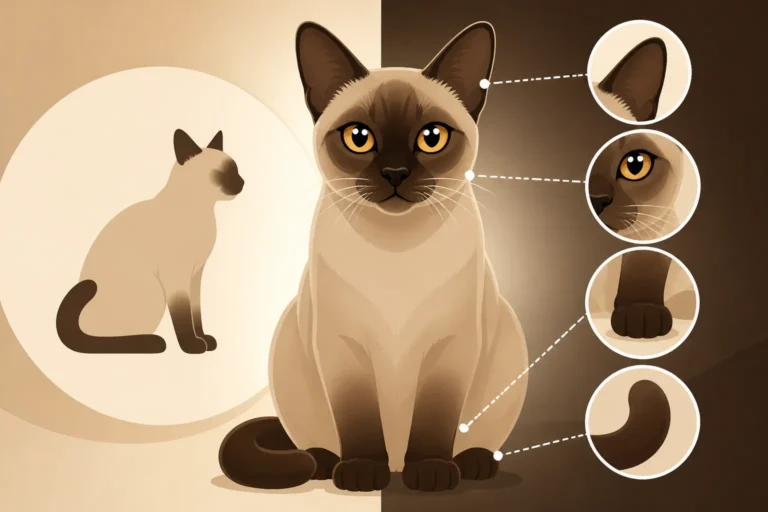
A true Burmese cat will always have two copies of this allele, making its genotype 'cb/cb'. This homozygous state is what creates that classic, warm, sepia-brown body color with slightly darker points. The effect of 'cb' is often described as an incomplete dominant, meaning that while it causes a color restriction, it doesn't do so as drastically as other alleles, allowing for that rich body color to still shine through. If you've ever gazed at your Burmese and noticed how their body is a consistent, deep brown, while their ears, paws, and tail are just a touch darker, you're seeing the cb allele in action.
How cb Differs from Other Color Alleles (Like cs for Siamese)
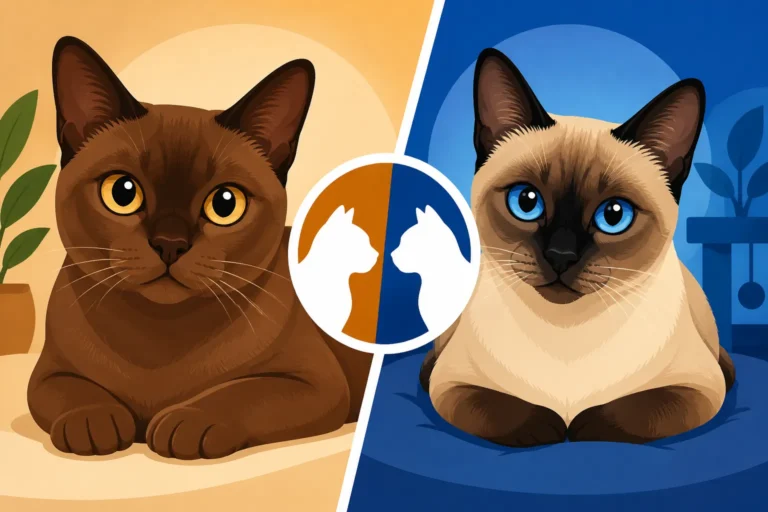
While both the Burmese and the Siamese breeds display temperature-sensitive albinism, the 'cb' allele of the Burmese and the 'cs' allele of the Siamese operate quite differently, resulting in vastly distinct appearances. Both are mutations of the same TYR gene, but the 'cs' allele, known as the "Siamese allele," is more restrictive than 'cb'. The 'cs' allele causes a much greater reduction in pigment production in warmer areas of the body, leading to the dramatic "pointed" pattern characteristic of Siamese cats, where the body is cream or pale, and the extremities are very dark.
Imagine a spectrum of pigment restriction: at one end, you have full pigment (like a solid black cat), and at the other, you have complete albinism. The 'cb' allele falls somewhere in the middle, allowing for a good amount of pigment production even on the warmer parts of the body, just slightly less than on the cooler extremities. The 'cs' allele is further along the spectrum towards albinism, where only the coldest parts of the body can produce significant pigment. This is why a Burmese has a deeply colored body with only subtle shading differences, whereas a Siamese has a very pale body and starkly contrasted dark points. For a deeper dive into this fascinating contrast, you might want to check out Why a Burmese Is Brown and a Siamese Is Pointed. Understanding this distinction helps breeders predict offspring colors and helps owners appreciate the nuanced beauty of their Burmese.
The Temperature-Sensitive Nature of the cb Allele
One of the most captivating aspects of the cb allele, and indeed a defining characteristic of the Burmese cat's coat, is its temperature-sensitive nature. It's almost like the cat's fur is a living thermometer, subtly changing its hue based on the surrounding environment and the cat's own body warmth. This isn't just a quirky fact; it's a fundamental part of the Burmese identity and contributes to their unique charm.
Why Burmese Cats are Darker at Their Extremities
The enzyme responsible for producing pigment, tyrosinase, is less active at higher temperatures. In a cat with two copies of the cb allele (cb/cb), this enzyme works efficiently enough to produce a rich color, but its efficiency is still somewhat temperature-dependent. This means that the warmer parts of the cat's body, like the torso, where blood circulation keeps the temperature higher, will have slightly less pigment deposited, resulting in that beautiful, uniform body color.
Conversely, the cooler parts of the cat's body – the ears, nose, paws, and tail – allow the tyrosinase enzyme to work more effectively. Here, the slightly lower skin temperature permits more melanin production, leading to a visibly darker shade on these "points." It's a subtle effect compared to the stark contrast seen in a Siamese, but it's unmistakably there, giving the Burmese its elegant, sophisticated look. This means a Burmese living in a cooler climate might have slightly darker overall body color than one living in a perpetually warm environment. It’s truly fascinating to see how their environment can subtly influence their appearance. To explore this phenomenon further, consider reading Why a Burmese's Color Deepens Where It Is Cool.
How a Burmese Kitten's Coat Develops Its Color
If you've ever seen a newborn Burmese kitten, you might have been surprised by how light they are. They're often born a pale cream or beige color, a far cry from the rich, deep sable brown they eventually become. This is another wonderful example of the cb allele's temperature sensitivity at play. Inside the warmth of their mother's womb, the ambient temperature is consistently high, which severely restricts the production of pigment. As a result, Burmese kittens emerge into the world with very little color development.
Once they are born and exposed to the cooler outside world, the tyrosinase enzyme gradually becomes more active in the cooler extremities, and then across the rest of the body. Over the first few weeks and months, you'll witness a remarkable transformation as their coat slowly darkens, particularly on their points, until they develop their characteristic adult coloration. This process continues as they grow, with their adult color usually settling in by about six months to a year old. It's a truly beautiful developmental journey to watch, and a clear testament to the fascinating genetics governing their coats. For more details on this adorable transformation, check out Why a Burmese Kitten Is Born Paler Than It Ends Up.
The Different Shades of Burmese Brown (and Beyond)
While "Burmese brown" might sound like a singular color, the reality is far more nuanced and delightful! Thanks to the interaction of the cb allele with other genes that control base color and dilution, the Burmese actually comes in a stunning array of shades. These variations are all incredibly beautiful and recognized within the breed, each with its own unique charm.
Sable: The Classic Burmese Brown
When most people picture a Burmese cat, they're often imagining the magnificent "sable" variety. Sable is the classic, original Burmese color, and it's the result of the 'B' (black) allele from the B locus interacting with two copies of the 'cb' allele (cb/cb). Genetically, it's a cat with black pigment, but the cb allele restricts that black pigment to create a warm, rich, deep sepia brown. It's not a cold, stark brown, but one with inviting undertones, often described as a sable or dark chocolate.
The depth and warmth of the sable coat are truly something to behold. It can sometimes appear almost black in certain lights, then reveal its glorious brown hues as light catches it. This classic color is what breeders initially worked to establish and what many enthusiasts still adore. It's the benchmark against which other Burmese colors are often compared, embodying the traditional look of the breed. If you’re curious to see exactly what this iconic shade looks like, you’ll find a great description in What a Sable Burmese Looks Like.
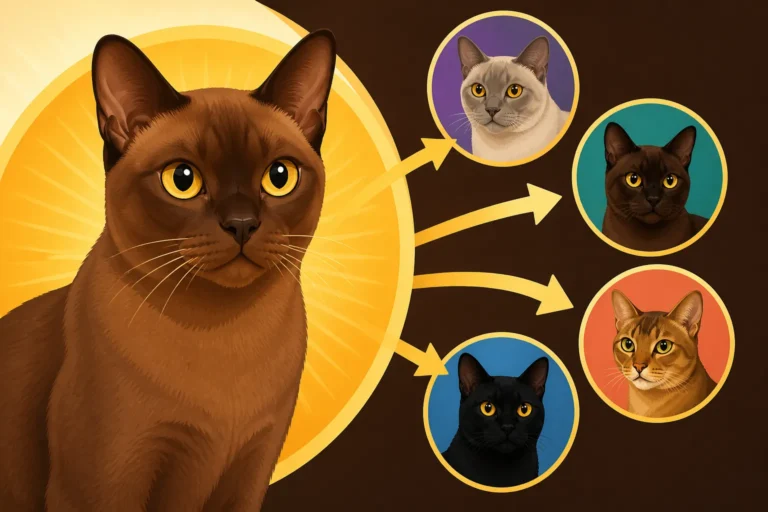
Champagne, Blue, and Platinum: Dilutions of the cb Allele
Beyond the classic sable, the Burmese boasts several other equally captivating colors, which arise from the interaction of the cb allele with other genetic modifiers, primarily the "dilution" gene. The dilution gene, denoted by the 'D' (dense color) and 'd' (dilute color) alleles, can effectively "soften" or lighten the primary pigment.
- Champagne: This gorgeous color is essentially the genetic equivalent of a chocolate cat (meaning it carries the 'b' allele at the B locus) that also has two copies of the cb allele (cb/cb). So, where sable is a restricted black, champagne is a restricted chocolate. It results in a warm, honey-beige or milk-chocolate hue, often with creamy undertones. It’s lighter and softer than sable but still carries that unmistakable Burmese warmth. To truly appreciate this delightful shade, take a look at What a Champagne Burmese Looks Like.
- Blue: If you take a sable Burmese (a genetically black cat with cb/cb) and add two copies of the dilute allele (d/d), you get a blue Burmese. The dilution gene transforms the restricted black pigment into a soft, silvery blue-grey. It’s elegant and sophisticated, often described as a slate grey with a slight brownish cast. It's not the stark blue of a Russian Blue, but a softer, more ethereal shade. Learn more about this stunning color in What a Blue Burmese Looks Like.
- Platinum: This is perhaps the most ethereal of the four traditional Burmese colors. Platinum is the diluted version of champagne. So, if a champagne Burmese (genetically chocolate with cb/cb) also carries two copies of the dilute allele (d/d), the result is platinum. This color is a pale, silvery-lilac or pale dove-grey, often with a hint of pink or mushroom. It’s incredibly delicate and refined. For a comprehensive look at this exquisite shade, refer to What a Platinum Burmese Looks Like.
These four colors – sable, champagne, blue, and platinum – are the foundational hues recognized in most Burmese cat associations, each demonstrating the fascinating ways the cb allele can interact with other genetic factors to create a diverse and beautiful palette within the breed. When you choose a cat from Chewy, for instance, you're not just picking a pretty face; you're often getting a whole lineage of careful breeding and genetic understanding that led to that specific color!
| Burmese Color | Basic Pigment Gene (B Locus) | Dilution Gene (D Locus) | Appearance |
|---|---|---|---|
| Sable | Black (B/B or B/b) | Dense (D/D or D/d) | Rich, warm sepia brown |
| Champagne | Chocolate (b/b) | Dense (D/D or D/d) | Warm honey-beige or milk-chocolate |
| Blue | Black (B/B or B/b) | Dilute (d/d) | Soft, silvery blue-grey |
| Platinum | Chocolate (b/b) | Dilute (d/d) | Pale, silvery-lilac or pale dove-grey |
Breeding Implications and Genetic Testing
For breeders, understanding the cb allele is not just a matter of curiosity; it's fundamental to maintaining breed standards, predicting litter outcomes, and ensuring the health and integrity of their lines. The unique genetic makeup of the Burmese requires careful planning and, increasingly, the use of modern genetic tools.
Understanding the Genetic Combinations for cb/cb
For a cat to truly be a Burmese in terms of its recognized color, it must carry two copies of the cb allele, meaning its genotype is cb/cb. This homozygous state ensures the full expression of the Burmese restriction pattern. If a cat only carries one copy of the cb allele (e.g., C/cb, where C is the full color allele, or cs/cb, where cs is the Siamese allele), it will not display the characteristic Burmese brown. Instead, a C/cb cat might appear completely colored, but carry the Burmese gene, while a cs/cb cat would be a "Tonkinese" color, displaying an intermediate level of pointing.
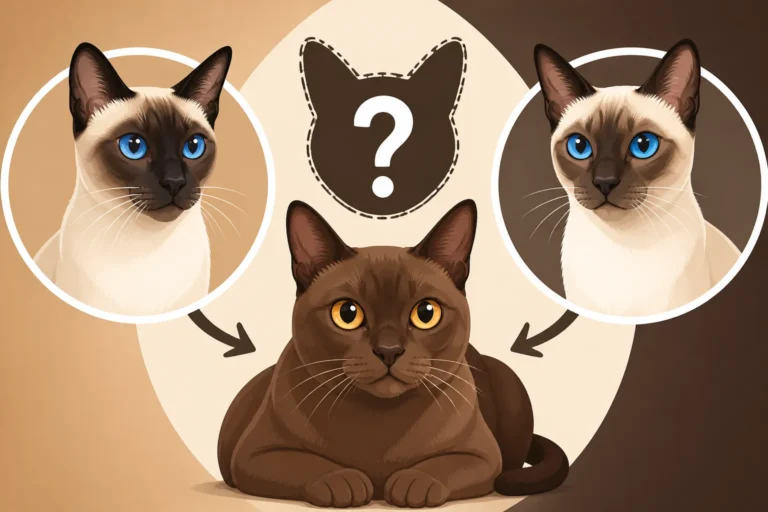
Responsible breeders carefully select their breeding pairs to ensure that both parents are cb/cb or, if introducing new lines, understand the implications of different allele combinations. Breeding a cb/cb cat with a non-cb/cb cat will result in kittens that are carriers of the cb allele but won't be true Burmese in color. For example, if a Burmese is bred to a Siamese, which carries two copies of the cs allele, all kittens will be Tonkinese, having inherited one cb and one cs allele. This understanding is paramount for preserving the breed's distinct appearance and avoiding unintended outcomes. Delving into the specific outcomes of such pairings can be found in What a Burmese Bred to a Siamese Produces.
Genetic Testing for the cb Allele
With advances in feline genetics, breeders no longer have to rely solely on pedigree charts or phenotypic observations to determine a cat's color genetics. Genetic testing offers a precise way to identify the alleles a cat carries at the TYR locus, including the cb allele. This is incredibly valuable for several reasons. First, it confirms that a breeding cat is indeed homozygous cb/cb, ensuring that all offspring will inherit at least one copy of the Burmese allele. This is vital for maintaining the purity of Burmese lines.
Second, testing helps breeders understand if a cat carries other alleles like C or cs, which might not be outwardly visible if the cat is also cb/cb but could be passed on to future generations. Such knowledge allows for informed breeding decisions, ensuring that specific desired colors are produced and that genetic diversity is managed responsibly. Many reputable genetic testing labs offer comprehensive panels that include color gene analysis. Resources like Chewy sometimes offer connections or information to these testing services, or products that support the care of specifically bred cats. This proactive approach to genetic testing is a hallmark of ethical breeding practices, contributing to the health and predictable characteristics of future Burmese generations.
Beyond the Brown: The Burmese Color Gene's Impact on the Cat Fancy
The cb allele's influence extends far beyond simply coloring the Burmese cat brown. This unique genetic trait has played a pivotal role in the development of entirely new breeds and has left an indelible mark on the broader cat fancy. It's a testament to the power of a single genetic mutation to spark a wave of diversity and innovation within the world of pedigree cats.
How the Burmese Led to New Breeds (Tonkinese, Bombay)
The Burmese cat, and specifically its cb allele, is a foundational cornerstone for several other beloved cat breeds. Perhaps the most famous example is the Tonkinese. This breed originated from crosses between Burmese and Siamese cats. As we discussed, the Siamese carries the 'cs' allele (for pointed coloration), while the Burmese carries the 'cb' allele. When these two are bred together, their offspring inherit one 'cb' allele and one 'cs' allele (cb/cs), resulting in a distinct "mink" pattern that is intermediate between the full body color of the Burmese and the extreme pointing of the Siamese. The Tonkinese showcases a richer body color than the Siamese, but with more defined points than a Burmese, truly creating a "best of both worlds" scenario for many cat enthusiasts. Learning about its origins is truly fascinating; you can read more about it in How the Tonkinese Was Made From a Burmese.
Another breed that owes its existence to the Burmese is the Bombay. This sleek, black panther-like cat was developed by breeding a sable Burmese with a black American Shorthair. The goal was to create a cat that resembled a miniature black panther, with a solid, patent-leather black coat. The Burmese contributed its compact, muscular build and expressive eyes, while the black American Shorthair provided the solid black coloration. While a Bombay is solid black, it often shares the lovely, affectionate personality traits of its Burmese ancestors. For a deeper dive into the Bombay's lineage, check out How the Bombay Was Made From a Burmese. The Burmese, therefore, isn't just a breed; it's a genetic stepping stone that has enriched the diversity of our feline companions.
The Burmese Coat: More Than Just Color
While the cb allele is undoubtedly the star when it comes to the Burmese's signature brown, it's important to remember that the Burmese coat is celebrated for more than just its color. The breed's unique texture and appearance contribute significantly to its overall allure and are often inextricably linked in the minds of admirers. The Burmese boasts a coat that is famously short, fine, and lies incredibly close to the body. This isn't a fluffy coat; it's sleek, smooth, and has an almost satin-like feel when you run your hand over it.
This satin quality contributes to the "brick wrapped in silk" description often given to the Burmese – a deceptively muscular and heavy cat beneath a surprisingly delicate, shimmering coat. The coat also exhibits a remarkable natural sheen, catching the light and enhancing the depth of its various colors, from sable to platinum. This close-lying, lustrous coat requires minimal grooming, which is a definite plus for busy owners. It sheds very little, making it a relatively low-maintenance companion. If you've ever wondered about the unique tactile experience of petting a Burmese, you'll find more insights into its luxurious texture in Why a Burmese's Coat Feels Like Satin. It's a combination of this remarkable texture and the specific color effects of the cb allele that truly make the Burmese coat a work of art.
Disclaimer
This article is for general informational purposes only and does not constitute professional advice. Laws, prices and regulations vary by location and change over time. Consult a qualified professional for guidance on your specific situation.