Why a Burmese’s Color Deepens Where It Is Cool
The darker shading on a Burmese cat’s face, ears, paws, and tail can look like a color change that happened overnight, especially after a move or a cold season. Usually, it reflects a temperature-sensitive pigment gene acting across the skin. This guide explains why cooler areas darken, what is normal, and when a coat change deserves a closer look.
Why Burmese coat color responds to temperature
The pigment gene works differently in cooler skin
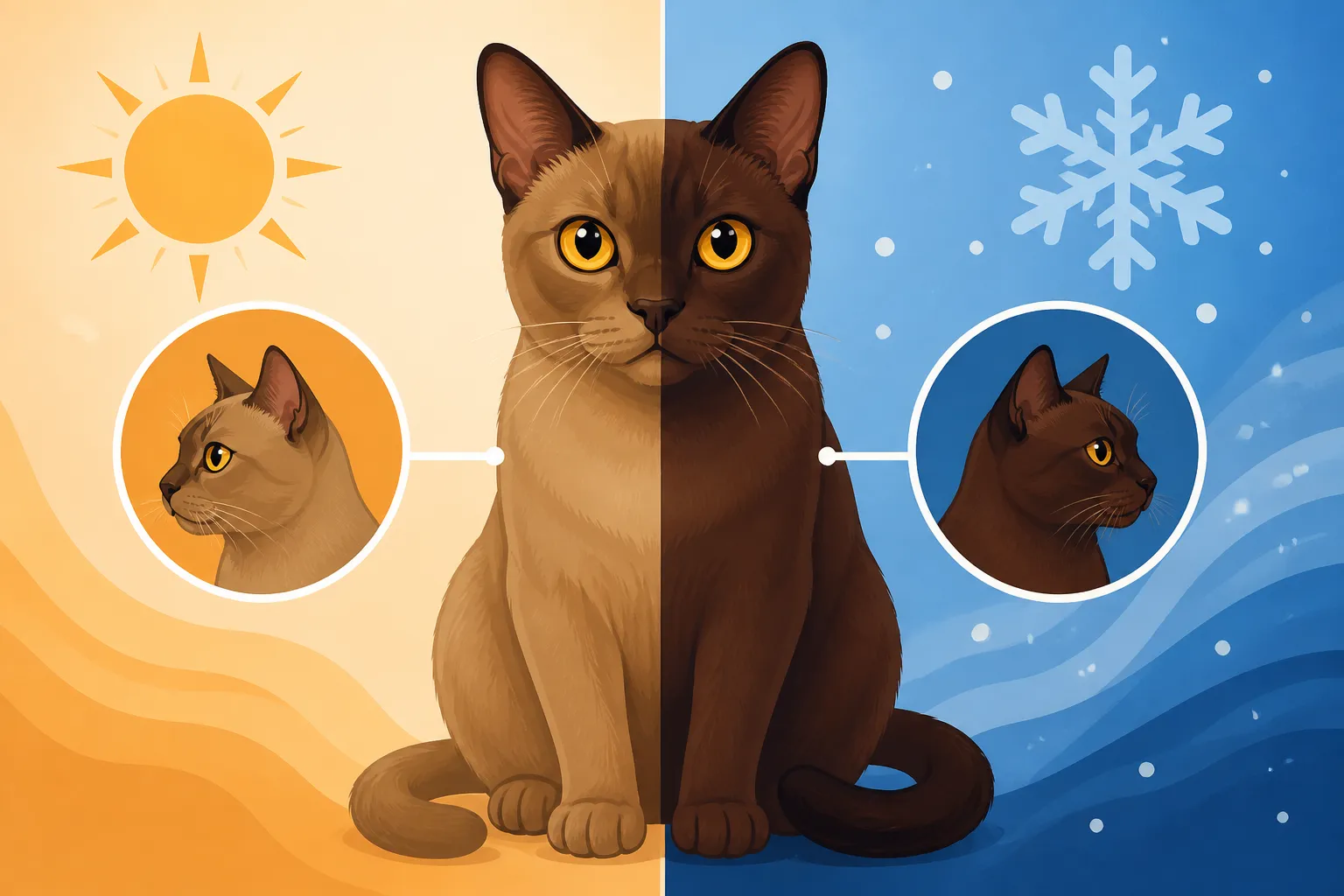
Burmese coloring is linked to a temperature-sensitive form of the tyrosinase gene, which helps the body make melanin, the pigment that colors hair, skin, and eyes. In Burmese cats, the gene’s activity is reduced at warmer temperatures and works more effectively in cooler areas. More pigment can therefore develop in hair growing over cooler skin.
The effect is not a dye-like change to hairs that have already grown. Rather, the color is influenced as each hair develops in its follicle. Hair on a cat’s cooler extremities may grow in darker, while hair on warmer areas of the trunk can remain lighter. That can make the face, ears, feet, and tail look richer or more shaded than the body.
This temperature-sensitive color mechanism is part of the Burmese breed’s distinctive appearance. The coat is not simply one uniform brown or blue from root to tip across every part of the body. Subtle differences in shade are normal, and a cat’s overall appearance can change gradually as its coat grows and seasons pass. The genetic background is closely tied to The cb Allele Is What Makes a Burmese Brown.
Burmese shading is subtle compared with pointed breeds
People sometimes expect Burmese cats to develop the dramatic contrast of a Siamese: a pale body with very dark points. Burmese cats generally have a more even, sepia-toned appearance. Their warmer body areas may still carry noticeable color, rather than looking nearly white beside sharply defined dark points.
The amount of contrast varies between individual cats and colors. A sable Burmese may show warm brown shading, while blue, champagne, or platinum cats have their own softer tonal differences. Lighting also matters: a cat standing beside a sunny window can look lighter than the same cat seen in a shaded hallway. A close look at the roots, the coat in natural daylight, and photos taken under similar conditions can help distinguish a true gradual change from a difference in lighting.
If you are comparing a Burmese with a Siamese or Tonkinese, look at the overall pattern, not just the darkest areas. Burmese coloration is part of a broader breed type and standard, which is Why a Burmese Is Darker at the Extremities and How a Burmese Differs From a Tonkinese are useful companion topics.
Where the darker color tends to appear
Face, ears, paws, and tail are often cooler
The areas most likely to appear darker are the face, ears, lower legs, paws, and tail. These parts of the body can be cooler than the cat’s trunk, particularly when the surrounding air is cool. The nose and muzzle may also look more strongly shaded than the chest or sides.
The contrast is often easiest to notice in a young cat whose adult coat is still developing. You might see the face and feet deepen first, then find the body color settling into a richer shade over time. A coat that looks different from one season to another does not necessarily mean the cat’s pigment biology has changed; it can simply reflect new hair growing under different conditions.
It helps to take occasional photos in the same room, at the same time of day, and under similar lighting. A phone photo taken with a flash one month and in warm indoor lighting the next can make a modest shift look dramatic. If your Burmese seems healthy and the change is gradual and evenly distributed, the variation is often part of normal coat development.
The trunk may look lighter, but it is not a separate color
A common description of a Burmese is that the body appears lighter than the points. That does not mean the trunk is unpigmented or that the cat is developing a new coat pattern. The body can have a slightly warmer or lighter tone while remaining recognizably the same registered color.
Think of the effect as a soft gradient rather than a hard border. A cat may have deeper shading on the face and tail, with the color blending gradually across the shoulders and flanks. The exact balance depends on genetics, age, individual coat, and the temperature around the skin while the hair grows.
If you are learning to identify the recognized color, compare the cat in daylight and consider its age. Burmese kittens are often paler than the coat they develop as adults, so a kitten’s early coloring is not always a reliable picture of its mature shade. Why a Burmese Kitten Darkens as It Grows explains how that change can unfold.
| What you notice | Common explanation | What to check |
|---|---|---|
| Darker face, ears, feet, or tail | Cooler skin areas can support more pigment production | Whether the change is gradual and symmetrical |
| A lighter-looking body | Burmese shading is often soft rather than sharply pointed | Compare the coat in natural daylight |
| A kitten becoming richer in color | Adult coat color develops over time | Use photos taken at regular intervals |
| A sudden patch of missing or discolored hair | May not be a normal temperature-related color shift | Look for irritation, scaling, scratching, or illness |
| A coat that looks lighter in sunlight | Lighting and sun exposure can affect how color appears | Compare photos away from direct sunlight |
What changes coat shade and what does not
Room temperature may influence new growth, not recolor the whole cat instantly
Because pigment is affected as hair develops, a cool room does not normally make the entire coat turn dark in a day. Changes are typically gradual, becoming visible as new hair grows. The cat’s skin temperature matters more directly than the thermostat setting alone, and coat density, posture, activity, and whether the cat is curled up can all affect local warmth.
A practical example: a Burmese that spends winter curled on a cool windowsill may gradually show more noticeable shading on cooler areas. After moving to a consistently warmer home, the coat may appear somewhat less contrasted as new hairs grow. Neither scenario means the cat has been harmed by ordinary seasonal temperature variation. There is no need to deliberately chill or overheat a cat to alter its color.
If you want to observe the pattern, a basic room thermometer can help you note whether the cat’s favorite resting places are unusually drafty or warm. If you are already ordering ordinary pet supplies from a retailer such as Chewy, you might look for a simple thermometer there, but the key is to keep your cat comfortable rather than chase a particular coat shade.
Age, lighting, and sunlight can confuse the picture
Age is a major reason Burmese coats change in appearance. Kittens can start with a lighter coat and gradually deepen as they mature. Adult coats may continue to vary subtly, while older cats can show changes in shine, texture, or density that make color seem different. That is not the same as a sudden pigment shift.
Sunlight can also make a coat look lighter, especially when a cat spends a lot of time in a bright window. The precise appearance depends on the color and coat condition, so do not use sun exposure as a way to manage a Burmese’s shade. Provide access to comfortable indoor resting spots and prevent prolonged exposure to strong direct sun, particularly if the cat has pale or exposed skin.
A quick coat check can separate visual variation from a problem. Part the fur gently and look for redness, scabs, scaling, excessive dandruff, or areas where hair is broken or missing. A smooth coat with gradual, even shading is a different situation from a patchy change accompanied by itching or discomfort.
Health problems usually come with more than a color difference
A Burmese coat becoming gradually darker at the extremities is not, by itself, a reliable sign of illness. A sudden color change, a bald patch, skin inflammation, strong itching, or a change in coat texture deserves more attention. So does a coat change that appears alongside reduced appetite, unusual thirst, weight loss, lethargy, or a cat acting unlike itself.
Cats are good at hiding discomfort. If you are concerned, take clear photos and note when you first noticed the change, where it is located, and whether it is spreading. Those details help a veterinarian distinguish ordinary coat variation from skin disease, parasites, nutrition issues, or another underlying problem.
Avoid applying human hair products, color treatments, oils, or home remedies to “correct” the shade. Cats groom themselves and can ingest substances left on the coat. If the coat looks dull or greasy, or your cat is licking one spot repeatedly, ask a veterinary professional before trying a topical product. Routine care—gentle brushing or wiping with a soft grooming mitt—should be about comfort, not altering pigment. Some owners find basic grooming supplies at stores such as Chewy, but any persistent skin or coat concern is better discussed with a veterinarian.
How to understand your Burmese’s color at home
Record changes without overinterpreting every shade shift
A simple photo log is more helpful than relying on memory. Photograph your cat every few weeks in indirect daylight, from the same angles: face, side, paws, and tail. Avoid using flash, filters, or different colored bulbs, since each can distort the coat’s appearance.
Also note the season, whether your cat has moved homes, and where it tends to sleep. You do not need to record every room temperature or inspect every hair. The purpose is to spot a meaningful pattern: gradual deepening across several months is different from a sharply defined new patch that appeared within a few days.
When assessing color, consider the whole cat. The Burmese has a short, close-lying coat that can reflect light differently depending on how it is groomed and whether it is shedding. A soft chamois or gentle grooming mitt may bring out the shine without rough brushing. For a broader look at coat texture and care, see What Makes a Burmese's Coat Satin Rather Than Silky and How to Bring Up the Shine on a Burmese's Coat.
Keep the cat warm and comfortable, not artificially warm
Burmese cats have short coats and may seek warm places, but normal home comfort is enough. Offer a soft bed away from drafts, and let the cat choose between sunny and shaded resting places. A pet-safe heated bed can be an option for some homes, provided the cat can move away from the heat and the product is used according to its instructions. Chewy is one possible place owners look for pet beds, but compare the product’s safety features and suitability for your cat rather than choosing it to affect coat color.
Avoid heating pads intended for people unless a veterinarian has specifically advised how to use them safely. Cats may remain on a surface that is too hot, particularly if they are sleepy or have reduced mobility. A warm blanket or a bed in a comfortable room is often a simpler choice.
There is no health benefit to making the points darker, and there is no need to keep a Burmese in a colder room to intensify its markings. A cat’s comfort, hydration, nutrition, and routine veterinary care matter far more than achieving a particular shade. If you are curious about how the recognized colors differ, The Four Colors a Burmese Comes In and What a Burmese Looks Like Against the Standard provide helpful context.
When to ask a veterinarian
Contact your veterinarian if a color change is abrupt, localized, or accompanied by skin symptoms. Mention any new food, medication, grooming product, or household change, as well as whether the cat has been scratching, licking, or losing hair. Bring the photo log if you have one; it can show whether the change is truly new or has been developing slowly.
Seek prompt advice if your cat seems unwell, stops eating, is unusually thirsty, loses weight, or becomes withdrawn. These signs are not explained by normal temperature-sensitive coat color. A veterinarian can examine the skin and coat and decide whether testing or treatment is needed.
For a healthy Burmese with a smooth, comfortable coat and gradual shading in cooler areas, the most likely explanation is simply the breed’s temperature-sensitive pigmentation. Keep your cat comfortable, track changes sensibly, and judge the coat in consistent light before assuming that a shade difference signals a problem.
Disclaimer
This article is for general informational purposes only and does not constitute professional advice. Laws, prices and regulations vary by location and change over time. Consult a qualified professional for guidance on your specific situation.