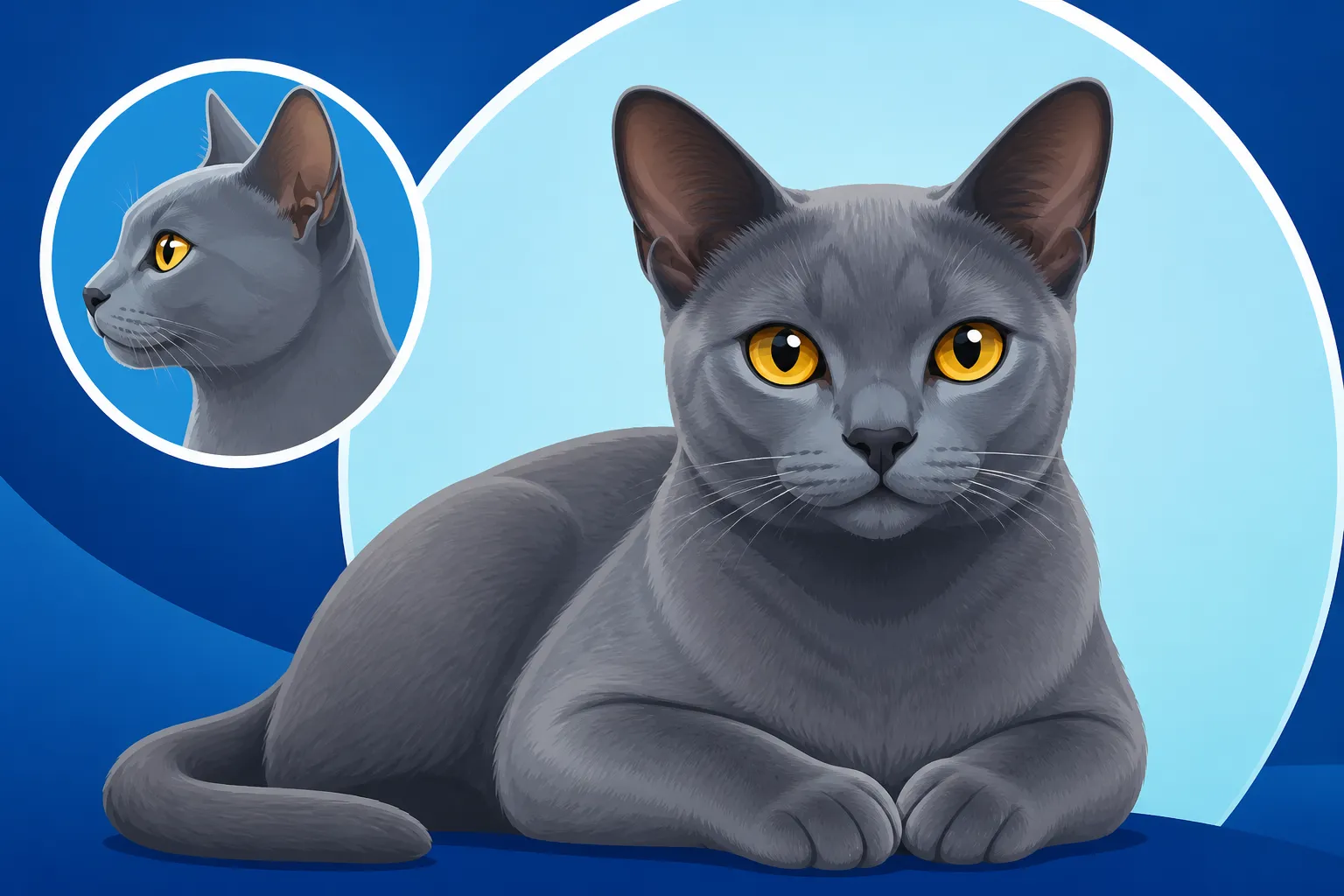
What a Blue Burmese Looks Like
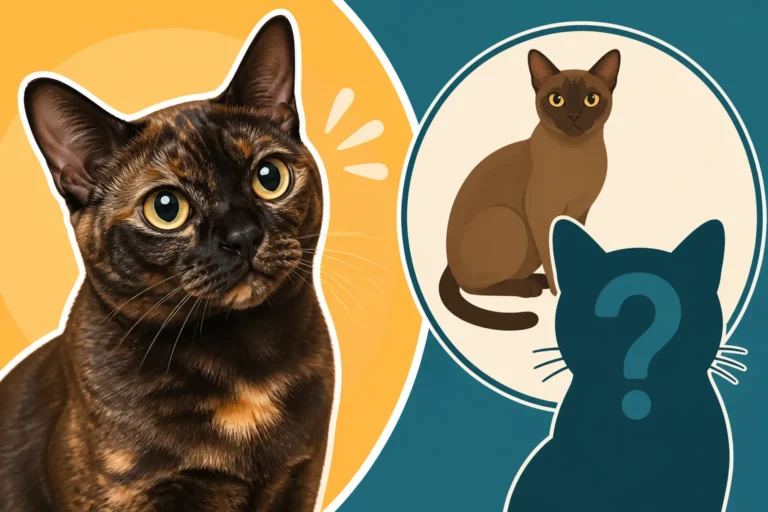
A blue Burmese can look slate gray in one photograph and warm, almost taupe-blue in another, which makes the color easy to mistake for a different breed or shade. This guide explains the coat, eye color, markings, and build you can expect, why lighting changes the impression, and how to tell a blue Burmese from similar-looking cats.
The blue Burmese coat and its color
What “blue” means in a Burmese
Blue is a diluted form of the Burmese sable color. It is not a bright sky blue or a flat charcoal gray: the coat usually reads as soft, even blue-gray, often with a subtle warm or fawn cast. The overall effect can be understated, especially beside a sable Burmese’s deeper brown coat.
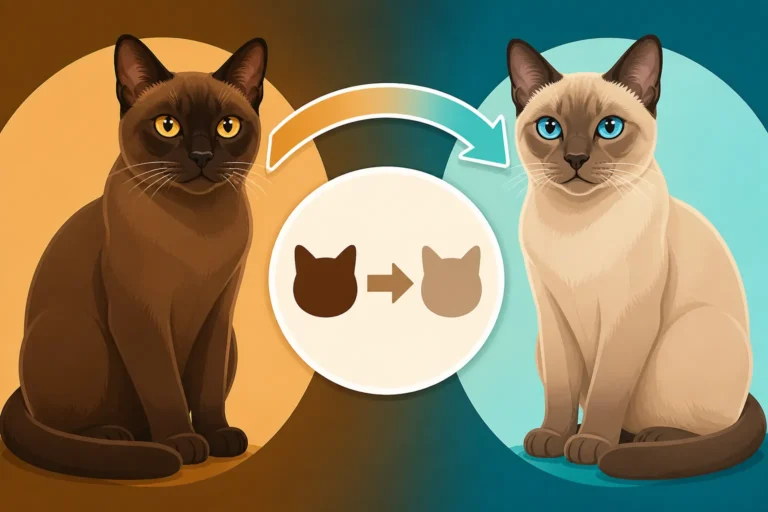
A Burmese’s coloring is influenced by the breed’s color-restriction gene, which affects how pigment develops across the body. The result is usually less sharply contrasted than the dark “points” of a Siamese. A blue Burmese may have slightly darker shading on the face, ears, legs, and tail, but you should not expect crisp, separate dark patches or a strong mask.
This is one reason photographs can be confusing. Cool indoor lighting may make a blue coat look silver or charcoal, while warm sunlight can bring out its softer brownish undertone. A kitten’s coat can also look lighter and less settled than an adult’s. For more on how the breed’s color changes with temperature, see Why a Burmese's Color Deepens Where It Is Cool.
Shading, undertones, and the coat’s finish
The body color is generally even, though the underside may appear lighter than the back. That doesn’t mean every blue Burmese has exactly the same shade: some look cooler and more silver-blue, while others have a more noticeable warm cast. Coat condition, age, season, and lighting all affect what your eye picks up.
Texture contributes just as much to the impression as color. The Burmese coat is short and lies close to the body, with a smooth, glossy appearance often compared to satin. There is little fluff to soften the outline, so the blue color tends to look sleek rather than plush. It can also show loose hairs more readily than a thicker coat, even though the coat itself is short.
A soft grooming mitt or chamois can help lift loose hair and bring out the coat’s natural shine. If you’re shopping at Chewy, check the description for a gentle grooming glove rather than a harsh deshedding tool; the Burmese’s close-lying coat generally doesn’t need aggressive brushing. For background on the breed’s distinctive finish, see What Makes a Burmese's Coat Satin Rather Than Silky.
The eyes, face, and overall Burmese shape
Eye color and expression
A blue Burmese should have expressive eyes in shades of yellow to gold. Depending on the light, the eyes may appear more golden, honey-colored, or yellow. They should not be blue simply because the coat is called blue. The contrast between warm eyes and a cool blue-gray coat is one of the features that gives the cat its distinctive look.
Eye color can be hard to judge in snapshots. A bright flash may wash out the gold, while a dim room can make the eyes appear darker. Look at the cat in natural, indirect daylight if you can, and consider the whole face rather than trying to decide from one close-up. Eye shape, spacing, and expression also matter when comparing a cat with a breed standard. How a Burmese's Eye Color Is Judged explains what judges look for.
A compact, muscular body
Burmese cats are famous for feeling heavier than they look. Their bodies are compact and muscular, and a blue Burmese should still have that solid, athletic build beneath its smooth coat. The cat may appear sleek rather than bulky, but picking one up can reveal how much substance is packed into its frame.
The head and body proportions depend partly on which Burmese type you are looking at. American Burmese and European Burmese standards differ in their preferred outlines, so a blue Burmese from one line may have a broader, rounder appearance than one from another. Neither coat color nor a single facial feature is enough to identify the type. See How the American and European Burmese Split and compare What an American Burmese's Head Should Look Like with What a European Burmese's Head Should Look Like.
The details that make the look distinctive
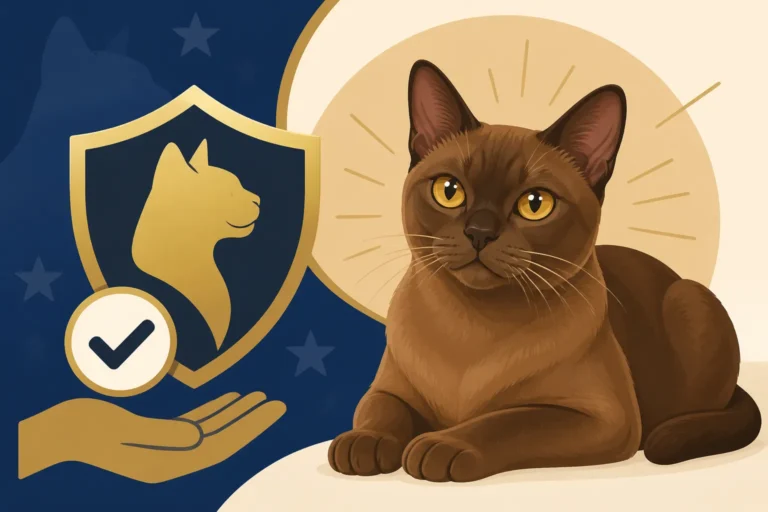
A blue Burmese should look like a coordinated whole: close, glossy coat; warm yellow-to-gold eyes; and a compact, muscular body. The face should fit the cat’s type rather than look like a separate color variety. A blue coat alone does not establish that a cat is Burmese, since several other breeds and mixed-breed cats can have blue-gray fur.
| Feature | Typical blue Burmese appearance | What may cause confusion |
|---|---|---|
| Coat color | Soft blue-gray, sometimes with a warm or fawn cast | Lighting can make it look silver, charcoal, or taupe |
| Coat pattern | Generally even, with subtle darker shading | Strong, sharply defined points may suggest another pattern |
| Eye color | Yellow to gold | Flash and dim lighting can obscure the true shade |
| Coat texture | Short, close-lying, and glossy | A thick or fluffy coat changes the overall impression |
| Build | Compact and muscular | A sleek outline can make the cat seem lighter than it is |
How to tell a blue Burmese from similar cats
Blue Burmese versus Russian Blue, Korat, or Chartreux
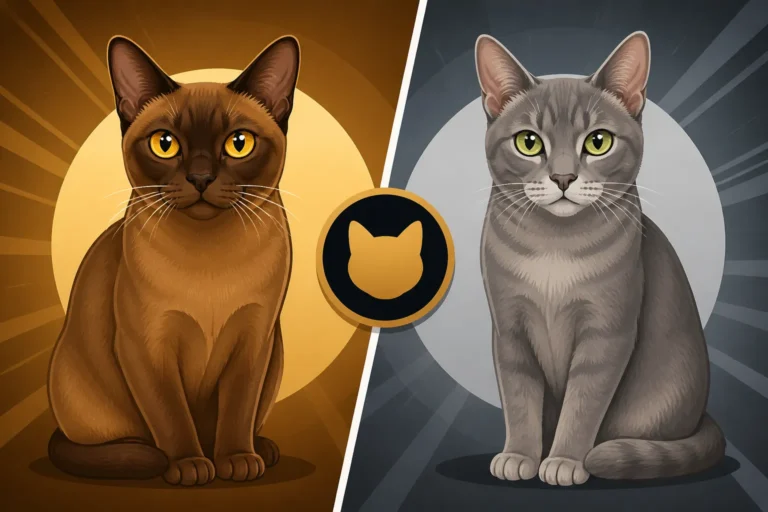
Several breeds can have blue-gray coats, so color by itself is not a reliable identifier. Russian Blues are known for a dense, plush double coat and vivid green eyes as adults. A Burmese coat is much shorter and closer to the body, and its eyes should be in the yellow-to-gold range. The body and head shape also differ, though individual cats vary.
Korat cats are another possible source of confusion. They typically have a silver-tipped appearance that can make the coat seem to glow, along with green eyes in mature cats. Chartreux cats tend to have a thicker, woollier-looking coat and copper-to-gold eyes. A blue Burmese is usually more satin-like in coat texture and warmer in eye color than a blue cat with green eyes.
If you are evaluating a kitten, be cautious about making a breed judgment from a quick photo or a seller’s description. Ask about pedigree and registration, and compare the cat with the relevant breed standard. What a Burmese Looks Like Against the Standard is a useful overview of the features to consider beyond color.
Blue Burmese versus platinum Burmese
Platinum and blue can be confused, especially in photographs. Both are dilute shades and both may look pale in bright light. A blue Burmese generally has a more noticeable blue-gray cast, while platinum is typically lighter and paler, often with a soft, silvery appearance. The difference is not always obvious in a single picture, particularly if the background or camera exposure alters the coat’s apparent tone.
The names used for colors may also vary between registries and regions. If you are comparing cats from different countries or breeder listings, check how the registry identifies the color rather than assuming every seller uses the same label. The Four Colors a Burmese Comes In provides context for the traditional color names, while Which Colors Only the European Burmese Has helps explain why descriptions may differ between standards.
Blue Burmese versus Siamese and Tonkinese
A blue Burmese may have subtle shading on the face and extremities, but it should not usually have the dramatic contrast associated with a pointed Siamese. Siamese coloring is more clearly concentrated on the mask, ears, legs, and tail, with a much paler body. Burmese shading tends to blend more softly across the coat.
Tonkinese cats can also have intermediate-looking color patterns, so the distinction may take more than a glance. Their coat and eye-color expectations differ, and their appearance reflects a different breed history. For a closer comparison, see How a Burmese's Coat Differs From a Siamese's and How a Burmese Differs From a Tonkinese.
Seeing the color clearly as a kitten or adult
Why kitten color can be misleading
Blue Burmese kittens may not show their eventual coat shade clearly at first. A young kitten’s coat can look paler, and the blue-gray tone may become more evident as the cat matures. Changes are gradual rather than a sudden switch, so it can be difficult to predict the finished appearance from early photographs alone.
The way a kitten is photographed adds another layer of uncertainty. A phone camera may brighten pale fur, deepen shadows around the face, or shift the coat toward purple or brown. Ask for pictures in ordinary daylight, ideally with a neutral background, and compare several photos taken at different times. For a general explanation of how Burmese color develops, see When a Burmese Kitten's Color Settles.
How to assess an adult coat
When looking at an adult blue Burmese, start with the coat in natural light. Check whether the color reads as blue-gray overall, whether the shading is soft rather than sharply divided, and whether the fur lies close and smooth against the body. Then look at the eyes and build. Taken together, these clues are more useful than trying to match a single photograph to a color chart.
A healthy-looking glossy coat also depends on routine care, not just genetics. Gentle handling and occasional grooming are usually enough for this short coat. If you’re browsing supplies at Chewy, look for a soft mitt or chamois and avoid choosing a tool simply because it is marketed for heavy shedding. The goal is to care for the coat without scraping or tugging at it.
For a breeder or show prospect, standards matter more than a general online description. Ask which registry the cat is recorded with, whether the paperwork identifies the Burmese type and color, and how the breeder describes the parents’ coats. The standards can vary, so What a Burmese's Coat Is Judged in the Ring and the relevant American or European standard are better references than a seller’s color label alone.
Questions to ask when viewing a blue Burmese
If you are meeting a kitten or adult in person, ask to see the coat in daylight and, if available, photos of the cat at different ages. That helps distinguish a naturally pale coat from a camera effect and gives you a better idea of how the color has developed. You can also ask whether the cat’s pedigree and registration use the color term “blue.”
A responsible breeder should be comfortable discussing the cat’s background and showing appropriate records. If a listing relies only on phrases like “rare blue” or “silver Burmese” without clear paperwork, ask for clarification rather than treating the wording as proof of breed or color. Online product or breed listings—including search results at Chewy for basic grooming supplies—can help you find care items, but they cannot confirm a cat’s pedigree or identify its color with certainty.
Disclaimer
This article is for general informational purposes only and does not constitute professional advice. Laws, prices and regulations vary by location and change over time. Consult a qualified professional for guidance on your specific situation.