Which Scientists Worked on the Burmese With Thompson
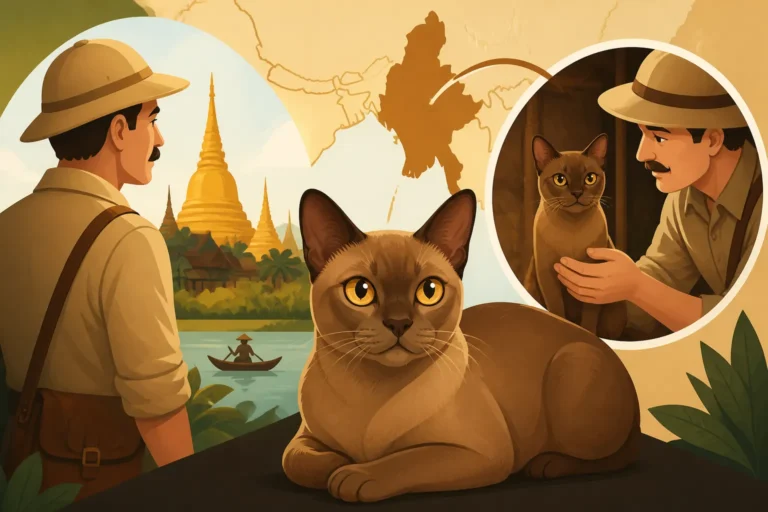
When Dr. Joseph Thompson first brought Wong Mau, his little "walnut brown" cat, back to San Francisco in the 1930s, he knew he had something special on his hands. She was unlike any cat he'd seen, yet clearly had some Siamese traits mixed in. However, to truly understand and establish the Burmese as a distinct breed, it wasn't a journey he could take alone. The story of the Burmese breed's origin is deeply rooted in scientific curiosity and collaboration, moving beyond casual observation into the rigorous study of genetics, with several key individuals contributing to unraveling Wong Mau's unique genetic code.
Dr. Thompson's Initial Investigations: The Seed of a New Breed
Dr. Joseph Thompson, a U.S. Navy medical officer, wasn't just a cat enthusiast; he approached Wong Mau's uniqueness with a scientific mind. His initial observations and breeding experiments laid the crucial groundwork for understanding what would become the Burmese cat. Without this meticulous first step, the genetic puzzle might never have been pieced together.
The Enigma of Wong Mau's Appearance
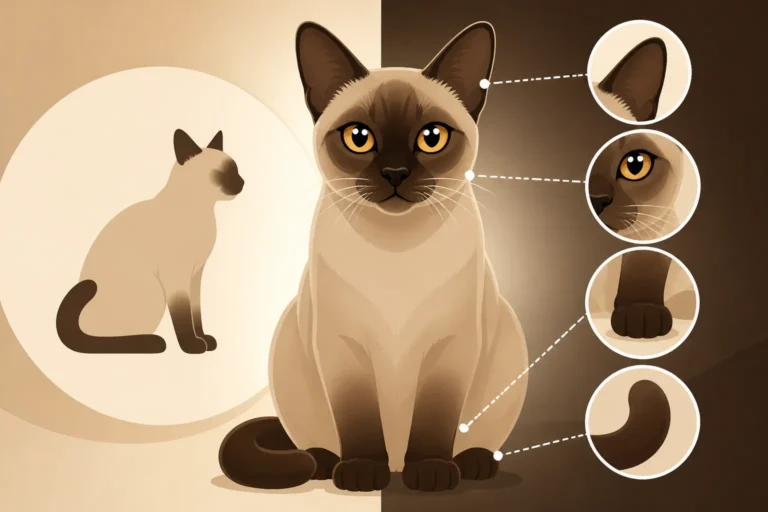
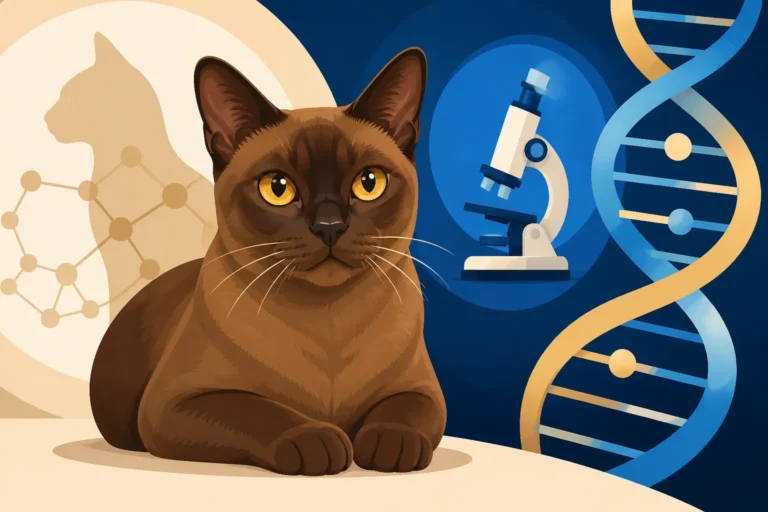
Wong Mau arrived in America from Burma (now Myanmar), a cat of captivating appearance. She was a rich, dark brown, with darker points on her ears, face, and tail, but her body color was notably different from the distinct points of a Siamese. She carried herself with an elegance and had those striking golden eyes. Thompson quickly realized she wasn't simply a dark Siamese, nor was she a solid brown cat. She possessed a nuanced coat pattern that hinted at a unique genetic makeup, a sort of intermediate between the fully pigmented cat and the pointed Siamese. This was the first clue that something genetically distinct was at play. Dr Joseph Thompson and the Burmese He Bought in 1930 tells more about how she was acquired.
Early Breeding Experiments and Observations
To understand Wong Mau's genetic blueprint, Dr. Thompson undertook a series of controlled breedings. His most famous initial pairing was with a Siamese male. This was a critical step in a scientific endeavor, as it allowed him to observe the inheritance patterns of her unique coloration. When Wong Mau was bred to a Siamese, the resulting litter was a revelation. It didn't produce a straightforward mix. Instead, the kittens showed three distinct coat patterns:
- Some were unmistakably Siamese, with their pale bodies and dark points.
- Others resembled Wong Mau herself, displaying the rich, dark sable brown with slightly darker points.
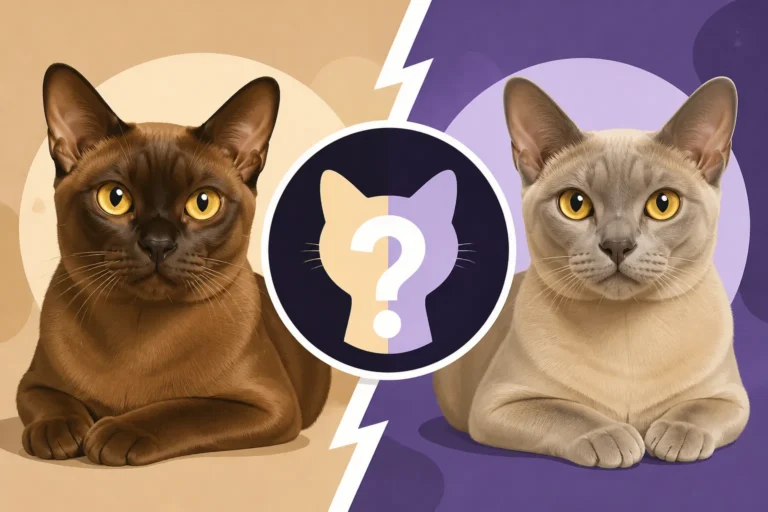
- Intriguingly, there were also kittens that were a paler, fawn-like brown with distinct points, a color now recognized in the Tonkinese breed, often referred to as 'mink'.
This "three-way split" in the kittens was a clear indication that Wong Mau was not a purebred Siamese or a completely dominant "solid" colored cat. It suggested she carried a unique gene for color and that her own appearance was actually a heterozygous expression of this gene. This was the precise moment the Burmese truly began as a scientific project, rather than just an interesting individual cat. What the First Burmese Litter Told Thompson delves deeper into these pivotal early results.
Unraveling the Genetics: Collaborators and Breakthroughs
Dr. Thompson knew he had stumbled upon something significant, and to properly categorize and understand it, he needed the expertise of geneticists. This led to invaluable collaborations that cemented the Burmese's place in scientific history.
Working with Dr. Clyde E. Keeler and Dr. Gordon Davis
The scientific brains that truly helped Dr. Thompson decode Wong Mau's genetics were Dr. Clyde E. Keeler and Dr. Gordon Davis.
- Dr. Clyde E. Keeler was a well-respected geneticist at the Harvard Medical School, known for his work with laboratory animals, particularly mice, and their genetic mutations. His background in Mendelian inheritance and coat color genetics in other species made him the perfect fit to analyze Thompson's breeding data. Keeler understood how recessive and dominant genes worked and could interpret the phenotypic expressions (the visible traits) of the kittens to deduce their underlying genotypes. He meticulously analyzed the ratios of the different colored kittens produced from Wong Mau's matings, comparing them against established genetic principles. His insight was crucial in confirming that Wong Mau carried a unique gene, different from the full color (C) and Siamese (cs) alleles.
- Dr. Gordon Davis, a colleague of Keeler's, also contributed significantly to this genetic investigation. Together, they meticulously documented the inheritance patterns observed in Wong Mau's offspring. Their collaboration with Dr. Thompson was a pioneering effort in applying formal genetic analysis to domestic cat breeding. They identified that the Burmese color was due to a specific allele, which they designated as 'cb' (for Burmese color). They determined that a cat with two copies of this allele (cb/cb) would be a full Burmese. Wong Mau herself was found to be heterozygous, carrying one copy of the Burmese allele (cb) and one copy of the Siamese allele (cs), making her, genetically, a "Tonkinese-like" cat, though the Tonkinese breed wasn't formally recognized at that time.
Their findings demonstrated that the Burmese gene was a "partial albino" allele, meaning it causes a reduction in pigment, but not as severely as the Siamese gene. It essentially lightens the body color while leaving the points darker, much like the Siamese gene, but to a lesser degree. This groundbreaking work was published, lending scientific credibility to the establishment of the Burmese breed. Why the Burmese Was the First Breed Studied by Geneticists offers more context on this historical achievement.
The Scientific Approach to Breed Development
The collaboration between Thompson, Keeler, and Davis wasn't just about understanding a single cat's genetics; it was about demonstrating a scientific methodology for establishing a new breed. Prior to this, many cat breeds were developed more empirically, through selective breeding based on visual traits, without a deep understanding of the underlying genetics.
This team, however, approached it like a laboratory experiment:
- Hypothesis: Wong Mau carries a unique gene that, when combined with the Siamese gene, produces her distinct color.
- Experimentation: Controlled breeding with known genetic types (Siamese).
- Observation & Data Collection: Detailed records of offspring coat colors.
- Analysis: Application of Mendelian genetics by Keeler and Davis.
- Conclusion: Identification of the 'cb' allele and its inheritance pattern.
This rigorous scientific approach allowed them not only to define the genetic basis of the Burmese color but also to develop a breeding program that could consistently produce true Burmese cats. It meant breeders could reliably predict offspring colors, avoiding the random outcomes of less scientific methods. For instance, knowing that two Burmese (cb/cb) would only produce Burmese kittens was a huge step for breed standardization. The cb Allele Is What Makes a Burmese Brown explains this genetic nuance further.
The Impact of Early Genetic Studies on the Burmese Breed
The meticulous work of Dr. Thompson and his scientific collaborators had a profound and lasting impact on the Burmese breed, shaping its development and ensuring its genetic integrity from the very beginning. This scientific foundation set the Burmese apart from many other breeds of its era.
Establishing the Burmese Standard Based on Genetics
Armed with the genetic understanding provided by Keeler and Davis, Dr. Thompson was able to establish a precise breed standard for the Burmese. This wasn't based on arbitrary preferences but on confirmed genetic reality. The standard specified the desired "sable" brown color, eye color, and body type, all of which were linked back to the cb/cb genotype. This scientific backing gave early Burmese breeders a clear roadmap. They knew exactly what they were aiming for genetically, not just aesthetically. This helped prevent the introduction of undesirable traits and maintained the distinct characteristics that defined the Burmese. Without this, the breed might have drifted genetically, losing its unique identity. When the First Burmese Standard Was Written details how this formalization took place.
Consider the clarity this brought to early breeders:
| Parent 1 Genotype | Parent 2 Genotype | Expected Offspring Phenotypes (Color) | Genetic Explanation |
|---|---|---|---|
| cb/cb (Burmese) | cb/cb (Burmese) | 100% Burmese | Homozygous recessive expression. |
| cb/cb (Burmese) | cs/cs (Siamese) | 100% Tonkinese-like (cb/cs) | Wong Mau's original genotype. |
| cb/cs (Tonkinese) | cs/cs (Siamese) | 50% Tonkinese-like, 50% Siamese | Clear inheritance pattern. |
| cb/cs (Tonkinese) | cb/cs (Tonkinese) | 25% Burmese, 50% Tonkinese-like, 25% Siamese | Demonstrates the intermediate nature of the 'cb' allele. |
This table, a simplified version of what geneticists would use, illustrates the predictive power of their findings. It helped breeders understand exactly what they were producing and how to move towards a pure Burmese line.
Legacy and Continued Understanding
The foundational genetic studies performed by Thompson, Keeler, and Davis continue to influence our understanding and breeding of Burmese cats today. Their work established a precedent for scientifically-informed breed development in the cat fancy.
Even now, when we talk about the "Burmese gene" or the "Siamese gene," we're building upon their pioneering efforts. This understanding is crucial for breeders ensuring the health and integrity of their lines, particularly when considering color genetics. The knowledge that the Burmese color is a distinct genetic entity, and not just a variation of Siamese, has allowed for focused breeding programs.
It also highlights the importance of genetic testing and responsible breeding practices. While basic color genetics are well understood, the spirit of scientific inquiry that began with Wong Mau encourages continued research into other genetic predispositions, such as those related to health. Which Diseases the Burmese Actually Carries is a testament to the ongoing importance of genetic understanding in the breed. When you pick up a bag of high-quality cat food from Chewy, you might not think about genetics, but the commitment to understanding an animal's specific needs, whether dietary or genetic, has its roots in this kind of foundational scientific work. Ensuring your cat receives proper nutrition, often advised by vets who understand breed-specific issues, is another way modern care is informed by scientific knowledge. The scientific curiosity that drove Thompson and his collaborators means that today's Burmese enthusiasts are much better equipped to care for their beloved companions than those of nearly a century ago.
Disclaimer
This article is for general informational purposes only and does not constitute professional advice. Laws, prices and regulations vary by location and change over time. Consult a qualified professional for guidance on your specific situation.