Whether the Two Burmese Types Are Separate Breeds
When someone says their cat is an “American Burmese” or a “European Burmese,” it can sound as though they mean two unrelated breeds. The distinction is real, but what it means depends on context: the cats come from related Burmese ancestry, while their appearance and formal breed classification differ across registries. This guide explains how to understand the labels, compare the types, and check a cat’s paperwork.
What the American and European Burmese labels mean
A shared origin with different breeding directions
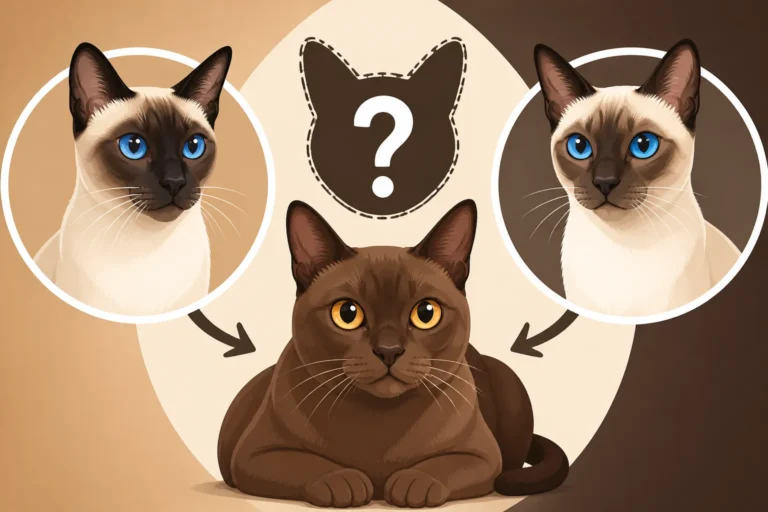
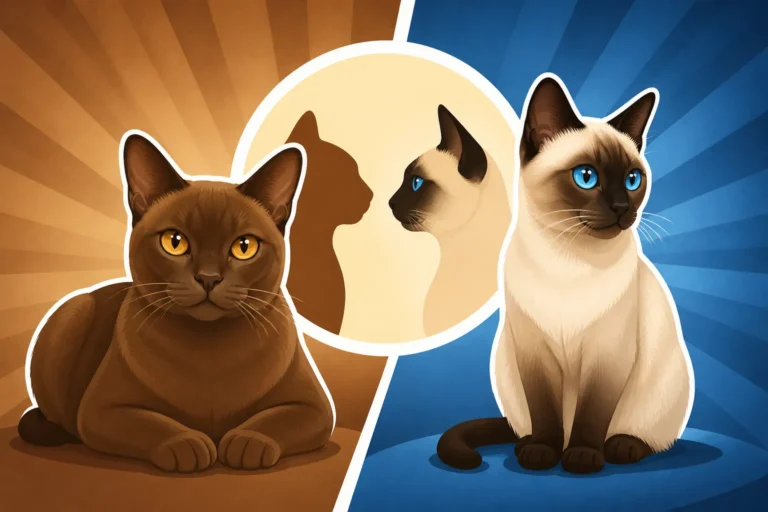
The American and European Burmese descend from related breeding lines, but breeders on either side of the Atlantic gradually favored different looks. In the United States, breeders developed a more compact, rounded appearance. British and European breeding programs followed a different direction, generally favoring a more moderate outline and a wider range of recognized colors.
That history is why “American” and “European” are useful labels for describing type. They refer to different traditions and standards, not to separate species or a simple difference in where an individual cat was born. A Burmese born in Europe does not automatically have European type, just as a cat born in the United States is not necessarily American type.
The split did not happen all at once, and the labels can be used loosely in conversation. A seller might use “European Burmese” to describe a cat’s appearance, while a registry may use the term as the name of a formally defined breed category. When the distinction matters, the cat’s pedigree and the relevant registry’s rules are more reliable than geography or a casual description. The background to this division is explored in How the American and European Burmese Split.
Why the cats can look different
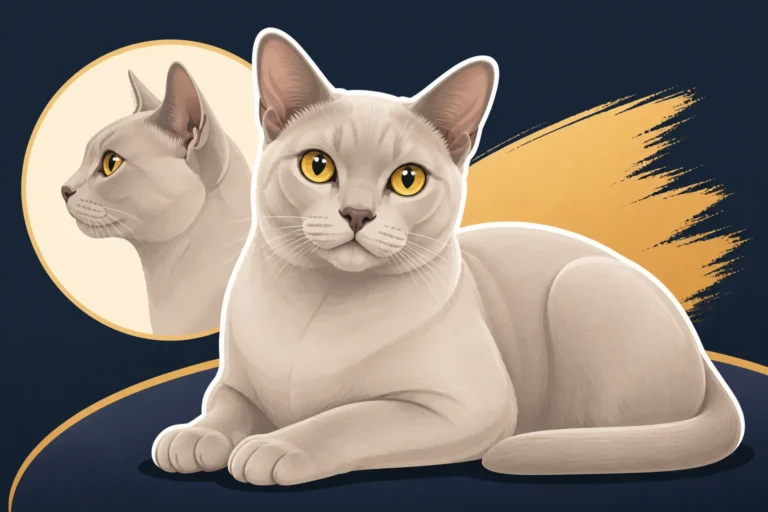
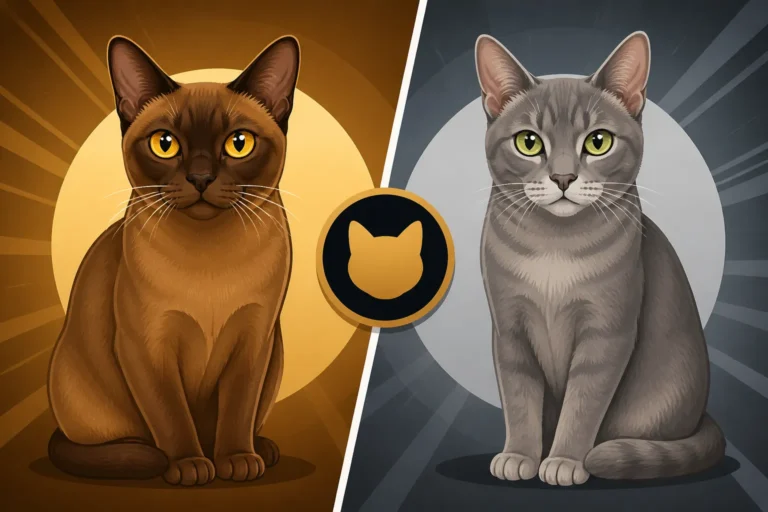
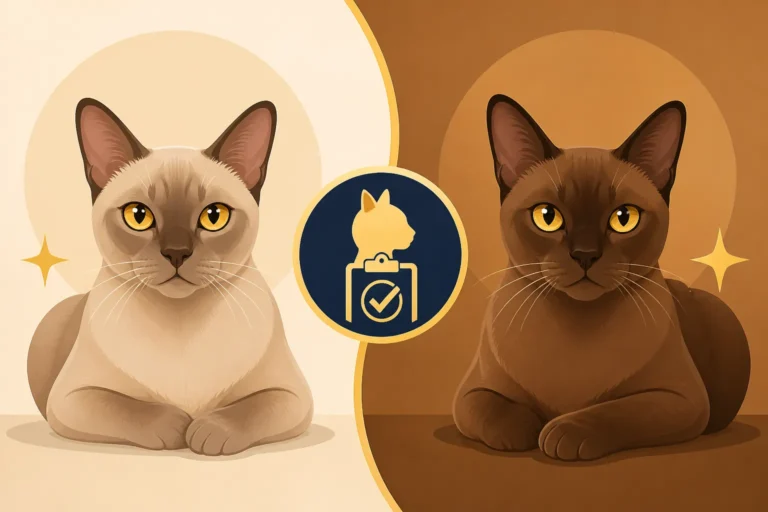
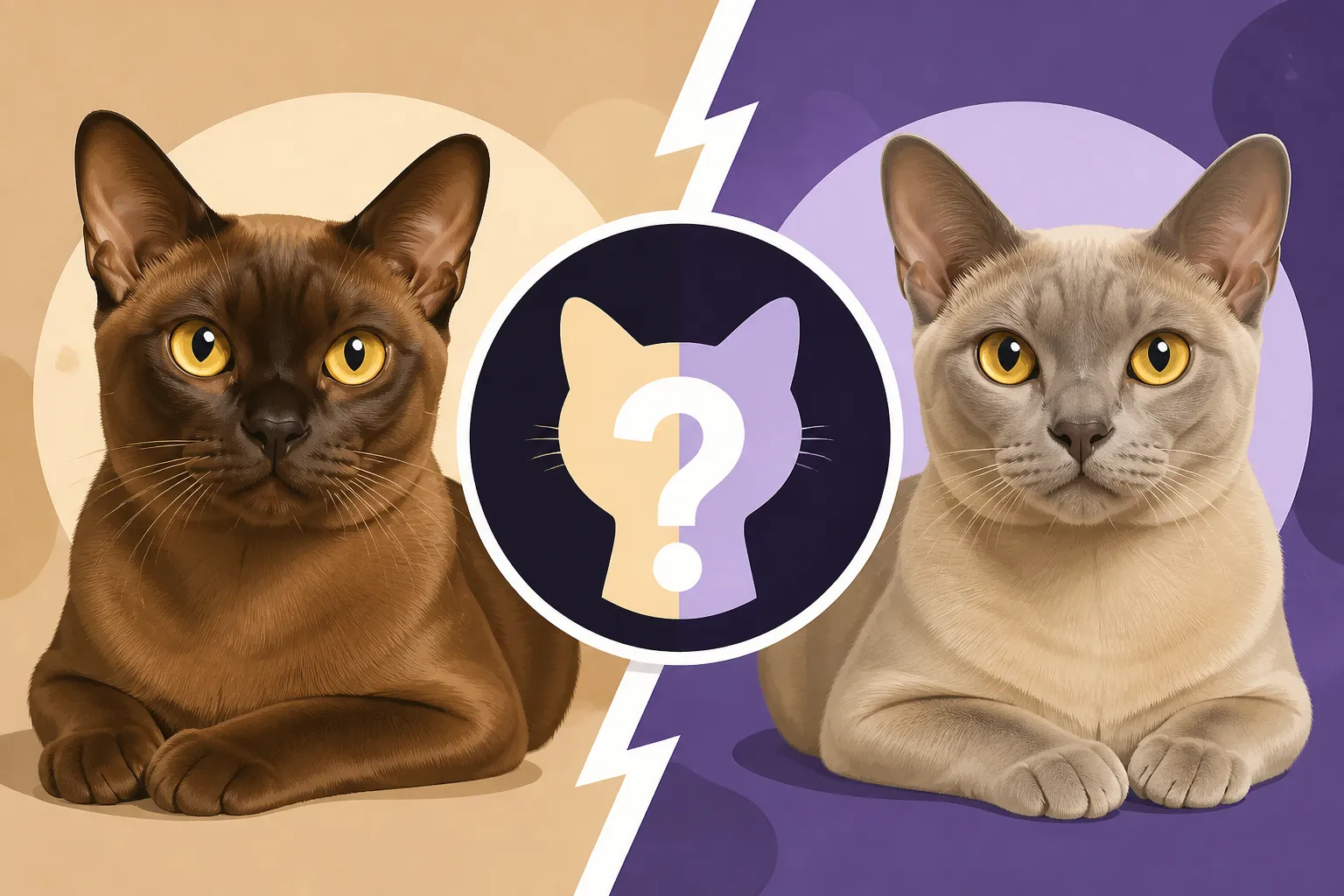
The most noticeable differences are often in head shape, body outline, and the range of colors accepted under a particular standard. A traditional American Burmese is typically described as compact and rounded, with a broad head and a short muzzle. European Burmese type is generally more moderate in outline, with a slightly different head shape and a wider variety of recognized colors in some registries.
These are tendencies, not a checklist that identifies every cat with certainty. Individual cats vary, and photographs can distort proportions. A close-up portrait may make the head appear rounder than it is; a low camera angle can make a cat’s body look stockier. Coat color alone is especially unreliable because standards differ between registries, and a color name may be used differently in different countries.
For a more precise visual comparison, see What an American Burmese's Head Should Look Like and What a European Burmese's Head Should Look Like. Those descriptions are useful for understanding breed standards, but they are not a substitute for pedigree documentation. A cat can resemble one type without having registered ancestry that supports that classification.
Are they separate breeds or two types of one breed
The answer depends on the registry
There is no single worldwide rule that settles the question for every Burmese cat. Some registries distinguish the types formally, while others use different naming or registration systems. As a result, two people can describe the same cat differently without either necessarily misunderstanding its appearance: one may be speaking about type, and the other may be speaking about registry status.
This is why the question “Are they separate breeds?” needs a little context. In ordinary conversation, people may use “American Burmese” and “European Burmese” to distinguish the two broad looks. In registry terms, a particular organization may recognize separate categories, maintain separate standards, or handle them under a different structure. The answer depends on the registry and the cat’s registered ancestry, not simply on the label someone puts in an advertisement.
A practical way to think about it is to separate three ideas: ancestry, appearance, and official registration. Ancestry is about the cat’s pedigree. Appearance is about how closely the cat resembles a particular type. Registration is the formal category assigned by a specific organization. These can overlap, but they are not interchangeable. The distinction is also addressed in Whether the Two Burmese Types Are Separate Breeds and Which Registries Separate the Two Burmese Types.
What registration can tell you
A registry’s rules matter when you are looking at show eligibility, breeding plans, or a pedigree. Different organizations may recognize different categories, colors, or standards, so the same cat’s documents may be interpreted differently depending on the registry involved. Check the paperwork itself and the organization that issued it rather than assuming every registry uses the same definition.
For example, CFA and TICA have their own registration approaches, and the GCCF has its own system as well. The details are not necessarily identical, so a breeder should be able to tell you which registry the cat is recorded with and what category appears on its documents. For more detail, see How CFA Registers a European Burmese, How TICA Registers the Two Burmese Types, and How GCCF Registers the Burmese.
A registry name on paperwork is more meaningful than a seller’s unsupported description, but it still answers a specific question: how that organization classifies the cat. It does not mean every other organization will use the same category or recognize the same standard. If you are comparing pedigrees across borders, ask the breeder or registry to explain how the terms correspond rather than trying to infer equivalence from the names alone.
| Question | What it helps clarify | What it does not prove by itself |
|---|---|---|
| Where was the cat born? | The cat’s place of birth | Its Burmese type or registry category |
| What does the cat look like? | Whether its features resemble a particular type | Its pedigree or registered ancestry |
| Which registry issued the papers? | The organization and category used for registration | That every registry uses the same classification |
| What does the pedigree show? | Documented ancestry and registered names | That the cat meets every show standard |
| What does an advertisement call the cat? | How the seller describes it | Official breed status or verified lineage |
How to check what type a Burmese is
Start with the documents, not the sales description
If you are considering a kitten or adult cat, ask for the registered name, pedigree, and registry details. Look for consistency between the cat’s paperwork and the breeder’s explanation of its type. If the documents use a term you do not recognize, ask what that term means under that particular registry’s rules.
A responsible breeder should be comfortable explaining the distinction without turning it into a sales trick. Ask which registry issued the papers, whether the cat is registered as Burmese or European Burmese under that system, and how the parents are classified. You can also ask to see the parents or photographs of them, while remembering that appearance is supporting context rather than proof of ancestry.
Be cautious if a seller uses “European” or “American” as a premium-sounding label but cannot explain the pedigree behind it. The term may be an informal description, a reference to a line, or a formal registry category; those are different things. A claim is more useful when the seller can show how it is supported, rather than relying on phrases such as “rare type” or “imported look.”
Treat online labels as clues, not verification
Online listings can be useful for finding cats, supplies, and background information, but a breed label in a listing does not authenticate a pedigree. The same caution applies when browsing Chewy or another retailer for Burmese-related products: a breed tag or product description is not evidence that a cat is a particular registered type.
If you are preparing for a new cat, Chewy may be one place to compare everyday supplies such as food, litter, or carriers. Those choices depend on the individual cat and household, not on whether the cat is American or European type. When shopping, check the product details and your veterinarian’s guidance rather than assuming a breed-specific label means an item is required.
You can also use the questions raised by a listing to guide a conversation with the breeder or rescue. If a description calls a cat “European Burmese,” ask what that means in the cat’s specific case. Chewy product pages and general pet retailer listings can help with practical preparation, but the registry paperwork and a transparent explanation of ancestry are what matter for confirming formal classification.
Choosing a Burmese without getting stuck on the label
Focus on the individual cat and the household fit
For most pet homes, the distinction between American and European type is less important than the cat’s temperament, health history, socialization, and fit with your daily routine. Both types are Burmese cats in the broader sense of shared breed history, and neither label guarantees a particular personality. A well-socialized cat’s individual behavior and needs matter more than a head shape or color category.
If you are choosing between kittens, spend time learning how they respond to handling, household noise, and new people. Ask about the environment they have grown up in and how the breeder supports their transition to a new home. For an adult or rescue cat, ask what is known about its previous home, current routine, and behavior around other animals. These details are more useful for day-to-day life than a type label alone.
When comparing cats, it is reasonable to have a preference for a particular appearance. Just keep that preference separate from health or temperament claims. A specific type is not automatically healthier, more affectionate, easier to care for, or better suited to a particular home. Chewy can help you assemble routine supplies once you know what the cat needs, but it cannot resolve questions about pedigree, temperament, or a breeder’s claims.
Questions to ask before you commit
A few direct questions can prevent confusion and help you compare breeders or adoption options fairly:
- Which registry issued the cat’s papers, if the cat is registered?
- What exact category or breed name appears on the documents?
- Are you using “American” or “European” as a formal registry term or as a description of appearance?
- Can I review the pedigree and see how the parents are identified?
- If the cat is not registered, what is known about its ancestry, and how certain is that information?
- What health records and veterinary history will be provided?
- What support is available if I have questions after bringing the cat home?
A clear answer is more reassuring than a confident label without documentation. If the cat is a pet and not registered, it may still be a wonderful companion; the important point is to understand what is known and what is not. If registration or breeding status matters to you, verify it with the relevant organization before making a decision.
Ultimately, American and European Burmese are not best understood as two unrelated cats simply because their standards differ. They are closely related Burmese types whose formal classification varies among registries. Use appearance to understand the style being described, use pedigree and registry records to confirm formal status, and make a pet decision based on the individual cat in front of you.
Disclaimer
This article is for general informational purposes only and does not constitute professional advice. Laws, prices and regulations vary by location and change over time. Consult a qualified professional for guidance on your specific situation.