How CFA Registers a European Burmese
When a breeder calls a kitten a “CFA-registered European Burmese,” it is reasonable to wonder what that actually means. CFA paperwork, a cat’s appearance, and the European Burmese label are not interchangeable. This guide explains how CFA treats the breed, what documents to request, and how to check a particular cat’s eligibility before you buy or register it.
What CFA registration means for a European Burmese
CFA does not use a separate European Burmese registration category
The Cat Fanciers’ Association, usually called CFA, registers cats according to its own breed and pedigree rules. It does not treat “European Burmese” as a separate CFA breed category in the same way some other registries distinguish the two types. That means the phrase “CFA-registered European Burmese” needs clarification: a seller may be describing the cat’s appearance or ancestry, not necessarily quoting the wording on its CFA papers.
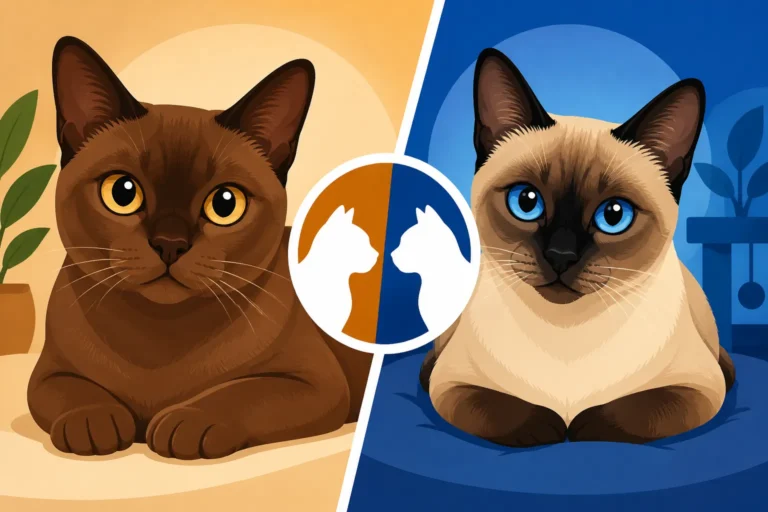
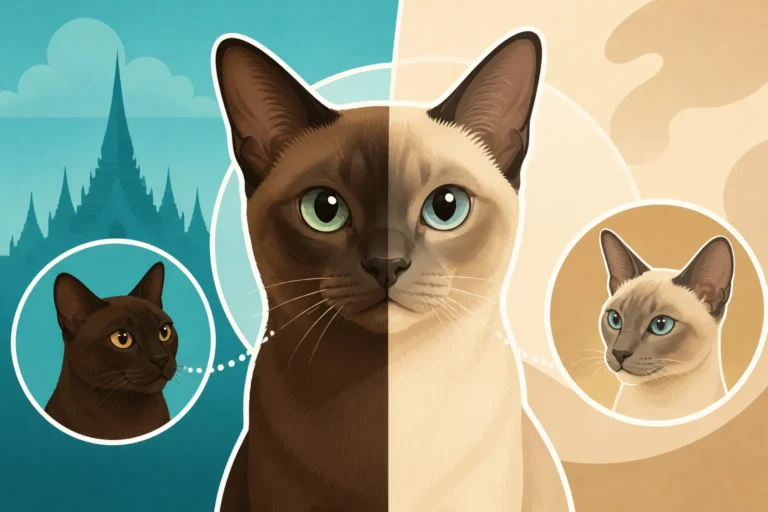
The distinction matters because “European Burmese” can refer to a type of Burmese developed and bred to a different standard from the American Burmese. The two types share breed history, but they have developed different characteristics and are not automatically interchangeable in every registry’s rules. For background, How the American and European Burmese Split explains why the types came to be discussed separately.
CFA’s registration decision rests on documented ancestry and its own rules, not simply on whether a cat looks like a European Burmese. A kitten might be described as European type by its breeder while its registration paperwork, if eligible, identifies it under a broader Burmese category. Conversely, having Burmese-looking parents does not by itself establish CFA eligibility.
Registration, breed type, and show eligibility are different things
Registration is an administrative record of a cat’s recorded identity and ancestry under a particular association. Breed type describes characteristics associated with a line or standard. Show eligibility concerns whether the cat can be entered and judged in a particular class under that association’s current rules. These ideas overlap, but they are not the same thing.
For example, a kitten could have a pedigree from another registry and be described by its breeder as European Burmese. Whether CFA can register that individual depends on the registry, pedigree, and documentation involved. Whether it fits the CFA show standard is another question. A certificate from a different association does not automatically settle either issue.
This is why it helps to ask for the exact registration wording rather than relying on an advertisement. Ask whether the kitten is already registered with CFA, whether the breeder expects to register it, or whether the breeder is using “CFA” to refer to a parent or ancestor. If you are trying to understand how other associations treat the types, Which Registries Separate the Two Burmese Types gives useful context.
How CFA eligibility is generally assessed
Start with the pedigree and the issuing registry
A breeder’s statement that a cat has “papers” is not enough to determine registration eligibility. Ask which association issued the papers, what breed is written on them, and whether the certificate belongs to the kitten, its parents, or another cat in the family. A pedigree is useful because it shows recorded ancestors, but its value depends on whether CFA can accept the records and the lineage for the purpose you have in mind.
If a cat is already registered with another association, do not assume that its registration transfers automatically to CFA. CFA may need to review the original certificate and pedigree, and the outcome can depend on the individual cat’s documented ancestry and applicable rules. A breeder or seller should be willing to provide clear copies of relevant records so that the question can be put to CFA directly.
The names and descriptions used by different registries may not match exactly. A cat listed as Burmese by one organization might have a type designation or lineage that matters to another organization. For a broader look at the distinctions, see Whether the Two Burmese Types Are Separate Breeds and How TICA Registers the Two Burmese Types.
Ask CFA about the specific cat before making assumptions
The safest approach is to ask CFA about the specific kitten or adult cat, using its identifying details and supporting documents. A general question such as “Can European Burmese be registered?” may not be enough to resolve an individual case. Provide the cat’s full registered name if available, registration number, date of birth, breeder details, pedigree, and the name of the registry that issued its existing papers.
A practical inquiry can be brief and precise:
- State that the cat is described as European Burmese.
- Identify the registry shown on its current paperwork.
- Attach or offer the registration certificate and pedigree.
- Ask whether CFA can register this individual and what application route or additional documents are required.
- Ask separately whether registration would make the cat eligible for a particular CFA show class.
Keep the response with the cat’s records. If you are buying a kitten, ask the breeder to clarify the registration arrangement in writing before paying a deposit or taking the kitten home. This avoids discovering later that “CFA registered” meant a parent was registered, rather than the kitten being eligible for registration itself.
Documents and questions to check
Use the paperwork to confirm exactly what is being promised
Before purchase or registration, request copies of documents that identify the cat and its recorded ancestry. Depending on the situation, these may include a registration certificate, pedigree, litter registration information, transfer documents, and any paperwork from the registry where the cat is currently recorded. Check that names, dates, identifying details, and parentage agree across the documents.
A breeder may have a sound explanation for why a kitten’s individual certificate is not yet available, especially if registration is being handled after the litter is recorded. What matters is that the process and responsibility are clear. Ask who will submit the paperwork, what documents you will receive, and what happens if CFA determines that the individual cat does not qualify.
| What you are told | What to ask for | Why it matters |
|---|---|---|
| “The kitten is CFA registered” | The kitten’s own CFA certificate or registration details | Confirms the claim refers to the kitten, not only a parent |
| “The parents are registered” | Each parent’s certificate and the kitten’s pedigree or litter records | Parent registration alone does not confirm the kitten’s status |
| “It is a European Burmese” | The registry name and the exact breed or type wording on its papers | The label may describe type rather than official registration |
| “It can be transferred to CFA” | Written confirmation or a direct eligibility answer from CFA | Transfer or registration eligibility depends on the individual records |
| “It can be shown in CFA” | Confirmation of show eligibility, separate from registration | A registration record does not automatically answer every show question |
Also ask whether the breeder’s contract makes any promise about registration, and what remedy is offered if the promised paperwork cannot be completed. You are not being difficult by asking. Clear documentation is a normal part of buying a pedigreed cat, and it protects both the buyer and the breeder from misunderstandings.
Compare the type claim with the pedigree, not only the cat’s face
European and American Burmese may differ in the features emphasized by their respective standards. Those differences can be visible in the head and overall expression, but appearance alone cannot establish a cat’s registry status. If you are comparing descriptions, What an American Burmese’s Head Should Look Like and What a European Burmese’s Head Should Look Like can help explain the kinds of features people mean when they discuss type.
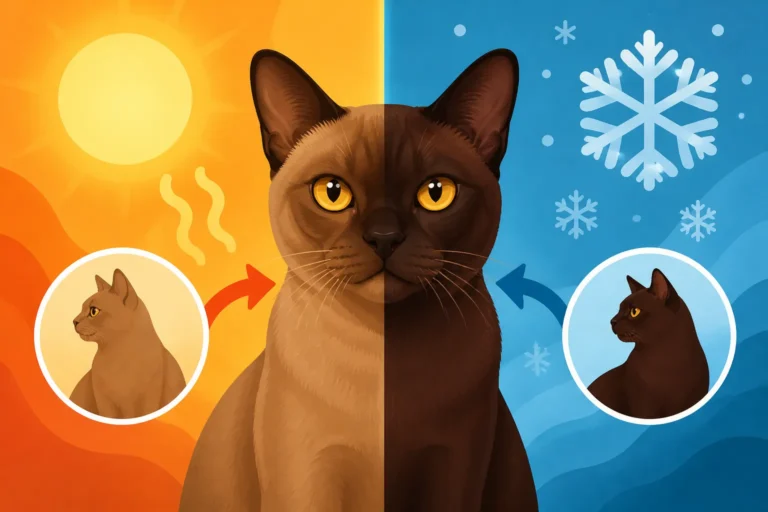
A kitten may also change as it grows. Coat color deepens with age in Burmese cats, and young kittens do not always look like adults. That makes a photograph or a quick visual assessment an especially weak substitute for pedigree documentation. A seller’s description can be useful, but it should not be treated as proof of registration eligibility.
Look for consistency across the breeder’s claims, the paperwork, and the kitten’s lineage. If the breeder says the kitten is European type but the paperwork shows another description, ask how they use those terms. If the explanation is vague or keeps shifting, pause before paying. Why a Burmese’s Pedigree Should Show Its Type Throughout offers further perspective on why consistent pedigree descriptions matter to buyers.
A careful path for buyers and owners
If you are buying a kitten
Before committing, ask the breeder to state in writing what registration the kitten will have and which organization will issue it. If CFA registration is important to you, ask whether the kitten itself—not simply its parents or litter—is eligible under CFA’s rules. Request the supporting pedigree and contact CFA with the details if the answer is not clear.
Do this before making plans around showing, breeding, or transferring the cat. Those plans can depend on separate conditions, and a registration certificate should not be assumed to grant breeding rights or show eligibility. Ask the breeder to explain any restrictions in the sales contract, including whether the kitten is sold as a pet or with other rights.
A responsible breeder should be comfortable explaining the difference between a cat’s type, the registry named on its papers, and what they are promising you. If a breeder uses “CFA registered” as a selling point but will not show relevant documents or clarify whose registration they mean, treat that as a reason to slow down and verify.
If you already own a European Burmese
Gather the cat’s existing registration certificate, full pedigree, transfer papers, and any records from the breeder. Contact CFA with copies or the identifying information and ask for an individual determination. Be specific about whether you want to know if the cat can be registered, whether an existing registration can be transferred, or whether the cat can participate in a particular show category.
If CFA cannot register the cat under the route you expected, that does not change the cat’s identity or your relationship with it. It means only that the cat’s documents do not meet that association’s requirements for the requested purpose. You can still keep accurate records from the original registry and use that registry’s processes for pedigree or show questions. For a comparison of another registry’s terminology and approach, How GCCF Registers the Burmese is a relevant companion topic.
The central point is simple: “European Burmese” is not, by itself, proof of CFA registration. The paperwork and pedigree need to be reviewed under CFA’s rules, and registration should be confirmed for the individual cat rather than inferred from its appearance, its breeder’s description, or the registration status of its relatives.
Disclaimer
This article is for general informational purposes only and does not constitute professional advice. Laws, prices and regulations vary by location and change over time. Consult a qualified professional for guidance on your specific situation.