Why a Burmese’s Pedigree Should Show Its Type Throughout
One of the most perplexing things for new Burmese cat owners, or even seasoned enthusiasts looking to add to their family, is navigating the complexities of their cat's lineage. You might pick up a pedigree, scan it, and wonder why it doesn't clearly state "American Burmese" or "European Burmese" for every single ancestor. This guide is here to unravel that mystery, explaining why a truly transparent Burmese pedigree should spell out the specific type of Burmese throughout its lines and what it means for you and your beloved furball.
The Tale of Two Burmese: Understanding the Breed Split
It might come as a surprise to some, but there isn't just one "Burmese" cat. Over decades, the breed diverged significantly, primarily between North America and Europe, leading to two distinct types recognized by different registries. This isn't just about a subtle difference in appearance; it's about divergent breeding goals that have shaped everything from their physical characteristics to their genetic predispositions. When you look at a pedigree, it's crucial to understand which "school of thought" your cat descends from, because these differences are more than skin deep.
How the American and European Types Developed
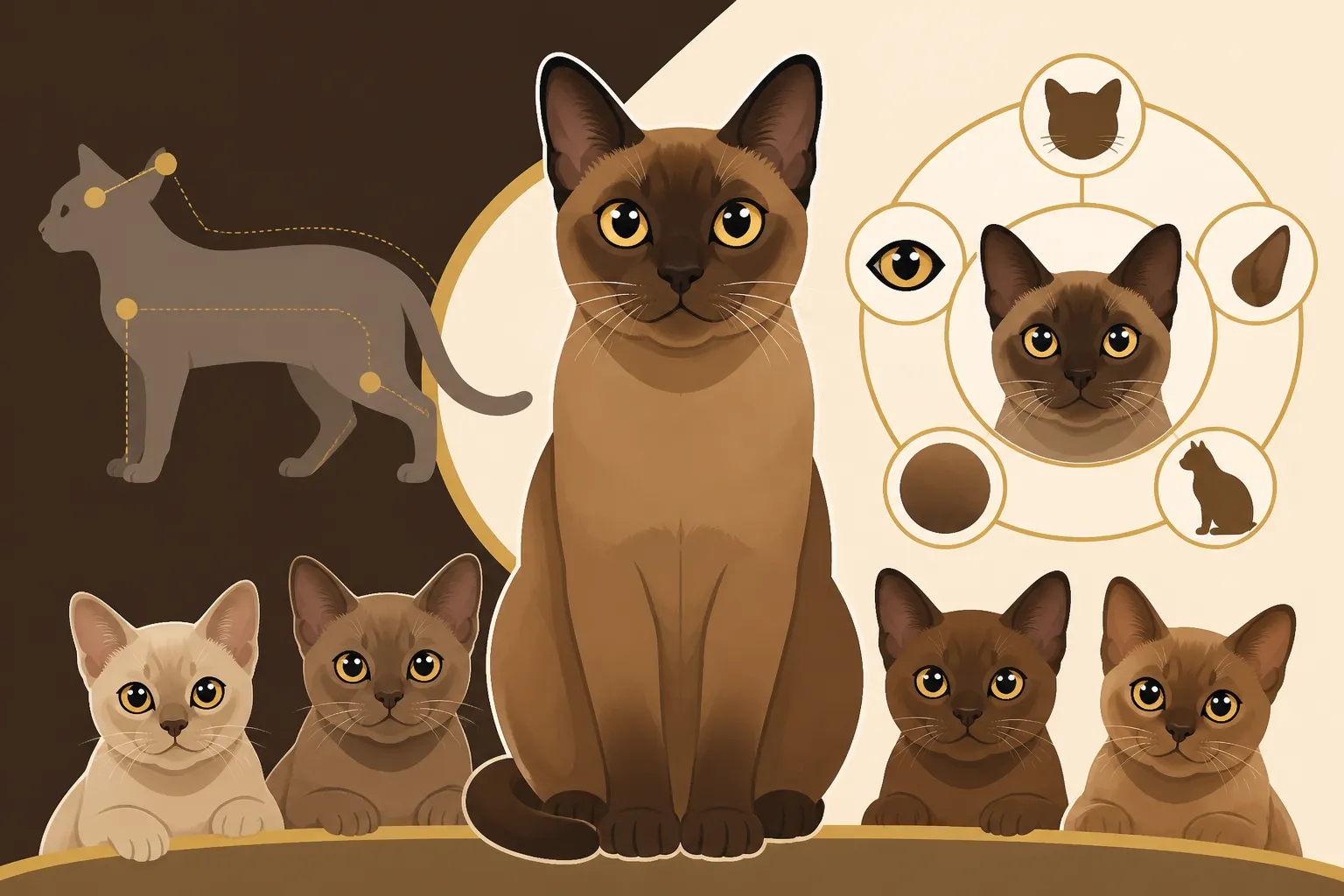
The very first Burmese cat, Wong Mau, brought to the United States in the 1930s, was initially bred with a Siamese to establish the breed. This laid the foundation for what we now know as the American Burmese. Breeders in the U.S. focused on a compact, cobby body with a round head and expressive, round eyes. Their vision was for a distinct, solid and affectionate cat. The emphasis was on a powerful, dense build, often described as a "brick wrapped in silk," with a noticeably shorter muzzle and full cheeks.
Across the Atlantic, the British Burmese (which later influenced the European Burmese) developed along a slightly different path. While they originated from similar stock, post-World War II breeding practices led to a more elegant, moderate body type. European breeders aimed for a cat with a slightly longer, more slender body, a wedge-shaped head, and almond-shaped eyes that were set at a slight angle. The physical differences became so pronounced that the two types are now recognized as distinct by various international cat associations. You can really see it when you put photos side-by-side; the subtle shifts in skull structure and body length are quite striking. Understanding How the American and European Burmese Split is key to appreciating why this distinction on a pedigree matters so much.
Why Crossing the Two Types Is Generally Avoided
Because of these distinct breed standards and the different genetic pools that have developed over generations, most reputable breeders and cat registries strongly discourage or outright prohibit crossing American and European Burmese lines. The fear is that such crosses can lead to offspring that don't conform to either standard, potentially diluting the established traits and even introducing unforeseen health issues. It's not about snobbery; it's about preserving the integrity of each type and ensuring predictable outcomes in terms of health and conformation.
Imagine you're trying to bake two different kinds of cake, each with its own precise recipe. Mixing the ingredients from both might give you something edible, but it won't be either the classic chocolate cake or the delicate sponge you were aiming for. The same principle applies here. Breeders work tirelessly to maintain specific traits and health clearances within their chosen line. A pedigree that doesn't explicitly state the type throughout makes it incredibly difficult to trace these lines accurately, potentially leading to unintended crosses and muddying the waters for future generations. For more on this, consider reading Why the Two Burmese Types Are Not Crossed.
The Critical Importance of Pedigree Clarity
So, why should a simple piece of paper detailing your cat's ancestors be so scrupulous about stating "American" or "European" at every turn? It boils down to transparency, health, and maintaining the breed's standards. Without clear documentation, you're essentially buying a cat with an unknown past, and in the world of purebreds, that can lead to a lot of headaches, heartache, and unexpected vet bills down the line.
Health Implications and Genetic Predispositions
Both American and European Burmese are wonderful cats, but like many purebreds, they can be predisposed to certain health conditions. Crucially, the prevalence and even the specific type of certain genetic conditions can vary between the American and European lines due to their separate breeding histories and gene pools. For example, while the Burmese breed as a whole has a higher incidence of diabetes, specific genetic markers or susceptibilities might be more common in one line over the other. Which Diseases the Burmese Actually Carries is a topic you absolutely need to be informed about.
If your cat's pedigree isn't clear about the type of its ancestors, you could inadvertently be purchasing a cat from a mixed lineage, making it harder to predict potential health challenges. This impacts your ability to prepare for, or even screen for, these conditions. A good breeder will be upfront about the health history of their lines, but if the lineage isn't clear on paper, how can they — or you — be sure? For instance, knowing if you have a European line might prompt you to research conditions like the WNK4 mutation associated with hypokalemia, which has been extensively studied in certain European lines. This knowledge allows you to make informed decisions about diet, veterinary care, and even pet insurance. Companies like Healthy Paws, for example, rely on accurate breed information to assess risk and coverage.
Maintaining Breed Standards and Future Breeding
For those considering breeding their Burmese, a clear pedigree is non-negotiable. If you hope to show your cat or contribute to the responsible continuation of the breed, every ancestor on that pedigree needs to unequivocally state its type. Judges at shows are looking for adherence to very specific breed standards — either the American or the European. A cat with ambiguous lineage will not be able to compete effectively, if at all.
Furthermore, if you're a responsible breeder, you're looking to enhance the breed, not dilute it. This means carefully selecting mates based on their type, conformation, and health clearances. A pedigree that mixes types or leaves them unclear makes it impossible to make these informed decisions. It compromises the genetic integrity of the entire breeding program. This is why Why a Burmese Breeder Must Test Before Any Mating is so vital, and these tests are often type-specific in their interpretation and relevance.
What Happens if Type Isn't Declared?
A pedigree that doesn't explicitly declare the "type" (American or European) for each ancestor is a huge red flag. It implies a lack of transparency, or worse, a deliberate obfuscation of mixed lineage. If a breeder is selling a kitten with a "Burmese" pedigree but hasn't specified the type, you should be asking some serious questions.
Potential Consequences of an Unspecified Pedigree:
- Unpredictable Conformation: Your kitten might grow up looking like a blend, not truly fitting either the American or European standard. This means it might not have the characteristic round head of an American Burmese or the elegant wedge of a European. See What an American Burmese's Head Should Look Like versus What a European Burmese's Head Should Look Like to grasp the distinctions.
- Difficulty with Registries: You might find it challenging to register your cat with reputable cat associations if the lineage is unclear. Many registries strictly enforce the separation of the two types. Which Registries Separate the Two Burmese Types explains how different bodies handle this.
- Increased Health Unknowns: As mentioned, you lose the ability to anticipate and screen for type-specific health issues. This could lead to expensive surprises down the road, and you wouldn't know if a specific diet or preventative care is optimally suited for your cat's precise genetic background.
- Lower Resale Value (for breeders): If you ever need to rehome your cat or decide to explore breeding, an unclear pedigree significantly diminishes its value and desirability within the responsible breeding community.
This is why Why a Burmese Sold Without a Type Is a Warning is such important advice for prospective owners. Always demand clarity.
Verifying Pedigree and Ancestral Type
So, you understand why it's important. Now, how do you actually ensure you're getting a pedigree that clearly shows the Burmese type throughout? It requires diligent research, direct communication, and a keen eye for detail. Don't be shy about asking questions; a reputable breeder will welcome them.
What to Look For on a Pedigree
When you receive a pedigree, whether it's a preliminary copy or the official document, meticulously examine every ancestor listed. You should see a consistent designation of "American Burmese" or "European Burmese" (or the specific local terminology, like "British Burmese" for European lines in the UK) next to the names of the cats in the lineage. This should extend back for at least three to five generations. If you see any entries that simply say "Burmese" without qualification, or if there's a mix of designated types, it warrants immediate inquiry.
A clear pedigree should also indicate the registration numbers from the relevant cat association for each ancestor. These numbers can often be cross-referenced with the association's records to verify the authenticity and type of the cat. Don't hesitate to ask the breeder to explain any ambiguities or inconsistencies you find. A good breeder will have no problem walking you through every line and confirming the type.
Asking the Right Questions to Your Breeder
Before committing to a kitten, engage in a thorough conversation with the breeder. Here are some key questions to ask, specific to pedigree and type:
- "Can you show me the full pedigree for both parents, explicitly stating 'American Burmese' or 'European Burmese' throughout?"
- "Which specific breed standard do you adhere to – the American or European?" (Their answer should align with the pedigree they provide.)
- "What cat associations are your cats registered with, and do these associations recognize the distinction between American and European Burmese?"
- "What are the common health concerns in your specific line, and how do you screen for them?" (This can give you clues about their focus on type-specific health.)
- "Have there ever been any crosses with the other Burmese type in your breeding program's history?"
A responsible breeder will not only have these answers ready but will also be proactive in educating you about the nuances of their lines. They should be transparent about genetic testing results, such as those for hypokalemia or GM2 Gangliosidosis, and how those results relate to the specific type they are breeding. For instance, knowing that a line has been tested for What the WNK4 Mutation Does in a Burmese tells you a lot about their commitment to health within that specific type.
Registries and Official Documentation
The main international registries that separate the types are often The International Cat Association (TICA) and some European federations. In the U.S., the Cat Fanciers' Association (CFA) recognizes only one Burmese standard, which aligns with the American type, though they may register European imports under specific conditions. It's important to understand Which Registries Separate the Two Burmese Types to ensure your cat's documentation is legitimate and recognized.
The official documentation from these registries should consistently reflect the type. If a breeder shows you a paper pedigree but the registered type on the official association's database is different or ambiguous, that's a discrepancy you need to resolve immediately. Remember, the paper trail is your best defense against misunderstanding your cat's true heritage.
The Long-Term Impact on Ownership
Choosing a Burmese with a clear, type-verified pedigree isn't just about showing off fancy papers; it's about setting yourself up for a fulfilling and predictable ownership experience. It impacts everything from your ability to understand your cat's behavior to managing its long-term health and care.
Predictable Traits and Temperament
While Burmese cats, regardless of type, share many wonderful characteristics like their 'Velcro' personality and vocal nature, subtle differences can exist. The American Burmese, with its cobby build, is often described as having a slightly more intense, "in-your-face" affection, while European Burmese might be a touch more athletic and graceful. These are broad generalizations, of course, but knowing the type of your cat can help you understand and appreciate its unique physical and behavioral traits.
For example, if you anticipate a very robust, cuddly lap cat with a distinct round face, knowing you have an American Burmese pedigree provides confidence. If you prefer a more svelte, elegant companion, a European pedigree helps manage those expectations. This foundational knowledge contributes to a deeper bond and better appreciation of your cat's individual quirks.
Planning for Lifelong Care and Nutrition
The implications of type extend to everyday care. While all Burmese benefit from high-quality, low-carbohydrate wet food to mitigate their diabetes risk, understanding your cat's specific lineage can fine-tune your approach. Some lines might have a higher predisposition to dental issues due to jaw structure, for instance.
If you know your cat's specific type, you can better research the care recommendations and dietary needs that breeders and vets specializing in that particular type advocate. This enables you to make more informed choices when purchasing food, ensuring your cat receives the best possible nutrition tailored to its heritage. It's all about proactive care, especially when you're looking at The Sixteen to Eighteen Years a Well Bred Burmese Gets—you want those years to be as healthy and happy as possible.
Your Peace of Mind
Ultimately, a pedigree that unequivocally states the Burmese type throughout its ancestry offers you immense peace of mind. You know exactly what you're getting, genetically speaking. You can research potential health issues relevant to your cat's lineage, understand its physical traits, and connect with a community of owners and breeders who share the same specific type.
This transparency empowers you to be a more informed and prepared owner, able to provide the best possible care for your unique Burmese companion. Don't settle for less than complete clarity when it comes to your cat's heritage; it's one of the best investments you can make in its future well-being.
| Pedigree Feature | Ideal Scenario (Clear Pedigree) | Red Flag Scenario (Ambiguous Pedigree) | Impact on Owner |
|---|---|---|---|
| Type Designation | "American Burmese" or "European Burmese" (consistently) | Just "Burmese" or inconsistent mixing of types | Clarity on physical traits, temperament, and health predispositions. |
| Registry Information | Official registry names (e.g., CFA, TICA, GCCF) with registration numbers for all ancestors | Unrecognized registries, missing numbers, or "paperless" claims | Ensures authenticity and adherence to breed standards. Facilitates registration. |
| Breeder Transparency | Openly discusses type, health, and lineage | Hesitant to provide detailed answers or full pedigree | Builds trust and confidence in the kitten's background. |
| Health Clearances | Documented genetic tests relevant to the specific type (e.g., Hypokalemia, Diabetes) | Lack of testing or vague statements about "healthy lines" | Ability to anticipate and prepare for specific health risks. |
| Breeding Practices | Strict adherence to one type's standard, no crossing | Willingness to cross types, "designer" Burmese | Predictability of appearance and health for future generations. |
Disclaimer
This article is for general informational purposes only and does not constitute professional advice. Laws, prices and regulations vary by location and change over time. Consult a qualified professional for guidance on your specific situation.