Why the Two Burmese Types Are Not Crossed
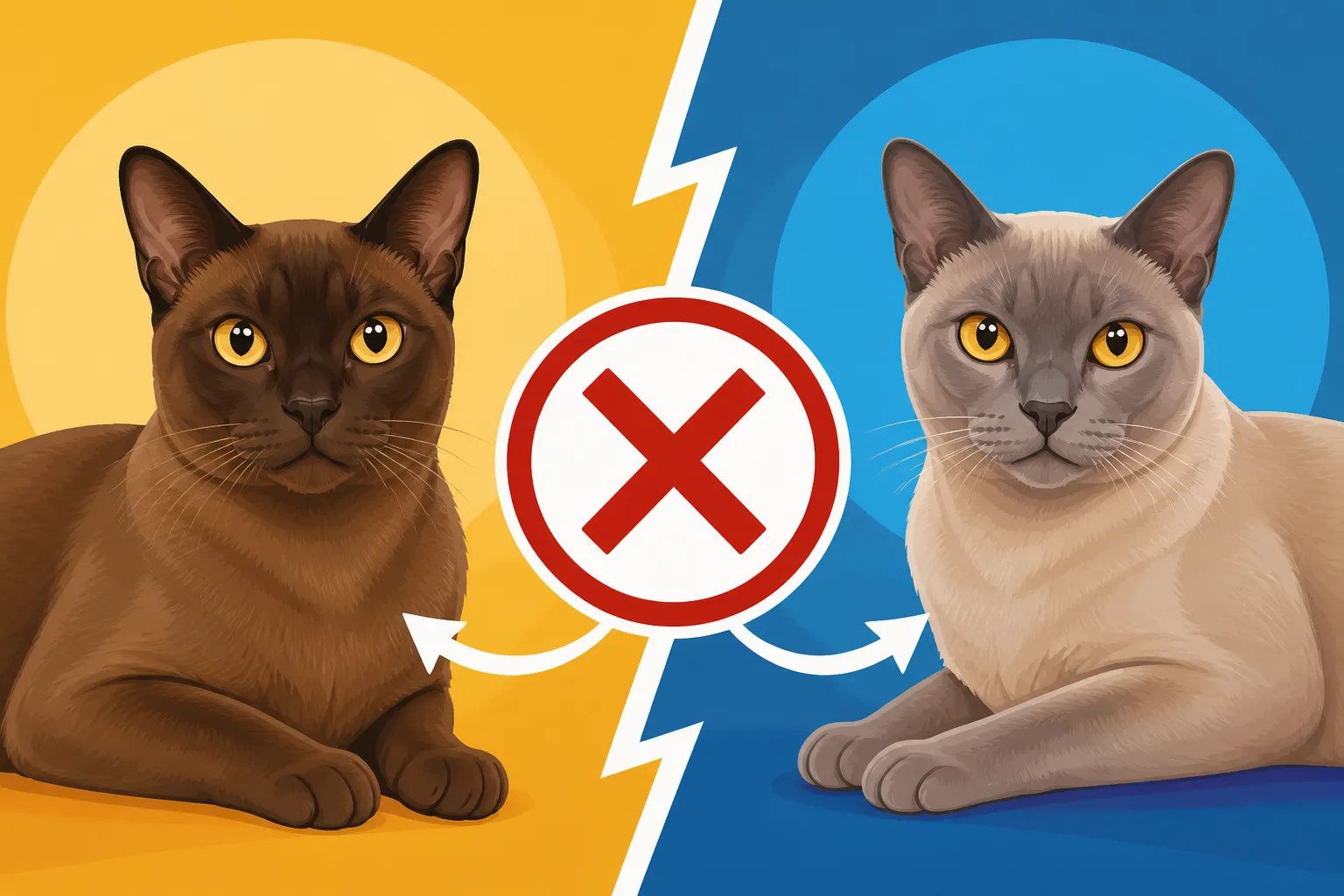
It’s a natural thought for many cat lovers, especially those new to the wonderful world of Burmese cats: if there are two distinct types, the American and the European, why don’t breeders ever cross them? You might imagine a hybrid combining the best of both worlds, creating an even more robust or unique feline. However, the reality in the cat fancy is quite different, and the reasons behind maintaining strict separation are deeply rooted in history, genetics, and the very health and future of the breed. This guide will delve into why these two cherished Burmese lineages remain distinct, and why crossing them simply isn't done.
Understanding the Split: A Historical Perspective
The journey of the Burmese cat, from its single progenitor, Wong Mau, to the two distinct types we know today, is a fascinating story of differing breed ideals and selective breeding. What started as a unified effort to establish this captivating breed eventually branched into two separate paths, each with its own vision for the Burmese cat.
The Divergence of American and European Lines
The original Burmese cat arrived in the United States in the 1930s, captivating early breeders with its unique appearance and delightful personality. Dr. Joseph Thompson played a pivotal role in establishing the breed, breeding Wong Mau with a Siamese to understand her genetic makeup. From these early foundational cats, the American Burmese type began to take shape, focusing on a compact, cobby body, a round head, and large, expressive eyes.
However, when the Burmese arrived in the United Kingdom and later spread across Europe, breeders there developed a slightly different vision. Post-World War II, the available gene pool was limited, and some outcrossings occurred, inadvertently influencing the breed's development. European breeders favored a more elegant, moderate build, often described as less extreme than the American type. They sought a slightly longer muzzle, a less rounded head, and a body that was still muscular but not quite as cobby. This slow but steady divergence meant that over decades, the two populations grew further apart, not just geographically, but phenotypically – in their physical characteristics. It wasn't a deliberate decision to create two breeds initially, but rather a natural evolution based on different aesthetic preferences and breeding choices across continents. You can learn more about this journey in How the American and European Burmese Split.
Distinct Physical Standards and Breed Ideals
The very essence of a pedigreed cat breed lies in its written standard, a detailed description of the ideal specimen that breeders strive to achieve and judges use to evaluate cats in competition. For the American and European Burmese, these standards have evolved to define two visually distinct animals.
The American Burmese standard, often seen in registries like the Cat Fanciers' Association (CFA), emphasizes a significant "roundness." We're talking a round head, full cheeks, and large, round, golden eyes. The body is compact, cobby, and surprisingly heavy for its size – a true "brick wrapped in silk." The muzzle is notably short and rounded. When you look at an American Burmese, the overall impression is one of solid, powerful charm. What the American Burmese Standard Asks For elaborates further on these specific traits.
In contrast, the European Burmese standard, recognized by organizations like The Governing Council of the Cat Fancy (GCCF) in the UK, describes a cat with a slightly longer, wedge-shaped head, a more moderate muzzle, and eyes that are typically more almond-shaped or slightly slanted, often in shades of green or gold, depending on the coat color. Their bodies are elegant, athletic, and well-muscled, but without the extreme cobby nature of their American cousins. The overall impression is one of refined grace and balance. What the European Burmese Standard Asks For provides excellent detail on these differences. These divergent standards mean that a cat that excels in one type of show ring would likely be faulted in the other, making a direct cross problematic for anyone aiming to meet breed specific criteria.
Genetic Integrity and Health Considerations
Beyond the physical appearance, the separation of the American and European Burmese lines is crucial for maintaining genetic integrity and managing breed-specific health concerns. Responsible breeding is not just about looks; it's fundamentally about health and welfare.
Preserving Unique Genetic Pools
With decades of separate breeding, the American and European Burmese populations have developed distinct genetic profiles. While they share common ancestors, the emphasis on different physical traits and the selection pressures applied by breeders on each continent have led to variations in their respective gene pools. Crossing these lines would, in essence, blend these distinct genetic histories, potentially diluting traits that each lineage has worked hard to preserve.
For instance, certain lines within the American Burmese might have a stronger predisposition to particular genetic markers, while European lines might carry different ones. Maintaining separate gene pools allows breeders to focus on strengthening desired traits and, importantly, identifying and managing breed-specific health conditions that may have emerged within their particular population. It’s about understanding the nuances of each family tree, much like tracing your own lineage to better understand your heritage. This intentional separation helps breeders make informed decisions that benefit the long-term health and vitality of their specific Burmese type, ensuring genetic diversity within each population rather than creating a homogenized blend that might mask important genetic information.
Potential Health Implications of Crossbreeding
One of the most significant reasons why reputable breeders do not cross the two Burmese types revolves around potential health implications. While the Burmese as a whole is generally a healthy breed with a good How Long a Burmese Lives, both types are known to carry certain predispositions to specific health conditions. For example, Burmese cats, particularly those from certain lines, are known for a higher incidence of diabetes compared to other breeds, a topic extensively covered in Why a Burmese Is Four Times More Likely to Become Diabetic.
Introducing genetics from one type into another without a deep understanding of the potential interactions could inadvertently combine different genetic predispositions in unpredictable ways. This isn't just a theoretical concern; it's a very real risk that could lead to an increase in certain health issues or even the emergence of new ones in subsequent generations. Breeders meticulously track health records and utilize genetic testing to screen for known conditions like hypokalemia (Hypokalemia Is the Burmese Disease With a DNA Test) or craniofacial defects (Burmese Head Defect Is Lethal and Recessive). Uncontrolled crossing could muddy these efforts, making it harder to predict and prevent inherited diseases.
Think about it like this: if one line has been carefully bred to minimize a certain genetic vulnerability, introducing another line that hasn't had the same selection pressure could undo years of hard work. Brands like Healthy Paws offer pet insurance policies that can help manage unexpected veterinary costs, but proactive breeding practices are the first line of defense against hereditary illnesses. Responsible breeders strive to produce the healthiest kittens possible, and this often means sticking to established, well-understood lines within their specific type.
Registry Rules and Breeder Ethics
The world of pedigreed cats is governed by rules, both formal and informal, that shape breeding practices and ensure the integrity of each breed. For the Burmese, these rules reinforce the separation of the American and European types.
The Role of Cat Registries
Major cat registries worldwide, such as the Cat Fanciers' Association (CFA) in North America and The Governing Council of the Cat Fancy (GCCF) in the UK, play a pivotal role in maintaining breed standards and ensuring proper lineage documentation. These organizations officially recognize and register cats based on adherence to specific breed standards and documented pedigrees. Crucially, they typically separate the American and European Burmese types as distinct entities within their systems, or recognize them under different standards. Which Registries Separate the Two Burmese Types offers a more detailed look into this.
What this means for breeders is that if you breed an American Burmese to a European Burmese, the resulting kittens may not be eligible for registration as purebred Burmese with either primary registry in their respective categories. Such a crossbreed, while still a lovely cat, would effectively be considered a "hybrid" in terms of registration, and its offspring would typically not be recognized for show or breeding within the purebred Burmese community. This strict adherence to type is a safeguard against indiscriminate breeding and ensures that breeders are working towards a consistent, recognized ideal. It is the framework that supports the efforts of breeders who dedicate themselves to improving the breed within its established parameters.
Ethical Breeding Practices and Line Purity
Beyond the formal rules, there's a strong ethical code among responsible Burmese breeders. Maintaining line purity is not just about winning ribbons at shows; it's about preserving the distinct characteristics, health, and historical legacy of each Burmese type. Breeders commit significant time, resources, and passion to understanding their specific lines, tracking health clearances, and carefully selecting mating pairs to improve the next generation. This involves extensive research into pedigrees, genetic testing, and ongoing health monitoring of their breeding cats, all to uphold the health and temperament specific to their type. A good breeder will be transparent about their cats' lineage and health testing, as discussed in Which Diseases a Burmese Breeder Must Declare.
Introducing an outcross from a different type would essentially restart much of this careful work, creating uncertainties in temperament, health, and adherence to the breed standard. Ethical breeders prioritize predictability in their breeding outcomes to ensure they are producing healthy, well-adjusted kittens that truly represent their specific Burmese type. They understand that every breeding decision has long-term consequences for the breed. For instance, reputable breeders will openly share What a Burmese Breeder Must Test Before Any Mating to ensure genetic health. This dedication is often reflected in the cost of a well-bred kitten, where Why Breeding Rights on a Tested Clear Burmese Cost Most emphasizes the value placed on genetic health and purity. The goal is to steward the breed responsibly for future generations.
Impact on the Future of the Burmese Breed
The decision to maintain two separate Burmese types isn't just about adhering to historical precedent or current standards; it's a strategic choice made with the long-term health and integrity of the breed in mind.
Maintaining Breed Identity for Generations
For any pedigreed breed to thrive, its defining characteristics must be consistently reproduced through generations. If the American and European Burmese were regularly crossed, their unique identities would inevitably begin to blur. Over time, the distinctive round head of the American Burmese might become less pronounced, or the elegant body of the European type might lose some of its characteristic length. The very traits that make each Burmese type special and distinct would be at risk of being diluted or lost entirely.
This isn't to say that either type is "better" than the other, but rather that they represent two different, cherished expressions of the Burmese cat. Maintaining their separate breeding programs ensures that enthusiasts of either the cobby, round-headed American Burmese or the more moderate, elegant European Burmese can continue to find cats that meet their specific preferences for years to come. It’s about preserving a living history and ensuring that the diversity within the broader "Burmese cat" family remains intact, providing options for those who adore these wonderful felines. It helps maintain the clear picture of What a Burmese Looks Like Against the Standard for each lineage.
The Importance of Informed Breeding Decisions
Ultimately, the separation of the two Burmese types underscores the paramount importance of informed and responsible breeding decisions. Breeders are the custodians of their chosen lines, tasked with making choices that benefit the individual cats, their immediate offspring, and the breed as a whole. This includes careful consideration of genetics, health, temperament, and adherence to the established breed standard.
In a world where accessibility to information is at our fingertips, discerning buyers should always seek out breeders who are transparent about their breeding practices, health testing, and lineage. They should be able to articulate clearly why they breed the type of Burmese they do and how they are working to improve it. Whether it's sourcing high-quality, low-carbohydrate food from retailers like Chewy or researching pet health plans, every aspect of owning a Burmese can be an informed decision, and that starts with where you get your kitten. Even specific nutritional needs require careful consideration, and breeders are key in guiding new owners. The commitment to not crossing the American and European Burmese types is a testament to the dedication of breeders to preserve the unique beauty and health of each lineage, ensuring a vibrant future for both. The lifetime cost of owning a Burmese, which can be considerable, as explored in What a Burmese Costs Over Sixteen Years, makes responsible breeding and health a top priority for everyone involved.
| Feature | American Burmese | European Burmese | Reason for Separation |
|---|---|---|---|
| Head Shape | Round, broad, full cheeks | Moderate wedge, slightly longer muzzle, softer contours | Divergent aesthetic preferences in early development |
| Eye Shape | Large, round | Expressive, slightly almond-shaped | Different interpretations of the ideal Burmese gaze |
| Body Type | Compact, cobby, surprising weight for size ("brick") | Elegant, athletic, well-muscled, less cobby | Variation in desired build and overall silhouette |
| Registries | CFA (Cat Fanciers' Association), TICA (The International Cat Association) | GCCF (Governing Council of the Cat Fancy), FIFe (Fédération Internationale Féline), TICA | Official recognition of distinct standards and lineages |
| Genetic Pools | Distinct, developed over decades of separate breeding | Distinct, developed over decades of separate breeding | Preserving unique genetic strengths and managing specific health predispositions |
| Breeding Goal | Adherence to specific standard, health, temperament | Adherence to specific standard, health, temperament | Each type has its own ideal to strive for and protect |
Disclaimer
This article is for general informational purposes only and does not constitute professional advice. Laws, prices and regulations vary by location and change over time. Consult a qualified professional for guidance on your specific situation.