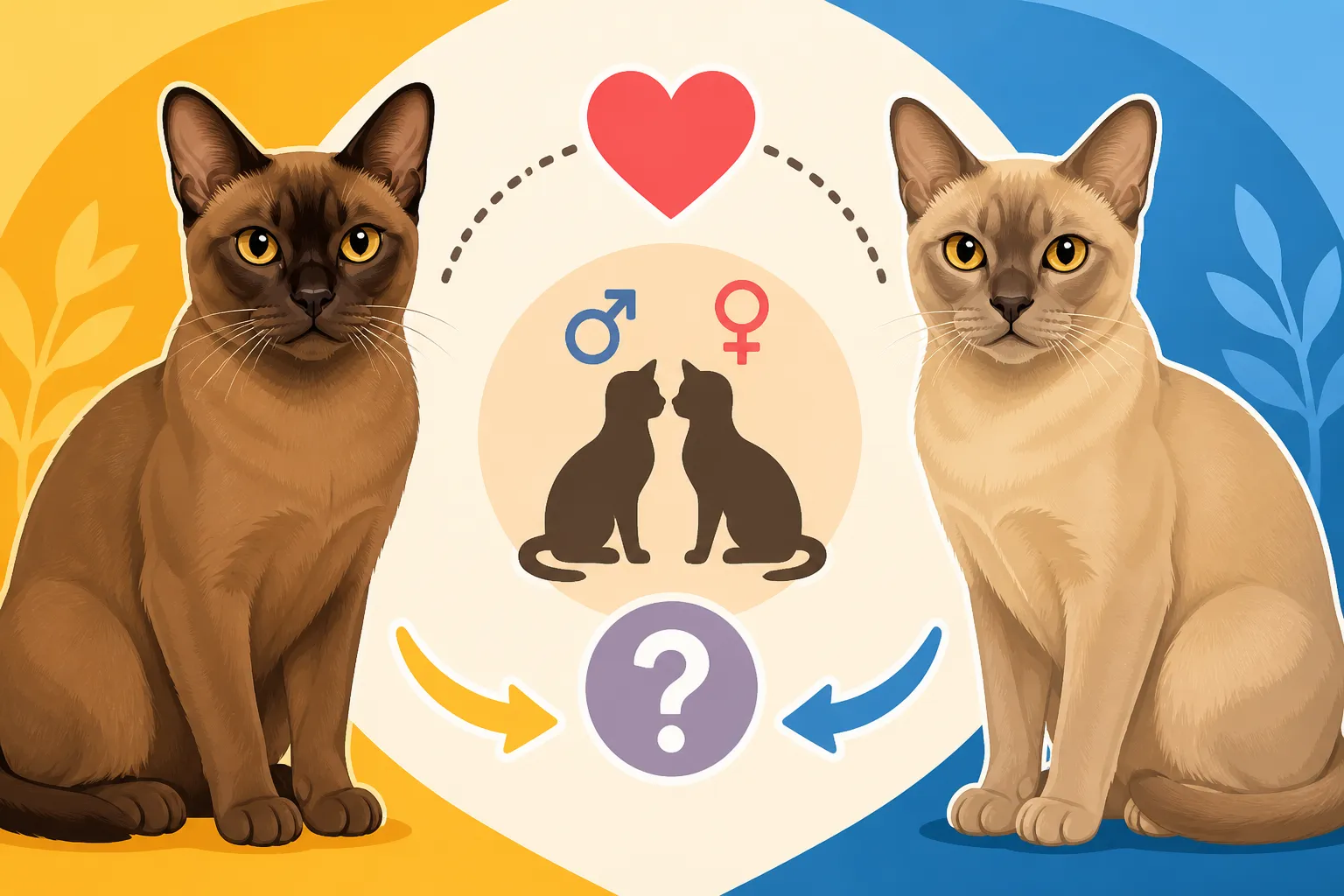
Whether a European Burmese Can Be Bred to an American
It's completely understandable to wonder about combining the genetic lines of an American Burmese and a European Burmese, especially when you love the qualities of both types. Many enthusiasts, and even some breeders, have pondered this very question, navigating the complexities of breed standards and genetic integrity. This guide will delve into why these two distinct types exist, what the major cat registries say about cross-breeding them, and the practical and ethical considerations for anyone considering such a union.
Understanding the Divergence: How Two Burmese Types Emerged
The Burmese breed, as we know it today, has a fascinating and somewhat complex history that led to the development of two distinct "types" – the American and the European. It wasn't an intentional split in the beginning, but rather a natural divergence influenced by geography, evolving aesthetic preferences, and the specific breeding goals of different regions.
The Initial Split and Breed Standards
The original Burmese cat, tracing back to Wong Mau, arrived in America in the 1930s. Early breeders, notably Dr. Joseph Thompson, worked to establish the breed using Siamese outcrosses to expand the gene pool. Over time, particularly after World War II, a separate lineage began to develop in the United Kingdom, often referred to as the British or European Burmese. While both types share a common ancestry and the stunning sable (brown) color, their paths diverged quite significantly. American breeders tended to favor a more compact, cobby body, a distinctly rounded head, and full, round eyes, developing what we now recognize as the American Burmese type. Think of it as a soft, rounded, brick-like form.
Meanwhile, breeders in Europe, starting from some of the same foundational cats but with different aesthetic goals, gravitated towards a more elegant, moderate physique. Their ideal Burmese possessed a slightly more wedge-shaped head, a longer muzzle, and eyes that were still large and expressive but not quite as profoundly round. This led to the establishment of separate breed standards by different cat registries, solidifying these two distinct visions for the Burmese cat. The differences, while subtle to the untrained eye, are quite pronounced to those immersed in the breed. If you've ever seen them side-by-side, it's clear they are both beautiful, but they certainly aren't identical. This divergence is a key part of How the American and European Burmese Split.
Physical and Temperamental Distinctions
When we talk about the physical differences, the head is often the first thing people notice. The American Burmese typically has a very round head with full cheeks, a short, broad muzzle, and widely set, round eyes that give a sweet, open expression. Their body is compact and muscular, often described as a "brick wrapped in silk," with powerful legs and a medium-length tail. They are incredibly dense and heavy for their size, a trait that always surprises new owners.
The European Burmese, on the other hand, presents a slightly more refined silhouette. Their head is a modified wedge, often described as having softer contours than the American type, with a slightly longer muzzle and a gentle dip at the nose. Their eyes are still large and expressive but often have a slightly more oval or almond shape. Their body is moderate, still muscular but less extreme in its cobbyness, with elegant lines. While both types are renowned for their incredibly affectionate and "velcro" personalities, some enthusiasts perceive the European type as perhaps a touch more vocal or energetic, though these are often individual cat variations rather than hard and fast rules. Both are famously loving, interactive, and intelligent companions. Understanding What a Burmese Looks Like Against the Standard helps appreciate these nuances.
The Official Stance: What Registries Say About Cross-Breeding
This is where the rubber meets the road for anyone considering breeding the two types. The organized cat fancy, through its various registries, has clear guidelines that largely discourage or even prohibit the interbreeding of American and European Burmese lines. This isn't just about aesthetics; it's rooted in decades of breed development and the desire to maintain specific genetic pools.
Rules of Major Cat Registries
Major international cat registries like the Cat Fanciers' Association (CFA) in North America, The International Cat Association (TICA), and the Governing Council of the Cat Fancy (GCCF) in the UK, generally treat the American and European Burmese as separate breeding programs, if not entirely separate breeds. For example, CFA primarily recognizes and registers the American Burmese type, adhering strictly to its standard. While TICA is more inclusive and acknowledges both types, they are still usually registered as distinct variants within the Burmese breed. The GCCF in the UK has its own stringent standard for the European Burmese, often referred to simply as "Burmese," and does not typically recognize the American type for breeding or showing within their main classes.
What this means in practice is that if you were to breed an American Burmese with a European Burmese, any resulting kittens would likely be difficult to register as purebred Burmese according to the strict standards of many major organizations. Their pedigrees would quickly become complex, and they would not conform cleanly to either the American or European standard, making them ineligible for show circuits and potentially impacting their value as breeding stock. It’s important to research Which Registries Separate the Two Burmese Types if you are serious about breeding or even just owning a specific type. In many cases, a contract from a reputable breeder will explicitly state What a Burmese Contract Bans Crossing the Two Types.
Why the Separation is Maintained
The reasons for maintaining this separation are multi-faceted. Firstly, it's about preserving the distinct aesthetic and conformational traits that breeders have worked for generations to establish. If you were to consistently cross-breed, the unique "look" of both the American and European types would gradually blur, leading to intermediate forms that don't quite fit either standard. This would dilute the very essence of what makes each type special and recognizable.
Secondly, it's about genetic integrity. While both types are Burmese, they have diverged genetically enough that their specific lines have been carefully managed over decades. Introducing a different "type" of Burmese can bring in unforeseen genetic combinations, potentially affecting health outcomes or temperament in unpredictable ways. Breeders have dedicated their lives to refining these lines, making sure specific traits are consistently passed down. Unsanctioned crossing undermines this careful work and can make it harder for future breeders to achieve consistency in their litters. Essentially, the separation helps maintain the genetic purity and predictability of each distinct line, which is why Why the Two Burmese Types Are Not Crossed is a common understanding among established breeders.
The Practical Realities and Ethical Considerations of Crossing Lines
While the idea of combining the best traits of both American and European Burmese might sound appealing in theory, the practical realities and ethical considerations often outweigh the perceived benefits. This isn't a simple matter of mixing two beautiful ingredients; it has long-term implications for the breed and the individual cats.
Potential Outcomes for Kittens
If you were to breed an American Burmese with a European Burmese, the resulting kittens would likely exhibit a mix of traits from both parents. You might see heads that are neither perfectly round nor perfectly wedge-shaped, eyes that are an ambiguous shape, and body types that don't conform cleanly to either the "cobby" American or "moderate" European ideal. Essentially, these kittens wouldn't be "true" to either breed standard. This makes them incredibly difficult, if not impossible, to register with many major cat registries as purebred Burmese that adhere to a specific type. For a breeder, this means the offspring would have little value in the show ring or as part of a structured breeding program.
Beyond aesthetics and registration, there's the consideration of health. While both types share a general robust health profile, they each have certain predispositions that ethical breeders diligently test for, such as diabetes risk in the Burmese as a whole. While there's no inherent known health disaster in crossing the two types directly related to the cross itself (unlike, say, breeding two carriers of a specific genetic disease), the lack of clear lineage standards could complicate future health tracking or breed-specific research. The aim of responsible breeding is to produce healthy, type-correct cats, and crossing these lines actively works against the goal of producing "type-correct" offspring. You want clear answers, and cross-breeding introduces ambiguity.
Breeder Responsibilities and the Future of the Breed
For any breeder, the core responsibility lies in preserving and improving the breed while prioritizing the health and welfare of their cats. This means adhering to established breed standards and working within the recognized genetic lines. Reputable breeders make significant investments in understanding their cats' pedigrees, genetic health tests, and the nuances of their chosen type. They often specialize in either American or European Burmese, committing to perfecting that specific vision of the breed.
Considering crossing the two types raises significant ethical questions. It essentially goes against the decades of careful selection that have established these distinct types. It's not about creating a "new and improved" Burmese, but rather about blurring lines that have been intentionally separated for specific reasons by the cat fancy. A responsible breeder will always prioritize the integrity of the breed and the future predictability of their lines. They will understand Why a Burmese Sold Without a Type Is a Warning and will transparently provide all pedigree information. Ethical breeders perform comprehensive DNA panels and health screenings; a company like Healthy Paws offers pet insurance plans that can help owners manage unexpected vet costs, highlighting the importance of responsible breeding practices from the start.
Alternative Paths: How to Get the Best of Both Worlds (Responsibly)
So, if directly crossing American and European Burmese lines isn't recommended, what options are available for someone who loves both types or seeks a certain look? The answer lies in appreciation, careful selection, and supporting ethical breeding practices.
Appreciating Both Types
Instead of trying to merge the two, many cat enthusiasts simply appreciate both American and European Burmese for their individual beauty and charm. Each type brings its own unique visual appeal and, while their core Burmese personality of intense affection is universal, there can be subtle variations in their presence and energy. You might find yourself drawn to the rounded, powerful look of the American Burmese for its endearing 'brick in silk' quality, or captivated by the elegant, moderate lines of the European Burmese. Many owners simply enjoy both as companions without any intention of breeding.
If you are particularly drawn to a specific trait that might seem "between" the two types, it's worth exploring the variety within each standard. Not all American Burmese are identically round, and not all European Burmese are identically wedge-shaped. There's a spectrum, and a good breeder will be able to show you how their lines conform to the standard they breed for, while still offering individual variations in appearance. You might find that the specific look you admire already exists perfectly within one of the established types. This highlights why it is crucial How to Tell Which Burmese Type You Are Buying and how to understand the specific standards for What the American Burmese Standard Asks For and What the European Burmese Standard Asks For.
Finding a Reputable Breeder for Your Preferred Type
The most responsible and rewarding path is to choose which type of Burmese truly speaks to you and then seek out a reputable breeder who specializes in that specific type. A good breeder will be passionate about their chosen standard, whether it's American or European, and will be transparent about their breeding goals, health testing, and pedigree lines. They should be able to show you the parents, explain their breeding philosophy, and provide clear health guarantees.
When you work with an ethical breeder, you're not just getting a kitten; you're gaining a mentor and supporting the integrity of the breed. They will ensure that your kitten has been properly socialized, vaccinated, and comes from parents who have been tested for known breed-specific health issues. They'll also provide guidance on How to Give a Burmese Its Insulin at Home or Which Diet Puts a Burmese Into Remission should your cat develop diabetes later in life, as a responsible breeder thinks about the long-term health of their lines. For all your supply needs, reputable online retailers like Chewy offer a vast selection of high-quality cat food, toys, and essentials, making it easier to care for your new companion, no matter their type. This approach guarantees you a well-bred cat that consistently represents its type, rather than an unpredictable mix.
| Feature | American Burmese | European Burmese |
|---|---|---|
| Head Shape | Very round, broad, full cheeks | Modified wedge, slightly longer muzzle, softer contours |
| Eye Shape | Large, round, widely set | Large, expressive, often slightly oval/almond |
| Body Type | Compact, cobby, muscular ("brick in silk") | Moderate, athletic, well-muscled, less cobby |
| Coat Texture | Short, fine, satin-like, lies close to body | Short, fine, satin-like, lies close to body |
| Ear Set | Medium size, rounded tips, tilted forward | Medium size, rounded tips, set to follow wedge |
| Temperament (General) | Highly affectionate, playful, "velcro cat" | Highly affectionate, playful, "velcro cat" |
| Registries | Primarily recognized by CFA in North America | Primarily recognized by GCCF in UK, often in TICA |
| Gene Pool | Generally larger and more diverse | Can be smaller, especially in some regions Why the European Burmese Gene Pool Is Smaller |
| Outcrossing | Prohibited with European type by most registries | Prohibited with American type by most registries |
| Show Eligibility | Judged against American standard | Judged against European standard |
Disclaimer
This article is for general informational purposes only and does not constitute professional advice. Laws, prices and regulations vary by location and change over time. Consult a qualified professional for guidance on your specific situation.