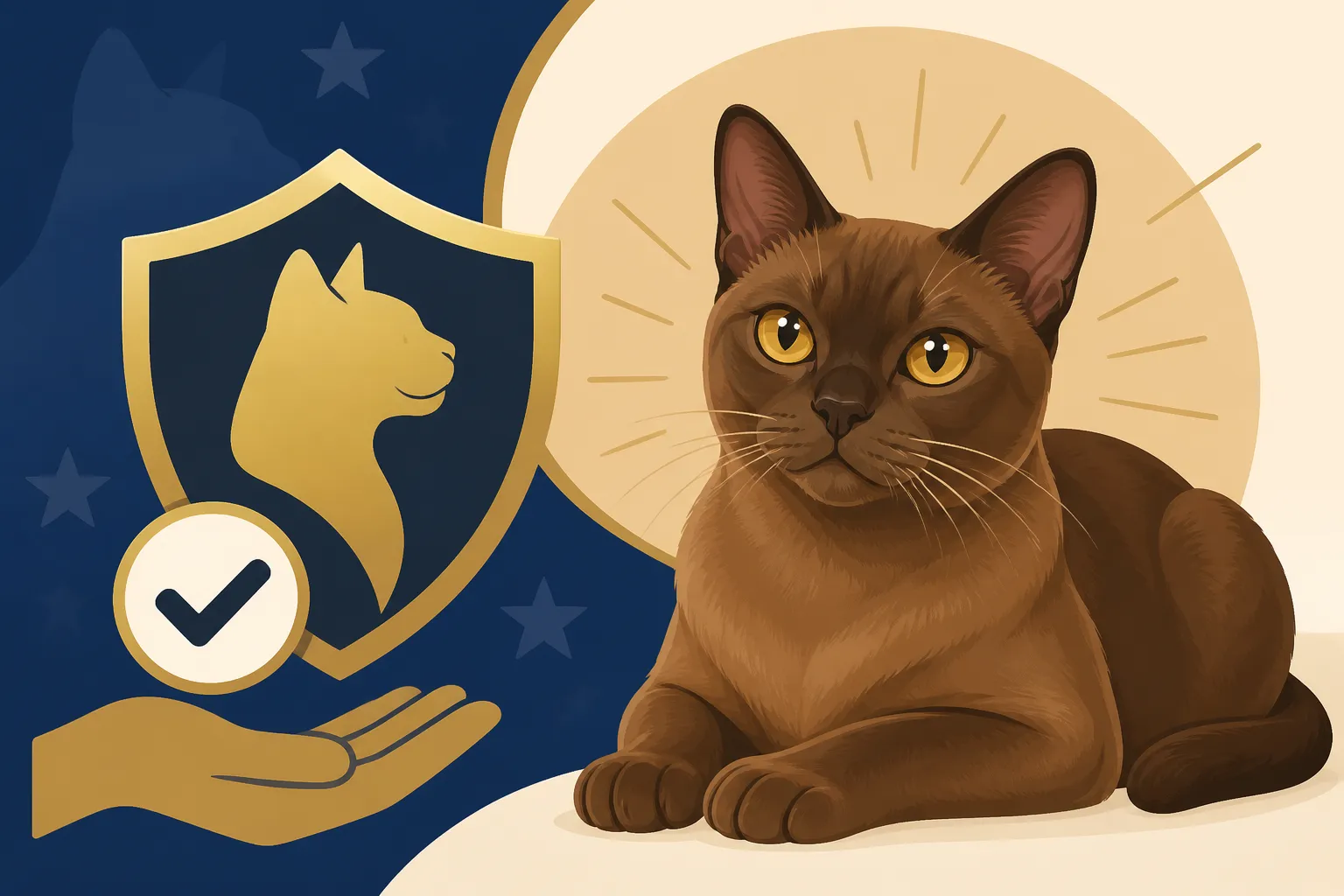
What the American Burmese Standard Asks For
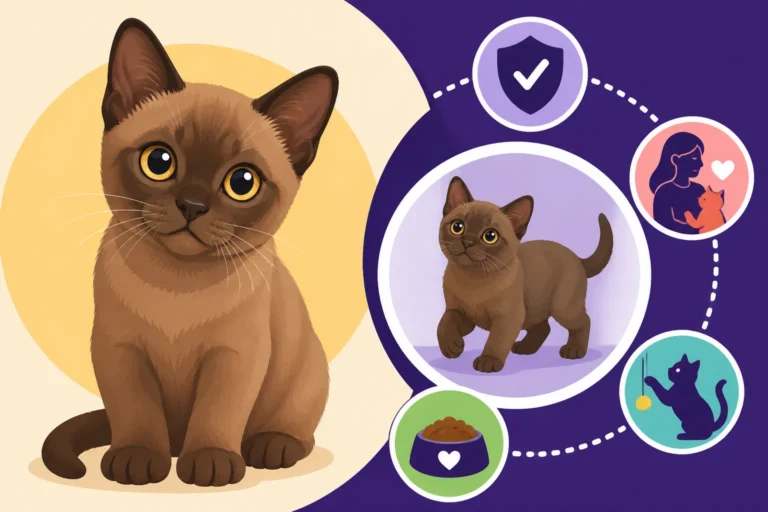
If you've ever found yourself marveling at the gorgeous, expressive eyes and compact, muscular body of a Burmese cat, you might also have stumbled into the confusing world of breed standards. It's not just about what makes a cat pretty; it's about preserving the unique traits that define a breed. This guide is all about peeling back the layers of the American Burmese standard, helping you understand precisely what makes this beloved cat type so special and how its characteristics are officially defined by major registries like the Cat Fanciers' Association (CFA).
The Historical Context of the American Burmese Standard
Understanding the American Burmese standard isn't just about reading a checklist; it's about appreciating a rich history that began with a single cat and a dedicated scientist. The standards we see today are the result of decades of careful breeding, scientific inquiry, and a clear vision for what this unique feline should embody.
Dr. Thompson's Vision and Wong Mau's Legacy
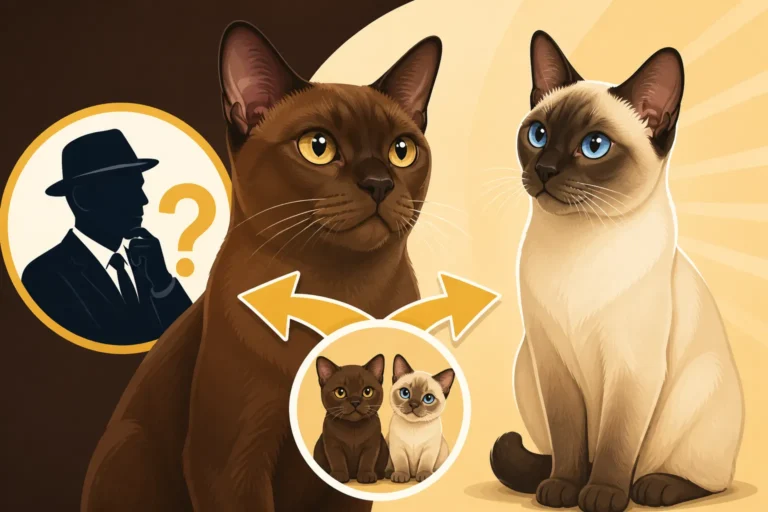
Our story truly begins with a cat named Wong Mau. She arrived in the United States in 1930, brought from Burma by Dr. Joseph C. Thompson, a U.S. Navy doctor. Wong Mau was a beautiful, walnut-brown cat, but she wasn't quite a Siamese, nor was she entirely like the domestic short-haired cats common in America at the time. Dr. Thompson, intrigued by her distinctive appearance and charming personality, embarked on a breeding program with the specific goal of understanding and replicating her unique traits. He decided to breed Wong Mau to a Siamese cat, a common practice for establishing new breeds with similar genetic backgrounds.
The kittens from this initial pairing were fascinating. Some were pointed like a Siamese, some were solid brown like Wong Mau, and others were a shade in between, what we now know as Tonkinese. This demonstrated that Wong Mau herself carried both the Burmese and the Siamese color genes, making her a hybrid, not a purebred in the traditional sense. Dr. Thompson's methodical approach, meticulously documenting each litter, was groundbreaking for the nascent cat fancy. He, along with geneticists, scientifically proved that the solid brown cats inherited a distinct genetic trait, the cb allele, responsible for the rich, warm brown color that deepens at the extremities but isn't as pronounced as the Siamese points. His vision was clear: to establish a breed that was solid brown, with a compact build and an affectionate nature, a truly distinct cat from its Siamese relatives. This foundational work laid the very groundwork for what would become the American Burmese. It's a testament to his dedication that The Burmese Began With One Cat Called Wong Mau and his subsequent breeding program truly launched this breed into existence.
CFA's Early Recognition and the 1947 Suspension
The Burmese quickly captivated cat enthusiasts. Their striking looks and engaging personalities made them incredibly popular, leading to rapid development and, perhaps, some growing pains. The Cat Fanciers' Association (CFA), one of the oldest and largest registries of pedigreed cats, officially recognized the Burmese for championship status in 1936. This was a huge step, granting the breed legitimacy and encouraging breeders across the country to participate in shows and adhere to a developing standard.
However, the rapid growth and high demand for these enchanting cats led to some unfortunate practices. To increase numbers quickly, some breeders began introducing more Siamese blood into their lines, or even other breeds, blurring the distinct characteristics that Dr. Thompson had so carefully identified. This dilution of the gene pool created cats that didn't consistently meet the emerging Burmese ideal. It became difficult for judges to differentiate between true Burmese and those with too much Siamese influence. The integrity of the breed was at stake. Consequently, in 1947, CFA made the difficult decision to suspend Burmese registration and championship status. This was a major setback and a source of considerable frustration for legitimate breeders who were working hard to maintain the breed's purity. It was a clear signal that the association was serious about upholding breed standards and protecting the unique identity of each cat breed. You can imagine the heartbreak and determination of those breeders who watched their beloved cats lose their championship status overnight, but understood the necessity of protecting the breed's future. CFA Suspended the Burmese in 1947 and Took It Back only after very specific conditions were met.
Reinstatement and the Defining Separation
The suspension wasn't the end for the Burmese; rather, it was a pivotal moment that forced a re-evaluation and ultimately strengthened the breed. For nine long years, dedicated breeders worked tirelessly to cleanse their lines of excessive outcrossings, focusing intensely on producing cats that truly embodied the original Burmese type. CFA stipulated that for a Burmese to be registered again, it had to have a documented pedigree of three generations of pure Burmese to Burmese breeding. This strict requirement was crucial in solidifying the breed's genetic foundation and ensuring uniformity.
When CFA reinstated the Burmese in 1956, it marked a new era. This rigorous selection process inadvertently led to the distinct split between what we now recognize as the American Burmese and the European Burmese. While American breeders were adhering to the strict "three generations pure" rule, their counterparts in Britain, who had also begun developing the breed, continued to breed for a slightly different look, often incorporating more moderate body types and a broader genetic base. The American standard, forged in this crucible of re-establishment, became characterized by its emphasis on a compact, muscular body, a distinctly rounded head, and the intense gold eye color. It was a conscious effort to preserve and promote the specific traits that American breeders valued, solidifying a type that was visually and genetically distinct. This period of meticulous breeding and stringent registration requirements truly defined the American Burmese we know today, setting it on a path that diverged significantly from its European cousins. Understanding What CFA Required Before Reinstating the Burmese helps us appreciate the careful thought that went into shaping this magnificent breed.
The Distinctive Head and Eye Features
When you look at an American Burmese, certain features immediately jump out, and none are more defining than its head and eyes. These aren't just pretty details; they're critical components of the breed standard, contributing to that unmistakable "Burmese look."
The Round, Expressive Head
The American Burmese head is truly a masterpiece of feline aesthetics, designed for a look of gentle power and endless curiosity. The standard calls for a head that is pleasingly rounded, with ample width between the ears and across the cheekbones. It's not just a circle, though; there's a definite structure underneath. The skull should be broad and gently rounded, tapering to a full, short muzzle that shows a distinct but not exaggerated stop or "break" in the profile. Imagine a gentle curve rather than a sharp angle. The chin should be firm and well-developed, creating a balanced and harmonious profile from nose to chin. This combination gives the Burmese its sweet, slightly surprised, and incredibly intelligent expression.
Breeders and judges meticulously scrutinize these features. A head that is too long, too narrow, or too wedge-shaped would be considered a fault. Likewise, a muzzle that is too pinched or too flat (reminiscent of some other brachycephalic breeds) would not meet the standard. The challenge lies in achieving this perfect balance: a short muzzle that still allows for healthy breathing and a harmonious facial structure. It’s a delicate line to walk, and a huge frustration for a breeder when a kitten doesn't quite hit that mark, even if it's otherwise lovely. The standard is very precise about What an American Burmese's Head Should Look Like, ensuring a consistent and recognizable breed type.
Large, Luminous Golden Eyes
Perhaps the most captivating feature of the American Burmese, at least for many admirers, are its eyes. The standard specifies that the eyes should be large, round, and set far apart. This wide setting contributes significantly to their open, innocent, and highly expressive gaze. They aren't almond-shaped like a Siamese or slanted; they should be distinctly round, almost doll-like, conveying both intelligence and a deep well of affection.
The color is equally important: shades of gold to amber are preferred, with a particular emphasis on brilliance and depth. Imagine liquid gold, shimmering with life. The deeper and richer the gold, the better, often described as luminous. Clear, bright gold is the ideal, making their expressions even more profound. Yellow eyes are considered less desirable, and green eyes are a definite fault, indicating a deviation from the pure Burmese genetic expression. This strict adherence to eye color is fundamental to the breed's identity. These vibrant golden or amber eyes are not just beautiful; they are a hallmark of the American Burmese, complementing the warm tones of their coat and adding to their overall captivating presence. When evaluating a Burmese, a judge will always pay close attention to How a Burmese's Eye Color Is Judged, as it speaks volumes about the cat's adherence to the breed's established characteristics.
Body, Coat, and Overall Presentation
Beyond the head, the American Burmese standard meticulously defines the entire physical presence, from its surprising weight to the unique texture of its fur. These elements combine to create a cat that is both elegant and powerfully built, embodying the breed's "brick wrapped in silk" moniker.
The "Brick Wrapped in Silk" Physique
This famous phrase perfectly encapsulates the American Burmese body type: compact, muscular, and surprisingly heavy for its size. When you pick up a Burmese, you're often taken aback by its density. It's not a large cat in stature, but it carries a significant amount of lean muscle mass. The standard calls for a medium-sized cat with a compact build. The chest should be full and rounded, indicating strong lung capacity and a robust heart. The back is straight, and the flanks are level, creating a balanced and powerful silhouette.
The legs should be well-proportioned to the body, neither too short nor too long, with solid muscle tone. The paws are round and compact, reflecting the overall sturdy build. This combination of compactness and surprising weight is a key characteristic. Owners often share stories of friends or family trying to pick up their Burmese and exclaiming about how heavy the cat feels. It’s a delightful, charming surprise that truly sets the breed apart. This robust build isn't just for show; it's indicative of a healthy, active cat that retains its playful vigor well into old age. Understanding Why a Burmese Is Called a Brick Wrapped in Silk is fundamental to appreciating their physical attributes.
The Signature Satin Coat
The American Burmese coat is unlike almost any other cat breed, contributing significantly to its unique tactile and visual appeal. The standard describes it as very short, fine, and close-lying to the body. What truly sets it apart, however, is its texture: it should feel like satin. This isn't a fluffy coat or a silky one; it's dense, smooth, and incredibly soft, almost like polished silk, but with a unique sheen that catches the light. There is little to no undercoat, which means shedding is generally minimal compared to many other breeds.
This distinctive coat contributes to the Burmese's sleek, elegant appearance. It highlights their muscular contours and enhances the depth and warmth of their color. Caring for this coat is remarkably easy, a bonus for owners. A simple rub with a chamois cloth or a soft hand can bring out its natural luster, making it shine. There's no need for elaborate grooming routines; the coat practically cares for itself. This low-maintenance aspect, combined with its unique feel, makes the Burmese a joy to pet and admire, and it's a critical component of what judges look for. For those new to the breed, it's always a revelation to feel that soft, sleek fur for the first time. The defining characteristic of The Burmese Satin Coat Is the Shortest in the Cat Fancy is something to be celebrated.
Tail and Paws: Finishing Touches
While often overlooked in favor of more prominent features, the tail and paws also play an important role in defining the American Burmese standard, completing the picture of a balanced and elegant cat.
The tail should be medium in length, proportionate to the body, tapering gradually from its base to a rounded, not pointed, tip. It should be straight, without kinks or abnormalities, and carried gracefully. A tail that is too long, too short, or has a whip-like appearance would be considered a fault. The taper should be smooth and subtle, fitting seamlessly with the cat's overall flowing lines.
The paws are another detail that, while seemingly small, adds to the breed's structural integrity. They should be round and compact, complementing the sturdy build of the body. The front paws should have five toes, and the back paws four. These compact paws contribute to the Burmese's agile yet powerful movement, allowing them to climb and play with characteristic energy. When examining a Burmese, a judge will always check these details to ensure they align with the breed's established ideal, ensuring a harmonious and well-proportioned feline from nose to tail.
Accepted Colors and Their Nuances
The American Burmese is known for its exquisite, warm, and deeply saturated colors. Unlike some breeds with a vast palette, the American standard is quite strict, recognizing only a specific set of hues, each with its own unique charm and depth.
The Four Classic American Burmese Colors
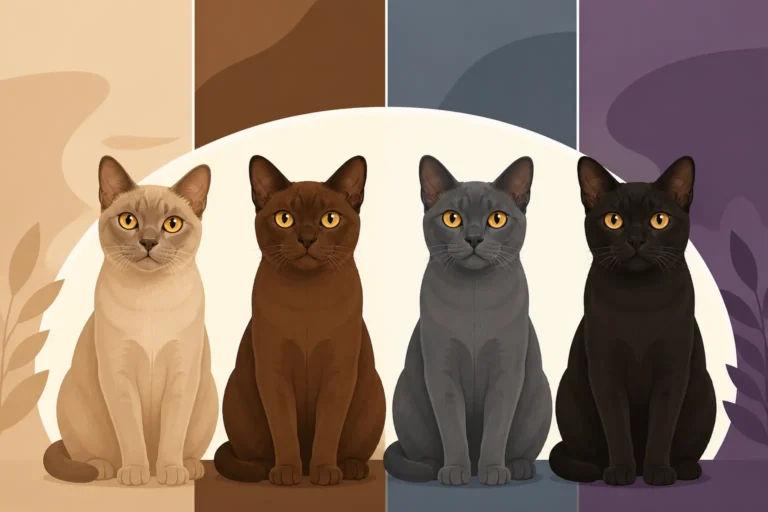
The Cat Fanciers' Association (CFA) recognizes only four distinct colors for the American Burmese, each a beautiful variation on a warm, rich theme. These colors are not simply surface-level; they are expressions of the cb allele, the gene responsible for the Burmese's unique color dilution and patterning.
- Sable: This is the original and most well-known color, a rich, warm, dark brown, often likened to a luxurious mink coat. The color should be even throughout the body, though it will be slightly darker at the points (mask, ears, feet, tail), a subtle expression of the Burmese color restriction gene. A well-conditioned Sable Burmese is truly stunning, with a deep, lustrous sheen.
- Champagne: A beautiful, warm beige or honey-brown. This color is genetically a brown dilute, meaning it's a lighter version of Sable. It should also have subtle shading at the points, but the overall impression is one of warmth and softness, reminiscent of milk chocolate.
- Blue: This color is a medium gray with a distinct blue cast, giving it a cool elegance. Like the other colors, the blue should be even, with slightly darker points. The blue is not a stark, steely gray, but rather a softer, more inviting tone, often described as slate blue.
- Platinum: The lightest of the recognized colors, Platinum is a pale, frosty gray with a faint lilac or fawn cast. It's a delicate and sophisticated color, often appearing almost silvery. Again, subtle point shading is present, but the overall effect is one of ethereal lightness.
These four colors represent the entirety of the American Burmese spectrum as recognized by CFA. Any other color, no matter how lovely, would not meet the standard. This limited palette helps maintain the breed's distinct identity and genetic purity. It's a testament to the beauty within these established hues that they continue to captivate enthusiasts. For anyone interested in the specifics, The Four Colors a Burmese Comes In provides a deep dive into each of these recognized shades.
Color Variation and Maturation
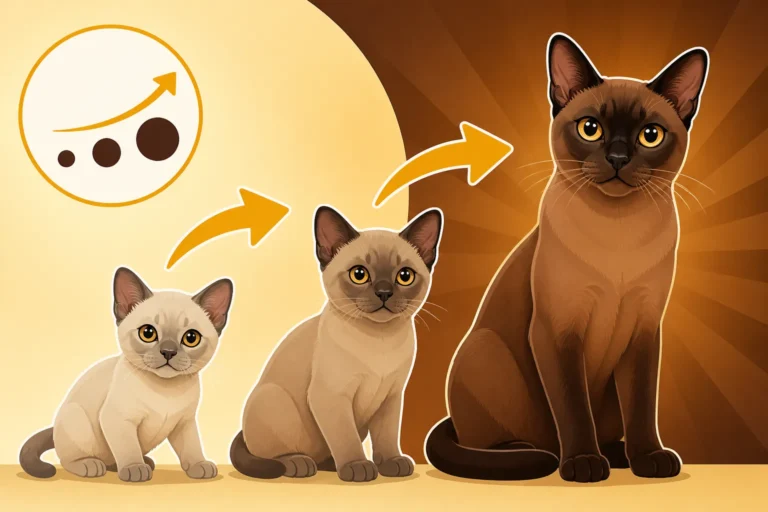
One of the fascinating aspects of Burmese coloration is how it develops and can subtly change over time, particularly as a kitten matures. Burmese kittens are almost always born significantly paler than their adult color will be. This is a direct consequence of the temperature-sensitive cb allele. In the warmth of the womb, the color expression is suppressed, resulting in very light coats at birth. As the kitten grows and is exposed to cooler ambient temperatures, the pigment begins to develop more fully, deepening into its true adult shade.
This means a Sable kitten might look like a Champagne initially, or a Blue kitten could appear almost Platinum. It's a journey of transformation that breeders anticipate and new owners often marvel at. The full adult color usually settles by about 12-18 months of age, but subtle shifts can continue throughout their lives. Furthermore, environmental factors can play a role; a Burmese living in a cooler climate might develop slightly darker points than one living in a consistently warm environment, simply due to the temperature-sensitive nature of the gene. Sunlight can also cause some lightening. This gradual deepening of color is a charming characteristic, and it’s why Why a Burmese Kitten Is Born Paler Than It Ends Up is such a common observation among breeders. Maintaining a healthy diet, with high-quality ingredients, can also support a vibrant, healthy coat. Many breeders and owners recommend high-quality food, readily available from retailers like Chewy, to support their overall health, which can subtly impact coat quality and depth of color.
Temperament and the Standard's Implicit Values
While breed standards primarily focus on physical attributes, it's impossible to discuss the American Burmese without acknowledging its extraordinary temperament. This isn't usually codified in the same way as eye color or head shape, but it's universally understood to be an intrinsic part of what makes a Burmese truly Burmese.
The Affectionate, People-Oriented Nature
If you've ever spent time with an American Burmese, you know immediately that their personality is as striking as their physical appearance. They are often dubbed "the dog of the cat world" because of their profound affection and unwavering devotion to their human companions. The standard may not explicitly state "must follow owner from room to room," but this is precisely what a Burmese does. They are intensely people-oriented, thriving on interaction and constantly seeking physical closeness. They want to be involved in whatever you're doing, whether it's riding on your shoulder, nestled in your lap, or simply supervising from a nearby perch.
This deep attachment means they form incredibly strong bonds with their families, often focusing their affection on whoever is home most. They are not aloof or independent; in fact, they can become quite anxious if left alone for extended periods. This intense need for companionship makes them ideal pets for active households, families with children, or anyone who desires a truly interactive feline friend. Their vocalizations, often a soft, rasping rumble rather than a sharp meow, are constant invitations for engagement. It's this "velcro cat" quality that truly defines the breed's heart and soul, making them utterly captivating companions. Understanding this inherent need for connection helps prospective owners realize that the Burmese isn't just a pretty face; it's a living, breathing companion that craves interaction. It’s no wonder The Burmese Is the Velcro Cat of the Cat Fancy.
Intelligence and Playfulness
Beyond their affectionate nature, American Burmese cats are renowned for their sharp intelligence and enduring playfulness. They are incredibly clever, often figuring out how to open cabinets, retrieve toys, or even perform tricks. This isn't a cat content to simply nap all day; they need mental stimulation and physical activity to stay happy and engaged. Their intelligence makes them highly trainable; many Burmese can be taught to fetch, walk on a leash, or respond to verbal commands, much like a dog.
This playfulness doesn't wane with age. Many Burmese are still chasing wand toys, batting at puzzle feeders, and engaging in energetic play sessions well into their senior years. This youthful exuberance means they need a household that can provide plenty of opportunities for interaction. Puzzle toys, interactive games, and regular playtimes are not just entertainment; they are essential for a Burmese's mental well-being. Without sufficient stimulation, a clever Burmese can become bored, which can sometimes lead to mischief or even anxiety. Engaging toys, easily found on sites like Chewy, are essential for a Burmese to channel their energy constructively. Their enduring kitten-like spirit makes them perpetually entertaining companions, always ready for a game or a cuddle. It's this combination of intelligence, affection, and play that makes owning an American Burmese such a rewarding experience, truly living up to the implicit behavioral standards expected of the breed.
Distinguishing the American from the European Standard
It's a common point of confusion for those new to the breed: there isn't just one Burmese cat. Over time, due to differing breeding goals and separate gene pools, two distinct types emerged: the American Burmese and the European (or British) Burmese. While both share a common ancestor in Wong Mau, their respective breed standards evolved to emphasize different physical traits.
Key Differences in Head and Body Type
The most significant distinctions between the American and European Burmese lie in their head and body structures. The American Burmese, as described throughout this guide, adheres to a standard emphasizing a more compact and rounded form, often referred to as "cobby" in cat fancy terms.
- Head: The American Burmese features a distinctly round head, with full cheeks and a short, broad muzzle that shows a noticeable "break" or stop in the profile. The overall impression is one of sweetness and roundness.
- Body: The body is compact and muscular, giving rise to the "brick wrapped in silk" analogy. They are surprisingly heavy for their medium size, with a broad chest and a sturdy build.
- Eyes: Typically large, round, and golden to amber.
In contrast, the European Burmese standard calls for a more moderate, oriental body type, reflecting its continued connection to Siamese influence in its early development.
- Head: The European Burmese has a more modified wedge-shaped head, without the pronounced roundness of its American counterpart. The muzzle is medium in length, with a gentle, flowing profile rather than a distinct break.
- Body: Their body is more elegant and sleek, with a medium length, reflecting an athletic build rather than the compact cobby type. They are still muscular but appear less dense than the American type.
- Eyes: Also large and expressive, but they can be slightly more oval-shaped and are typically golden to green-gold.
These differences are not subtle to the trained eye, and they represent decades of divergent breeding programs. While both types are beautiful and share that renowned Burmese personality, their physical standards are quite distinct. It's truly fascinating to see How the American and European Burmese Split into these two unique expressions of the breed.
Color and Eye Differences
Beyond the structural variations, the American and European Burmese standards also differ significantly in their accepted color palettes. This is often one of the quickest ways to visually distinguish the two types, especially for those who aren't experts in feline conformation.
- American Burmese Colors: As discussed, the American standard is very strict, recognizing only Sable, Champagne, Blue, and Platinum. These four colors are genetically limited by the American gene pool.
- European Burmese Colors: The European standard, due to a broader genetic foundation and different breeding objectives, accepts a much wider range of colors. In addition to the four classic colors (which they often call Brown, Chocolate, Blue, and Lilac, respectively), they also recognize Red, Cream, and various Tortoiseshell patterns (Blue Tortie, Brown Tortie, Chocolate Tortie, Lilac Tortie). This expanded palette offers a broader visual variety within the European Burmese lines.
The eye color requirements also show a subtle divergence, though less dramatic than the body type or coat colors. While both prefer shades of gold and amber, the European standard may allow for slightly more variation, including green-gold, whereas the American standard firmly faults green eyes. This distinction in accepted colors and eye tones highlights the different aesthetic ideals that breeders in America and Europe pursued for their respective Burmese types. For a comprehensive look at the European standard's color range, you can refer to Which Colors the European Burmese Standard Adds.
Here's a quick comparison of some key differences:
| Feature | American Burmese Standard | European Burmese Standard |
|---|---|---|
| Head Shape | Distinctly round, broad skull, short broad muzzle with break | Modified wedge, moderate muzzle, gentle profile |
| Body Type | Compact, muscular, "cobby," surprisingly heavy | Medium length, elegant, athletic, less dense |
| Eye Shape | Large, round, set far apart | Large, can be slightly more oval, expressive |
| Eye Color | Gold to amber (green eyes are a fault) | Gold to green-gold |
| Accepted Colors | Sable, Champagne, Blue, Platinum (4 total) | Brown, Chocolate, Blue, Lilac, Red, Cream, Torties (many more) |
| Overall Look | Rounded, sturdy, powerful | Elegant, sleek, moderate |
Conclusion
The American Burmese standard, meticulously crafted over decades, is more than just a set of rules for show cats; it's a blueprint for preserving the health, beauty, and distinctive personality of this incredible breed. From the precise roundness of their heads and the luminous gold of their eyes to the surprising density of their "brick wrapped in silk" bodies and the unique feel of their satin coats, every aspect is designed to maintain the integrity of Dr. Thompson's original vision.
Understanding this standard helps us appreciate the American Burmese for its unique characteristics and the dedicated work of breeders who strive to produce healthy, typey kittens. It also helps clarify the distinctions between the American and European types, ensuring that prospective owners can make informed decisions about which specific Burmese is right for their home and heart. Ultimately, whether for the show ring or simply as a cherished family member, the American Burmese embodies a remarkable combination of striking physical traits and an unparalleled affectionate spirit, making them truly one of a kind.
Disclaimer
This article is for general informational purposes only and does not constitute professional advice. Laws, prices and regulations vary by location and change over time. Consult a qualified professional for guidance on your specific situation.