Why Burmese Kittens Are Sold at Thirteen Weeks
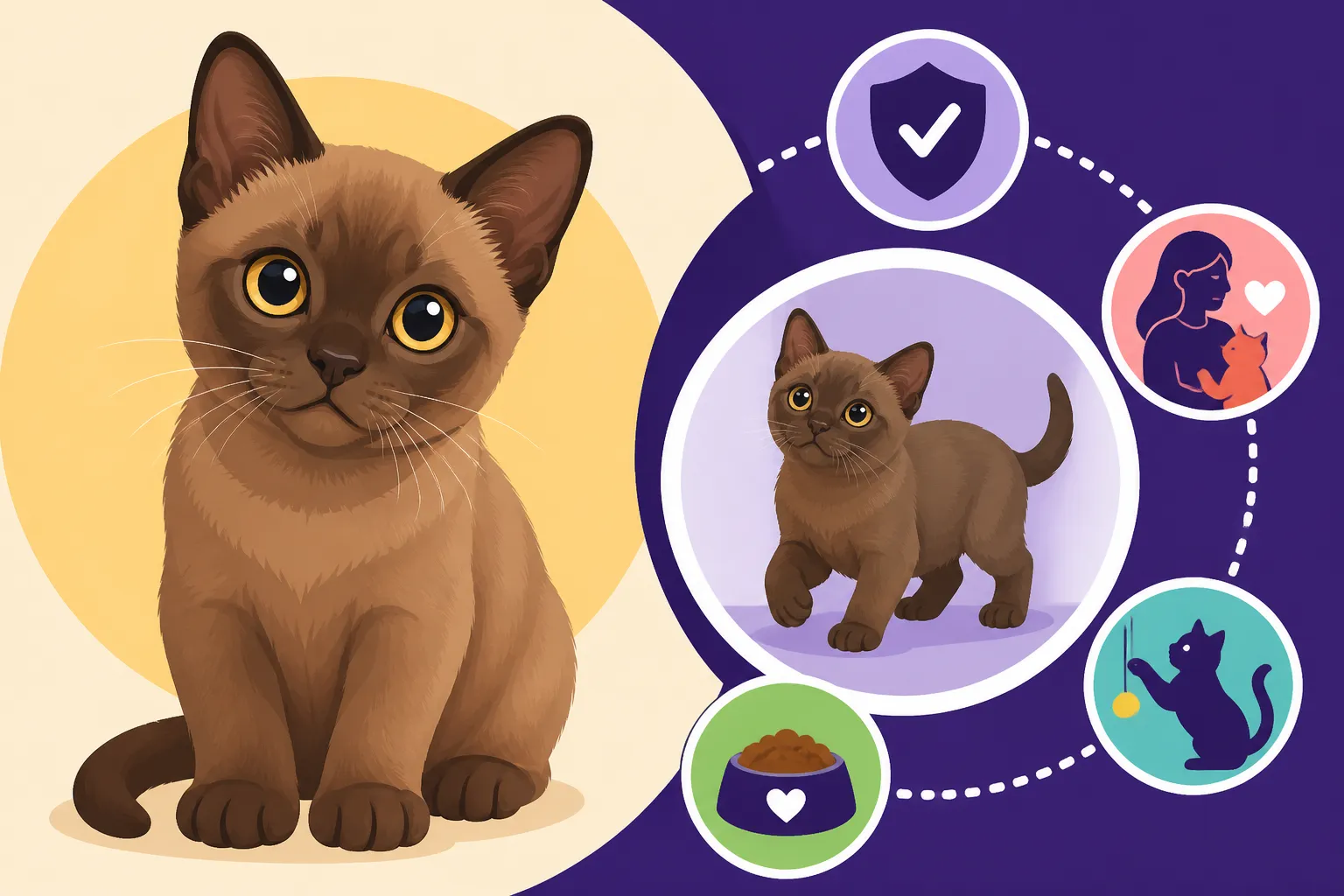
A Burmese kitten may look confident, curious, and ready to follow you home well before it is ready to leave its mother and littermates. That gap can feel frustrating when you have prepared the house and are eager to meet your new companion. This guide explains why responsible breeders often wait until around thirteen weeks, what happens during that extra time, and how to prepare for pickup.
Why Burmese kittens often stay with the breeder until thirteen weeks
The extra weeks support social and emotional development
Kittens learn a great deal from their mother and littermates during their first months. Play-wrestling, sharing space, and responding to a sibling’s signals help them practise social skills and learn how to moderate their behavior. A kitten that leaves very early may miss some of those everyday lessons.
This matters with Burmese cats because they are often especially people-oriented and active. A kitten may appear eager to explore a new home, but boldness is not the same as being socially ready to leave its familiar group. Staying longer gives it time to build confidence in a setting it knows, while continuing to meet and interact with people.
Those interactions are not just about cuddling. A thoughtful breeder gradually gets kittens accustomed to ordinary household experiences: being handled, hearing everyday sounds, encountering different people, and learning that a carrier or gentle examination is not necessarily frightening. For more on this early learning, see Why a Burmese Kitten Socializes Itself.
By thirteen weeks, a kitten has usually had more time to practise those skills than it would at eight weeks. That does not guarantee an effortless transition; each kitten is an individual. But a few additional weeks of stable, familiar care can give a kitten a stronger starting point for adjusting to a new household.
Weaning is only one part of being ready
A kitten may start eating solid food before it is ready to leave. Being able to eat independently is important, but it is only one piece of the transition. The breeder also needs to see that the kitten is eating reliably, growing appropriately, using the litter tray, and behaving comfortably around its littermates and people.
Moving homes changes a kitten’s surroundings, routines, smells, and social company all at once. A gradual transition is easier when the kitten already has a steady routine for meals, rest, play, and toileting. A few more weeks with the breeder can help establish those habits and make it easier for you to continue them at home.
That is one reason a kitten who looks physically ready may still be kept back. Responsible timing is not simply a matter of choosing a birthday on the calendar. It means considering the kitten’s development and wellbeing, as well as any veterinary care and local requirements that apply.
The timing can also vary. Some breeders may arrange pickup around thirteen weeks; others may recommend a different age based on the kitten, their veterinary schedule, or the rules and practices in their location. Ask what the breeder means by “ready” and what specific milestones they have observed.
What the breeder should be doing before pickup
Health checks and preventive care need to be planned
The time before pickup gives the breeder an opportunity to arrange appropriate veterinary care and keep records for the new owner. Depending on the kitten’s age, health, location, and veterinary guidance, this may include an examination, vaccinations, parasite prevention, or other routine care. There is no single checklist that applies identically to every kitten, so ask for the dates and details rather than assuming a particular treatment has been completed.
A breeder should be able to explain what care the kitten has received, what is still due, and when to book the next appointment. You should receive any available veterinary records and clear instructions about continuing care. If anything is unclear, your own veterinarian can help you work out the next steps.
It is sensible to arrange a vet visit soon after bringing a kitten home, following your veterinarian’s advice. A new-home check gives the clinic a chance to review the kitten’s history, assess its health, and plan preventive care. For a useful overview of that first appointment, read Why a Burmese Kitten Needs an Early Vet Check and What a Burmese Kitten's First Exam Should Cover.
Paperwork should describe the kitten, not just promise a healthy pet
Before pickup, ask what documents will come with the kitten. Depending on the breeder and location, these may include veterinary records, registration or pedigree information, a written agreement, identification details, and guidance on food and care. Confirm what is included rather than relying on a verbal assurance.
You can also ask whether the kitten has had any screening relevant to its family line and whether the breeder will share information about the parents’ health. Burmese breeding programs may use genetic testing for particular inherited conditions, but the appropriate tests depend on the lines and circumstances. The useful question is not simply “Is the kitten tested?” Ask which tests were done, whose results they are, and how the results relate to this kitten. Which Tests Belong on a Burmese DNA Panel offers further context.
A breeder should welcome reasonable questions and give straightforward answers. If a kitten is being offered earlier than expected, or the breeder cannot explain its veterinary care and readiness, pause and ask for clarification. A later pickup date alone does not prove responsible breeding; the quality and transparency of the care matter too.
What to ask about a thirteen-week pickup
Use a simple readiness checklist
Before you agree on a pickup date, ask the breeder to walk you through the kitten’s routine and progress. A good conversation should leave you understanding how the kitten eats, what litter it uses, how it responds to handling, and what care it has already received.
| Ask the breeder | Why it helps | What to request |
|---|---|---|
| What does the kitten eat, and how often? | Familiar food and timing can make the first days less disruptive. | Food name or type, meal routine, and transition advice |
| What veterinary care has been completed? | Prevents missed or duplicated care. | Dates, records, and what is due next |
| Is the kitten using a litter tray reliably? | Helps you set up a familiar toileting arrangement. | Litter type and any useful routine details |
| How does the kitten respond to handling and new sounds? | Gives you a realistic picture of its experience and temperament. | Examples from everyday care |
| What should I do if the kitten seems unwell after pickup? | Makes it easier to respond calmly and promptly. | The breeder’s written guidance and your vet’s contact plan |
The answers may not be identical from one breeder to another. What matters is whether they can describe the kitten as an individual and provide practical information you can use. “It is ready” is less helpful than an explanation of what the breeder has observed.
Ask about the kitten’s temperament, too. A Burmese may be sociable, but it still needs time to settle. Find out whether it tends to seek company, how it responds to being picked up, and whether it is used to household noise. These details help you prepare a suitable first few days rather than expecting the kitten to act as if it already knows your home.
Do not treat thirteen weeks as a guarantee
A kitten’s age is a useful part of the picture, not a guarantee that every aspect of its care is complete. Two kittens of the same age can differ in confidence, health, and experience. Likewise, a breeder can keep a kitten until thirteen weeks and still provide poor information or inadequate preparation. Look at the whole process: the kitten’s condition, the breeder’s explanations, the documents provided, and the care environment you are able to see.
You might also ask to meet the kitten or receive an update before pickup. If you cannot visit in person, request clear information about how the kitten is being cared for and how its progress is being assessed. For perspective on the earlier stage of development, What a Burmese Kitten Looks Like at Eight Weeks can help explain why an eight-week-old kitten and a thirteen-week-old kitten may be at different points in their growth and readiness.
If the breeder recommends delaying pickup beyond thirteen weeks, ask why. The reason may be a health concern, a need for additional socialization, or a veterinary recommendation. A responsible breeder should be able to explain the delay in a way that focuses on the kitten’s welfare.
How to prepare for bringing your Burmese kitten home
Set up familiar routines before pickup
Ask the breeder what food and litter the kitten currently uses, then have those supplies ready before it arrives. Keeping the first days familiar can reduce unnecessary changes while the kitten adjusts. If you plan to change food or litter, ask how to make that transition gradually and whether it is sensible to wait until the kitten has settled.
Chewy can be one place to look for routine supplies such as food bowls, a litter tray, or a carrier, but check that the items suit the breeder’s recommendations and your veterinarian’s advice. A carrier should be secure and comfortable, and it is helpful to have it ready before pickup rather than scrambling for one on the day.
Prepare a quiet starting room with the essentials close together: food, water, a litter tray, a resting place, and a safe spot where the kitten can retreat. You do not need to introduce the whole home at once. Let the kitten explore at its own pace, and keep doors and windows secure as it learns the layout.
Keep the first days calm and predictable
A Burmese kitten may be eager to follow people from room to room, but give it room to pause and rest. Let it approach you, speak gently, and offer short periods of play instead of expecting constant interaction. If there are children or other pets, plan introductions gradually and supervise them. Even a friendly kitten needs time to understand unfamiliar people and animals.
Try to keep meals and bedtime close to the routine the breeder described. If the kitten seems unsettled, hiding or calling out can be part of adjusting to a new environment, but a marked change in appetite, energy, breathing, or toileting deserves prompt attention from a veterinarian. When in doubt, call your clinic for guidance rather than assuming a symptom is simply homesickness.
Preparation also matters because Burmese cats often seek company and interaction. Think about who will be home, how the kitten will be supervised, and how you will provide play and companionship as it grows. A Burmese Kitten's First Year of Never Being Alone and Why a Burmese Kitten Stays Until It Is Socialized offer related guidance on the transition and the breed’s social needs.
Thirteen weeks is not a magical threshold, and it is not a promise that settling in will be instant. It is a common point at which a breeder may feel a kitten has had more time to develop, learn, and receive planned care before moving. Ask questions, review the kitten’s records, prepare a familiar routine, and let your new companion adjust at its own pace.
Disclaimer
This article is for general informational purposes only and does not constitute professional advice. Laws, prices and regulations vary by location and change over time. Consult a qualified professional for guidance on your specific situation.