Where the Founding Burmese Wong Mau Came From
It’s easy to look at our gorgeous Burmese cats today, with their sleek coats and affectionate personalities, and never stop to wonder where they actually came from. Many people assume cat breeds have always existed, or perhaps sprang from ancient, mystical lands, but the truth for the Burmese is far more recent and incredibly well-documented. If you've ever felt a pang of curiosity about the precise origins of this beloved breed, especially the enigmatic cat named Wong Mau, you're in the right place. This guide will take you on a journey back to the very beginnings of the Burmese cat, exploring her mysterious arrival and the dedicated work that followed to establish the breed we adore today.
The Enigmatic Arrival of Wong Mau
The story of the Burmese cat, as we know it, really begins with one individual: a small, dark brown female cat named Wong Mau. Her arrival in the United States in the early 1930s wasn't heralded by fanfare or scientific expedition, but rather by the quiet curiosity of a retired U.S. Navy medical officer. It’s a bit like finding a rare jewel tucked away in a dusty attic – its true value only becomes apparent with careful examination and appreciation. For many cat enthusiasts today, understanding that such a unique and distinct breed sprung from a single, foundational cat is a testament to the power of observation and dedicated breeding.
Where Wong Mau Was Believed to Originate
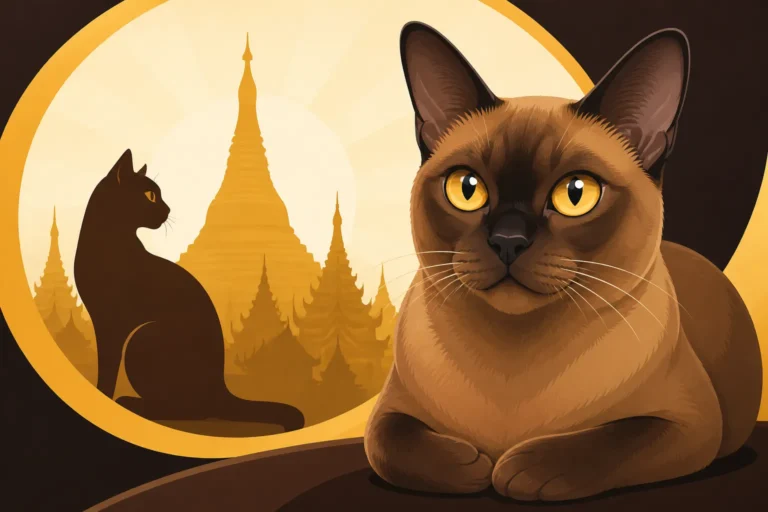
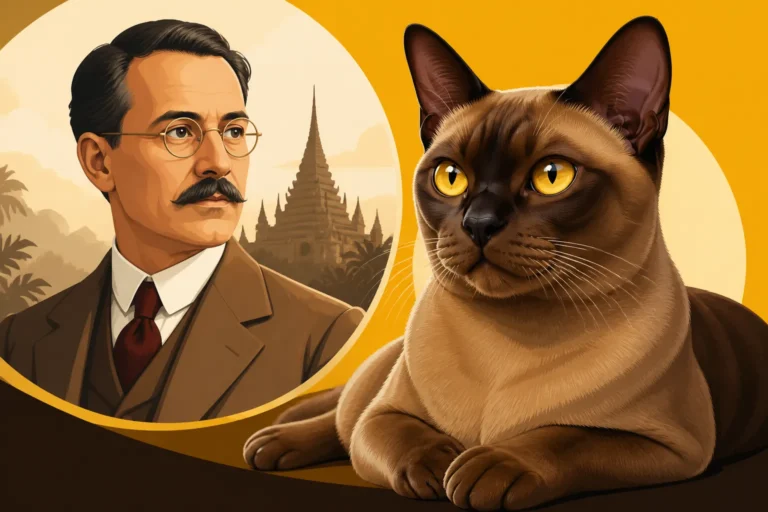
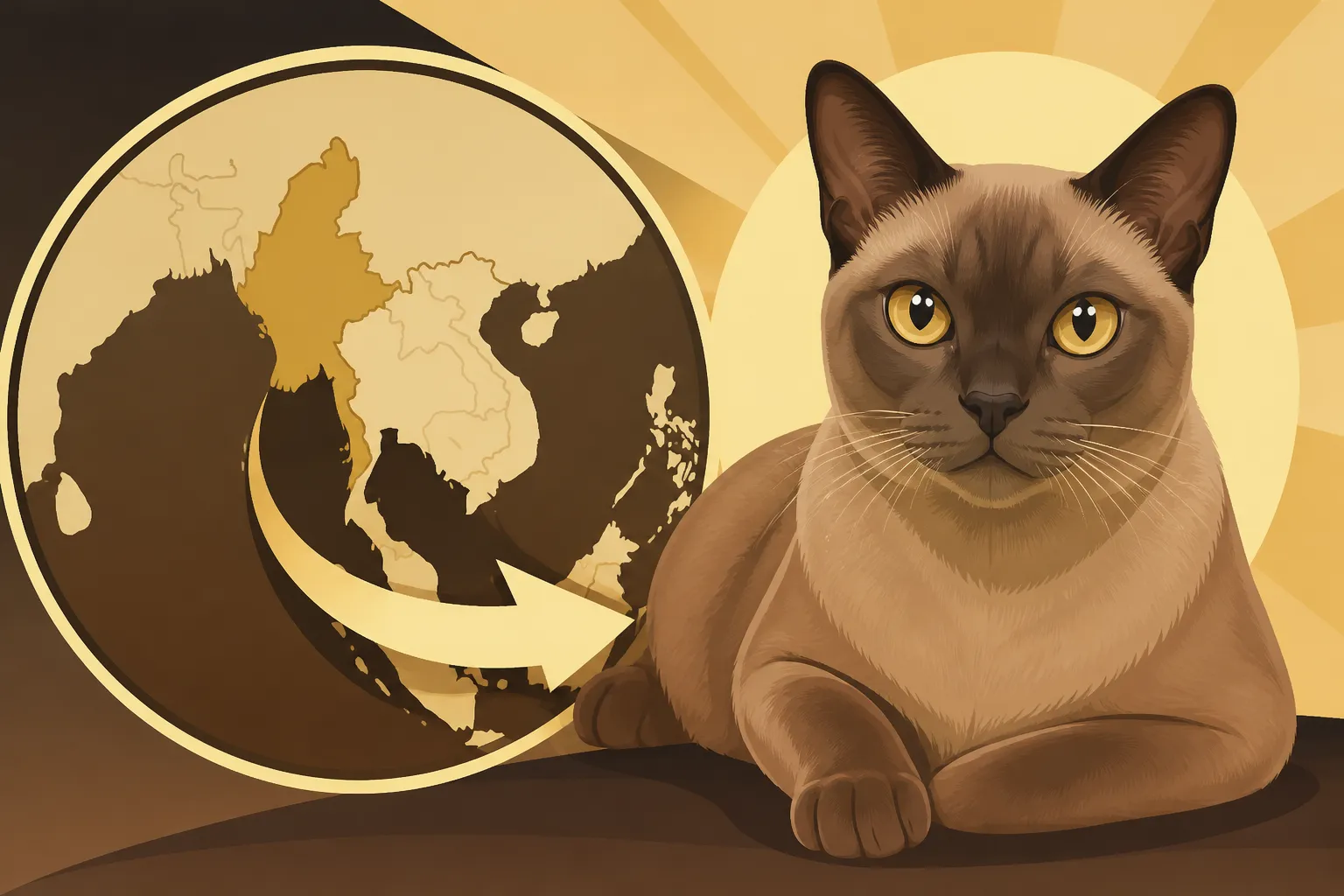
Wong Mau arrived in San Francisco in 1930, brought back from Burma (modern-day Myanmar) by Dr. Joseph C. Thompson. While the exact circumstances of how he acquired her are a bit hazy – was she a gift? A stray he took a liking to? – the prevailing belief is that she came from the region of Burma. This detail is crucial because it gives the breed its name and sets the stage for understanding its genetic heritage. Imagine traveling the world and stumbling upon a creature so captivating, you just knew she was special. That's essentially what happened with Wong Mau.
At the time, the world of cat breeds was still developing, and many Asian cats were broadly categorized, often under the umbrella of 'Siamese' due to their similar body types and origins. Wong Mau, however, presented a conundrum. She wasn't quite a Siamese, yet she clearly had connections to that lineage. Her distinctive warm, rich brown coloration, darker than a Siamese point but not a solid black, immediately caught Dr. Thompson's eye. This difference, though subtle to an untrained observer, hinted at something entirely new. The Year the First Burmese Reached San Francisco details this pivotal moment.
Initial Observations and Unique Traits
Dr. Thompson wasn't just a casual cat owner; he was a passionate cat fancier with an interest in genetics. When he first encountered Wong Mau, he noted her distinct characteristics. Her body was more compact and muscular than the slender, elongated Siamese. Her head was rounder, and her eyes, while still a lovely gold, had a different set and expression. Most notably, her coat color was a uniform, rich brown, with only slightly darker points, rather than the stark contrast seen in a Siamese. It was this unique shade, a deep walnut brown, that truly set her apart.
It must have been a fascinating challenge for Dr. Thompson, like a puzzle waiting to be solved. He had this beautiful cat who defied easy categorization, and his scientific curiosity was piqued. He knew he had something special, something that didn't quite fit the existing molds. Her gentle, affectionate nature combined with her striking appearance must have been a powerful draw, inspiring him to delve deeper into her genetic makeup. This initial, keen observation was the first step on the path to recognizing a whole new breed.
Dr. Joseph Thompson's Pioneering Breeding Program
The story of the Burmese isn't just about Wong Mau; it's equally about the dedication and scientific rigor of Dr. Joseph Thompson. He didn't just admire Wong Mau; he set out to understand her, to unravel the genetic mystery behind her unique appearance. This wasn't a casual hobby; it was a serious undertaking, almost like a detective story with a furry protagonist. Many cat fanciers today can appreciate the immense patience and careful record-keeping required for such a project, especially in an era without modern genetic testing readily available.
The Deliberate Cross with a Siamese
To understand Wong Mau's genetic makeup, Dr. Thompson embarked on a deliberate breeding program. His first crucial step was to breed Wong Mau to a Siamese cat named Tai Mau. This might seem counterintuitive if you're trying to establish a new breed, but it was a brilliant scientific move. He knew Wong Mau wasn't a typical Siamese, but suspected she carried some of the same colorpoint genes. By breeding her to a known Siamese, he could observe the traits that emerged in their offspring and deduce what genetic information Wong Mau was carrying.
The results of this initial cross were illuminating. The litter produced three distinct types of kittens: some resembled Siamese cats with their traditional points, some were like Wong Mau with her warm, dark brown coat, and, fascinatingly, some were intermediate in color, appearing lighter brown with more pronounced points than Wong Mau but less extreme than a Siamese. This variation provided the first concrete evidence that Wong Mau was not a purebred Siamese, nor was she a solid-colored cat. She carried a unique genetic code. Why the First Burmese Was Bred to a Siamese offers more insight into this specific decision.
Scientific Documentation and Early Findings
Dr. Thompson meticulously documented every aspect of his breeding program. He recorded the appearance of each kitten, tracked their growth, and noted their temperament. This careful record-keeping was vital, allowing him to present a compelling case for Wong Mau representing a distinct genetic type. He even partnered with geneticists from the University of California, Berkeley, notably Dr. Clyde Keeler, to analyze his findings scientifically. This collaboration elevated the project beyond mere observation, giving it academic credibility.
Their studies revealed that Wong Mau was, in fact, a hybrid of sorts, carrying a previously unobserved gene for coat color. She possessed one gene for the solid color found in many domestic cats and one for the Siamese colorpoint gene, but in a modified form. This new gene, later identified as the 'Burmese gene' or cb allele, was responsible for her distinctive warm brown coloration. It was a groundbreaking discovery, confirming that the Burmese was not merely a variant of an existing breed but a unique genetic entity. Which Journal Published the Burmese Findings details this scientific publication.
The Genetic Code: The cb Allele
The foundation of the Burmese breed's unique appearance lies deep within its genetic code, specifically with a gene known as the cb allele. This isn't just a fancy scientific term; it's the very blueprint that gives the Burmese its signature warm, rich coat. Understanding this genetic component is key to appreciating how distinct the Burmese truly is, and how carefully its lineage was established.
What the cb Allele Does to a Cat's Color
The cb allele is a temperature-sensitive gene, similar in nature to the cs allele that creates the colorpoint pattern in Siamese cats. However, the cb allele produces a less extreme temperature-sensitive effect. In simple terms, it restricts the production of pigment to the cooler parts of the cat's body, but not as severely as the Siamese gene. This results in the Burmese's characteristic "sepia" coloration: a rich, warm brown that is darker on the extremities (face, ears, paws, tail) but still has a significant amount of pigment distributed across the warmer parts of the body.
Think of it like this: if the Siamese gene turns down the pigment production almost to zero in warm areas, the Burmese gene just turns it down a little, leaving a beautiful wash of color everywhere. This is why a Burmese cat doesn't have the stark contrast of a Siamese, but rather a subtle gradient of color. The geneticists working with Dr. Thompson were able to identify that Wong Mau carried one copy of this cb allele and one copy of the gene for solid color (C), making her heterozygous (C/cb). When two cats carrying the cb allele are bred together, they can produce kittens with two copies of the cb allele (cb/cb), which is the genetic makeup of a true Burmese. The cb Allele Is What Makes a Burmese Brown delves deeper into this fascinating genetic trait.
How it Differs from Siamese Colorpoint Genetics
To truly grasp the uniqueness of the cb allele, it helps to compare it directly to the cs allele responsible for the Siamese colorpoint. The Siamese gene causes a much more pronounced restriction of pigment. In a Siamese, the body color is very pale, often cream or white, with dark points on the ears, face mask, paws, and tail. The contrast is stark and immediately recognizable. This is because the cs allele is much more sensitive to body temperature, effectively shutting down pigment production almost completely in the warmer core areas.
The cb allele, while also temperature-sensitive, is less potent. It allows for more pigment to develop on the main body, creating that beautiful, uniform sepia tone with subtle darkening at the points. Furthermore, when a cat inherits one cb allele and one cs allele (cb/cs), you get a "Tonkinese" pattern – an intermediate phenotype with less contrast than a Siamese but more point definition than a Burmese. This is sometimes referred to as a "mink" pattern. This genetic interplay is a beautiful example of how small variations in genes can lead to entirely different, yet equally stunning, feline appearances. It also explains why, when looking at a cat's pedigree, knowing its color genetics is often as important as knowing its physical appearance. Reputable breeders, who might use products from trusted pet suppliers like Chewy for their cats, understand the significance of these genetic details.
Early Challenges and CFA Recognition
Establishing a new breed is rarely a smooth process, and the Burmese was no exception. Despite Dr. Thompson's meticulous work and the scientific backing, the breed faced significant hurdles in gaining official recognition. It's a classic tale of innovation meeting skepticism, and the dedication of early fanciers eventually winning out. Imagine the frustration of knowing you have something unique and wonderful, but having to convince an entire establishment of its merit!
CFA Suspension and the Siamese Hybrid Problem
The Cat Fanciers' Association (CFA), one of the most prominent cat registries, initially recognized the Burmese for championship status in 1936. However, this recognition was short-lived. By 1947, CFA suspended the registration of Burmese cats. The primary issue was the proliferation of Siamese hybrids. Because Wong Mau was initially bred to a Siamese, and because early breeders sometimes continued to outcross to Siamese to expand the gene pool, many cats being presented as "Burmese" were, in fact, intermediate types (what we now know as Tonkinese) or even full Siamese.
This created a chaotic situation where the distinct genetic identity of the Burmese was being diluted. The purity of the breed was at risk, and CFA rightly stepped in to protect the integrity of the cat fancy. It was a difficult decision, but necessary to prevent the Burmese from dissolving back into a general "Asian cat" category. Breeders were essentially selling a mixed bag, and the unique characteristics that Dr. Thompson had worked so hard to identify were becoming obscured. This period was undoubtedly a setback for Burmese enthusiasts, but it ultimately forced a more rigorous approach to breeding and registration. CFA Suspended the Burmese in 1947 and Took It Back further details this challenging time.
The Path to Reinstatement and Breed Purity
The suspension by CFA spurred dedicated Burmese breeders to focus intensely on establishing true breed purity. They understood that to regain recognition, they needed to demonstrate a consistent, distinct genetic line, free from recent Siamese outcrosses. This meant carefully selecting breeding pairs, ensuring that only cats producing true Burmese characteristics for several generations were used. It was a painstaking process, requiring patience and a deep understanding of feline genetics. This commitment to purity is what many breeders still champion today, ensuring the health and integrity of their lines.
CFA eventually reinstated the Burmese in 1957, but with strict new regulations. Breeders were required to prove three full generations of pure Burmese ancestry for any cat to be registered. This "three generations pure" rule was a game-changer, forcing breeders to meticulously track pedigrees and verify the genetic purity of their breeding stock. This rigorous standard ensured that the cats being registered as Burmese truly carried the cb/cb genetic makeup and exhibited the characteristic physical traits. This era marked a turning point, solidifying the Burmese as a distinct and recognized breed, and demonstrating the power of a dedicated community to overcome adversity. Access to historical pedigree data and understanding breed standards, alongside quality nutritional options like those found at Chewy, are crucial for modern ethical breeders.
The Dual Nature: American and European Burmese
As the Burmese breed flourished and gained international recognition, a fascinating divergence began to occur, leading to the establishment of two distinct types: the American Burmese and the European Burmese. While both share the foundational genetics of Wong Mau, their developmental paths, influenced by different breeding goals and preferences across continents, have given them unique physical characteristics. This split highlights how cultural aesthetics can shape a breed over time.
Divergence in Breeding Standards
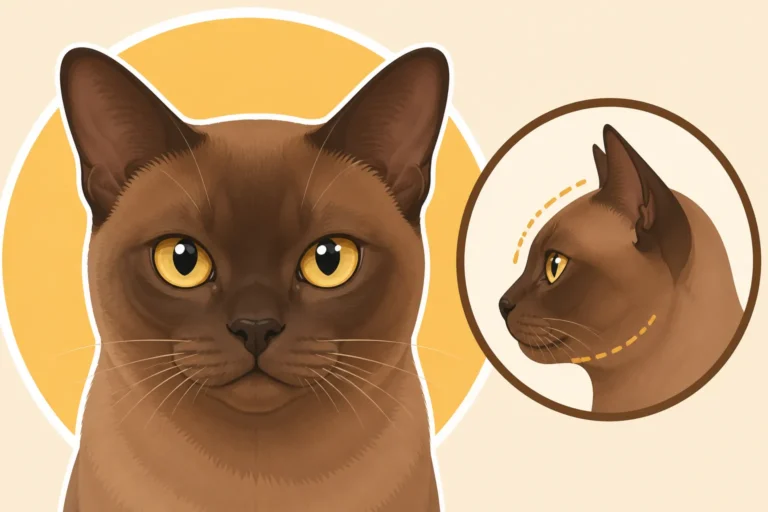
The split between the American and European Burmese types wasn't an intentional act to create two separate breeds, but rather a gradual divergence influenced by differing interpretations of the ideal Burmese look. In the United States, breeders focused on developing a more compact, cobby body type with a rounder head and full cheeks, a shorter, broader muzzle, and large, round, expressive gold eyes. The overall impression was one of robust elegance and a sweet, open facial expression. The American standard emphasizes this powerful yet gentle appearance, often described as a "brick wrapped in silk."
Conversely, in Europe, particularly in Britain, breeders gravitated towards a more elegant, moderate body type. The European Burmese typically has a slightly longer, more athletic body, with a wedge-shaped head that is still rounded but less extreme than its American counterpart. Their muzzles are generally longer, and their eyes, while still gold, often have a more almond shape. This created a cat with a slightly less "cobby" and more svelte appearance, reflecting different aesthetic preferences among European cat fanciers. These distinct standards, developed independently, solidified the two recognizable types we see today. How the American and European Burmese Split details this historical divergence.
Distinctive Physical Characteristics
Let's break down some of the key physical differences that distinguish the American and European Burmese:
| Feature | American Burmese | European Burmese |
|---|---|---|
| Body Type | Compact, cobby, muscular ("brick wrapped in silk") | More elegant, medium-sized, athletic |
| Head Shape | Distinctly round, broad skull, full cheeks | Modified wedge, slightly rounded |
| Muzzle | Short, broad, often with a noticeable "break" | Moderate length, gently rounded |
| Ears | Medium-sized, set wide apart, rounded tips | Medium-sized, set wide apart, slightly more pointed |
| Eyes | Large, round, expressive, gold to amber | Slightly more almond-shaped, gold to amber |
| Coat Color | Four traditional colors: Sable, Champagne, Blue, Platinum | Adds Red, Cream, and Tortoiseshell varieties |
These differences, though subtle to the untrained eye, are quite significant to breeders and judges in the cat fancy. They represent the diverse directions taken in selective breeding over decades, even though both types share the same fundamental genetic origins. A breeder of American Burmese would look for very specific facial and body characteristics that might be faulted in a European Burmese, and vice-versa. While the American Burmese adheres strictly to the original four colors, the European type, influenced by outcrosses to other breeds in its early development (after the founding lines were established), introduced additional colors like red, cream, and various tortoiseshell patterns. This expansion of the color palette is another key differentiator.
The Burmese Legacy: A Breed Forged in Dedication
The journey from a single, enigmatic cat named Wong Mau to the two distinct and beloved Burmese types we know today is a testament to perseverance, scientific curiosity, and the unwavering dedication of cat fanciers. It’s a story not just of genetics, but of passion and the desire to preserve and celebrate a truly unique feline companion. The legacy of Wong Mau and Dr. Thompson continues to influence every Burmese cat born today.
Wong Mau's Enduring Impact on the Cat Fancy
Wong Mau's arrival and the subsequent breeding program didn't just give us the Burmese breed; they laid foundational groundwork for understanding feline genetics. Her unique cb allele was one of the first specific genes to be identified and studied in domestic cats, paving the way for further genetic research in other breeds. She quite literally changed the way cat fanciers and geneticists viewed feline inheritance. Without her, and Dr. Thompson's investigative spirit, the nuanced understanding of colorpoint variations might have taken much longer to unfold.
Her legacy extends beyond pure genetics, though. The Burmese breed she founded is celebrated worldwide for its extraordinary temperament: affectionate, playful, and deeply attached to its human companions. The phrase "dog in a cat's body" often comes up when describing a Burmese, and it's a well-earned moniker. Why the Burmese Is Called a Dog in a Cat's Body perfectly captures this sentiment. This wonderful personality trait, combined with their striking appearance, has endeared them to countless owners who cherish their interactive and loving nature. Modern Burmese owners, who meticulously choose the right diet and toys for their intelligent companions from retailers like Chewy, are carrying on this tradition of dedicated care.
The Continued Importance of Ethical Breeding
Today, the story of Wong Mau and the challenges faced by early breeders serve as a powerful reminder of the importance of ethical breeding practices. Understanding the breed's genetic predispositions, such as the Why a Burmese Is Four Times More Likely to Become Diabetic or Hypokalemia Is the Burmese Disease With a DNA Test, is paramount. Responsible breeders conduct comprehensive DNA panels, screening for known genetic health issues to ensure they are producing healthy, well-adjusted kittens. This commitment ensures the long-term well-being of the breed and prevents the kind of genetic dilution that led to CFA's initial suspension.
When looking for a Burmese kitten, knowing this history empowers potential owners to ask the right questions about parentage, genetic testing, and pedigree. It's not just about getting a beautiful cat; it's about acquiring a healthy companion whose lineage has been carefully preserved and nurtured. The dedication of individuals like Dr. Thompson continues in the responsible breeders of today, who uphold the standards and genetic integrity of this remarkable breed, ensuring that the unique characteristics of Wong Mau live on for generations to come. What a Burmese Breeder Must Test Before Any Mating covers these crucial screenings.
Disclaimer
This article is for general informational purposes only and does not constitute professional advice. Laws, prices and regulations vary by location and change over time. Consult a qualified professional for guidance on your specific situation.