Who Bred the First Tonkinese From a Burmese
The first Tonkinese was not simply a Burmese with a different name. The breed took shape through deliberate Burmese–Siamese crosses, most closely associated with Canadian breeder Margaret Conroy in the 1960s, alongside related breeding efforts elsewhere. Here’s how those crosses led to the Tonkinese, and why it’s hard to identify one definitive “first” cat.
Who bred the first Tonkinese
Margaret Conroy and the Canadian breeding program
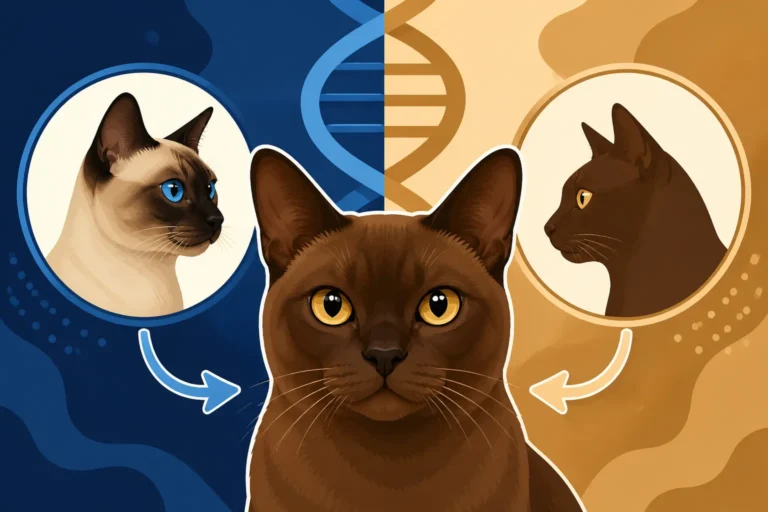
Canadian breeder Margaret Conroy is widely credited with developing the Tonkinese as a distinct breed. In the 1960s, she began crossing Burmese cats with Siamese cats, aiming to produce cats with a consistent blend of traits from both breeds. The name “Tonkinese” came to be used for the resulting cats, which were neither simply Burmese nor simply Siamese.
That distinction matters. Burmese and Siamese cats had been crossed before Conroy’s work, and individual kittens with in-between features could appear in earlier litters. But a crossbred kitten is not automatically the start of a recognized breed. Establishing a breed takes a planned, continuing program: breeders select cats with desired characteristics, mate them thoughtfully over generations, and work toward a shared standard.
Conroy’s role, then, was not necessarily to produce the first cat in history whose parents were Burmese and Siamese. She is better understood as a key breeder who helped turn that combination into an intentional breeding program and a recognizable breed. The broader history is part of why The Bombay and the Tonkinese Came Out of the Burmese is a useful starting point for understanding how Burmese cats influenced other breeds.
Why there may not be one agreed-upon first cat
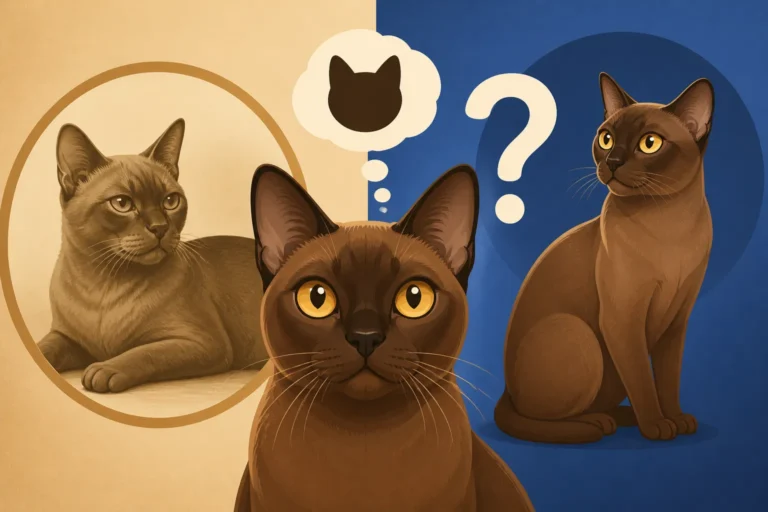
Breed histories often use the phrase “the first Tonkinese” as shorthand, but it can mean several different things. It might refer to the earliest Burmese–Siamese cross, the first kitten deliberately bred as part of a Tonkinese program, or the first Tonkinese accepted by a registry. Those are different milestones, and they do not have to belong to the same cat.
There were also breeding efforts beyond Conroy’s Canadian program. Other breeders in North America pursued Burmese–Siamese crosses around the same broad period. When separate people are working with similar cats and goals, a neat story with one breeder, one mating, and one founding kitten may leave out important parts of what happened.
So, if you’re looking for a simple answer, Margaret Conroy is the breeder most commonly associated with developing the Tonkinese in Canada. If you’re asking who bred the first-ever Burmese–Siamese hybrid or the first cat that looked Tonkinese, the answer is less clear. The earlier history of the Burmese helps explain why: Why the First Burmese Was Bred to a Siamese describes the crossing that contributed to the breed’s foundation long before the Tonkinese became a separate project.
How Wong Mau fits into the story
The Burmese breed’s early history is closely tied to Wong Mau, a cat brought to the United States in the early twentieth century. Wong Mau was bred to a Siamese, and her descendants helped establish the Burmese breed. Some offspring showed combinations of traits that did not look exactly like either modern breed.
That early work is relevant, but it should not be confused with Conroy’s later effort to establish the Tonkinese. The two stories involve Burmese–Siamese ancestry, yet they happened in different breeding contexts. One helped build the Burmese breed; the later program aimed to establish a separate breed from the Burmese–Siamese combination.
In other words, the Tonkinese did not appear from nowhere when Conroy started breeding. The ingredients and some intermediate-looking cats had a longer history. Conroy’s importance lies in the deliberate, sustained work to shape those traits into a breed with its own identity. For more on the earlier experiments, What Thompson's Program Proved About the Burmese explains how the first breeding work revealed more than one type of cat.
How Burmese and Siamese traits came together
A blend rather than a halfway-looking accident
The Tonkinese is often described as sitting between the Burmese and Siamese, but that does not mean every individual cat is an identical midpoint. The breed’s appearance reflects inherited traits from both sides, and different kittens can show those traits in different ways.
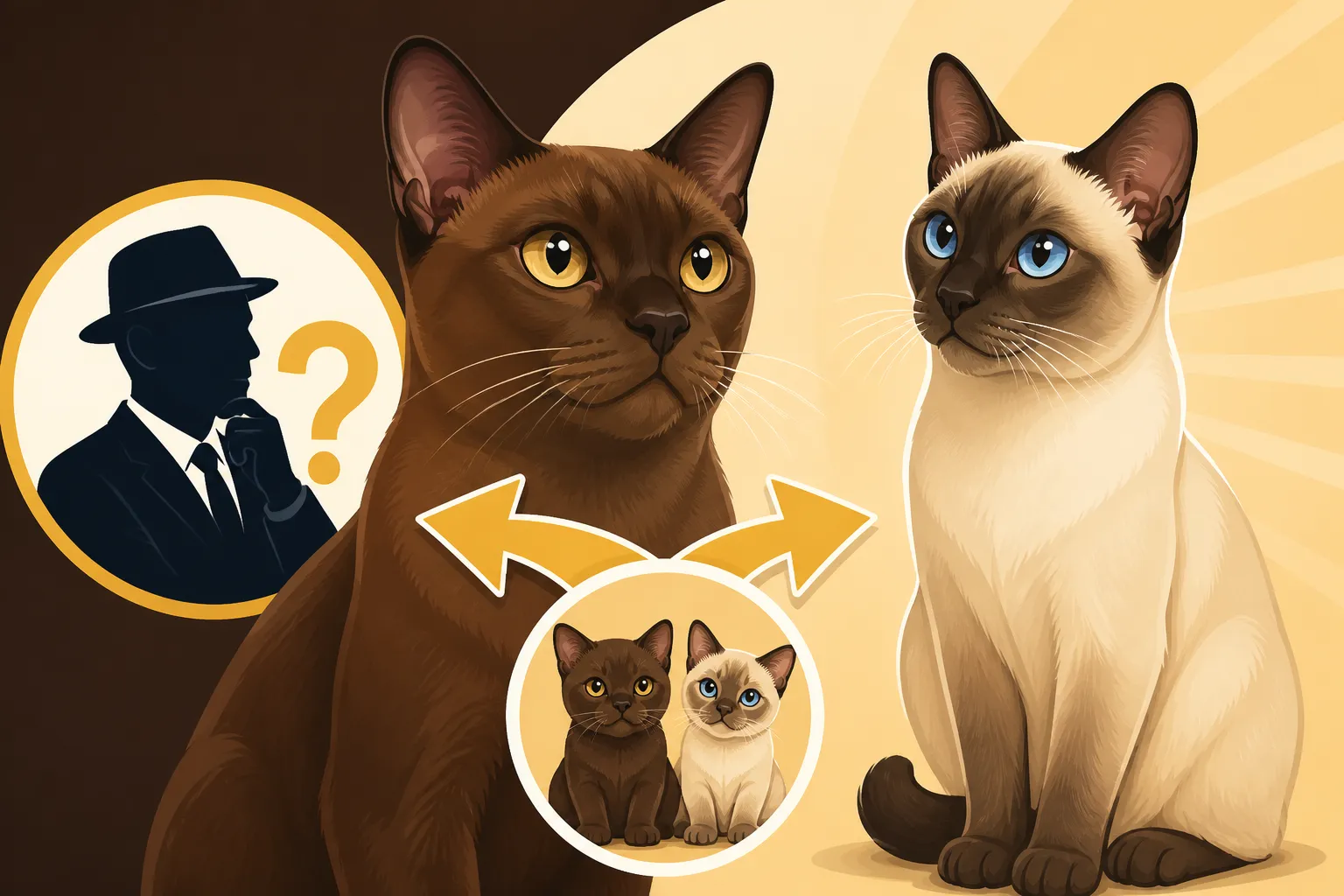
Coat pattern and color are part of the story. Burmese cats are associated with a more even, shaded coat, while Siamese cats are known for pointed coloring, where the extremities are darker than the body. Tonkinese cats are commonly associated with the “mink” pattern, which falls between those two extremes. Their coat contrast can look softer than a Siamese’s while being more distinct than a Burmese’s.
Eye color is another feature that helps people recognize the Tonkinese. Many have aqua-toned eyes, though appearance varies. As with coat and body type, a breed is not defined by one trait alone. Breeders develop and assess a combination of features over generations, rather than expecting every kitten to inherit exactly the same look. What Happens When Burmese and Siamese Genes Meet offers more detail on why crosses can produce a range of appearances.
What “between Burmese and Siamese” really means
The phrase “between Burmese and Siamese” is handy, but it can give the wrong impression if taken too literally. It does not mean Tonkinese cats are simply half one breed and half the other in every visible feature. Inheritance is more complicated than a tidy blend, and kittens in the same litter can differ.
A Tonkinese may have a sturdy, muscular body, a short coat, and a sociable, people-focused temperament. But those qualities are not a checklist that every cat will display in precisely the same way. Individual temperament depends on many factors, including inherited tendencies, early handling, health, and the environment in which a cat grows up.
This is also why the Tonkinese should not be treated as a “designer” label for any Burmese–Siamese cross. A cross may share ancestry without having the consistent lineage, breeding history, and registry status associated with a recognized breed. To see how the breeds differ in practice, read How a Burmese Differs From a Tonkinese alongside Why the Tonkinese Sits Between Burmese and Siamese.
Why the Burmese connection matters
The Burmese was not just one of the parents in the Tonkinese story; it was a source of traits that helped shape the breed’s body, coat, and temperament. At the same time, Siamese ancestry contributed qualities that distinguish the Tonkinese from the Burmese. The result is a breed with its own profile, not merely a Burmese that happens to have Siamese markings.
The history also shows how breed development tends to work: breeders may begin with existing breeds, then select for particular combinations and build a population that produces those traits more predictably. That process takes time, record keeping, and agreement about which characteristics belong in the standard.
It helps to keep that distinction in mind when looking at online listings. A cat described as “Tonkinese-type” might have a similar appearance without documented Tonkinese ancestry. If pedigree matters to you, ask the breeder or rescue what is known about the cat’s background rather than relying on coat color or eye color alone.
| Question | Helpful distinction |
|---|---|
| Who is most associated with developing the Tonkinese? | Canadian breeder Margaret Conroy, through a breeding program in the 1960s |
| Was she necessarily the first person to cross a Burmese with a Siamese? | No; Burmese–Siamese crosses and intermediate-looking cats have a longer history |
| Is every Burmese–Siamese cross a Tonkinese? | No; ancestry alone does not establish a recognized breed or pedigree |
| What does “mink” usually describe? | A coat pattern commonly associated with the Tonkinese, with contrast between Burmese and Siamese extremes |
| Why is “the first Tonkinese” hard to pin down? | “First” can mean the first hybrid, the first planned breeding, or the first registry-recognized cat |
How the Tonkinese became a distinct breed
From planned crosses to a breeding population
Producing a striking first-generation kitten is only one step in breed development. To create a stable breed, breeders need to decide which traits they want to preserve, choose suitable cats for future matings, and track the results. They also need a population large enough to continue breeding responsibly.
That work is why the Tonkinese story is not best told as a single-mating anecdote. Conroy’s crosses helped establish a program, while other breeders contributed to the development and recognition of the breed. Over time, breeders worked toward cats whose appearance and characteristics could be described consistently.
The same pattern appears in the history of other breeds developed from Burmese ancestry. The Bombay, for example, came from a different breeding goal and a different selection process. Who Bred the First Bombay From a Burmese is a helpful comparison: it shows why sharing a Burmese ancestor does not make two breeds the same.
Recognition and the importance of breed standards
A breed standard gives breeders and judges a shared description of the cat they are trying to produce. Recognition by a registry is a separate step from the first crosses themselves. A cat can be part of a pioneering breeding program before a registry formally accepts the breed or establishes its rules.
This is one reason different accounts may emphasize different dates or “firsts.” One writer may be describing when breeders began the work; another may focus on the first club, standard, or registry decision. The details can sound contradictory when they are actually describing different stages of the breed’s development.
For a prospective owner, registry paperwork and a clear pedigree are more useful than a broad claim that a cat is “from the original line.” If a breeder says a kitten is Tonkinese, ask which registry recognizes the lineage, what documents are provided, and whether the kitten’s parents are identified in the pedigree. A transparent breeder should be able to explain the cat’s background without leaning only on a dramatic origin story.
What the Tonkinese origin means for cat owners
Breed history is not a personality guarantee
People often hear that Tonkinese cats are affectionate, social, and lively. Those traits are commonly associated with the breed, but history cannot promise that every individual cat will behave the same way. A kitten’s early experiences, health, and home environment matter too.
If you’re considering a Tonkinese, think about the day-to-day reality as well as the breed’s reputation. A sociable cat may want company and interaction rather than being left alone for long stretches. Ask the breeder or rescue how the particular cat responds to handling, visitors, other animals, and time by itself. The broader question of household fit is explored in Which Household a Burmese Fits, which can help you think through similar social needs in a related breed.
Prepare for enrichment before bringing a cat home. Interactive play, scratching surfaces, hiding places, and comfortable resting spots can help a cat settle in. Chewy is one place owners may look for everyday supplies such as toys, beds, and feeding equipment, but the important thing is choosing items that suit the individual cat and your home. A wand toy, for instance, can give an energetic cat a focused play routine, while a quiet, enclosed bed may help a new arrival feel secure.
Choosing a cat by more than appearance
A cat with aqua eyes and a softly contrasted coat may look Tonkinese, but appearance alone cannot confirm its breed. If you’re buying from a breeder, ask about the parents, pedigree, health records, and the registration organization. If you’re adopting, the cat’s exact ancestry may not be known, and that is perfectly fine; a loving companion does not need a verified breed label.
It is also worth asking what support is available after adoption. A responsible breeder should be willing to discuss the kitten’s care and temperament, while a rescue can tell you what staff or foster carers have observed. Do not feel awkward asking practical questions. It is much better to learn that a cat is unusually vocal or needs a gradual introduction to other pets before you bring them home.
Supplies should follow the cat’s real needs, not the breed name on a listing. Chewy and other pet retailers offer broad categories of food, litter, carriers, and enrichment items, but a veterinarian is the right person to advise on a cat’s diet or health needs. If you are comparing food labels, focus on the cat’s age, health, and feeding plan rather than assuming that a product marketed for a particular breed is automatically the right choice.
A quick way to explain the origin story
If someone asks who bred the first Tonkinese from a Burmese, the most accurate short answer is that Margaret Conroy is widely credited with developing the Tonkinese through Burmese–Siamese crosses in Canada during the 1960s. The fuller answer is that Burmese–Siamese crosses existed earlier, related breeding efforts occurred elsewhere, and “first” can refer to several different milestones.
That answer gives Conroy her place in the story without suggesting that one kitten single-handedly created the breed. The Tonkinese emerged through a broader process: early Burmese and Siamese ancestry, deliberate selection, continued breeding, and the eventual development of a distinct breed identity.
For readers following the family tree, The Bombay and the Tonkinese Came Out of the Burmese connects the Tonkinese story to another Burmese-derived breed, while How the American and European Burmese Split offers context on how breeding histories can lead to distinct types over time.
Disclaimer
This article is for general informational purposes only and does not constitute professional advice. Laws, prices and regulations vary by location and change over time. Consult a qualified professional for guidance on your specific situation.