How a Bombay Differs From a Black Burmese
A glossy black coat can make a Bombay and a very dark Burmese look remarkably alike, especially in a shelter photo or dim room. But color alone does not establish breed, and a Burmese’s standard coat color is usually called sable rather than black. This guide explains the differences in appearance, ancestry, temperament, and paperwork—and how to avoid guessing from a picture.
The key difference between a Bombay and a black Burmese
A Bombay is bred to look black
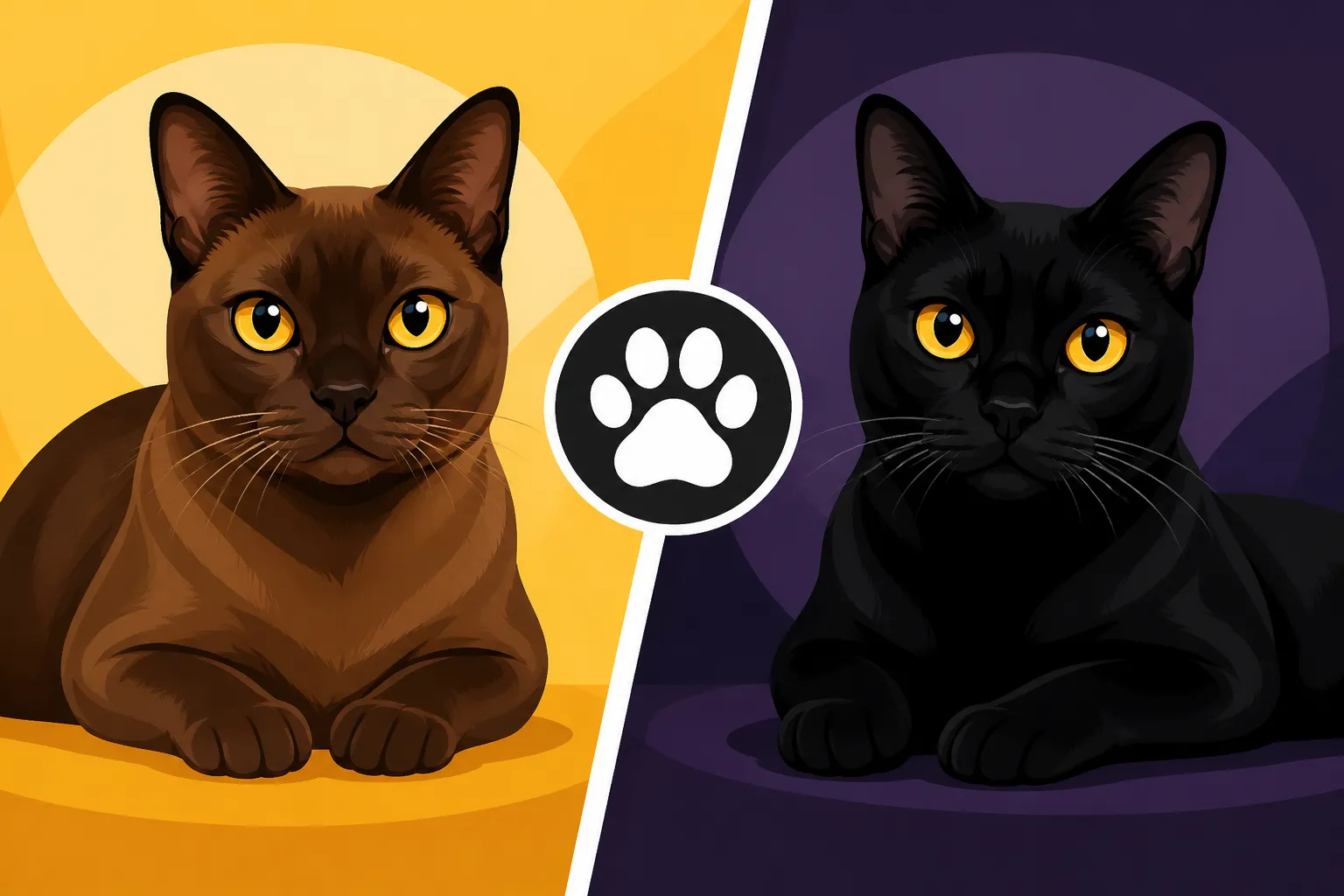
The Bombay was developed to resemble a small black panther. Its defining look is an even, glossy black coat, paired with a rounded head, a medium build, and eyes that are typically copper or gold. The coat is expected to look black across the body, rather than brown in warm light.
The breed’s history includes Burmese cats and black American Shorthairs. That does not mean every Bombay is simply a black Burmese: the Bombay was developed and recognized as a distinct breed, with a particular appearance breeders aim to maintain. Its identity comes from ancestry and breed standards, not just its dark coat.
A black cat with a rounded face and bright eyes may look like a Bombay, but appearance alone cannot prove that it is one. Many non-pedigreed cats share those traits. The same caution applies to cats described casually as “black Burmese.”
A Burmese usually has a sable coat, not a black one
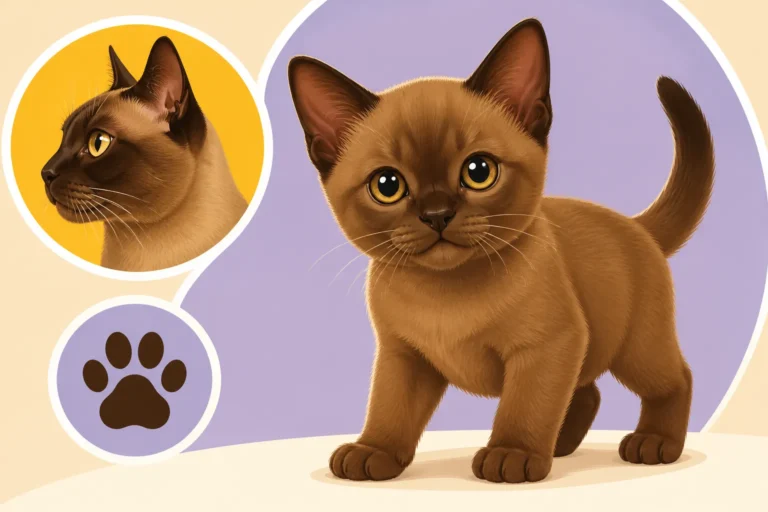
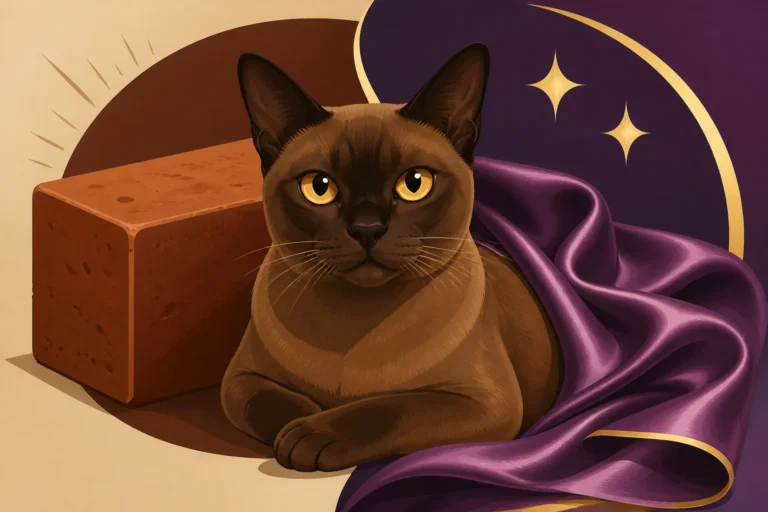
In the American Burmese standard, the darkest color is called sable. It can look very dark brown—sometimes nearly black in a shadowy room—but strong daylight may reveal warmer brown tones. That difference can be subtle, especially in photographs, where lighting and camera settings can flatten the color.
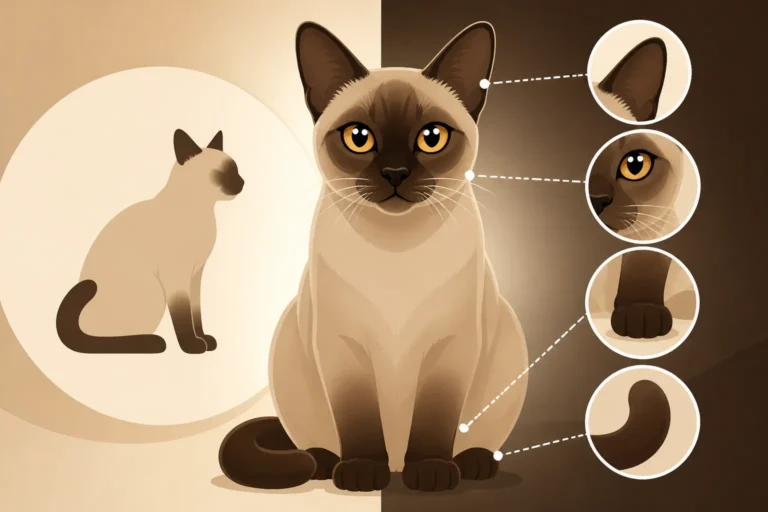
Burmese cats are known for a short, close-lying coat with a smooth, satiny feel. The breed is compact and muscular, and can feel heavier than its outline suggests. A sable Burmese may have a rounded head and golden eyes too, so those features overlap with the Bombay rather than providing a sure way to tell them apart. For more on the Burmese build, see Why a Burmese Weighs More Than It Looks.
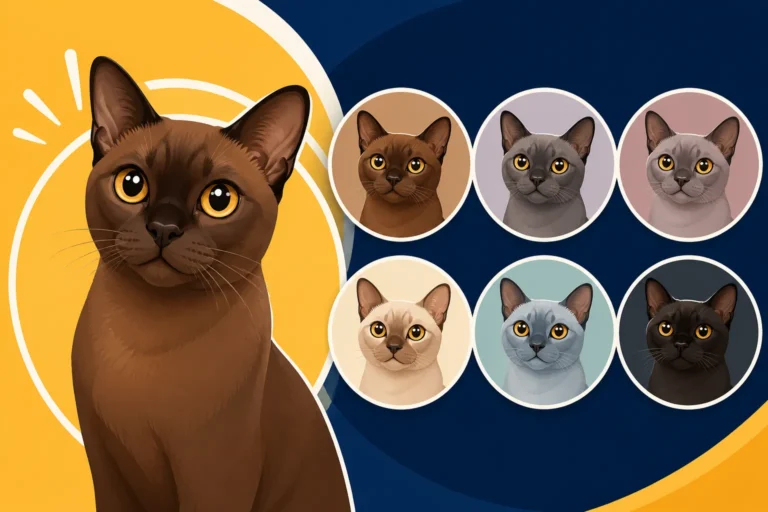
The recognized Burmese colors depend on the registry and type of Burmese being discussed. In the American standard, the familiar colors include sable, champagne, blue, and platinum. A cat described as a “black Burmese” may therefore be a sable Burmese that looks especially dark, a mixed-breed cat, or a cat whose breed has not been confirmed. The Four Colors a Burmese Comes In explains how those coat colors differ.
A quick comparison
| Feature | Bombay | Burmese described as black |
|---|---|---|
| Typical coat description | Black, glossy coat | Usually called sable in the American standard; may look nearly black |
| Eye color | Commonly copper or gold | Commonly shades of gold to yellow |
| Breed history | Developed as a distinct black cat breed, using Burmese and black American Shorthair ancestry | Burmese breed with its own standards and recognized colors |
| Body and head | Medium, muscular, rounded appearance | Compact and muscular; features vary with the standard and line |
| What confirms breed | Pedigree and registry documentation | Pedigree and registry documentation |
| What color alone can tell you | Not enough to confirm a Bombay | Not enough to confirm a Burmese |
This is a practical comparison, not a substitute for a pedigree or a registry’s breed standard. Standards can differ between organizations, and individual cats do not always look exactly like a show-standard example. For a broader description of Burmese features, read What a Burmese Looks Like Against the Standard.
How to tell them apart in real life
Look at coat tone in natural light
If the coat looks black indoors, check it in soft natural light before drawing conclusions. A sable Burmese may show brown warmth, while a Bombay’s coat is intended to read as black. Avoid judging by flash photography: flash can make a dark coat look shiny or wash out its underlying tone.
Look at several areas rather than one patch. A cat’s face, shoulders, back, and sides may reflect light differently, and shadows can make brown fur appear black. If you are comparing two cats, view them in the same light. Comparing a sunlit cat with one photographed indoors is not a fair test.
Coat tone is a clue, not a verdict. A very dark sable Burmese can be visually difficult to distinguish from a black cat, and a black domestic shorthair can resemble a Bombay. Breed standards give useful context: What a Sable Burmese Looks Like describes the color more specifically.
Compare the overall shape without treating it as proof
Bombays are generally described as medium-sized and muscular, with a rounded look. Burmese cats are also compact, muscular cats, so a quick glance at body shape may not settle the question. A cat’s age, weight, posture, and health can also change how its proportions appear.
Try to assess the whole cat rather than focusing only on the face or eyes. A round head, short-looking muzzle, or golden eyes may be consistent with either breed. Even experienced cat lovers can be misled by a flattering photo or a cat curled into a small shape.
If you are looking at a shelter cat, concentrate on what you can reliably observe: coat condition, body condition, behavior, and health. Ask staff what is known about the cat’s background, but treat breed labels without supporting history as descriptions rather than proof. You can also compare the specific distinctions in How to Tell a Burmese From a Bombay.
Treat temperament as a clue, not a breed test
Both breeds are often described as people-oriented and affectionate, but an individual cat’s personality is shaped by many things: early socialization, past experiences, age, health, and the home environment. A cat that follows you from room to room is not automatically a Burmese, and a quiet Bombay is not “less Bombay” because it does not match a stereotype.
Spend time observing how the cat responds to handling, visitors, play, and ordinary household activity. A kitten may be energetic and curious, while an older cat may prefer a warm lap and a predictable routine. Those differences matter for choosing a companion, but they cannot reliably identify a breed.
If you are choosing a cat based partly on expected personality, ask about the individual animal rather than relying on a breed label alone. Whether a Burmese Is the Right Cat for You can help you think through the everyday fit of living with a Burmese.
What pedigree and registration can establish
Ask for documents, not just a color description
When a breeder advertises a cat as a Bombay or Burmese, ask what documentation supports that description. A pedigree should identify the cat’s ancestry, and registration paperwork should make clear how the cat is recorded. The relevant registry depends on the breeder and the breed type.
A listing that says “black Burmese” without explaining whether it means a sable Burmese, a Burmese mix, or a cat with an informal appearance label deserves a follow-up question. Ask the breeder to explain the terminology and show the paperwork that goes with it. A responsible answer should be clear rather than relying on a photo or a confident-sounding label.
If papers are unavailable, that does not make a cat any less deserving of a loving home. It simply means you should be cautious about claiming that the cat is a confirmed pedigree breed. For details on how breed records can vary, see Which Registry Calls It a European Burmese and How CFA Registers a European Burmese.
Understand how Burmese type and color names can differ
The name “Burmese” is used in more than one breed-standard context. American and European Burmese have developed along different paths, and registries may use different naming and recognition rules. That can affect which colors are accepted and how a cat is recorded.
This is one reason a color label should be read in context. A breeder’s use of “black” might be an informal description of a very dark coat, while the official color name on the pedigree could be sable or another recognized color. If the wording seems inconsistent, ask what appears on the registration documents and which standard the breeder follows.
Color naming can also cause confusion between breeders, sellers, and prospective owners. Which Colors CFA Accepts in a Burmese is useful background if you are comparing an American Burmese listing with a different type or registry.
Be careful with online photos and marketplace descriptions
Photos can make a black coat look brown, or a brown coat look black. Indoor lighting, sunlight, phone-camera processing, and the angle of the picture all affect what you see. A short video in natural light can provide more context, but it still cannot establish pedigree.
This caution applies whether you find a cat through a breeder, a rescue group, or an online listing. Be wary of dramatic claims such as “rare black Burmese” when the seller does not explain the color name or provide clear documentation. Ask questions before paying a deposit, and never rely on a coat-color description as a substitute for paperwork.
Chewy may come up when you are comparing food, litter, or other supplies for a newly adopted cat, but a retailer’s product descriptions are not breed records. The same is true of labels in shelter profiles or social media posts: they can be helpful context, but they do not confirm ancestry.
Choosing a cat without getting stuck on the label
If you are adopting, focus on the individual cat
At a shelter or rescue, a cat’s exact breed may be unknown. That is common for cats without pedigree records, including those with a striking, Bombay-like black coat or a dark sable appearance. Instead of trying to solve the cat’s ancestry from a photograph, ask about its energy level, health history, comfort with handling, and experience living with other pets.
Spend time with the cat if possible. Notice whether it approaches visitors, seeks contact, plays readily, or prefers to watch from a safe spot. Staff or foster carers may be able to describe how the cat behaves at home, which is often more useful than a guess about breed.
Once you bring a cat home, choose care products for its actual needs. A short coat may need little grooming, while appetite, age, dental health, and activity level can affect food choices. Chewy is one example of a retailer people may use to compare basic supplies; a neighborhood pet shop or veterinary clinic can also help you find appropriate items. The cat’s care needs—not the word “Bombay” or “Burmese” in a listing—should guide those decisions.
If you are buying from a breeder, verify the claim carefully
Ask whether the kitten is registered as a Bombay or Burmese, which registry is involved, and whether the breeder can show the pedigree. If you are told a Burmese kitten is “black,” ask whether its documented color is sable or whether the seller is using “black” informally. Clear answers help you understand exactly what is being offered.
Look beyond the coat, too. Ask about the kitten’s age, socialization, health care, and the breeder’s approach to matching kittens with homes. A polished website or beautiful photographs do not replace a chance to review records and ask practical questions. A reputable breeder should be prepared to explain the distinction between breed, color, and appearance.
If a breeder uses the term “Bombay” but cannot provide documentation, you can still decide whether the cat is right for you. Just make the decision with an accurate understanding: without supporting records, the breed may be unconfirmed. Chewy can help with everyday supplies after the kitten comes home, but it cannot resolve questions about lineage; ask the breeder or registry for that information.
Remember that a good match matters more than a perfect label
A cat does not need to be a Bombay or a Burmese to have a glossy coat, golden eyes, or a devoted personality. The breed distinction matters when you are buying a pedigreed cat or trying to understand the history behind a particular animal. For most owners, daily compatibility, health, and a safe home matter more.
If you already live with a black cat who might be a Burmese or Bombay, enjoy the traits you can see without feeling pressure to assign a definite breed. If you are planning to adopt or buy, use appearance as a starting point for questions, not as the final answer. Chewy and other pet retailers can be part of the practical setup, but your adoption or breeder records are what matter when you need to establish identity.
Disclaimer
This article is for general informational purposes only and does not constitute professional advice. Laws, prices and regulations vary by location and change over time. Consult a qualified professional for guidance on your specific situation.