How a Burmese Compares to a Siamese as a Pet
Choosing between a Burmese and a Siamese can be tricky: both are affectionate, clever cats that want plenty of interaction, but they often express that need differently. This guide compares their personalities, voices, activity levels, care needs, and fit with everyday routines, so you can picture what living with each breed may actually feel like.
Burmese and Siamese personalities
How each breed seeks attention
A Burmese often wants to be close to its people throughout the day. That might mean following you from room to room, settling beside you while you work, or climbing into your lap as soon as you sit down. Many are sociable with visitors, too, though individual cats vary. Their attachment can feel especially constant: they don’t just enjoy a cuddle at bedtime; they may want to be part of whatever is happening around the house.
Siamese cats are also famously people-oriented. Many seek conversation and company, follow household members around, and get involved in daily routines. The difference is less about one breed being affectionate and the other being independent, and more about how each cat shows that affection. A Siamese may actively call for your attention, while a Burmese may communicate through proximity, touch, play, and a steady presence at your side.
Either breed can struggle with long, lonely days if it has no companionship or stimulation. If your schedule involves regular time away, plan for more than a quick cuddle before work: provide play, climbing opportunities, and interaction when you’re home. Some cats benefit from a well-matched feline companion, but compatibility depends on the individuals and a careful introduction. For more on the Burmese side of this need, see Why a Burmese Should Never Be an Only Cat and How Many Hours Alone a Burmese Tolerates.
Voice and conversation
Siamese cats are often the more vocal of the two. A Siamese may announce meals, greet you when you come home, or keep up a running conversation when you speak. The sound can be persistent and quite distinctive. If you like a cat that makes its opinions obvious, that trait may be charming. If you need a quiet home, it’s worth thinking carefully about whether frequent vocalizing will suit you.
Burmese cats can be talkative too, but many have a softer, throatier sound than the classic loud Siamese call. Their vocal style is not a guarantee of temperament: some Burmese are chatty, while some Siamese are comparatively quiet. Listen to the adult cats in a breeder’s home or ask a rescue caregiver what an individual cat is like, rather than relying only on a breed description. How a Burmese Sounds Throatier Than a Siamese explores the Burmese voice in more detail.
A cat’s vocalizing can also change with its circumstances. A cat that suddenly starts calling more, becomes unusually quiet, or seems restless may be responding to a change in routine, stress, or a health issue. Consider the timing and context: is the cat asking for food, reacting to a closed door, or showing a new behavior that deserves a veterinary check? The breed comparison is a useful starting point, not a substitute for paying attention to the cat in front of you.
Energy, play, and trainability
Activity levels and play styles
Both breeds are intelligent and generally enjoy interactive play. A Siamese may bring a high-energy, athletic feel to the household, often enjoying climbing, chasing toys, and exploring new spaces. A Burmese is muscular and playful too, and many stay interested in games well into adulthood. Neither breed should be assumed to be a decorative lap cat that will entertain itself all day.
The daily experience depends heavily on the individual cat’s age, health, and personality. A young Siamese or Burmese may need several short play sessions, while an older cat may prefer gentler games and a predictable routine. Wand toys, puzzle feeders, and safe climbing spots can help channel energy. Rotate toys occasionally so familiar objects don’t become invisible to a cat who has already investigated them thoroughly.
Look at how each cat plays before deciding which style suits you. Does the cat chase a toy intensely, enjoy puzzle-solving, or prefer to watch before joining in? A Burmese may be especially motivated by interaction with a person, while a Siamese may also make its own games by exploring and climbing. Those are tendencies, not rules. Why the Burmese Is Called a Dog in a Cat's Body offers more context on the breed’s interactive reputation.
Learning and household routines
Both Burmese and Siamese cats can be quick learners. Many respond well to reward-based training, and short, consistent sessions can make everyday handling easier. You can teach a cat to come when called, enter a carrier, or accept a gentle grooming routine by pairing the experience with something positive. Keep sessions brief, end on a success, and avoid forcing contact when the cat is frightened or overwhelmed.
A Burmese may be particularly eager to join in when a person is involved, while a Siamese may show its intelligence through persistent curiosity and problem-solving. For either breed, mental activity matters as much as physical exercise. A food puzzle or a small training session can be more satisfying than leaving a pile of toys untouched on the floor.
Routine can be useful, but flexibility matters too. If your cat expects breakfast at a particular time, a sudden schedule change may prompt a vocal reminder. If you’re using food as a training reward, include those treats in the cat’s overall daily ration. For supplies such as puzzle feeders or food-storage containers, a retailer such as Chewy may be one place to compare options; check that any item is appropriate for your cat’s size and feeding plan.
Care, appearance, and health
Coat and grooming differences
Both breeds have short coats that are relatively straightforward to maintain. A Burmese coat is close-lying and often described as satin-like, while a Siamese coat is also short and sleek. Neither usually needs elaborate grooming, but a gentle brush or grooming glove can help remove loose hair and give you a chance to check the skin. Grooming can also become a calm social routine if you introduce it gradually.
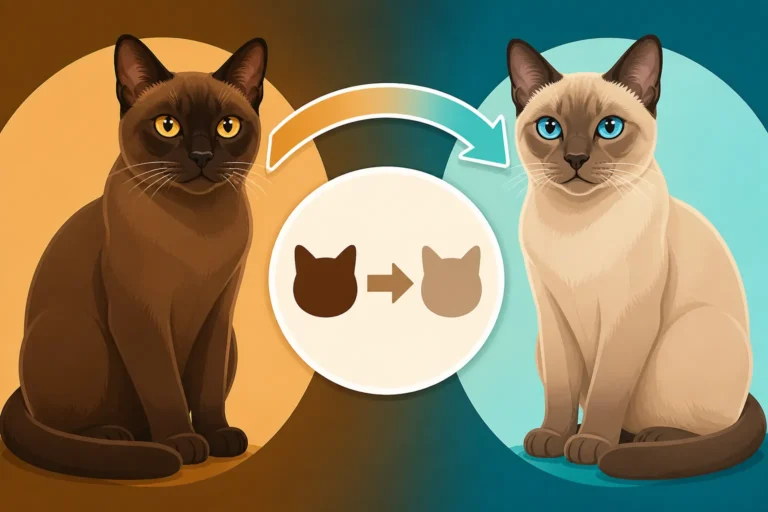
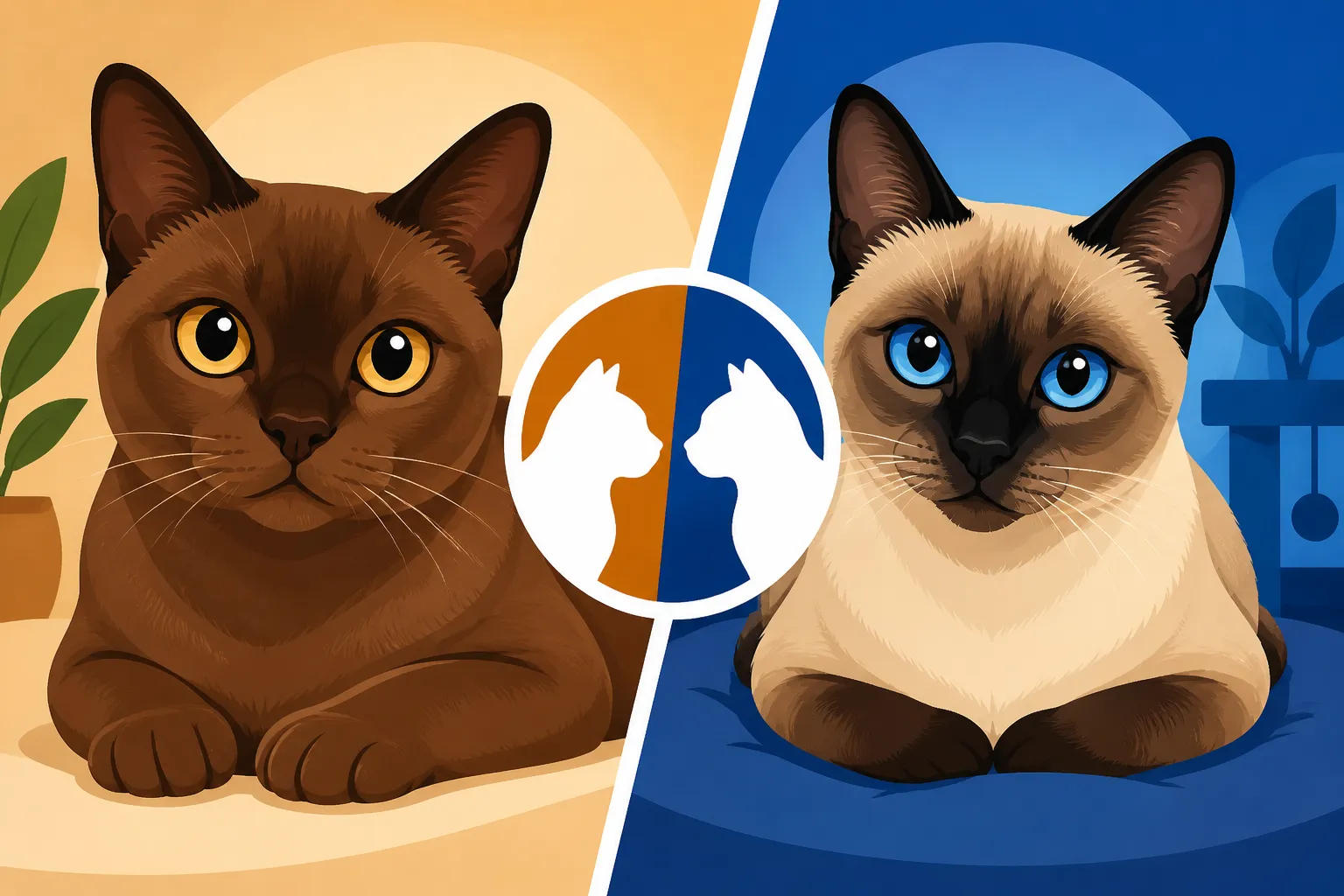
The cats may differ in build and appearance more noticeably than in coat-care demands. Burmese cats tend to feel compact and muscular, often heavier than their size first suggests. Siamese cats are generally more elongated in outline, with a finer-looking frame and distinctive wedge-shaped features in some lines. Breed standards and appearance vary, so look at the parents or adult relatives if you’re choosing a kitten and want a better sense of how it may develop. For a closer look at coat texture, see How a Burmese's Coat Differs From a Siamese's.
A slick, short coat does not mean there is nothing to monitor. Check ears, eyes, claws, skin, and teeth as part of routine care, and let a veterinarian guide you on preventive health visits. Some cats dislike having their paws or mouths handled, so start gently and build comfort over time. If you’re shopping for basic grooming supplies, Chewy can be a place to compare brushes and nail-care tools, but choose equipment suited to your cat and ask your veterinary team for help if you’re unsure how to use it.
Health and preventive care
Neither breed should be treated as automatically healthy or unhealthy based on its name. A cat’s health depends on its individual history, breeding, environment, and preventive care. Ask about veterinary records, family health history, and any screening relevant to the cat’s background. If adopting, request the medical information available and arrange a veterinary visit after bringing the cat home.
Burmese owners may want to discuss breed-relevant health concerns with a veterinarian and the breeder or rescue. Burmese cats can have a higher risk of diabetes than many other cats, so maintaining a healthy body condition and noticing changes in thirst, urination, appetite, or weight are important. Siamese cats also have health considerations that deserve individualized discussion; don’t assume that a more slender appearance means a cat cannot gain excess weight or develop illness.
Preventive care is practical, not just paperwork. Keep a record of weight, appetite, water intake, litter-box habits, and behavior so you can describe changes clearly at an appointment. Ask your veterinarian what screening schedule makes sense for your cat’s age and history. For Burmese-specific context, The Burmese Has the Highest Diabetes Rate of Any Cat Breed and Why Portion Control Is Medical Care in a Burmese explain why weight and routine monitoring matter.
Which breed fits your household
A quick comparison
| What to consider | Burmese | Siamese |
|---|---|---|
| Companionship | Often strongly people-focused and keen to stay nearby | Often strongly people-focused and may actively seek interaction |
| Vocal style | Can be chatty, often with a softer or throatier sound | Often known for frequent, prominent vocalizing |
| Play | Interactive, playful, and commonly people-oriented | Curious, active, and often enthusiastic about climbing and games |
| Coat care | Short coat; usually simple routine grooming | Short coat; usually simple routine grooming |
| Household fit | Often suits an involved home with regular company | Often suits a home that enjoys an active, communicative cat |
| Important caveat | Individuals differ; discuss breed-relevant health and weight care | Individuals differ; ask about temperament and health history |
Use the table as a conversation starter, not a scorecard. If you want a quiet cat who is content to spend most of the day alone, neither breed is a safe bet based on breed tendencies alone. A particular adult cat may be more independent than expected, but it’s better to assess that cat’s known behavior than to hope it will fit a lifestyle that leaves little time for companionship.
A busy home can suit either breed if people are willing to provide attention, play, and safe places to rest. Children should be taught to let the cat approach, handle it gently, and leave it alone when it retreats. Other pets can provide company, but introductions should be gradual and supervised. Read more about the Burmese household match in Which Household a Burmese Fits and Whether a Burmese Suits Someone Who Works Away.
Questions to ask before choosing
Meet the cat, if possible, and ask how it behaves in ordinary situations: when people are busy, when visitors arrive, and when play stops. For a kitten, ask about the parents’ temperaments and how the litter has been socialized. For an adult cat, ask the caregiver about its vocal habits, comfort with handling, play preferences, and experience with other animals. Those details are more useful than a broad promise that every cat of a breed behaves alike.
Be honest about your own routine. How much time will the cat spend alone? Do you enjoy a vocal companion? Are you ready to schedule daily play and provide environmental enrichment? If you travel often, who will care for the cat and spend time with it? Burmese and Siamese cats can both be wonderful companions, but affection and intelligence don’t eliminate their need for attention.
Finally, consider the individual animal’s welfare alongside your preferences. A calm adult Burmese might suit someone who wants a close companion without a particularly loud voice; a confident, vocal Siamese might be ideal for someone who enjoys frequent interaction and conversation. But those are possibilities, not guarantees. Whether a Burmese Suits a First Time Cat Owner can help with the Burmese-specific decision, while meeting the cat and discussing its needs with its caregiver will help you make a grounded choice.
Disclaimer
This article is for general informational purposes only and does not constitute professional advice. Laws, prices and regulations vary by location and change over time. Consult a qualified professional for guidance on your specific situation.