Why Siamese Hybrids Flooded Burmese Registration
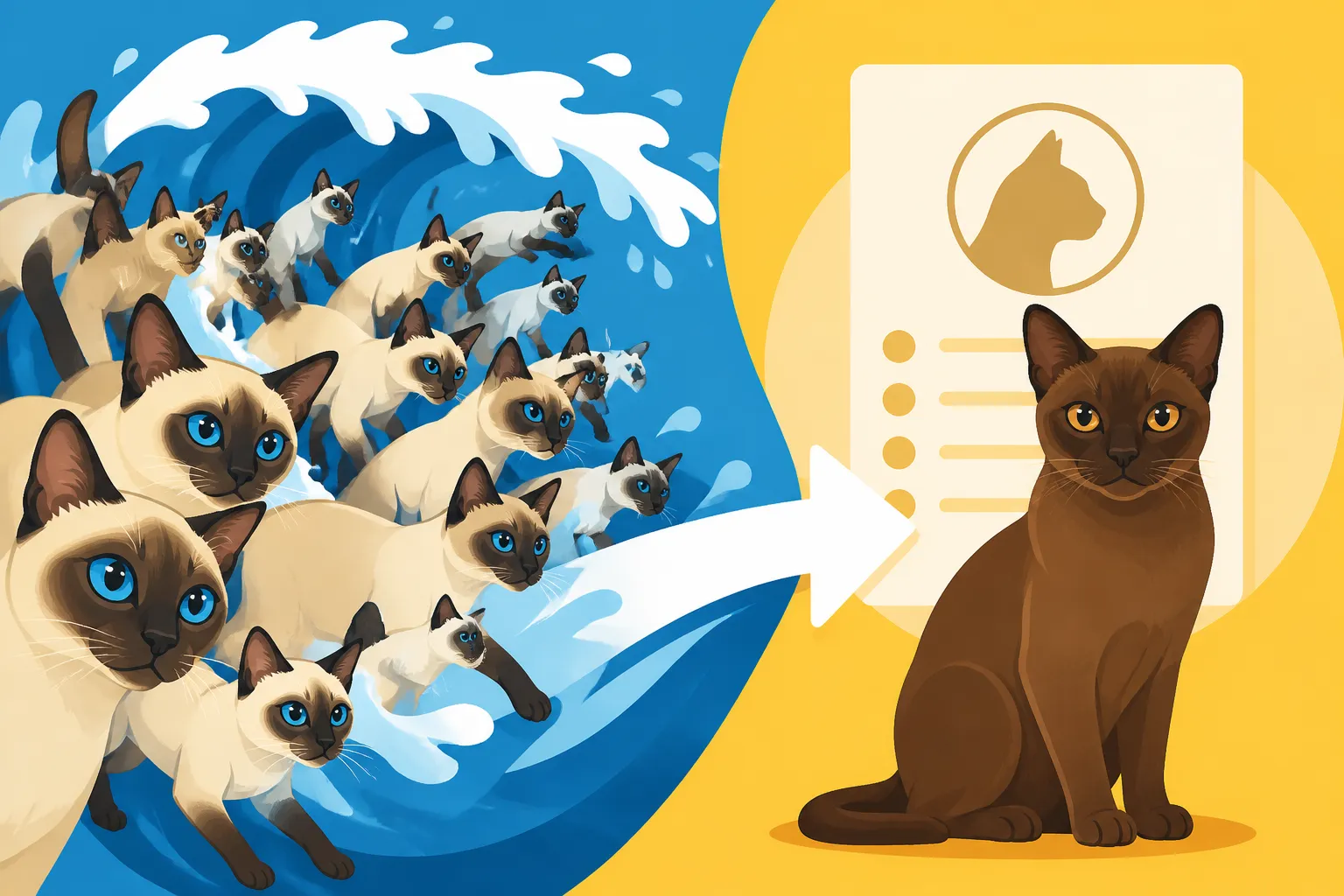
It's a story as old as time in the cat fancy: a new, captivating breed emerges, and everyone wants a piece of it. But with that excitement can come a rush to market, and in the early days of the Burmese, this led to a real headache: an overwhelming number of Siamese hybrids finding their way into the Burmese registration rolls. This wasn't just a minor mix-up; it threatened the very integrity of the fledgling breed. This guide will take you through the fascinating, sometimes frustrating, history of how Siamese genetics inadvertently flooded Burmese registrations and the rigorous steps breeders and cat associations had to take to protect the beloved Burmese cat.
The Genesis of the Burmese and the Siamese Connection
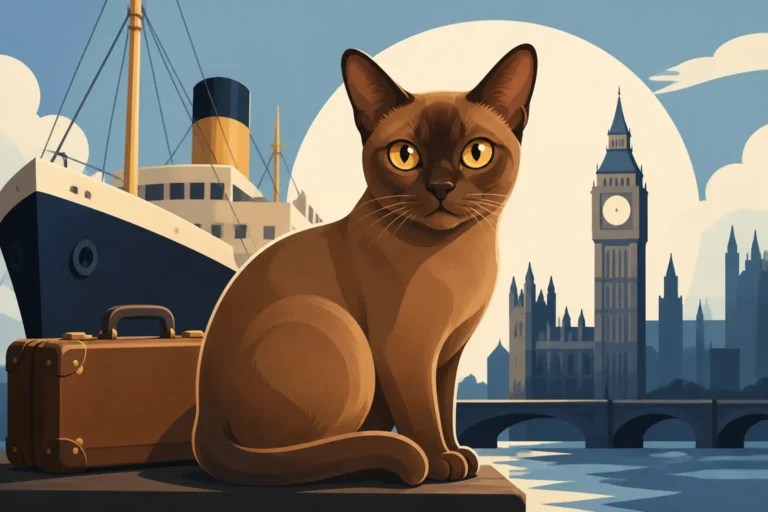
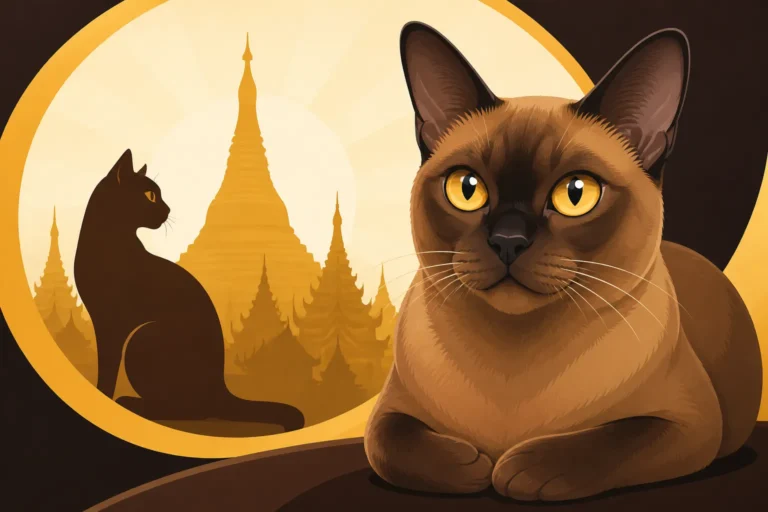
The tale of the Burmese cat officially begins in 1930, when a small, walnut-brown cat named Wong Mau arrived in San Francisco from Burma, brought to Dr. Joseph C. Thompson. She was unlike any cat seen before in the West – a compact, muscular feline with a stunning, soft brown coat and expressive golden eyes. Dr. Thompson, a navy psychiatrist and cat fancier, immediately recognized her unique qualities. He set out to understand her genetic makeup, a journey that would inadvertently lead to the "hybrid flood" we're discussing.
Wong Mau's Arrival and Initial Breeding
Wong Mau was truly a trailblazer. She was distinct from the popular Siamese cats of the era, yet clearly shared some common ancestral traits. To unravel her genetic mystery, Dr. Thompson made a crucial decision: he bred Wong Mau to a Siamese cat. This wasn't a random choice; it was a deliberate scientific experiment designed to reveal the genetic underpinnings of her unique brown coloration. At the time, DNA testing was a distant dream, so understanding inheritance patterns meant careful observation of offspring.
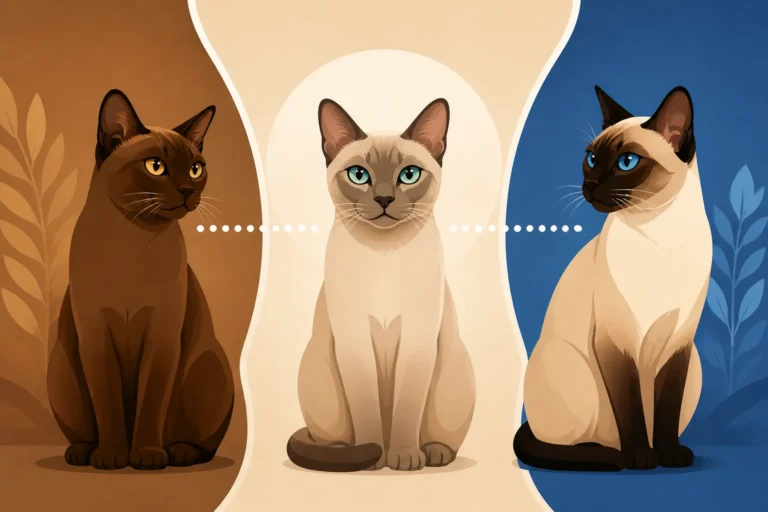
The results of these initial pairings were eye-opening. Wong Mau, when bred to a Siamese, produced kittens of three distinct types: some looked like pure Siamese, with their characteristic points; some were intermediate in color, a sort of "sable point" that would later be recognized as the Tonkinese; and others, crucially, were solid brown, like Wong Mau herself. This told Dr. Thompson that Wong Mau was not a homozygous cat for her color but carried both the gene for full color and the gene for the Burmese dilution.
Unveiling the "Burmese Gene" (cb Allele)
What those first breeding experiments revealed was that Wong Mau was genetically an "impure" Burmese, in the sense that she wasn't true-breeding for her unique color. She carried one copy of the gene for solid color (C) and one copy of the gene responsible for the Burmese coloration (cb). The Burmese gene, or cb allele, is a variant of the gene that controls pigment distribution. It causes a partial reduction in pigment, resulting in the distinctive sepia-like brown color and the subtle darkening at the extremities (ears, mask, paws, tail), though much less pronounced than in a Siamese.
When Wong Mau (C/cb) was bred to a Siamese (cb/cb, meaning two copies of the Siamese pointing gene), the kittens inherited various combinations. Some got C from Wong Mau and cb from the Siamese, resulting in the intermediate "Tonkinese" look. Others got cb from both parents, producing the true Burmese phenotype. This genetic revelation was monumental for understanding cat coat colors and would be the subject of academic papers, as detailed in Which Journal Published the Burmese Findings. It clarified that to produce a true-breeding Burmese, you needed two copies of the cb allele.
The First Litters: A Mix of Phenotypes
Imagine the excitement and perhaps the confusion surrounding these early litters! Here was this amazing new cat, Wong Mau, producing a rainbow of kittens even when bred to a Siamese. The solid brown kittens, the ones that truly matched Wong Mau's stunning appearance, were the prize. These were the cats breeders hoped to propagate as the new "Burmese" breed. However, the presence of Siamese-looking kittens and the intermediate "Tonkinese" types meant that the genetic waters were immediately muddied.
For aspiring breeders without a deep scientific understanding, distinguishing a true Burmese from a Burmese-Siamese hybrid could be challenging, especially as some of the intermediate cats were also incredibly appealing. This paved the way for inconsistencies and, eventually, the registration issues that would plague the breed in its formative years. The focus was on phenotype (what the cat looked like) rather than genotype (what genes the cat carried), a common pitfall in early breed development.
The Floodgates Open: Why Hybrids Became a Problem
As the beauty and unique personality of the Burmese began to captivate more cat enthusiasts, the demand for these "new" cats soared. Without the scientific rigor of Dr. Thompson's initial work and before formalized breed standards were universally understood and enforced, the purity of the Burmese gene pool quickly became compromised. It was an era of rapid expansion, and unfortunately, genetic understanding often lagged behind breeding ambition.
Breeder Enthusiasm Outpacing Genetic Understanding
In those pioneering days, the cat fancy was still evolving. Many breeders were driven by passion and a desire to produce beautiful cats, but not all possessed a strong grasp of genetics. When confronted with litters from Burmese-Siamese pairings, where some kittens appeared "Burmese" and others "Siamese" or "Tonkinese," it was easy for mistakes or shortcuts to occur. There was also a significant economic incentive: if you could produce what looked like a Burmese, you could sell it.
The initial understanding of the Burmese gene itself was complex. It wasn't as simple as dominant/recessive, but an incomplete dominant trait. This meant that a cat with one copy of the Burmese gene and one copy of the full color gene would look different from a cat with two copies of the Burmese gene. And a cat with one copy of the Burmese gene and one copy of the Siamese gene would look different again. This nuance was often lost, leading to unintended and repeated cross-breeding with Siamese cats, simply because they were readily available and produced some Burmese-looking offspring.
The Appeal of the Intermediate "Tonkinese" Type
One of the significant contributing factors to the hybrid flood was the striking appearance of the intermediate cats produced by crossing a Burmese and a Siamese. These cats, with their aqua eyes and mink-colored coats, were beautiful in their own right. They possessed a color pattern that was less pointed than a Siamese but not quite as rich and uniform as a Burmese. Today, we know these cats as Tonkinese, a distinct breed developed later. However, in the early days, before the lines were clearly drawn, these "mink" colored cats were sometimes passed off or genuinely mistaken for Burmese.
The allure of these cats meant they were often kept for breeding, further perpetuating the introduction of Siamese genetics into what was supposed to be a pure Burmese line. Many enthusiasts simply didn't realize the genetic implications of breeding these intermediate cats, thinking they were simply variations within the Burmese spectrum. This era highlights Why the founding Burmese produced two breeds – the Tonkinese eventually emerging as a recognized breed in its own right, directly from these early Burmese-Siamese crossings.
Rapid Expansion and Lack of Strict Oversight
The period following Wong Mau's arrival saw a rapid proliferation of "Burmese" cats across America. The breed was new, exotic, and gained popularity quickly. However, this fast growth occurred without a truly robust system of registration and verification in place. Cat associations, like the CFA (Cat Fanciers' Association), were still developing their stringent rules and processes for breed recognition and purity.
Without universally applied genetic testing (a concept decades away) or tightly enforced pedigree checks, it became incredibly difficult to trace a cat's lineage definitively. This created an environment ripe for what we now refer to as "paper pedigrees" – documents that claimed a cat was purebred Burmese but might, in reality, have recent Siamese ancestors or be a hybrid itself. This lack of strict oversight meant that cats that were, in essence, Siamese hybrids, were being registered as Burmese, diluting the breed's genetic purity and making a consistent breed standard almost impossible to achieve.
The CFA Suspension and the Call for Purity
The escalating problem of Siamese hybrids within the Burmese registration didn't go unnoticed forever. Judges in cat shows, breed committee members, and diligent breeders began to observe a concerning lack of uniformity and genetic integrity in many of the cats presented as Burmese. This growing concern ultimately led to a dramatic and necessary intervention by the Cat Fanciers' Association.
The Inconsistent "Burmese" Appearance
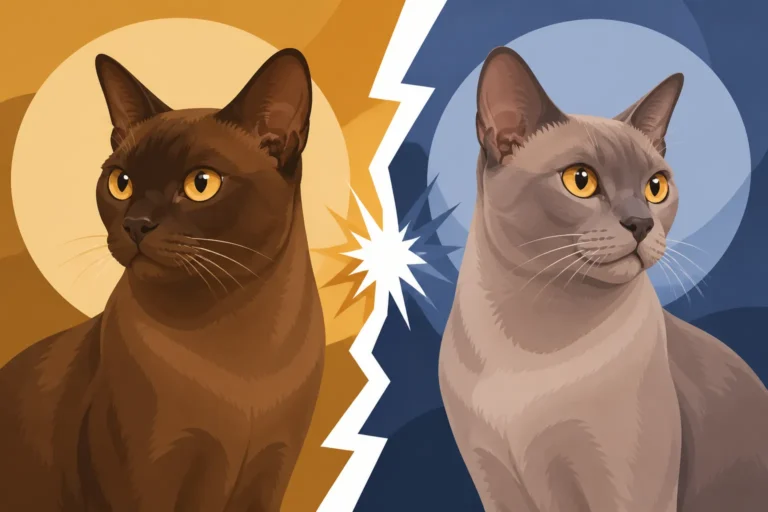
Imagine a show ring filled with cats all labeled "Burmese," yet displaying a bewildering array of appearances. Some would be the classic, rich sable brown, compact and muscular. Others might be lighter in color, with more pronounced points like a Siamese, or have lighter eyes that weren't the desired golden hue. There would be variations in body type too – some more slender, more oriental in form, resembling their Siamese ancestors, rather than the "brick wrapped in silk" Burmese ideal.
This inconsistency wasn't just an aesthetic problem; it indicated a fundamental issue with the genetic purity of the breed. If a breed can't produce consistent offspring according to its standard, then its very definition is at risk. Breeders and judges were struggling to apply a standard to a population that was too genetically diverse due to unverified Siamese crossings. The genetic makeup of the population was, to put it simply, all over the place.
CFA's Response: Suspending Registration
Recognizing the severity of the situation, the Cat Fanciers' Association took decisive action. In 1947, a pivotal year for the breed, CFA officially suspended the registration of Burmese cats. This was a drastic measure, but it was deemed essential to safeguard the future of the breed. It meant that no new Burmese could be registered, and existing registrations came under scrutiny. The suspension served as a loud and clear alarm call to the cat fancy: the Burmese breed, as it stood, was not genetically stable enough to continue without significant corrective action.
The motivation behind this move was to prevent further dilution of the true Burmese lines with Siamese genetics. It forced breeders to take a hard look at their breeding programs and verify the authenticity of their cats. This period of suspension, which lasted nearly a decade, was a crucible for the breed, ultimately strengthening it by demanding purity and adherence to a clear genetic path. You can learn more about this challenging period in When CFA Suspended Burmese Registration.
Rebuilding the Breed: The "Three Generations Pure" Rule
For the Burmese to be reinstated by CFA, a strict and rigorous breeding program was required. The key to this reinstatement was the "three generations pure" rule. This mandate meant that for a cat to be registered as a purebred Burmese, its pedigree had to show three consecutive generations of only Burmese-to-Burmese matings, with no Siamese or any other breed appearing in those generations. This was a monumental task for breeders.
This rule acted as a filter, effectively weeding out the hybrids and unverified crosses. Breeders had to meticulously trace pedigrees, provide verifiable documentation, and demonstrate consistent type over multiple generations. It was a painstaking process, but it ensured that when the Burmese was finally reinstated for championship status in 1957, it was on solid genetic ground. The cats being registered were now true-breeding Burmese, capable of producing offspring consistent with the emerging breed standard. This rigorous standard and its impact are further explored in What CFA Required Before Reinstating the Burmese.
Lessons Learned and the Modern Burmese
The early struggles of the Burmese breed, particularly the challenge of Siamese hybrids flooding its registration, served as an invaluable lesson for the entire cat fancy. It underscored the critical importance of genetic understanding, strict breed standards, and meticulous record-keeping. The legacy of this period continues to influence how Burmese cats are bred and registered today.
The Impact on Breed Development
The initial flood of hybrids and the subsequent CFA suspension, while difficult at the time, ultimately forged a stronger, more resilient Burmese breed. It forced early breeders to become geneticists in their own right, meticulously tracking lineages and focusing on producing true-to-type offspring. This commitment to purity helped solidify the distinctive physical and temperamental traits that define the Burmese today. It also set a precedent for other developing breeds, highlighting the need for careful management of new genetic material.
This historical challenge has contributed to the longevity and health-consciousness of the breed. Breeders learned that a strong, consistent genetic foundation is paramount not just for appearance, but for the overall well-being of the cats. This dedication over decades has led to a remarkable stability in the breed, a testament to the hard work of those early pioneers. What Ninety Years Have Done to the Burmese truly speaks to this enduring commitment.
Modern Genetic Testing and Breed Integrity
Fast forward to today, and the challenges of the past seem almost unimaginable thanks to modern science. Genetic testing has revolutionized breed integrity. Reputable Burmese breeders now routinely perform DNA panels on their breeding cats, not just for coat color verification, but for known genetic health issues like Hypokalemia or Head Defect. These tests can definitively identify carriers of specific genes, ensuring that breeders can make informed decisions and prevent undesirable traits or hybridizations from entering their lines.
For instance, a simple cheek swab can confirm whether a cat carries the cb allele in two copies (a pure Burmese), or if it's a carrier for pointed genes (Siamese). This level of clarity simply didn't exist in the 1940s. A comprehensive DNA panel, often available through services like Chewy's partner labs, provides peace of mind and precision that early breeders could only dream of. Understanding Which Tests Belong on a Burmese DNA Panel is now a fundamental part of responsible breeding, safeguarding the genetic legacy of the Burmese.
The Enduring Legacy: Two Burmese Types
Interestingly, even after the intense efforts to purify the American Burmese lines, the breed's story took another twist across the Atlantic. The British Burmese, influenced by different breeding choices and standards, evolved along a slightly different path, eventually leading to the recognition of two distinct types: the American Burmese and the European Burmese. While both descend from Wong Mau, they represent different interpretations of her original beauty and have developed separate breed standards over the years.
Today, while the European Burmese might have a slightly more oriental look and a wider range of accepted colors, both types are rigorously purebred. The lessons learned from the "hybrid flood" ensured that the distinction between these two types, and their purity within their own standards, is carefully maintained. The historical context of the Siamese hybrid issue underpins the importance of these distinctions, illustrating the continuous effort involved in maintaining breed integrity, as discussed in How the American and European Burmese Split.
The challenges of the past serve as a powerful reminder of the dedication and careful stewardship required to establish and maintain a beloved cat breed. The Burmese, with its charming personality and stunning looks, stands today as a testament to those who fought to preserve its purity against the tide of early genetic confusion.
| Historical Period | Key Event/Issue | Impact on Burmese Breed | Resolution/Outcome |
|---|---|---|---|
| Early 1930s | Wong Mau's arrival & initial breeding | Genetic makeup (C/cb) revealed through Siamese crosses | Understanding of the Burmese (cb) allele began |
| Mid-1930s-1940s | Rapid breed expansion & enthusiasm | Siamese hybrids (e.g., intermediate "Tonkinese" types) entered registration | Dilution of Burmese gene pool, inconsistent appearance |
| 1947 | CFA Suspends Burmese Registration | Forced breeders to re-evaluate programs, halted hybrid influx | Catalyzed a focus on genetic purity and verification |
| 1947-1957 | "Three Generations Pure" Rule | Eliminated cats with recent Siamese ancestry from purebred lines | Re-established genetic consistency and integrity |
| 1957 | CFA Reinstates Burmese Registration | Solidified the American Burmese type based on genetic purity | Paved the way for modern, stable Burmese breed development |
| Modern Era | Genetic Testing (DNA panels) | Ensures purity, identifies carriers of specific traits/diseases | Prevents recurrence of hybrid issues, promotes health |
Disclaimer
This article is for general informational purposes only and does not constitute professional advice. Laws, prices and regulations vary by location and change over time. Consult a qualified professional for guidance on your specific situation.