What Ninety Years Have Done to the Burmese
The Burmese cat began with one remarkable brown cat and a small breeding program in the United States. Since then, nearly a century of selective breeding, changing show standards, and international breeding choices have shaped the cats people recognize today. This guide traces what changed, what stayed familiar, and why “Burmese” can describe cats with noticeably different looks.
From Wong Mau to a recognized breed
The cat that started the story
The modern Burmese breed’s recorded history begins with Wong Mau, a brown female cat brought to the United States in 1930 by Dr. Joseph Thompson. She did not look exactly like a Siamese, but neither did she fit neatly into the cat breeds familiar to American fanciers at the time. Her warm, dark coat and comparatively compact build caught Thompson’s attention.
Wong Mau’s precise ancestry has long invited discussion. She is often described as the founding Burmese, but accounts of her appearance and breeding have led to the suggestion that she may have been a Burmese-Siamese type rather than a cat of a fully established, separate breed. The distinction matters: “Burmese” was not yet a settled breed identity when she arrived. That identity took shape through planned matings and the kittens they produced.
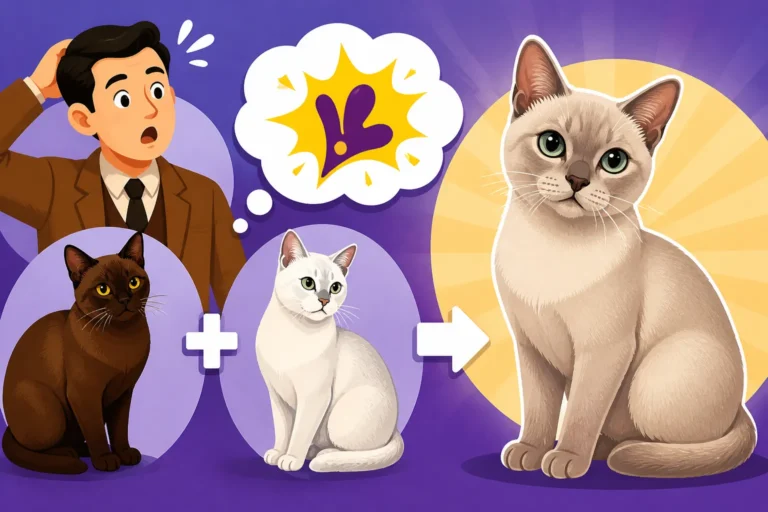
Thompson bred Wong Mau to a Siamese, and the resulting kittens helped show that her appearance could be inherited in recognizable patterns. Some kittens resembled Siamese cats, while others had the richer, more even brown coloring that would become central to the Burmese. The early program was an investigation as much as a breeding project. For more on that first stage, see The Burmese Began With One Cat Called Wong Mau and Dr Joseph Thompson and the Burmese He Bought in 1930.
How early breeding established the Burmese
Early Burmese breeding involved Siamese cats because there were very few cats with Wong Mau’s particular traits available to work with. Breeders selected offspring that best matched the emerging Burmese look and bred those cats onward. Over generations, their goal was to establish a consistent type: a close-lying brown coat, a compact but muscular body, and a distinctive head and expression.
That process helped define the breed, but it also created a registration problem. Some Burmese pedigrees included cats that were still too close to Siamese in appearance, and the breed’s identity was not yet reliably consistent. In 1947, the Cat Fanciers’ Association suspended Burmese registration until cats could meet stricter pedigree and type requirements. The episode was a major turning point: breeders had to demonstrate that the Burmese was becoming a stable breed rather than a loose category of brown cats.
The suspension did not erase the earlier breeding work. Instead, it put pressure on breeders to document lineages and produce cats that more consistently matched the standard. The breed was registered again after breeders produced cats that met the required criteria. This history explains why pedigrees, breed standards, and the records maintained by registries have mattered so much in Burmese breeding. CFA Suspended the Burmese in 1947 and Took It Back explores that chapter in greater detail.
How breeding changed the Burmese look
A coat color became a breed signature
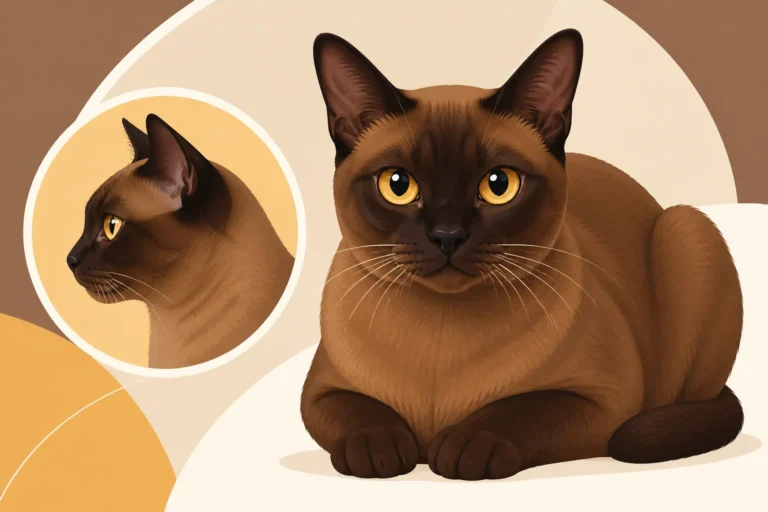
The Burmese coat is not simply a solid brown coat. Its color comes from a temperature-sensitive form of the color-point gene, which affects pigment production differently across the body. The result is a coat that can appear warmer or darker in cooler areas, while the overall impression remains much more even than the sharply pointed pattern associated with a Siamese.
Selective breeding helped establish the distinctive Burmese shades and the close, glossy coat that people often describe as satin-like. Breeders also paid attention to eye color, body shape, and the head. Over time, these features became part of the complete Burmese picture—not isolated traits to be judged on their own.
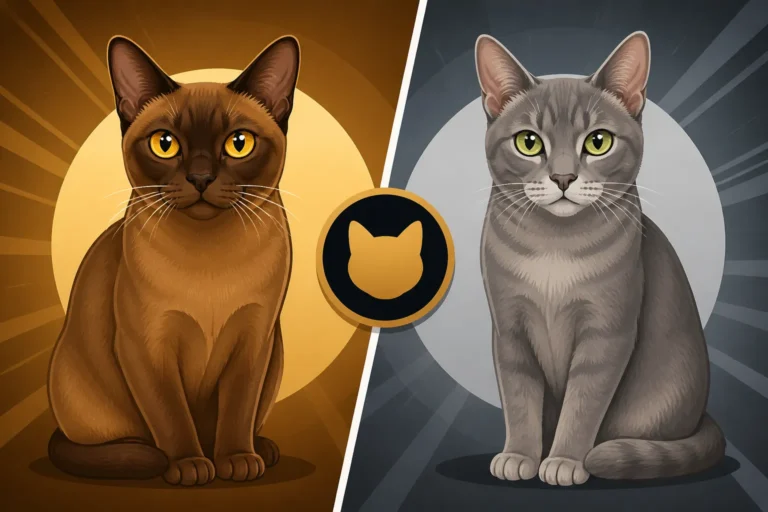
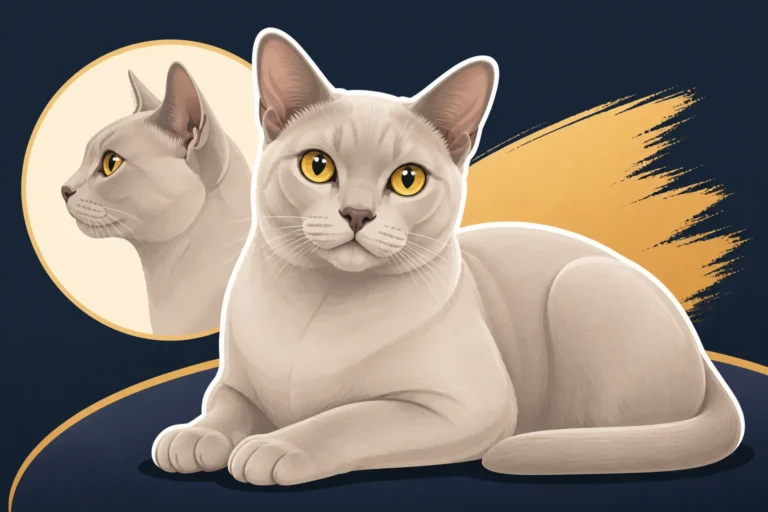
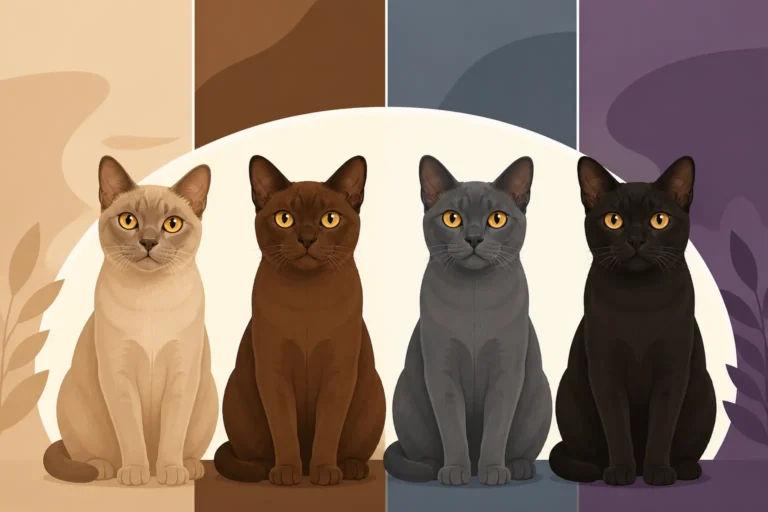
Color preferences and accepted colors have varied between registries and regions. In the American show tradition, the familiar colors include sable, champagne, blue, and platinum. Other Burmese standards, particularly in Europe, recognize a broader range. A cat’s color name can therefore depend on the registry and the standard being used. The Four Colors a Burmese Comes In and The cb Allele Is What Makes a Burmese Brown explain how color and genetics fit into the breed’s history.
Two breeding traditions developed
One of the most visible changes over the Burmese’s history is the divergence between American and European Burmese types. The split grew from different breeding populations and different preferences for what the ideal Burmese should look like. British breeders developed their lines from cats imported from the United States, then continued selecting according to their own standards and breeding goals.
The American Burmese is generally associated with a rounder head, a shorter muzzle, and a compact, substantial appearance. The European Burmese tends to have a more moderate head shape and a slightly different overall outline. These are broad descriptions, not guarantees about every individual cat. A particular Burmese may fall somewhere between the most exaggerated show-ring examples, and everyday cats are not judged solely by whether they match a show ideal.
The two types are related, but they are not simply interchangeable labels in every registry or breeding program. Their separate development has influenced registration rules, pedigrees, and the way breeders describe their cats. Someone looking for a kitten may hear “Burmese” without being told which type is meant, so it is sensible to ask the breeder about the parents’ lines and the registry under which the kittens are recorded. For a closer look, read How the American and European Burmese Split and What an American Burmese's Head Should Look Like.
| Feature | American Burmese | European Burmese |
|---|---|---|
| General impression | Often compact and rounded | Often more moderate in outline |
| Head shape | Typically rounder, with a shorter muzzle | Typically less rounded, with a more moderate muzzle |
| Development | Shaped by American breeding and show preferences | Shaped by British and European breeding traditions |
| What to ask a breeder | Which registry and type appear in the pedigree | Which registry and type appear in the pedigree |
What stayed familiar across generations
The Burmese remains a people-focused companion
Although appearance has changed with breeding choices, the Burmese reputation for being closely involved with household life has endured. Many are curious, sociable cats that seek out people, follow them from room to room, and join everyday routines. Their affectionate nature is often a central part of their appeal, but it also means they may struggle if they are left alone for long stretches without companionship or enrichment.
A prospective owner should think beyond coat color and head shape. Consider who will be home, how the cat will be occupied, and whether there is another friendly animal in the household. A busy family may suit a Burmese well if the cat has safe places to rest and consistent attention. Someone who works away all day may need to plan for interaction, a compatible companion, and engaging play rather than assuming the cat will simply sleep until they return. Whether a Burmese Is the Right Cat for You and Why a Burmese Should Never Be an Only Cat can help with that decision.
It is also worth remembering that breed tendencies are not promises about an individual cat. One Burmese may greet every visitor, while another takes time to warm up. Early socialization, health, personality, and the home environment all influence how a cat behaves. A thoughtful breeder or rescue organization can tell you about the individual cat’s habits, not just the general reputation of the breed.
The basics of care did not become complicated
The Burmese’s short coat is relatively straightforward to maintain. Gentle brushing or wiping can remove loose hair and provide a chance to check the skin. Routine care still includes nail trimming, dental attention, clean litter facilities, play, and regular veterinary visits. A sleek coat does not mean a cat is maintenance-free; it simply means grooming usually does not require the same effort as it does for a long-haired breed.
A measured feeding routine is useful because Burmese cats can be enthusiastic about food, and weight changes can be easy to miss under a muscular build. Use your veterinarian’s guidance to choose food and portions, and keep an eye on body shape as well as the number on the scale. If you are gathering everyday supplies, a retailer such as Chewy may be one place to compare food formats, bowls, and grooming tools; the important part is choosing items that suit your cat and your veterinarian’s recommendations. How to Weigh a Burmese Accurately at Home offers practical ideas for tracking weight consistently.
For a new cat, it can help to prepare a quiet room with food, water, a litter box, a resting place, and a few familiar-smelling items before arrival. A secure carrier is useful for the trip home and later veterinary visits. Some owners compare carrier styles and other basic supplies through Chewy, but the best choice is one that fits the cat comfortably and can be secured safely in the car. Introduce new items gradually, especially if the cat is nervous after a move.
What ninety years of change means for owners
Breed history can clarify what a seller means
A modern Burmese is the result of sustained selection, record-keeping, and regional breeding traditions. That history is why asking about type and pedigree is useful rather than fussy. If a breeder advertises a Burmese, ask which registry records the litter, which type the parents represent, and what health screening has been done. Clear answers help you understand the background of the kitten you are considering.
Look for more than a striking photograph. A responsible breeder should be willing to discuss the kitten’s parents, health, socialization, and the care the kitten has received. You should also be able to ask about breed-related health concerns and see relevant records. These conversations are useful even if you are not interested in showing a cat: they help you understand what is known about the kitten’s family and what support may be available after adoption.
If you are adopting an adult Burmese or a Burmese-type cat from a rescue, a complete pedigree may not be available. That does not make the cat less deserving of a loving home. It simply means that observable health, temperament, and veterinary history may be more useful than trying to assign a precise type from appearance alone. Which Registry Calls It a European Burmese and What Burmese Owners Wish They Had Known provide additional context for sorting through breed labels and expectations.
The breed is both a history and an individual cat
It is tempting to treat nearly a century of development as a straight line from Wong Mau to today’s Burmese. In reality, the breed’s story includes uncertain beginnings, changing standards, distinct regional preferences, and ongoing choices about which traits to preserve. The Burmese of today is not identical to the cat breeders were shaping in the 1930s, but the connection to that early breeding work remains part of its identity.
For a future owner, the most practical lesson is to use breed history as background, not as a substitute for getting to know the actual cat. A Burmese may be a wonderful fit for someone who wants an interactive companion, but that closeness comes with a real need for attention and stimulation. Meet the cat if possible, ask detailed questions, and plan for ordinary care as carefully as you plan for the first few exciting days at home.
When setting up for a Burmese, think about daily routines as much as purchases: play sessions, feeding habits, comfortable resting places, and veterinary care. Chewy may be convenient for comparing some household pet supplies, but a shopping list cannot replace a suitable home and consistent care. The breed’s history is fascinating; the day-to-day relationship is what makes life with a Burmese meaningful.
Disclaimer
This article is for general informational purposes only and does not constitute professional advice. Laws, prices and regulations vary by location and change over time. Consult a qualified professional for guidance on your specific situation.