How a Burmese Produced the Burmilla by Accident
A Burmese produced the Burmilla through an unexpected mating in Britain, but the breed that followed was more than a one-off cross. Its silver-shaded coat, expressive green eyes, and Burmese-influenced build caught breeders’ attention, leading them to develop a consistent cat with its own identity. Here’s how the accidental first litter became the foundation of a recognized breed.
How a Burmese and a Chinchilla Persian produced the first Burmilla
The accidental mating behind the breed
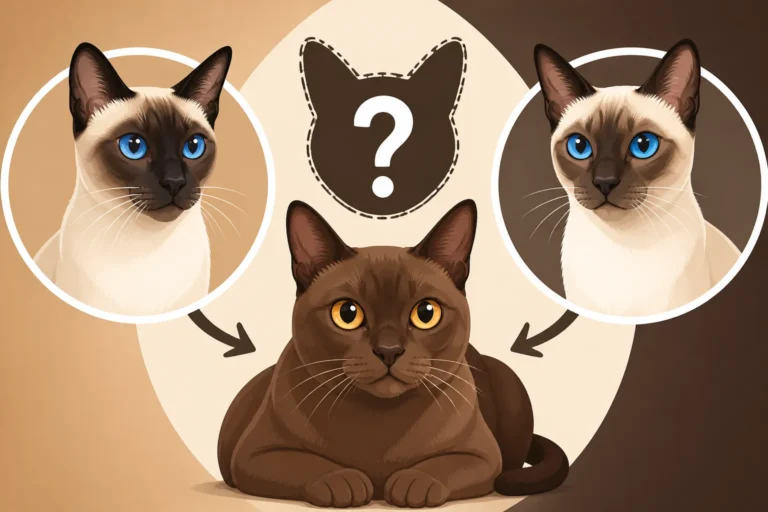
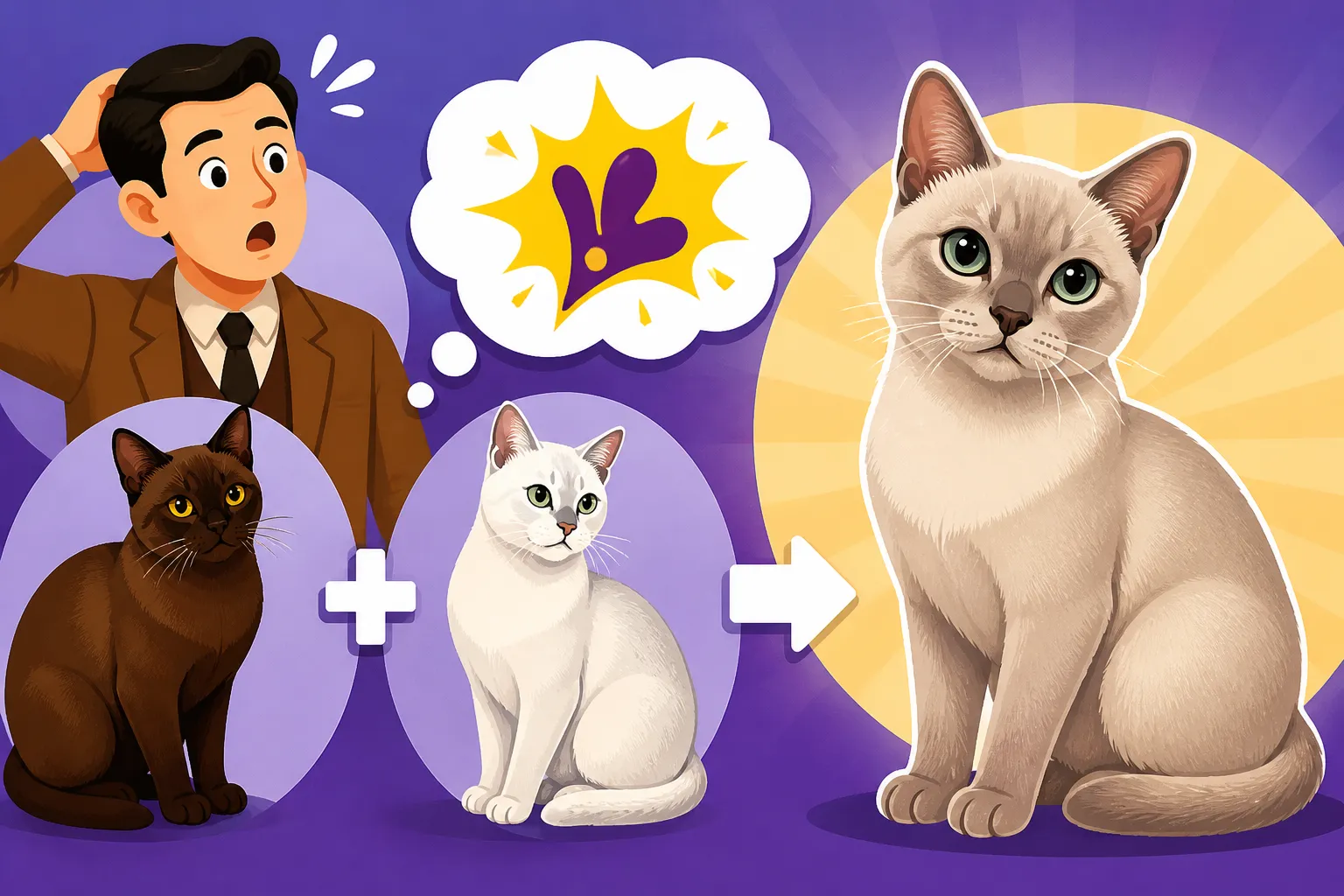
The Burmilla’s story began in 1981 in Britain, in the breeding program of Baroness Miranda von Kirchberg. A Chinchilla Persian male named Jemari Sanquist and a lilac Burmese female named Bambino Lilac Fabergé were kept in the same household. An accidental opportunity for them to mate resulted in a litter of four kittens.
The kittens surprised their breeder. They had short coats with a pale, silvery appearance and darker shading at the tips, along with striking green eyes. Their looks combined features associated with both parents, but the result wasn’t simply a Burmese with a Persian’s coloring. The kittens had a distinctive appearance that seemed worth developing.
That surprise is part of what makes the Burmilla’s origin memorable. Many breeds are developed through planned crosses over generations. In this case, a household mishap first brought the combination together; deliberate breeding work came afterward. For a broader look at the Burmese’s own beginnings, see The Burmese Began With One Cat Called Wong Mau.
What the first kittens inherited from each parent
The Burmese contributed more than the possibility of a compact, muscular body and a short coat. Burmese cats are known for their close-fitting coats and people-focused nature, although an individual kitten’s temperament can’t be guaranteed by its ancestry alone. The Chinchilla Persian contributed the silver coloring and tipped appearance that helped make the first litter visually distinctive.
The resulting look depended on several inherited traits working together. A pale base coat allows darker pigment at the hair tips to show clearly, creating the shaded or tipped effect associated with the breed. Green eyes became another notable part of the Burmilla’s look. These features helped distinguish the kittens from either parent breed.
A crossbreed litter can vary, even when both parents are known and carefully selected. Coat length, color, pattern, and personality are influenced by inheritance from both sides of the family. The first Burmillas were unusual enough to spark interest, but it took further generations of planned matings to make their appearance more consistent.
What makes a Burmilla look different from a Burmese
Silver shading, tipped hairs, and green eyes
The Burmilla is often recognized by the contrast between its light undercoat and darker hair tips. Depending on the cat, the coat can look softly shaded or more lightly tipped. The effect is subtle from a distance, but up close it gives the coat a silvery glow that can change with the light and the cat’s movement.
Its eyes are commonly green, and the face often has dark edging around the eyes and nose that makes the expression seem especially defined. The body is typically medium in size and muscular, reflecting the Burmese side of its ancestry. Yet a Burmilla’s overall impression is different: the silver coat and dark tipping create a softer, more luminous look than the solid-color appearance commonly associated with a Burmese.
Breed standards describe an ideal, not a promise that every pet will look exactly the same. A cat’s age, coat condition, and individual markings can affect how its coloring appears. For a useful comparison of the Burmese’s own show-ring appearance, see What a Burmese Looks Like Against the Standard. The Burmese color palette is also a separate topic from Burmilla shading; The Four Colors a Burmese Comes In explains the commonly recognized Burmese colors.
Why the Burmilla is not just a silver Burmese
It’s easy to see why someone might call a Burmilla a silver Burmese at first glance, especially when the cat has a compact build and a short coat. But a breed’s identity is shaped by its ancestry and the traits breeders have worked to establish, not by one feature alone. The Burmilla’s tipping, pale base, and characteristic eye color are central to its distinct appearance.
Nor is the Burmilla simply a Persian with a short haircut. Its coat and body reflect a different combination of inherited traits, and the Burmese influence is an important part of its history. The original cross created a starting point, not a complete breed definition. Breeders then selected cats with the desired features and continued pairing them to produce offspring with more predictable characteristics.
This is a useful distinction when comparing related breeds. The Tonkinese, for example, also has a history connected to Burmese and Siamese cats, but it has its own characteristic coat and appearance. How a Burmese Differs From a Tonkinese explains why a shared ancestor or related breeding history doesn’t make two breeds interchangeable.
How an accidental cross became a breed
From an unusual litter to planned breeding
After the first litter, the kittens’ appearance encouraged breeders to develop the type intentionally. That meant choosing cats with the desired coat, shading, body, and expression, then recording how those traits appeared in later generations. The aim was to establish a recognizable, repeatable breed rather than continue producing occasional unusual crosses.
Developing a breed takes time because kittens inherit different combinations of traits. One kitten may have especially clear tipping, while a sibling may have a heavier coat or a different balance of features. Breeders have to evaluate not just what a kitten looks like as a baby, but how its appearance develops and what it may pass on to its own kittens.
The process also involves decisions about which cats can be paired responsibly. A sound breeding program pays attention to health, temperament, and genetic diversity alongside appearance. That broader responsibility is part of the history of many established breeds, including the Burmese, whose breeding traditions developed over generations. The story of How the American and European Burmese Split shows how breeding choices can also shape distinct types within a breed.
Recognition and breed identity
A breed does not become established just because a striking kitten is born. Breed clubs and registries generally look for consistent traits, documented ancestry, and a breeding population that can reproduce the intended type. The details of recognition and registration can differ among organizations and countries, so someone researching a particular cat should check the registry named on its pedigree.
This matters because the word “Burmilla” may be used casually to describe a silver-looking cat, even when the cat’s documented ancestry is unknown. Appearance alone can’t confirm pedigree. If you’re considering a kitten, ask for the breeder’s records and clarify which registry the kitten is registered with. A responsible breeder should be able to explain the parents’ background and the kitten’s paperwork without making you feel awkward for asking.
A breed’s development also doesn’t erase its founding cross. The Burmese and Chinchilla Persian remain central to the Burmilla’s origin story, just as the Burmese helped establish other breeds. The Bombay and the Tonkinese Came Out of the Burmese offers another example of how Burmese ancestry contributed to the development of cats with distinct identities.
What the Burmilla’s origin means for owners
Appearance is only one part of choosing a cat
The unusual coat may be what first draws someone to a Burmilla, but daily life with a cat depends on much more than color. Ask about the cat’s temperament, early socialization, health history, and the care it has received. A kitten’s behavior is shaped by its individual personality and experiences as well as its breed background.
If you are meeting a litter, pay attention to how the kittens respond to ordinary handling and household sounds. Ask what they are used to eating, how they have been introduced to grooming, and what support the breeder provides after adoption. Seeing kittens with their littermates can also give you a better feel for their interactions than viewing a single posed photograph. What a Burmese Kitten Looks Like at Eight Weeks offers a useful reminder that young kittens are still developing, and that one snapshot is not the whole story.
For practical supplies, owners often make a checklist before bringing a cat home: food, bowls, a carrier, a litter tray, scratching options, and grooming basics. Chewy is one place people may use to compare everyday pet supplies, but the breeder or veterinarian can help you decide what is suitable for an individual cat. Familiar food and a calm transition are often more useful at first than buying a full set of new items all at once.
Grooming, enrichment, and a comfortable settling-in period
A short coat generally doesn’t require elaborate grooming, but gentle handling helps a cat become comfortable with routine care. A soft brush or grooming glove can help remove loose hair, while short, calm sessions let the cat learn that being touched is not something to fear. Owners shopping for basic grooming tools may find options through retailers such as Chewy; choose a tool that feels gentle on the cat’s coat rather than reaching for a heavy-duty deshedding product.
Give a new cat time to learn the household. Set up a quiet starting room with food, water, a litter tray, a hiding place, and somewhere comfortable to rest. Let the cat approach new people at its own pace. Even a sociable kitten may need a little time to settle after leaving its littermates and familiar surroundings.
Enrichment matters, too. A scratching post, safe toys, and regular play help a cat explore and burn off energy. If you’re comparing food or household supplies online, Chewy can be one option for browsing, but product decisions should fit the individual cat and any advice from its veterinarian. Keep the first days simple: predictable routines, familiar food, and a patient approach do more for settling in than a room full of unfamiliar equipment.
The lasting legacy of the Burmese cross
The Burmilla began with an accidental pairing, but its continuation depended on purposeful breeding. Burmese ancestry and Chinchilla Persian influence came together in kittens with an eye-catching silver coat, dark tipping, and green eyes. Breeders then worked to make those traits more consistent, giving the Burmilla a distinct identity rather than leaving it as a one-generation novelty.
That origin is also a reminder that breeds are shaped over time. One unusual litter can inspire a breeding program, but careful selection, reliable records, attention to health, and clear breed standards are what turn an intriguing beginning into a lasting breed. The Burmilla’s story is unusual, but the broader lesson applies widely: a cat’s looks may tell part of its history, while its pedigree and the care behind its breeding fill in the rest.
Disclaimer
This article is for general informational purposes only and does not constitute professional advice. Laws, prices and regulations vary by location and change over time. Consult a qualified professional for guidance on your specific situation.