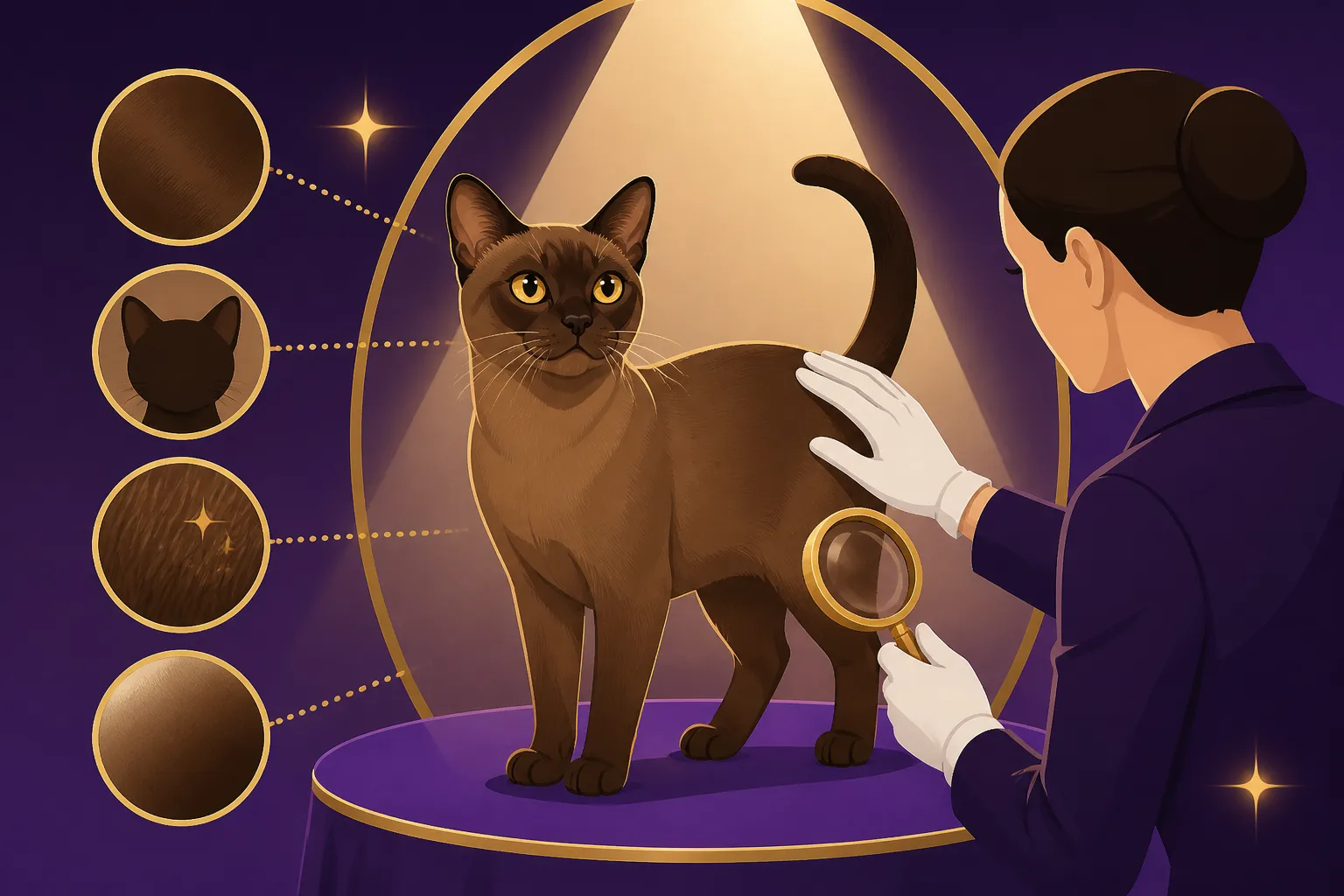
How a Burmese’s Coat Is Judged in the Ring
A Burmese can look beautifully glossy at home and still lose points in the show ring if the coat is dull, uneven, or the wrong color for its registry’s standard. That can be frustrating when you have groomed carefully and the cat looks immaculate to you. This guide explains what judges assess, how coat faults differ from normal variation, and how to prepare without over-grooming.
What judges assess on a Burmese coat
Texture, length, and how the coat lies
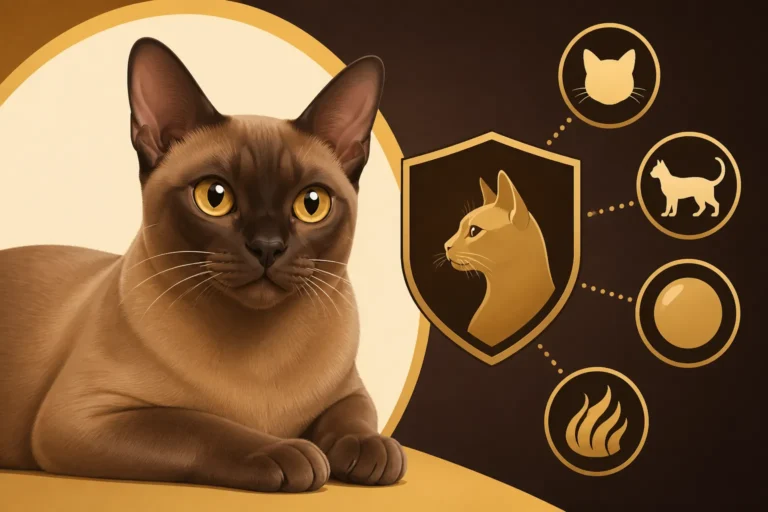
A Burmese coat is short, fine, close-lying, and glossy. In the ring, judges assess the coat as part of the cat’s overall conformity to its breed standard, not as a beauty contest for whoever has the shiniest finish. A coat that feels smooth and looks sleek supports the Burmese’s characteristic appearance; a coat that sticks up, looks rough, or seems unusually long may distract from it.
The coat should lie close to the body rather than standing away in a fluffy layer. Burmese cats have little undercoat compared with many breeds, so their coat generally does not have the dense, plush appearance of a double-coated cat. That’s part of the breed’s distinctive feel, described in What Makes a Burmese's Coat Satin Rather Than Silky and Why a Burmese Has Almost No Undercoat.
Judges assess the coat by sight and touch, but they also consider the cat’s condition and presentation. A single loose hair, a brief static-cling moment, or a coat ruffled by handling is not automatically the same as a persistent texture or condition fault. A judge may smooth the coat with a hand to see how it lies and whether the finish looks naturally healthy.
Sheen and condition
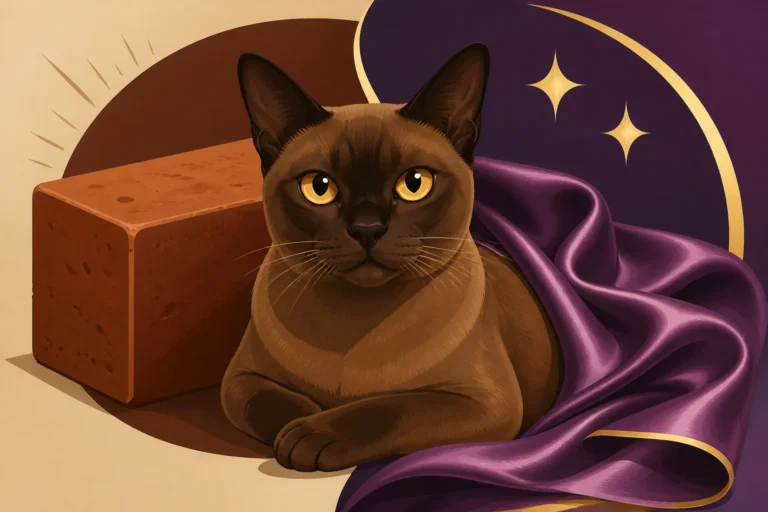
The Burmese coat is known for its satin-like shine. That sheen should look like a natural quality of the coat, not an oily or sticky surface created by grooming products. Judges are looking for a healthy, clean coat that reflects light evenly. Grease, residue, dandruff, or a coat that feels coated with product can make the finish look less natural.
A coat can also lose its shine temporarily because of stress, illness, poor nutrition, or an unhelpful grooming routine. If your cat’s coat has changed noticeably, treat that as a possible health or care clue rather than assuming it needs more brushing. The Burmese coat is short and close-lying, so heavy grooming tools can irritate the skin or disrupt the sleek appearance instead of improving it.
Loose hairs are especially visible against a Burmese’s smooth coat. That does not mean every hair out of place is a major fault, but a coat covered in shed hair can look less polished under show lighting. See Why a Burmese's Coat Shows Every Loose Hair for more on why a few stray hairs can be surprisingly noticeable.
Color and shading
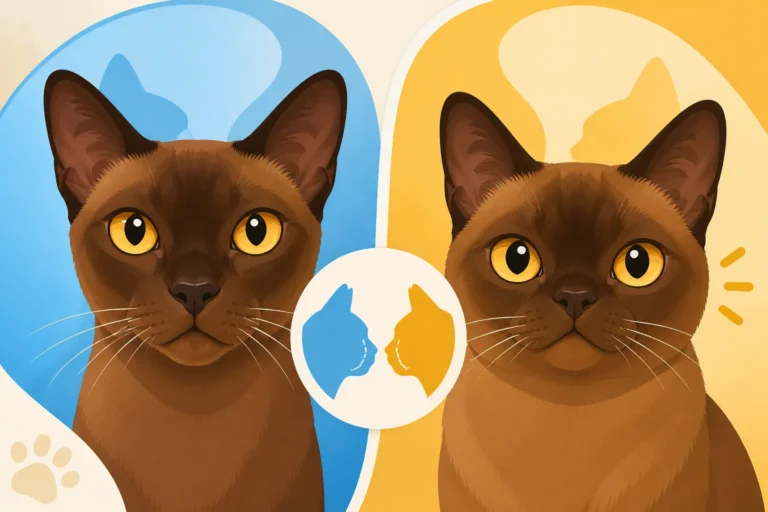
Color is one of the most distinctive parts of Burmese coat judging. The expected colors depend on the registry and the Burmese type being shown. The American Burmese is commonly judged in four recognized colors: sable, champagne, blue, and platinum. Other registries and standards for European Burmese may recognize a broader range, so it is important to know the rules for the particular show rather than relying on a general description of the breed.
Burmese color is not always completely uniform from head to tail. The body may be somewhat lighter than the extremities, and the coat’s tone can change with age and environmental conditions. Judges look for color that fits the applicable standard and appears even and clear overall, while allowing for the natural shading described in that standard. The reference The Four Colors a Burmese Comes In gives a useful starting point, and How a Burmese's Sable Coat Changes With Age explains why a cat’s shade may develop over time.
A kitten’s coat color may not match its mature appearance exactly. It can deepen as the cat grows, and some changes are normal rather than evidence of poor care or a defect. For a show prospect, compare the cat with the standard for its registry and age category. Avoid trying to “correct” natural coat color with dyes, color-enhancing products, or other treatments; they are not a substitute for the cat’s actual coat quality and may violate show rules.
How standards and Burmese type affect judging
The registry’s standard is the rulebook
There is no single universal scorecard that every cat show uses. Each registry publishes its own breed standards and show rules, and judges evaluate cats against the standard governing that event. A color or feature accepted in one registry may be treated differently in another.
Before entering a show, identify which registry is hosting it and read its current Burmese standard. Pay particular attention to the wording about coat length, texture, color, shading, and condition. The standard may describe the ideal in specific terms, while judges use their experience to interpret how closely an individual cat matches that ideal.
The coat is only one part of the assessment. A judge considers the whole cat, including body, head, eyes, and overall condition. A glossy coat cannot compensate for every other difference from the standard, just as a small coat imperfection does not tell the whole story about a cat’s quality. What a Burmese Looks Like Against the Standard offers broader context for how coat and other features fit together.
American and European Burmese are not interchangeable show entries
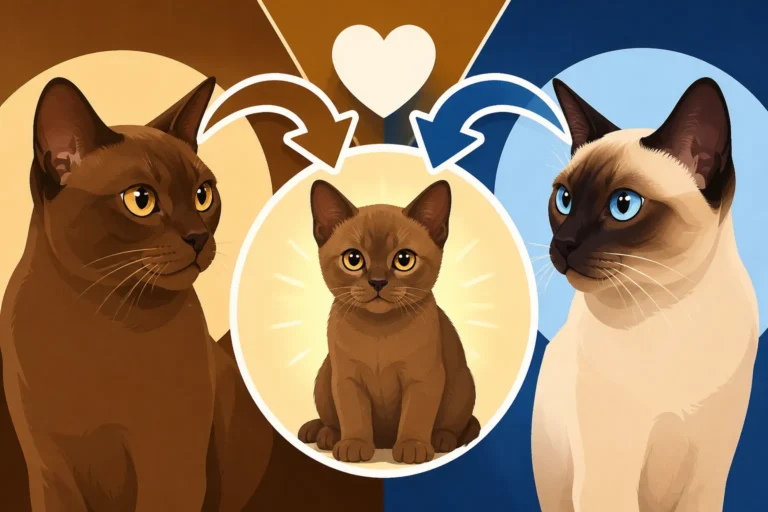
The American and European Burmese developed along different lines and are judged according to the applicable type and standard. Their standards may differ in more than appearance, including which coat colors are accepted. That makes it important not to assume that a description of one type applies automatically to the other.
A cat’s pedigree and registration information help establish which type it is shown as. If you are uncertain, ask the breeder or the show organization before entering. A judge is not expected to assess a cat against whichever standard the exhibitor prefers; the entry must be appropriate for the registry’s classification. The background in How the American and European Burmese Split can help explain why those distinctions matter.
Color names can also differ between regions or organizations. For instance, a shade may be described by a different term in another standard. Focus on the written standard and official entry category, not just the label used in casual conversation or online listings.
Coat color is not the same as eye color
The overall impression of a Burmese often comes from the combination of coat and eye color, but these are assessed as separate characteristics. A beautiful coat does not make an eye-color mismatch disappear, and eye color should not be used to excuse a coat outside the accepted range.
Lighting can change how a coat appears. Under bright show lights, a blue Burmese may look lighter or cooler than it does in a living room, while darker shades can appear more intense. Judges are familiar with how coat color reads under show conditions, so exhibitors should avoid judging their cat’s shade from a single photograph or one kind of lighting.
If you are comparing a cat with a standard, use natural light where possible and consider the coat in more than one setting. Photographs can be useful records, but automatic phone adjustments, flash, and warm indoor bulbs can shift color substantially. The goal is to understand the cat’s real coat, not to chase a shade that appears only in a particular picture.
Coat faults, normal variation, and what judges may notice
Common presentation issues
Some coat issues are largely about presentation: loose hair, dust, a small amount of static, or a ruffled patch after the cat has been handled. These may be improved with gentle preparation. Other concerns, such as persistent greasiness, poor coat condition, or an unusual texture, may reflect grooming habits or health and are not fixed by a last-minute polish.
A rushed bath can make matters worse. If a cat is not fully dry, the coat may look uneven or lie differently than expected. Strong shampoos, conditioners, powders, and shine products can leave residue or alter the natural texture. A show-day routine should be familiar to the cat and should preserve the coat’s natural finish.
| Coat feature | What a judge generally looks for | Practical preparation |
|---|---|---|
| Length and lay | Short coat that lies close to the body | Avoid tools that lift or roughen the coat |
| Texture | Fine, smooth, and consistent with the breed | Use gentle handling rather than vigorous brushing |
| Sheen | Natural, clean-looking gloss | Keep the coat clean and product-free |
| Color | A shade accepted for the cat’s type and registry | Check the written standard and entry category |
| Condition | Healthy-looking coat without obvious dirt or residue | Address persistent changes with a veterinarian |
A coat that looks different from day to day is not necessarily a show fault. Seasonal shedding, age, sunlight, temperature, and individual variation can affect the way a coat appears. A judge assesses the cat in front of them, while the exhibitor’s job is to present the cat cleanly and honestly.
When a coat change deserves attention
If the coat suddenly becomes dull, greasy, patchy, flaky, or unusually thin, do not assume that it is simply a grooming problem. Changes can accompany skin irritation, parasites, stress, nutritional issues, or other health concerns. A veterinarian can help determine whether a medical issue is involved, especially if the change comes with itching, over-grooming, weight change, or a shift in appetite.
Regular home observation is useful. Notice whether the coat change is widespread or limited to one area, whether the skin looks irritated, and whether your cat is grooming more or less than usual. That information can help you describe the problem clearly if you seek veterinary advice.
For routine shed hair, a light pass with a soft cloth or grooming glove may be enough. The Burmese coat is not a coat that needs aggressive stripping or frequent brushing to look presentable. How Little a Satin Coated Burmese Sheds offers more detail on routine shedding and what to expect.
Preparing a Burmese for the show ring
Keep grooming simple and gentle
For many Burmese, a soft cloth or gentle grooming glove is more useful than a firm brush. Work in the direction the coat lies, using light strokes rather than scrubbing. The goal is to lift loose hair and smooth the surface, not to create artificial shine or force the coat into a shape it would not naturally have.
If you are choosing a grooming glove or soft cloth, focus on the material and how it feels against your cat’s skin. You might compare options at Chewy or a local pet-supply shop, but a simple, soft tool is often preferable to a complicated grooming kit. Introduce anything new well before show day so your cat is not surprised by it in the carrier or grooming area.
A chamois can help bring out the natural finish when used gently. Do not rub hard or keep polishing the same patch until it becomes warm or irritated. For tips on using one, see Which Chamois Brings Up a Burmese's Satin Shine. If you are shopping through Chewy, check that the cloth is soft, clean, and intended for gentle grooming rather than assuming every polishing cloth is suitable for a cat.
Plan show preparation around your cat
A calm cat usually presents better than one who has been over-handled. Make grooming a brief, familiar routine at home. A few quiet sessions can help your Burmese accept being touched along the back and sides, which can make the judge’s hands-on assessment less stressful.
Check the coat in good light the day before and again before leaving. Remove loose hairs with a light touch, then stop. A lint roller can be useful on clothing or a show blanket, but it should never be rolled over the cat. If you pick up supplies from Chewy, keep tools meant for fabrics separate from grooming tools so there is no mix-up during a busy morning.
Pack familiar bedding and allow time for the cat to settle. Avoid testing a new shampoo, spray, or grooming product right before a show. A product that seems harmless at home may leave residue, change the feel of the coat, or bother sensitive skin. If your Burmese has a coat or skin concern, discuss it with your veterinarian rather than trying to mask it for the ring.
Ask the right questions before entering
If you are new to showing, ask the show organizer which standard applies, how the Burmese is classified, and what grooming practices are allowed. A breeder with show experience can also help you understand whether your cat’s color and type match the entry category. Clear answers before the event can prevent the disappointment of preparing for a class that does not fit your cat.
It is also reasonable to ask for feedback after judging, when the rules and show setting allow it. A judge may be able to explain whether the coat presentation was strong or point out a feature to discuss with your breeder. Treat feedback as information, not as a verdict on your bond with your cat or the care you provide.
The best preparation is consistent care: a healthy diet, a clean environment, gentle grooming, and attention to changes in the coat. When you understand the standard and let the Burmese coat look like itself, you give the judge a fair view of the cat’s natural texture, color, and condition.
Disclaimer
This article is for general informational purposes only and does not constitute professional advice. Laws, prices and regulations vary by location and change over time. Consult a qualified professional for guidance on your specific situation.