Why a Burmese Feels Heavier Than It Looks
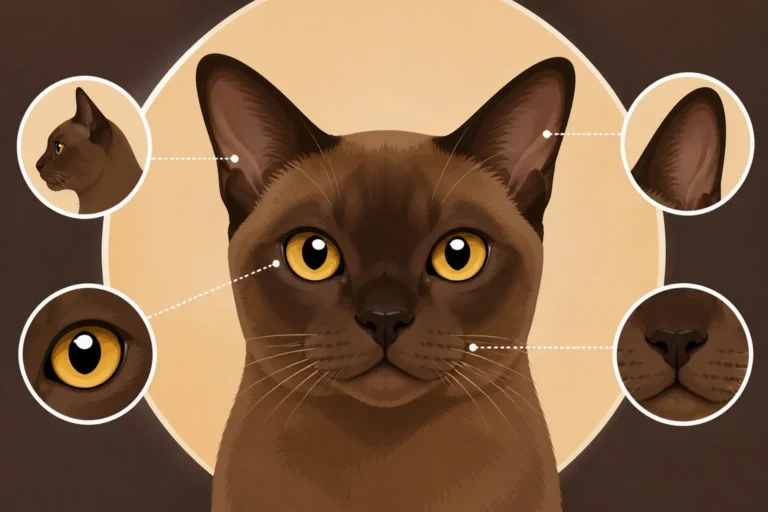
A Burmese can look sleek and surprisingly compact, then feel like a little weightlifter when you lift them. That mismatch is usually down to the breed’s muscular, solid build and close-lying coat—not automatically a sign of excess weight. This guide explains what gives a Burmese its heft, how to tell muscle from body fat, and what to check at home.
Why a Burmese Feels Heavier Than It Looks
A compact, muscular body carries real weight
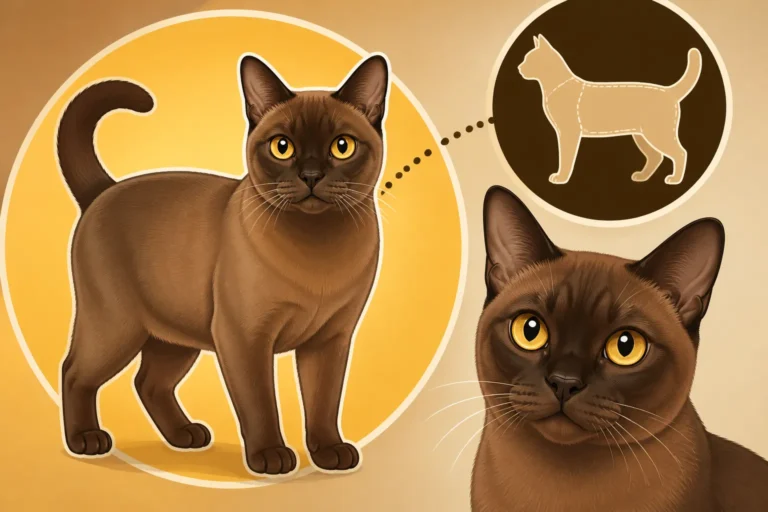
Burmese cats are known for a compact, muscular build. They may not look especially large beside a long-bodied cat, but their sturdy frame can make them feel substantial when you pick them up. Their weight is concentrated in a relatively compact body, rather than spread across a long torso and legs.
That is why a Burmese can surprise someone who expects a small-looking cat to feel light. A quick lift may reveal a firm, solid body that seems heavier than its outline suggests. The breed’s traditional description as a “brick wrapped in silk” captures this contrast: a sleek exterior over a dense, muscular frame. For more on the phrase and the breed’s build, see Why a Burmese Is Called a Brick Wrapped in Silk.
This does not mean every Burmese is unusually heavy, or that a particular number on the scale is automatically healthy. Individual cats differ in sex, frame, age, and condition. The helpful question is not simply “How much does my cat weigh?” but “Does this weight suit my cat’s body?”
A close coat can disguise the outline
The Burmese’s short, smooth coat lies close to the body. It does not create the fluffy silhouette that can make a cat appear larger, but it can also make changes in body shape harder to judge at a glance. A cat may look trim in a photo while carrying extra weight around the abdomen, or seem broad because of muscle when their body condition is healthy.
That can be confusing when you are comparing your cat with other breeds. A long-haired cat may look larger than they are, while a Burmese can feel heavier than their neat outline implies. The coat is not a reliable guide to muscle or fat; use your hands as well as your eyes.
The same compact build can make a Burmese’s weight feel especially noticeable when you lift them from a sofa or carry them to a carrier. If you want a broader guide to expected size and how it varies, How Big an Adult Burmese Gets covers the breed’s general scale.
“Heavy” can describe different things
When owners say a Burmese feels heavy, they may mean that the cat is muscular and firm, that the cat has gained fat, or simply that the cat is more solid than expected. Those are not interchangeable. Muscle and frame contribute to weight, while body fat can change the cat’s outline and make movement less comfortable.
A well-conditioned cat should feel substantial without feeling padded. You should generally be able to feel the ribs beneath a light covering, though they should not jut out sharply. A pronounced belly, a disappearing waist, or difficulty feeling the ribs can be reasons to check body condition more carefully.
A single lift cannot tell you which explanation applies. Use a scale, observe the shape of the body from above and from the side, and ask your veterinarian to assess your cat if you are unsure. Why a Burmese Weighs More Than It Looks explores the contrast between a Burmese’s appearance and physical build in more detail.
How to Tell Muscle From Extra Body Fat
Look at your cat from above and from the side
Start with a calm visual check while your cat is standing naturally. From above, look for a gentle narrowing behind the ribs before the hips. From the side, notice whether the abdomen rises slightly toward the hind legs or hangs low. These are clues, not a diagnosis: posture, age, and individual shape all affect what you see.
A muscular Burmese may have a broad chest and solid shoulders without having excess fat. By contrast, weight gain may make the waist harder to see and soften the outline around the ribs. A low-hanging abdominal pouch alone is not enough to determine whether a cat is overweight; many cats have a primordial pouch, a loose fold of skin and tissue under the abdomen.
A useful check combines sight and touch. If your cat’s build makes visual assessment difficult, your veterinarian can show you how to assess body condition on your own cat rather than relying on comparisons with breed photos or another household pet. Why a Muscular Burmese Is Mistaken for a Fat One looks at why a solid build can be misleading.
Feel the ribs, waist, and spine gently
With your cat relaxed, run your hands lightly along the ribcage. You are looking for ribs that are easy to feel under a modest layer of tissue, not ribs that are sharply prominent and not ribs hidden beneath a thick cushion. Then feel along the waist and hips, using steady, gentle pressure rather than pinching.
A Burmese’s muscles can make the body feel firm, so do not treat firmness by itself as proof of ideal condition. The overall picture matters: can you feel the ribs, is there some waist behind the ribcage, and does your cat move comfortably? If you are not confident, ask your vet to demonstrate the check during an appointment. The guide How to Score a Burmese's Body Condition can help you understand the general assessment approach.
It can also help to learn what a healthy rib check feels like before you are worried about weight. How to Feel a Burmese's Ribs Under a Satin Coat focuses on that hands-on assessment. If your cat has recently gained or lost weight, mention the change to your veterinarian even if their body shape still seems familiar.
Use weight as a trend, not a verdict
A scale gives you useful information, but it cannot distinguish muscle from fat. A Burmese with a larger frame may weigh more than a smaller, lighter-built cat while still having a healthy body condition. Likewise, a cat whose number has not changed much could have lost muscle while gaining fat, so the scale should be considered alongside body shape and veterinary assessment.
The most useful home record is a series of measurements taken consistently. Weigh your cat under similar conditions, such as at the same time of day and on the same scale, and write down the result. A gradual change over time is easier to interpret than one isolated reading. Why a Burmese's Weight Should Be Recorded Monthly explains the value of tracking a pattern rather than reacting to a single number.
| What you notice | What it may suggest | What to do next |
|---|---|---|
| Firm body, ribs easy to feel, waist visible | A solid or muscular build may be contributing to the heft | Keep monitoring weight and body condition |
| Ribs difficult to feel, waist less visible | Extra body fat may be present | Arrange a body-condition check with your veterinarian |
| Ribs or spine sharply prominent | Low body condition or muscle loss may be a concern | Contact your veterinarian for an assessment |
| Weight changes noticeably over time | A health or feeding change may be involved | Record the change and discuss it with your veterinarian |
Checking Your Burmese’s Weight at Home
Weigh consistently and make the process calm
If your Burmese will stand still on a suitable household scale, weigh them directly and record the result. If your scale does not register a cat reliably, you can weigh yourself while holding your cat, then weigh yourself alone and calculate the difference. This method is less precise, so use the same scale and routine each time and treat the result as a trend rather than a perfect measurement.
Make the scale part of a relaxed routine. Let your cat sniff it, reward calm behavior, and avoid turning weighing into a struggle. If your cat becomes stressed, stop and try another time. A vet clinic can help obtain a more reliable measurement, especially for a cat who will not settle at home.
If you are comparing equipment through retailers such as Chewy or a local pet-supply shop, check that the scale is intended for the kind of measurement you need and is stable enough for your cat to stand on safely. You do not need to buy a special device simply to begin tracking; consistency matters more than having a particular brand of equipment.
Keep a simple record of weight and body shape
Write down the date, the weight, and anything that could help explain a change: a new food, a change in appetite, reduced activity, or recovery from illness. It can also help to note whether the ribs feel easier or harder to find and whether the waist looks different. These observations give your veterinarian more context than a number alone.
If your cat lives with another pet, make sure you know which cat you are weighing. It sounds obvious, but busy households can mix up records, particularly when two cats look similar or share feeding areas. Take a clear photo from above and from the side every so often, using a similar position and lighting, if you find visual comparison helpful.
If you use Chewy or another retailer to shop for food or feeding supplies, keep the food name and feeding amount in your notes when something changes. That record can be useful when discussing weight trends with your veterinarian. Avoid changing food portions sharply based on a single weigh-in.
Ask your veterinarian what weight suits your cat
There is no single ideal weight that fits every Burmese. A veterinarian can consider your cat’s frame, age, sex, muscle condition, and health history, then help establish a sensible target if weight adjustment is needed. That is more useful than relying on a breed-wide number or an online photo.
A professional assessment is especially important if the change is sudden, if your cat seems less active, or if appetite, thirst, urination, or grooming habits have changed. A cat can gain or lose weight for reasons that have little to do with portion size alone. Do not put a cat on a strict diet without veterinary guidance, because overly rapid weight loss can be dangerous.
For general context on typical build, What an Adult Burmese Should Weigh may help you understand why a breed range is only a starting point. Your own cat’s body condition and health matter more than matching a number.
Helping a Burmese Stay at a Healthy Weight
Measure meals instead of guessing
Burmese cats can be enthusiastic about food, and a bowl that is topped up whenever it looks low makes intake difficult to track. Measuring meals gives you a clearer sense of how much your cat is eating. If your veterinarian recommends a change, you can then adjust the amount in a controlled way rather than estimating by eye.
A kitchen scale can be useful for weighing portions, especially if scoops vary or several people feed the cat. If you are checking retailers such as Chewy for measuring tools, focus on whether the item suits your routine and is easy to use consistently. The important part is not where you buy it; it is measuring portions accurately and keeping the plan stable.
Treats count too. Small extras from different family members can add up, particularly if everyone assumes someone else has not given the cat a snack. Set a household rule for treats and include them in the daily feeding plan. If the cat begs, try a play session or attention before offering more food.
Avoid sudden weight-loss plans
If your Burmese needs to lose weight, aim for a gradual plan guided by your veterinarian. Cutting food drastically can leave a cat hungry, stressed, and at risk of serious health problems. It can also be hard to maintain, leading to a cycle of strict restriction followed by extra feeding.
A practical plan usually focuses on measured portions, appropriate food, and activity your cat can manage. Short play sessions with a wand toy or a food puzzle can make daily routines more engaging without requiring dramatic changes. Adjustments should be reviewed over time, particularly if your cat is older or has another medical condition.
For broader context on gradual weight management and why careful monitoring matters, see How Slowly an Overweight Burmese Should Lose Weight. If you notice a sudden change in weight or condition, do not assume it is simply a feeding issue; talk with your veterinarian.
The key is to understand what your hands and eyes are telling you alongside the scale. A Burmese may feel surprisingly solid because of a compact, muscular body, while a change in waist shape or rib coverage may point to weight gain. Track the pattern, keep portions measured, and ask your veterinarian to help interpret what is normal for your individual cat.
Disclaimer
This article is for general informational purposes only and does not constitute professional advice. Laws, prices and regulations vary by location and change over time. Consult a qualified professional for guidance on your specific situation.