When a Burmese Reaches Full Size
One of the most common questions I hear from new Burmese cat parents, or even those considering bringing one of these amazing companions home, is about their size. You might look at your tiny, energetic kitten and wonder, "When will this little whirlwind actually stop growing?" It’s a valid question, especially when you know Burmese are famous for being "bricks wrapped in silk," hinting at a substantial cat underneath that sleek coat. This guide will walk you through the distinct growth phases of the Burmese, from their rapid kitten development to the slow, steady process of filling out that muscular frame, and explain why their true "full size" isn't just about reaching a certain age, but about achieving a mature, dense build.
The Myth of the "Small" Burmese and Their Growth Spurts
It's easy to look at a Burmese kitten and assume they'll stay relatively small, given their fine bone structure and playful agility. However, this breed is deceptively substantial, and their growth isn't a simple linear progression. It's a journey from a delicate, energetic sprite to a compact, muscular powerhouse.
Why They Feel Like a Brick Wrapped in Silk
The phrase "a brick wrapped in silk" isn't just a catchy description; it's a perfect encapsulation of the Burmese physique. When you pick up a Burmese, even a young one, you'll immediately notice their unexpected weight. They possess incredible muscle density and heavy boning, which belies their elegant, short-coated appearance. This dense build contributes significantly to their overall "full size" feeling, often leading people to underestimate how much they truly weigh. A Burmese might not be the tallest or longest cat, but they are certainly one of the most solid.
During their growth, this characteristic develops progressively. As kittens, they might feel a little lankier, but the underlying bone structure is already there. Over time, that frame starts to pack on serious muscle. This isn't fat; it's pure, athletic power. This density means that even when they’re still growing in height or length, they’re simultaneously building that core solidity. It’s why a Burmese can appear quite svelte, yet be surprisingly heavy in your arms. This muscularity is also what gives them their incredible agility and strength, allowing them to jump, climb, and play with boundless energy, well into their senior years.
Understanding the Stages of Growth
A Burmese cat's journey to full size isn't a sprint; it's more like a marathon with several distinct phases. Understanding these stages can help you manage expectations and ensure your feline friend is developing healthily. We often think of growth as a simple matter of getting taller and longer, but for a Burmese, it's also about building internal density and muscle mass.
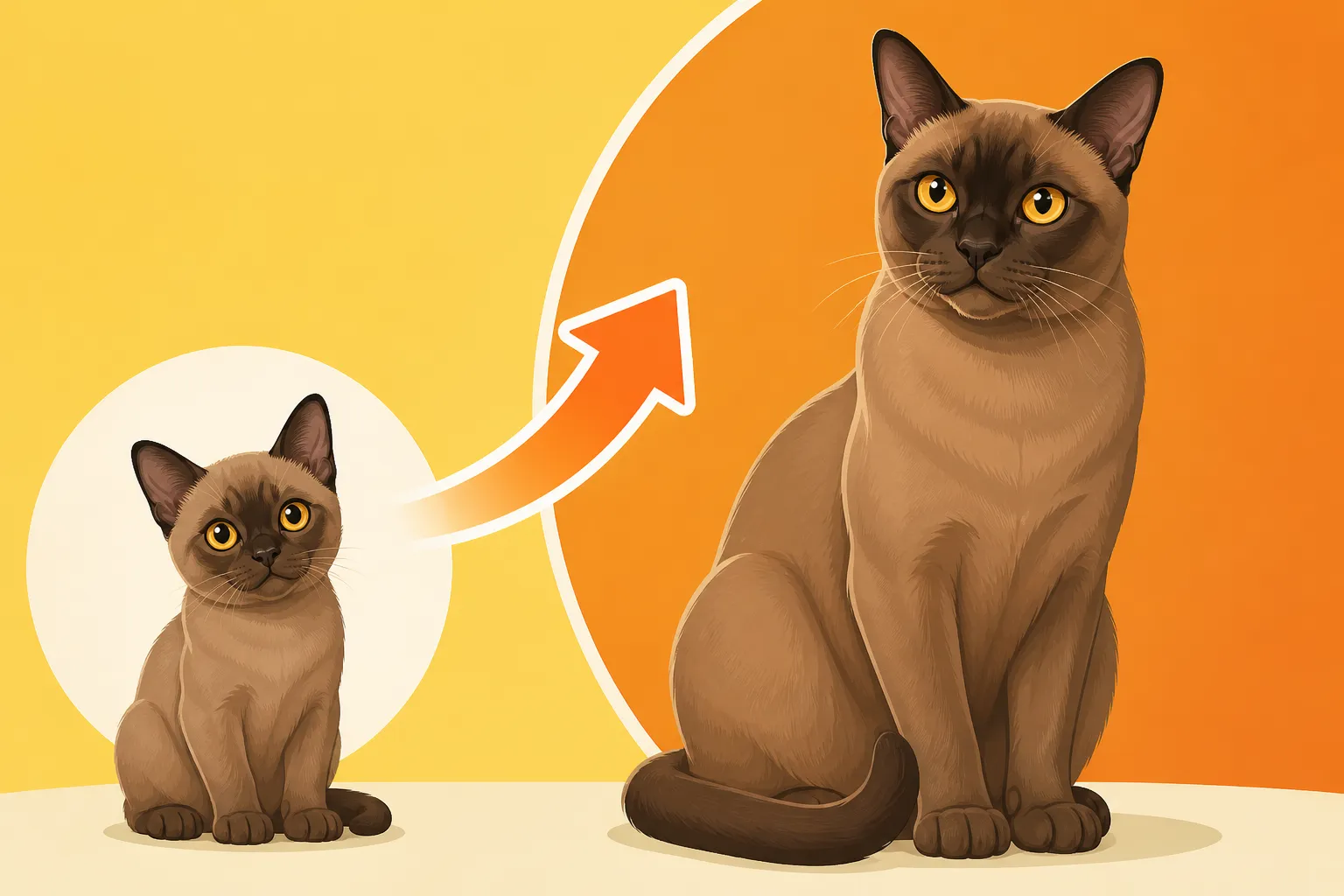
The first stage, kittenhood, is marked by rapid changes in overall size. They shoot up, almost like little beanpoles, gaining both height and length quickly. Then comes a period of adolescence where the growth slows down in terms of outward dimensions but shifts its focus. Finally, they enter adulthood, where the real "filling out" happens. This last stage is often overlooked, but it's crucial for the Burmese's characteristic brick-like feel. This isn't just about weight gain; it's about muscle development and the maturation of their skeletal system, making them incredibly robust.
When Does a Burmese Kitten Stop Being a Kitten?
The kitten phase of a Burmese is an absolute joy, filled with boundless energy, playful antics, and an insatiable curiosity. But when exactly do they transition from that adorable, gangly stage to a more mature physique? It happens in stages, and it's not always as obvious as with some other breeds.
Rapid Growth in the First Six Months
From the moment they arrive home, usually around 12-13 weeks, Burmese kittens are in a period of intense, rapid growth. They are little powerhouses, putting on weight and shooting up in size seemingly overnight. This initial surge is when their bone structure lengthens, and they develop the basic framework that will support their adult musculature. During this time, proper nutrition is absolutely critical. They need a high-quality diet that supports this fast-paced development, ensuring their bones and muscles have all the building blocks they need. Any deficiencies during these early months can have lasting impacts on their health and eventual size. You'll notice them getting taller and longer, with their legs often looking a bit too big for their body, a classic sign of a growing youngster.
It’s during these formative months that careful observation is key. Regular vet checks are essential to monitor their progress. Breeders will often check for things like Why a Burmese Kitten's Chest Should Be Checked at Birth to ensure healthy development. This rapid growth also means they're burning a lot of calories, so it's important not to restrict their food during this period, provided it's a high-quality, kitten-appropriate diet. They need the fuel to grow into that magnificent "brick."
The Adolescent Phase: Lean and Lanky
Between six months and about one year of age, your Burmese will likely enter an adolescent phase. This is where their rapid vertical growth starts to taper off. They might not seem to be getting much taller or longer, but don't let that fool you. They're still growing internally, shifting from height to density. During this time, they often appear quite lean, almost lanky, as their bodies are still catching up to their full bone structure. Their energy levels remain incredibly high, and they might burn through calories efficiently, preventing them from looking "filled out" just yet.
This lanky stage can sometimes worry new owners, who might wonder if their cat is too thin. However, it's a very normal part of their development. They're like teenage athletes, all muscle and bone without a lot of extra padding. Their muscle definition becomes more apparent, and their athletic prowess really starts to shine. It's during this phase that you'll begin to appreciate their inherent strength and agility. Keeping up with a balanced, high-protein diet is still essential, even if the pace of outward growth has settled. This continued nutritional support ensures that the muscles are strengthening and preparing for the final stage of maturation.
Reaching Physical Maturity: More Than Just Height and Weight
While many breeds might hit their full height and weight around a year, the Burmese often continues to develop in a more subtle but significant way beyond this point. It's about achieving that famed density and robust build.
The Filling Out Period: 1 to 2 Years Old
The period from one year to closer to two years of age is crucial for a Burmese as they enter their true physical maturity. This is when they really start to "fill out." While their skeletal growth might have largely concluded, their muscles continue to develop, gain mass, and become denser. This isn't about gaining excess fat; it's about achieving that deep-chested, compact, and heavy feel that is characteristic of the breed. You might not notice them getting visibly larger in terms of height, but when you pick them up, they will feel noticeably more substantial.
This phase is where the "brick wrapped in silk" really comes into its own. Their shoulders broaden, their chest deepens, and their overall musculature becomes more defined and powerful. It’s a slow, steady process, often subtle enough that you might not notice the day-to-day changes, but over several months, the transformation is remarkable. They become incredibly solid. This is why a consistent, high-quality diet rich in protein is still important, as it fuels this crucial muscle development. Just like human athletes, building and maintaining muscle takes consistent nutritional support.
Hormonal Impact on Growth (Neutering/Spaying)
Neutering or spaying your Burmese typically happens before they reach full physical maturity, often around six months to a year. While these procedures are essential for health and population control, they can have a subtle, yet notable, impact on your cat's metabolism and how they mature. After being spayed or neutered, a cat's metabolic rate can slow down, and their hormonal balance changes. This means they often have a greater propensity to gain weight if their caloric intake isn't carefully managed.
For a Burmese, who is already genetically predisposed to conditions like diabetes if they become overweight, this post-procedure period requires extra vigilance. While they will still continue to fill out and develop muscle mass, it's easier for this to be accompanied by unwanted fat if their diet isn't adjusted. This isn't a direct impact on their "full size" in terms of height or length, but rather how that size is composed – whether it's dense muscle or soft fat. Understanding this metabolic shift is vital for preventing obesity and ensuring your Burmese achieves their ideal, healthy mature physique. This is a time when Why Portion Control Is Medical Care in a Burmese becomes paramount, helping to manage their weight and keep them in optimal condition.
How to Accurately Monitor Your Burmese's Growth and Condition
Given the Burmese's unique body type, monitoring their growth and overall condition requires a bit more nuance than simply looking at a number on the scale. Their dense musculature can be deceiving.
Beyond the Scale: Body Condition Scoring
While regular weighing is important, relying solely on the number on the scale can be misleading for a Burmese. Because they are so naturally muscular and dense, a weight that might seem heavy for another breed of similar frame could be perfectly healthy for a Burmese. This is where body condition scoring (BCS) becomes an invaluable tool. BCS involves a hands-on assessment of your cat's body, feeling for their ribs, spine, and waistline.
A healthy Burmese should have ribs that are easily felt with a light touch, without being visibly prominent. You should also be able to feel their spine and hip bones without them protruding sharply. When viewed from above, they should have a discernible waistline, and from the side, their belly should tuck up slightly rather than sag. If you can't easily feel their ribs or spine, or if they have a rounded belly and no waist, they might be carrying too much weight, even if the number on the scale doesn't seem alarming. Regularly performing a BCS alongside weighing helps you understand if your Burmese is filling out with muscle or accumulating unhealthy fat.
The Importance of Consistent Measurement
Consistent monitoring is your best friend when it comes to tracking your Burmese's healthy development. This means not just periodic vet visits, but also regular checks at home. Ideally, you should weigh your Burmese weekly or bi-weekly during their intense growth phases, and then monthly once they are fully grown. How to Weigh a Burmese Accurately at Home is an essential skill every Burmese owner should master. It allows you to catch any sudden drops or gains that could signal an underlying health issue.
Beyond the scale, visual assessments are key. Take note of their energy levels, their appetite, and how their coat looks. Are they still leaping and playing with the same vigor? Is their coat as glossy and smooth as usual? Any significant changes in these areas, combined with weight fluctuations, warrant a call to your vet. Keeping a small journal or using a pet app to log their weight and BCS observations can provide a valuable historical record, making it easier to spot trends and discuss them accurately with your veterinarian. This consistent approach empowers you to be proactive in their health management.
The Role of Proper Nutrition in Development
The right nutrition isn't just about growth; it's a lifelong commitment to your Burmese's health, particularly given their predisposition to certain conditions. A high-quality, protein-rich, and moderate-fat diet is paramount throughout their lives, from kittenhood right into their senior years. During their growth phases, adequate protein supports the development of that dense musculature they are famous for. As they mature and fill out, this nutritional foundation continues to be critical.
Perhaps even more important for a Burmese is controlling carbohydrate intake. This breed has a notoriously high risk of developing diabetes, and diet plays a massive role in mitigating that risk. Free-feeding, or leaving dry kibble out all day, can be particularly detrimental. Instead, measured, portion-controlled meals of high-quality wet food are often recommended. Brands like Chewy offer a wide selection of cat foods, and you can filter specifically for low-carbohydrate options, which are highly beneficial for a Burmese's long-term health. Regularly reviewing your cat's diet with your vet and making adjustments as they age or their activity levels change is a non-negotiable part of responsible Burmese ownership. Why Weight Is the Only Lever a Burmese Owner Has when it comes to managing their diabetes risk, and diet is the primary tool for weight control.
Here's a general guide to average weights for a healthy, fully-grown Burmese:
| Age/Gender | Average Weight Range (lbs) | Key Developmental Stage | Considerations |
|---|---|---|---|
| Kitten (3-6 months) | 4-7 lbs | Rapid Growth | Significant increase in height and length. |
| Adolescent (6-12 months) | 7-10 lbs | Continued Growth | Filling out, gaining lean muscle. |
| Adult Male (1-2 years) | 10-14 lbs | Physical Maturity | Dense musculature, broad chest. |
| Adult Female (1-2 years) | 8-12 lbs | Physical Maturity | Slightly smaller frame, still very dense. |
| Adult (2+ years) | 8-14 lbs | Maintained Weight | Weight should stabilize, maintain muscle. |
Note: These are average ranges. Individual cats can vary based on genetics, activity level, and whether they are American or European type.
Distinguishing American and European Burmese Growth Patterns
It’s important to remember that there are two distinct types of Burmese: the American Burmese and the European Burmese. While both share the core "brick wrapped in silk" characteristic, their breed standards describe slightly different body types, which can subtly influence how they appear to grow and mature.
Subtle Differences in Body Type
The American Burmese standard emphasizes a more compact, cobby, and rounded body type. This means they tend to be a bit shorter in the body, with a more substantial, rounded head and full cheeks. When an American Burmese fills out, it often results in a very robust, dense, and "chunky" appearance – in the best possible way, of course! They gain that muscle mass and density, making them feel incredibly solid. What the American Burmese Standard Asks For perfectly illustrates this ideal.
In contrast, the European Burmese, while still muscular and substantial, is described as being more moderate and elegant. They often have a slightly longer body and a less rounded, more wedge-shaped head. Their build, while undeniably powerful, tends to be more athletic and less cobby than their American cousins. As a European Burmese matures, they still develop impressive musculature and feel heavy, but their overall silhouette might appear a bit sleeker or more lithe compared to the American type. These subtle differences mean that while both types reach a significant "full size," the exact visual and tactile experience of that maturity can vary. What the European Burmese Standard Asks For provides more detail on these distinctions.
Impact of Breed Standards on Perception of Size
Breed standards aren't just for show cats; they define the ideal physical characteristics of a breed, which in turn influences how breeders select for certain traits and how owners perceive their cat's development. Because the American and European Burmese standards highlight different nuances in body type, an owner might interpret their cat's "full size" differently depending on which type they have.
For example, an American Burmese owner might expect their cat to be particularly compact and broad, and see a leaner, more elongated cat as still "growing" or not fully developed. Conversely, a European Burmese owner might appreciate a more athletic, less cobby build as the pinnacle of maturity for their type, without expecting the extreme roundness seen in some American lines. These standards also guide discussions with veterinarians about ideal weight and body condition, as what's healthy for a cobby American Burmese might differ slightly from a more moderate European Burmese. It’s a testament to the diversity within the breed itself and why understanding your cat’s lineage can be so helpful.
The Lifelong Playfulness That Belies Their Size
Even once your Burmese has reached its full impressive size and muscle density, don't expect them to settle into a sedentary life! One of the most endearing qualities of the Burmese is their enduring kitten-like spirit.
When Physical Maturity Meets Enduring Kitten Energy
It’s truly remarkable how a fully grown, often substantial Burmese cat can retain the playfulness and energy of a kitten. While they certainly develop into magnificent, solid animals, their mental and physical energy levels often remain incredibly high well into their golden years. This means that even at one, two, or even ten years old, your Burmese will likely still be chasing wand toys, pouncing on crinkle balls, and initiating games of fetch with the enthusiasm of a six-month-old. A Burmese Is Still Playing at Fifteen isn't an exaggeration; it's a common reality for this breed.
This enduring vitality is part of their charm but also a factor in maintaining their healthy adult size. A playful Burmese is an active Burmese, and regular activity helps to keep their muscles toned and prevent unhealthy weight gain, particularly vital for a breed prone to diabetes. So, while they might have reached their full physical dimensions, their zest for life and active engagement with their human companions will make them feel perpetually young at heart. Don't put away those feather wands just because they're no longer a tiny kitten!
Adapting Play to Their Adult Size
While their playfulness lasts a lifetime, you might need to adapt the types of games and toys you offer as your Burmese reaches their full adult size. Those tiny kitten toys might no longer provide enough challenge or stimulation for a powerful, agile adult. Instead, focus on toys that encourage their natural athleticism and intelligence. Large, sturdy wand toys that can withstand vigorous play and high jumps are excellent. Puzzle feeders, which can also help with Why Portion Control Is Medical Care in a Burmese and manage their food intake, are fantastic for mental stimulation.
Consider interactive games that engage their problem-solving skills, like hiding treats for them to find or teaching them tricks. Their intelligence and desire to interact with you mean they thrive on these challenges. Even fully grown, a Burmese craves interaction and attention above all else. So, while they might be a "brick," they're still a very playful one, always eager for a game or a cuddle. Ensuring they have appropriate outlets for their energy is key to their happiness and continued good health throughout their long and joyful lives, which can stretch to The Sixteen to Eighteen Years a Well Bred Burmese Gets.
Disclaimer
This article is for general informational purposes only and does not constitute professional advice. Laws, prices and regulations vary by location and change over time. Consult a qualified professional for guidance on your specific situation.