Why the Burmese Name Causes Confusion With the Birman
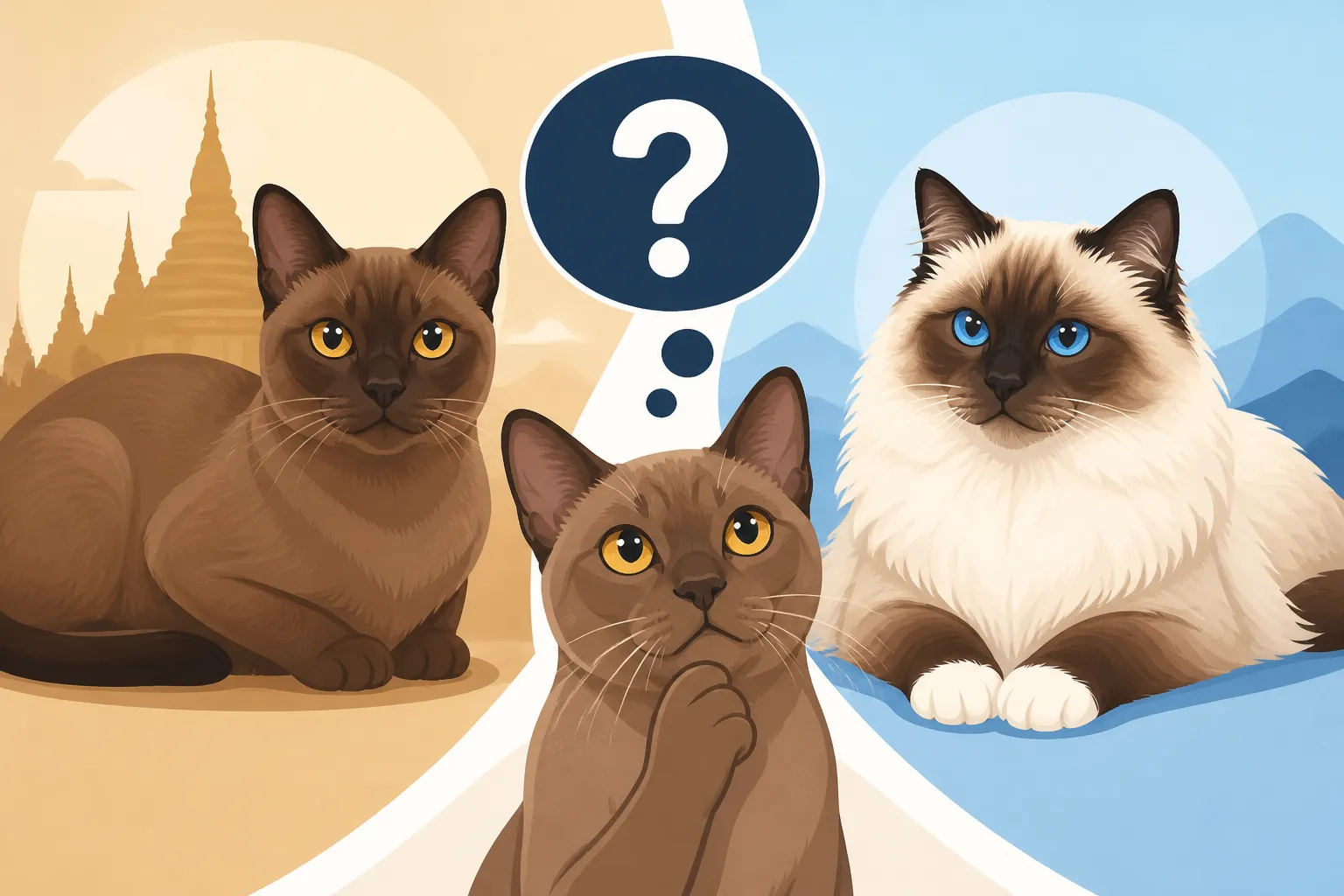
A cat described as “Burmese” may bring to mind either a sleek, short-coated cat or a blue-eyed, fluffy one with white paws. That mix-up is understandable: Burmese and Birman look and sound alike in name, and the Birman has also been called the Sacred Cat of Burma. This guide explains how the breeds differ, where the confusion comes from, and how to check what a cat really is.
Why the names Burmese and Birman are so easy to mix up
The words sound almost interchangeable
“Burmese” and “Birman” differ by only a few letters, and both names are associated with Burma, now known as Myanmar. In everyday conversation, it is easy to hear one and remember the other—especially if someone is talking quickly or describing a cat you have not seen.
The confusion grows when a person encounters a phrase such as “Sacred Cat of Burma.” That phrase is often associated with the Birman, not the Burmese, but it sounds as if it could be another name for the Burmese breed. It is not. The names point to different recognized breeds, with different standards and characteristic appearances.
You may also see the terms used loosely in online listings, social media posts, or informal conversations. A cat described as a “Birman Burmese mix,” for instance, could be a cross, a cat whose ancestry is unknown, or simply a mislabeled cat. The label alone does not establish pedigree. If you see a breed description on a retailer or marketplace such as Chewy, treat it as a starting point for questions rather than proof of a cat’s ancestry.
The Birman’s nickname adds another layer
The Birman is sometimes called the Sacred Cat of Burma. That name is tied to stories about the breed’s supposed temple origins, but those stories are not the same thing as a documented, verifiable pedigree. The romantic legend is memorable, and it can make people assume that “Birman” and “Burmese” refer to the same historical cat.
They do not. A shared reference to Burma in the names does not mean the breeds have the same identity, coat, or standard. Breed names can preserve old place names, traditions, and stories even when the precise history behind them is complicated or debated.
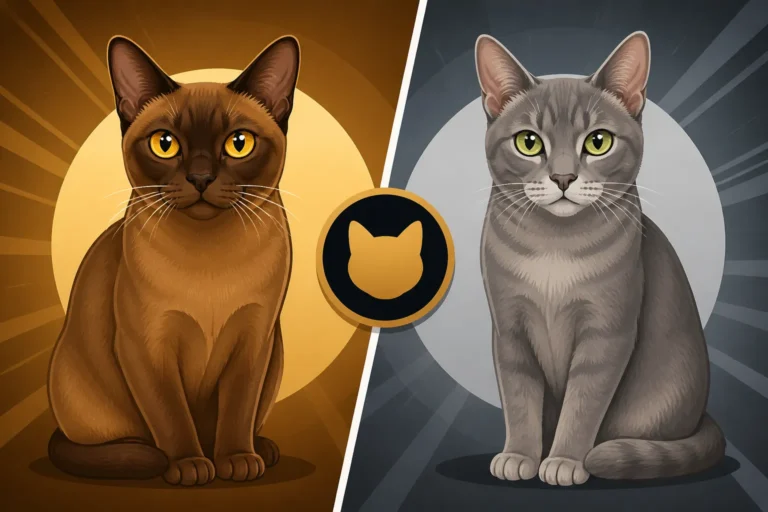
A helpful way to keep the names straight is to connect each one with a visual clue: a Burmese is typically short-coated, while a Birman is long-haired, colorpointed, and has white “gloves” on its paws. That distinction is more useful than trying to remember the stories behind the names.
How a Burmese differs from a Birman
Coat, color, eyes, and paws offer quick clues
The most noticeable difference is usually the coat. A Burmese has a short, close-lying coat with a smooth, glossy look. The breed is known for a compact, muscular feel that can surprise people when they pick one up. Its coat is not the same as a Birman’s longer, flowing appearance.
A Birman has a semi-long, silky coat and a colorpoint pattern: the body is generally lighter, while the face, ears, legs, and tail are darker. Birmans are also known for blue eyes and white feet, often described as gloves on the front paws and laces on the hind paws. A Burmese typically has gold to yellow-toned eyes, depending on the individual and the applicable breed standard, and does not have the Birman’s distinctive white-gloved feet.
| Feature | Burmese | Birman |
|---|---|---|
| Coat | Short, close-lying, glossy | Semi-long and silky |
| Common pattern | Solid or nearly solid appearance, with recognized colors varying by registry and type | Colorpoint pattern with darker points |
| Eyes | Usually gold to yellow tones | Blue |
| Paws | No required white gloves | Distinctive white gloves and hind-paw laces |
| Overall impression | Compact, muscular, and sleek | Longer-coated, colorpointed, and often visibly fluffy |
These are useful breed clues, not a substitute for a registry standard or pedigree. Coat length and color can be hard to judge in kittens, and mixed-breed cats may combine features in unexpected ways. Lighting, grooming, age, and the cat’s health can also affect how its coat looks in a photograph.
For a closer look at the Burmese’s build and accepted appearance, see What a Burmese Looks Like Against the Standard. The standards for the two Burmese types also differ, so it is worth checking which type is being discussed in What the American Burmese Standard Asks For and What the European Burmese Standard Asks For.
The shared warmth does not make them the same breed
Both breeds can be affectionate companions, but personality is individual. A Burmese may be highly people-oriented and eager to follow its family from room to room. Birmans are often described as gentle and sociable, but no breed description can promise that a particular cat will behave in a specific way.
This is one reason not to use temperament as a breed test. A quiet Burmese is still a Burmese if its pedigree says so, and a very social Birman does not become a Burmese because it follows someone around the house. Personality develops through genetics, early handling, health, and the cat’s experiences in its home.
If you are choosing a cat, focus on the individual’s needs rather than assuming the name tells you everything. Ask how the cat responds to handling, visitors, other pets, grooming, and time alone. For a broader look at the Burmese’s history and temperament, Whether a Burmese Is the Right Cat for You can help you think through the fit.
Where the Burmese name comes from
The Burmese breed’s modern history is tied to Wong Mau
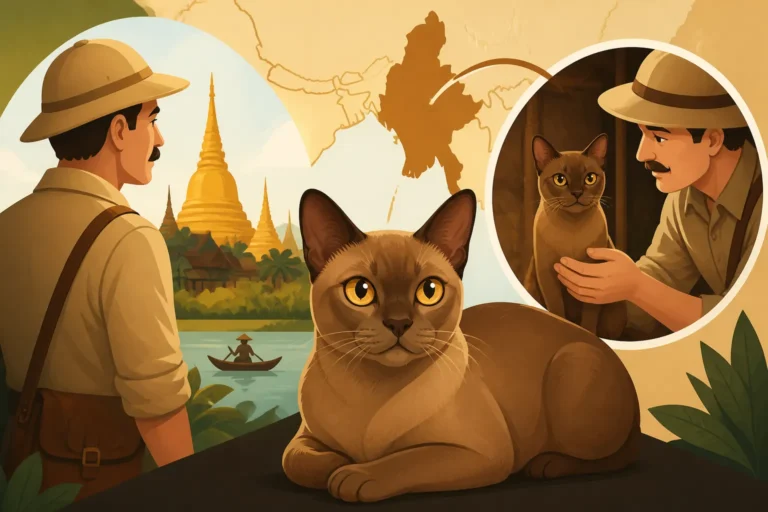
The modern Burmese breed is associated with a cat named Wong Mau, who was brought to the United States from Southeast Asia in the early twentieth century. Her appearance and breeding history helped establish the foundation for the Burmese as a distinct breed. The story is more involved than a simple claim that every Burmese is a direct copy of an ancient cat from Burma.
Wong Mau’s ancestry and the early breeding program have been discussed in relation to Siamese cats and the development of other breeds. That history helps explain why breed names and origin stories can be confusing: cat breeds are shaped over time through selective breeding, registration decisions, and changing standards, not just by a single place name.
For more background, see The Burmese Began With One Cat Called Wong Mau and Where the Founding Burmese Wong Mau Came From. The later distinction between American and European Burmese types is also relevant; How the American and European Burmese Split explains why the word “Burmese” does not always mean exactly the same appearance in every registry.
The Birman’s origin story is a separate one
The Birman has its own breed history and identity. Its traditional association with Burma and the “Sacred Cat” story can make it sound like a close synonym for Burmese, but the breed is recognized by its own characteristic features, including its colorpoint coat, blue eyes, and white paws.
When a breed’s history includes legends, retellings, and changing records, it is sensible to separate folklore from the features used to identify the breed today. A story may be part of the breed’s cultural history without serving as evidence that a cat is a particular breed.
That distinction is especially important when reading adoption descriptions or browsing photographs. Someone may use “Burmese” loosely to mean a cat connected with Burma, while a breeder or registry uses it as a specific breed name. If the context is unclear, ask what the person means instead of assuming the terms are interchangeable.
How to check whether a cat is Burmese or Birman
Start with the cat’s records, not a guess from a photo
If you are looking at a pedigreed kitten or adult cat, request the pedigree and ask which registry recorded it. The paperwork should identify the breed and, for a Burmese, may also clarify the type or registry context. A responsible breeder should be willing to explain the terminology and show relevant records.
Photos can offer clues, but they cannot confirm ancestry. A short-coated, gold-eyed cat may resemble a Burmese, but appearance alone does not prove it is pedigreed. Likewise, a fluffy, blue-eyed cat with white paws may resemble a Birman without having documented Birman ancestry.
If you are adopting from a shelter or rescue, breed labels are often best understood as estimates unless the cat has reliable paperwork. In that situation, it is more useful to ask about known health needs, coat care, temperament, and the cat’s history than to treat a breed guess as certain. A cat can be a wonderful companion without a confirmed breed.
Ask clear questions when the label matters
When speaking with a breeder, rescue, or previous owner, ask direct questions: Is the cat registered as a Burmese or a Birman? Which registry is named on the paperwork? Is the cat a mixed breed, or is its ancestry unknown? If the cat is Burmese, does the breeder mean the American or European type?
A clear answer should connect the label to documents or explain honestly when the cat’s background is uncertain. Be cautious if someone relies only on a color or a photograph to make a confident pedigree claim. Similar-looking cats can have very different ancestry, and names are easy to misremember.
When searching for care information, use the correct breed name where possible. Grooming needs, for example, should follow the cat’s actual coat: a short-coated Burmese generally needs a different routine from a semi-longhaired Birman. If you are browsing grooming supplies on Chewy, choose based on the cat’s coat and comfort rather than assuming the similar breed names mean the same grooming needs.
Likewise, product searches cannot settle a breed question. Chewy may be one place a cat owner looks for food or grooming items, but the relevant choice depends on the individual cat’s age, health, and coat—not simply whether a listing says Burmese or Birman. For questions about breed background, rely on registration records and knowledgeable breed organizations rather than a shopping category.
Keep the distinction practical
In ordinary conversation, mixing up the names is a small mistake. It matters more when the label is being used to make claims about pedigree, expected appearance, grooming, or health. A breed name can guide your research, but it should not replace veterinary advice or a close look at the specific cat.
If your cat has a short, glossy coat and a compact, muscular build, “Burmese” may be the word you were trying to remember. If the cat has a longer coat, blue eyes, colorpoint markings, and white paws, “Birman” is more likely the name people mean. When records are unavailable, describe what you can observe and be transparent that the breed is uncertain.
The key is simple: Burmese and Birman are separate breed names, even though they sound alike and both carry an association with Burma. Recognizing the coat and paw differences helps with everyday conversation; checking documents is the better route when pedigree really matters.
Disclaimer
This article is for general informational purposes only and does not constitute professional advice. Laws, prices and regulations vary by location and change over time. Consult a qualified professional for guidance on your specific situation.