What Three Generations Pure Meant for the Burmese
A pedigree phrase such as “three generations pure” can sound like a judgment about a cat’s quality or a claim that its family has no Siamese ancestry. In Burmese history, it referred to a specific breeding and registration requirement: after concerns about outcrossing, breeders had to document successive generations of Burmese-to-Burmese matings. This guide explains what that rule meant, why it arose, and what it did not mean.
Why the Burmese faced a three-generation requirement
The breed began with a small, unusual foundation
The modern Burmese breed is associated with Wong Mau, a brown cat brought to the United States in the early twentieth century. At the time, the cats that would become Burmese were not already a large, established population with generations of clearly documented pedigrees. Breeders had to work out how to reproduce the distinctive coat and body type, and the available cats were few.
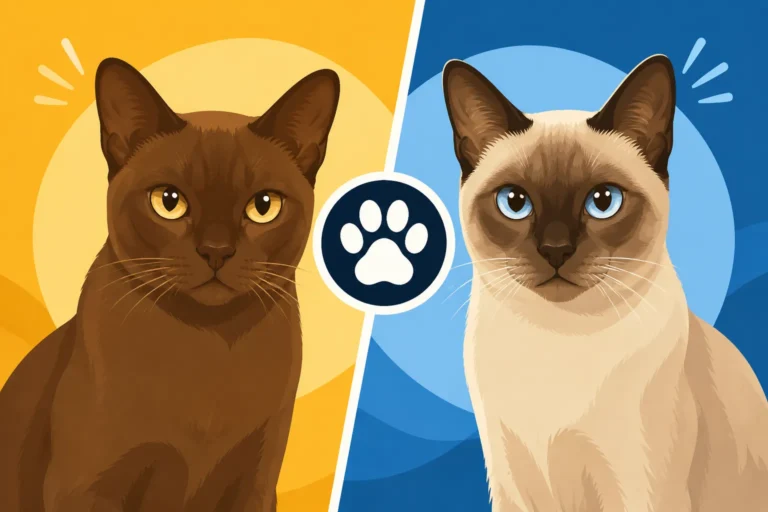
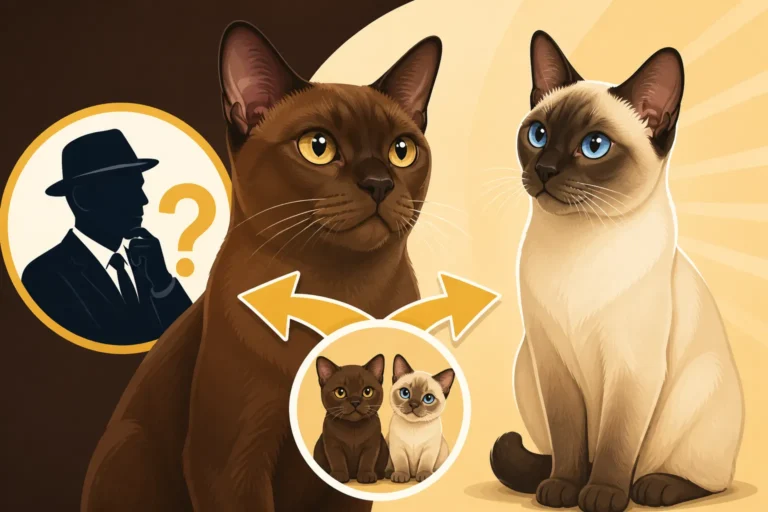
Wong Mau was bred to a seal-point Siamese named Tai Mau. Their offspring did not all look alike: some resembled Siamese, while others had a darker, more solid-looking coat. Those differences helped breeders recognize that coat appearance and ancestry could be more complicated than simply calling a cat “brown” or “Siamese.” The early breeding program used Siamese cats to develop the Burmese type, rather than beginning with a large group of unrelated Burmese cats.
That history is important when interpreting the word “pure.” The breed’s beginnings involved deliberate crossing and selection. A rule requiring several generations of Burmese-to-Burmese matings came later, as a way to establish that breeders could maintain a recognizable Burmese type without continuing to cross to Siamese cats. For more background on the early litter, see What the First Burmese Litter Told Thompson and Which Siamese the First Burmese Was Bred To.
Burmese and Siamese cats were being crossed too freely
Once the Burmese began attracting interest, demand for kittens grew faster than the small population of cats available to breed. Some breeders continued crossing Burmese with Siamese. These matings could produce kittens with Burmese-like coloring, Siamese-like points, or appearances between the two familiar types. That made it harder for a registry to decide whether a cat belonged in the Burmese breed.
This was not simply a matter of one kitten having the “wrong” color. A registry depends on consistent rules and records. If cats with different appearances and mixed recent ancestry were all entered as Burmese, the breed’s standard could become difficult to apply, and pedigrees would no longer give a reliable picture of how a cat was bred.
The issue became serious enough that the Cat Fanciers’ Association, or CFA, suspended Burmese registration in the late 1940s. The dispute reflected a practical concern: could the breed be maintained as a distinct, consistently documented population? The background is explored in Why Siamese Hybrids Flooded Burmese Registration and What CFA Objected To in Burmese Pedigrees in 1947.
What “three generations pure” meant in practice
A pedigree rule, not a description of a cat’s worth
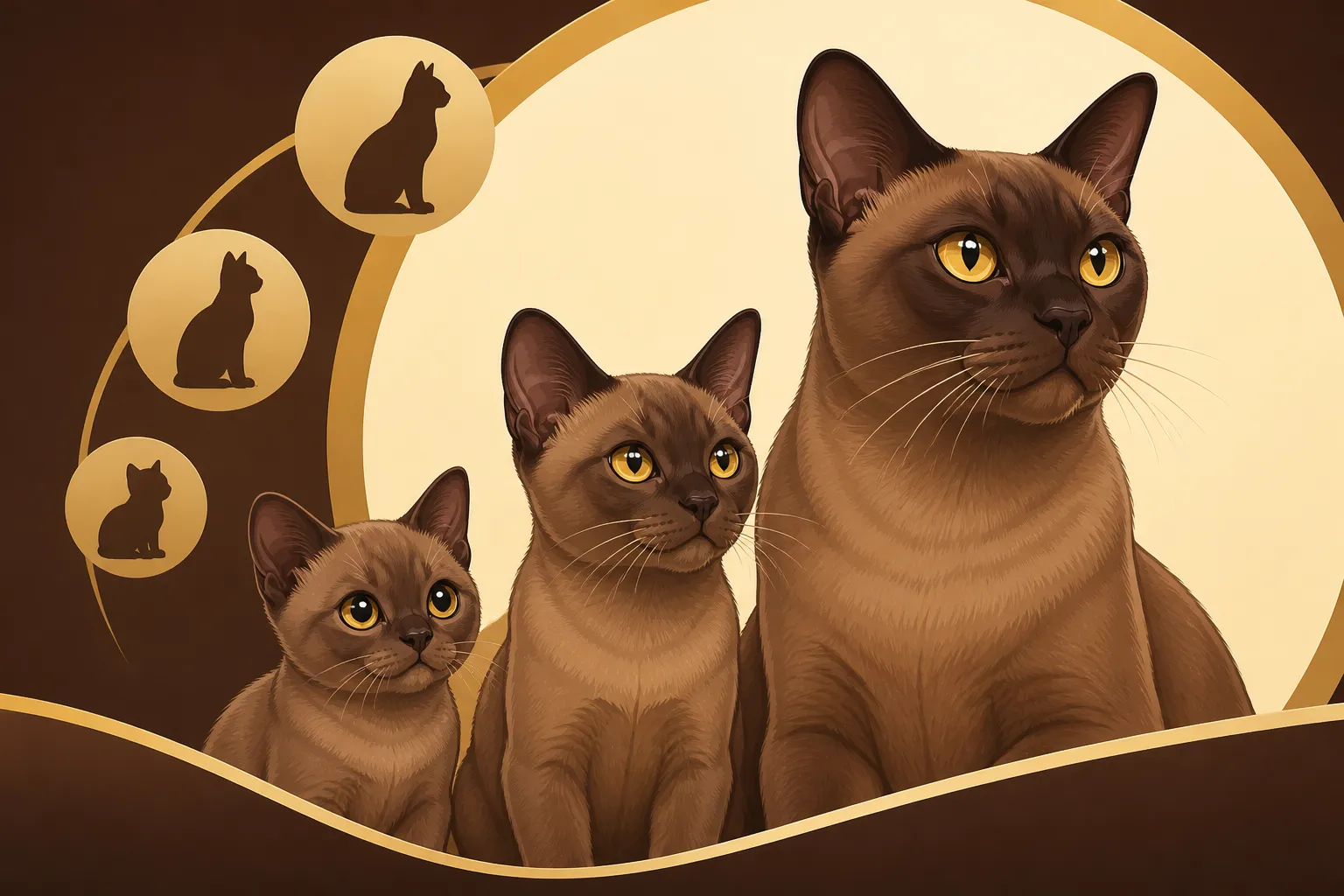
In this historical context, “three generations pure” meant that breeders had to show successive generations produced through Burmese-to-Burmese matings. The exact records mattered: a breeder needed a traceable pedigree that showed the required breeding history, rather than relying only on a cat’s coat color or general resemblance to the Burmese standard.
Think of a breeder who had a Burmese-looking cat whose recent ancestry included a Siamese outcross. Even if the cat looked convincingly Burmese, appearance alone would not establish that the line had met the registration requirement. The breeder would need to continue breeding eligible Burmese cats together and document the resulting generations. Each generation helped build a clearer record of the line as Burmese.
The word “pure” can be misleading today because it may sound like a genetic claim that a cat has no ancestry outside the breed. Here, it is more useful to understand it as a term used for a pedigree and breeding condition in a particular registry dispute. It did not mean that the earliest Burmese had appeared without crossing, nor did it make a cat less valuable as a companion.
Three generations did not mean three generations since Wong Mau
The requirement should not be read as a statement that the Burmese had to be separated from Wong Mau or all Siamese ancestry by three generations. Wong Mau’s role in the breed’s early development is a different question from the later registration rule. The rule addressed how breeders were expected to produce and document Burmese cats during the period when registration was under scrutiny.
It also was not a modern DNA test. A pedigree records named ancestors and matings; it does not provide the same kind of evidence as a genetic test. The rule relied on breeder records and registry procedures that were available at the time. Its purpose was to make breeding practices and ancestry more consistent and verifiable within the organized cat fancy.
Nor does “pure” automatically mean “better.” A cat’s health, temperament, welfare, and suitability as a pet cannot be judged from a single phrase in a pedigree. For a fuller look at how the founding cat’s identity has been discussed, read Whether Wong Mau Was a Purebred Burmese. The historical distinction between foundation breeding and later documented pedigrees is also relevant to Whether Any Siamese Blood Remains in the Burmese.
Why the rule mattered to recognition
The registry needed evidence of a stable breed
A breed standard describes the traits judges and breeders expect to see, but a standard alone cannot establish that a population is being bred consistently. Registries also need pedigrees and breeding records. When Burmese and Siamese cats were being crossed, it became difficult to tell whether the cats entered as Burmese came from lines being maintained as a distinct breed.
Requiring several generations of Burmese-to-Burmese breeding helped show that breeders could produce cats meeting the Burmese standard without relying on recent Siamese crosses. It gave the registry a clearer basis for evaluating pedigrees and deciding when the breed could be registered again. In that sense, the rule was an administrative and breeding safeguard, not a verdict on every individual cat.
The episode also demonstrates how breed identity is shaped by people and institutions as well as by appearance. A cat might look Burmese, but registration depended on documented ancestry and the rules of the registry. That distinction between a cat’s visible traits and its recorded pedigree remains useful when reading old pedigrees or breed histories.
Registration resumed after breeders met the conditions
After the suspension, Burmese breeders worked to establish lines that met the required standard and documentation expectations. CFA later resumed registering Burmese cats, with the breed’s recognition developing through the organization’s registration and showing processes. It is helpful to distinguish the return of registration from later milestones such as full championship status; they were not necessarily the same administrative step.
The three-generation rule was part of that effort to demonstrate consistency. It did not erase the breed’s earlier history or make the original Siamese matings irrelevant. Instead, it marked a point when breeders were expected to maintain the developing Burmese population through documented Burmese-to-Burmese breeding.
If you want to follow the timeline beyond the rule itself, see When CFA Resumed Registering the Burmese and What CFA Required Before Reinstating the Burmese. These milestones help explain why the phrase is tied to a particular chapter in Burmese history rather than being a timeless definition of what every Burmese cat must be.
How to interpret the phrase today
Read it as historical context, not a current health guarantee
When “three generations pure” appears in a historical account, it usually points to the registration challenge and breeding policy of that era. It should not be treated as a universal present-day requirement unless a particular registry’s rules or a specific pedigree record says so. Different registries can maintain different procedures, and historical rules should not be assumed to apply identically across organizations or periods.
The phrase also does not guarantee that a cat is healthy, free of inherited conditions, or a good match for a particular home. Those questions call for more specific information: health screening, veterinary records, socialization, and an honest discussion of the cat’s needs. A pedigree can tell you about recorded ancestry, but it cannot replace those other forms of care and evaluation.
If you are looking at a Burmese pedigree, ask what the notation means in that document and which registry issued it. A breeder or registry should be able to explain how the recorded generations were counted and what the record establishes. That is more useful than assuming the word “pure” has one fixed meaning in every context.
Keep the history and the modern cat separate
The three-generation requirement was a response to a real problem: breeders and the registry needed confidence that the Burmese was being maintained as a distinct, consistently recorded breed. It arose after the breed’s early development had already involved Siamese cats, so it cannot be used to claim that the Burmese began as a completely separate, long-established population.
For today’s cat owner, the history offers context rather than a reason to worry about an individual Burmese. The rule helps explain why Burmese pedigrees and breed recognition were closely connected to careful recordkeeping. It also shows why the breed’s story includes both crossbreeding at its origin and stricter breeding boundaries later on.
In short, “three generations pure” described a documented breeding condition used during a specific period in Burmese breed history. It was not a judgment of an individual cat’s character, a guarantee of health, or proof that the breed had never shared ancestry with Siamese cats. Understanding those distinctions makes the phrase far less confusing—and gives the Burmese’s development a more accurate place in the history of cat breeding.
Disclaimer
This article is for general informational purposes only and does not constitute professional advice. Laws, prices and regulations vary by location and change over time. Consult a qualified professional for guidance on your specific situation.