Where a Burmese Wants Its Scratching Post
It's incredibly frustrating when you invest in a beautiful scratching post, only to find your beloved Burmese still trying to sharpen their claws on your favorite sofa arm or door frame. It's not about being naughty; it's about meeting their primal needs in the right way. This guide will help you decode your Burmese's scratching preferences and strategically place scratching solutions that they'll actually use, protecting your home and keeping your cat content.
Understanding Your Burmese's Scratching Instincts
Before we even think about buying a scratching post, it's vital to understand why your Burmese scratches. It’s far more than just sharpening claws; it’s a multifaceted behavior deeply ingrained in their feline nature. When you understand the 'why,' the 'where' and 'what' become much clearer. Your Burmese isn't trying to annoy you; they're simply being a cat, a very particular and social cat at that.
The Importance of Scratching for Burmese Health and Happiness
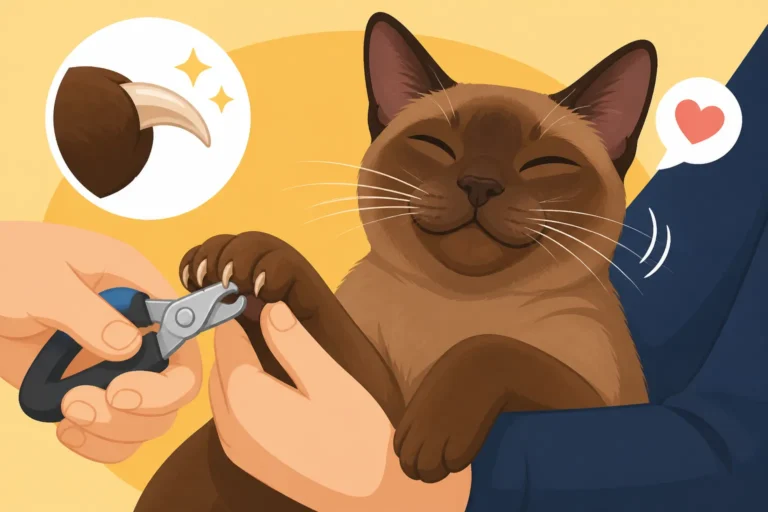
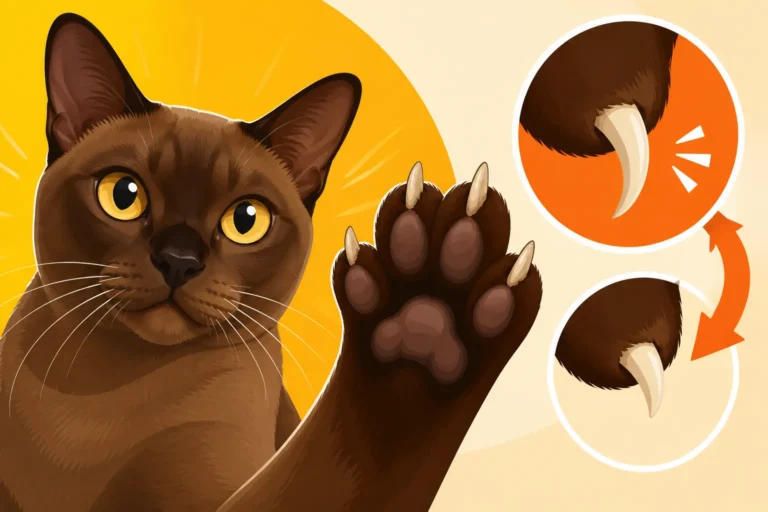
For a Burmese, scratching is a fundamental activity that serves several critical purposes, both physical and mental. Firstly, it's nail care 101. Cats shed the outer layer of their claws, revealing a new, sharper layer underneath. This is why you might find little "husks" of nail around their favorite scratching spots. Without appropriate surfaces, these layers build up, becoming uncomfortable and potentially leading to ingrown claws. Keeping their claws trimmed with suitable clippers is part of this, but scratching is their natural way of maintaining them. We've talked about How Fast a Burmese's Claws Grow Back, and believe me, they grow!
Beyond manicure duties, scratching is a full-body stretch. Have you ever noticed your Burmese reaching up, arching their back, and extending their front paws fully when they scratch? It’s a fantastic way for them to work out their muscles, joints, and spine, keeping them limber and healthy. Given that A Burmese Is Still Playing at Fifteen, maintaining this physical flexibility throughout their life is incredibly important. It's also a stress reliever; a good, vigorous scratch can help them work off excess energy or frustration, much like a human might stretch after sitting for a long time.
Why Burmese Choose Specific Surfaces and Locations
Burmese cats are known for being incredibly social and tactile creatures. The Burmese Is the Velcro Cat of the Cat Fancy is a title they've earned for a reason. This social nature extends to their scratching habits. They often choose highly visible spots, not just because the surface feels good, but because scratching is a visual and scent-marking behavior. Their paw pads contain scent glands, so when they scratch, they're leaving their unique scent, along with visual marks, signaling their presence and ownership of a territory. In a multi-cat household, this is especially important for establishing boundaries and communication.
They are also highly sensitive to texture. Think about the difference between your plush carpet, a smooth wooden floor, or a sisal rug. Each offers a different tactile experience. Burmese often gravitate towards materials that offer good resistance and allow them to really dig in without slipping. This explains why an untreated sisal rope or corrugated cardboard is often preferred over a slick, carpeted post that might not give them the satisfying rip and tear they crave. Observing where your Burmese currently tries to scratch (even if it's inappropriate) can give you invaluable clues about their preferred height, angle, and material. If they're always going for the vertical corner of a sofa, they want a tall, sturdy vertical post. If they're attacking the flat rug, a horizontal scratcher is probably what they're after.
The Ideal Scratching Post: Type and Material
Now that we understand the 'why,' let's dive into the 'what.' Scratching posts aren't one-size-fits-all, especially for a cat as particular and playful as a Burmese. Offering a variety of styles and materials is often the most successful strategy to ensure all their scratching needs are met.
Vertical Posts and Trees: Meeting the Burmese's Upward Stretch
Many cats, including the athletic Burmese, absolutely adore a good vertical stretch. This mimics scratching trees in the wild, allowing them to fully extend their bodies and dig their claws in deeply. When choosing a vertical scratcher, height is paramount. It needs to be tall enough for your adult Burmese to stretch their entire body upward without bending, with plenty of extra space at the top. A post that's too short won't be satisfying, and they'll likely ignore it in favor of something that offers that full extension. Some cat trees combine vertical scratching surfaces with platforms for climbing and lounging, which can be a double win for an active breed like the Burmese. You can find excellent, tall options on sites like Chewy that cater to all sizes and activity levels.
Sturdiness is another non-negotiable factor. Imagine trying to stretch and pull on something wobbly – it's frustrating and unsafe. A good vertical scratching post should have a wide, heavy base that prevents it from tipping over, even during the most enthusiastic scratching sessions. If it moves or falls, your Burmese will quickly lose interest, viewing it as unreliable. Consider heavy-duty, floor-to-ceiling options if you have the space; these are often exceptionally stable and provide ample scratching area.
Horizontal Scratchers and Loungers: For the Floor Dwellers
While the vertical stretch is crucial, some Burmese also enjoy scratching horizontally. This might be because they're stretching out after a nap, or simply because they prefer to scratch at ground level. Horizontal scratchers come in many forms, from simple flat pads to inclined ramps and even corrugated cardboard loungers that double as nap spots. These are fantastic for cats who enjoy clawing at carpets or doormats, offering a similar angle and resistance.
Many horizontal scratchers, particularly those made from corrugated cardboard, are designed to be replaceable. This is a huge plus because, let's be honest, those cardboard scratchers get shredded! Being able to swap out the worn-out insert keeps the scratcher fresh and inviting. Brands available on Amazon often offer multi-packs of these inserts, making it easy to keep a rotation going. Placing these near areas where your Burmese likes to lounge or play can encourage their use. Remember, variety is key; having both vertical and horizontal options provides a comprehensive scratching environment.
Material Matters: Sisal, Cardboard, and Carpet Preferences
The material of the scratching surface is perhaps one of the most critical aspects. Different cats have different preferences, and what works for one might be completely ignored by another. For Burmese, whose claws are active and grow quickly, materials that provide good resistance and allow for shredding are usually preferred. We've discussed Whether a Burmese Prefers Sisal or Cardboard previously, and the answer often lies in observing your individual cat.
- Sisal: This is a firm favorite for many cats and is often considered the gold standard. It's durable, tough, and provides excellent resistance for clawing. Sisal can be found as rope wound around a post or as a flat fabric panel. Both are usually very effective.
- Corrugated Cardboard: These are often very popular due to their shreddable nature. Cats love the sound and feel of tearing into the cardboard, and they're relatively inexpensive to replace. They're great for horizontal scratchers and can even be found in fun shapes or with catnip infusions.
- Carpet: While some older, carpet-covered posts exist, they are generally less effective than sisal or cardboard for redirecting scratching from furniture. If a post is covered in the same carpet as your floor or furniture, your Burmese might not differentiate it as an acceptable scratching target. It's often better to avoid carpeted posts unless you know your cat specifically prefers it, or if it's a very different texture from your home's carpeting.
Here's a quick comparison of common scratching materials:
| Material Type | Pros | Cons | Best For |
|---|---|---|---|
| Sisal Rope/Fabric | Very durable, excellent resistance, mimics tree bark. | Can be more expensive, less shreddable than cardboard. | Vertical posts, heavy scratchers. |
| Corrugated Cardboard | Highly shreddable, satisfying texture, often inexpensive, replaceable. | Can create mess, needs frequent replacement. | Horizontal scratchers, loungers, ramps. |
| Carpet (different texture) | Familiar texture for some cats, durable. | Less desirable than sisal/cardboard, can be confused with furniture. | Cats with specific carpet preferences, older posts. |
| Wood (untreated) | Extremely durable, natural feel. | Harder to find, not all cats like the lack of shredding. | Specialized posts, natural cat trees. |
Strategic Placement: Where to Put the Scratching Post
This is where the magic really happens. You can have the most expensive, perfect scratching post in the world, but if it's in the wrong spot, your Burmese won't touch it. Their social nature and territorial instincts play a huge role in where they prefer to perform their claw-sharpening rituals.
High-Traffic Areas: Where Your Burmese Spends Time
Burmese are social butterflies who love to be wherever the action is. As we know, Why a Burmese Cannot Be Left Alone All Day, they crave companionship and will follow you from room to room. This means their scratching posts should reflect this desire for presence. Think about the rooms where your family gathers most often: the living room, a family room, or even a home office. These are prime locations for a scratching post.
Why? Because scratching is also a declaration. When your Burmese scratches in a prominent area, they're essentially saying, "I was here! This is my space, and I'm part of this family." Placing a scratcher in an out-of-the-way corner, like a seldom-used guest room or a laundry room, is essentially asking your Burmese to scratch in secret, which goes against their natural inclination to mark their territory prominently. Don't hide the scratcher; celebrate it as a functional piece of cat furniture.
Near Favorite Sleeping and Lounging Spots
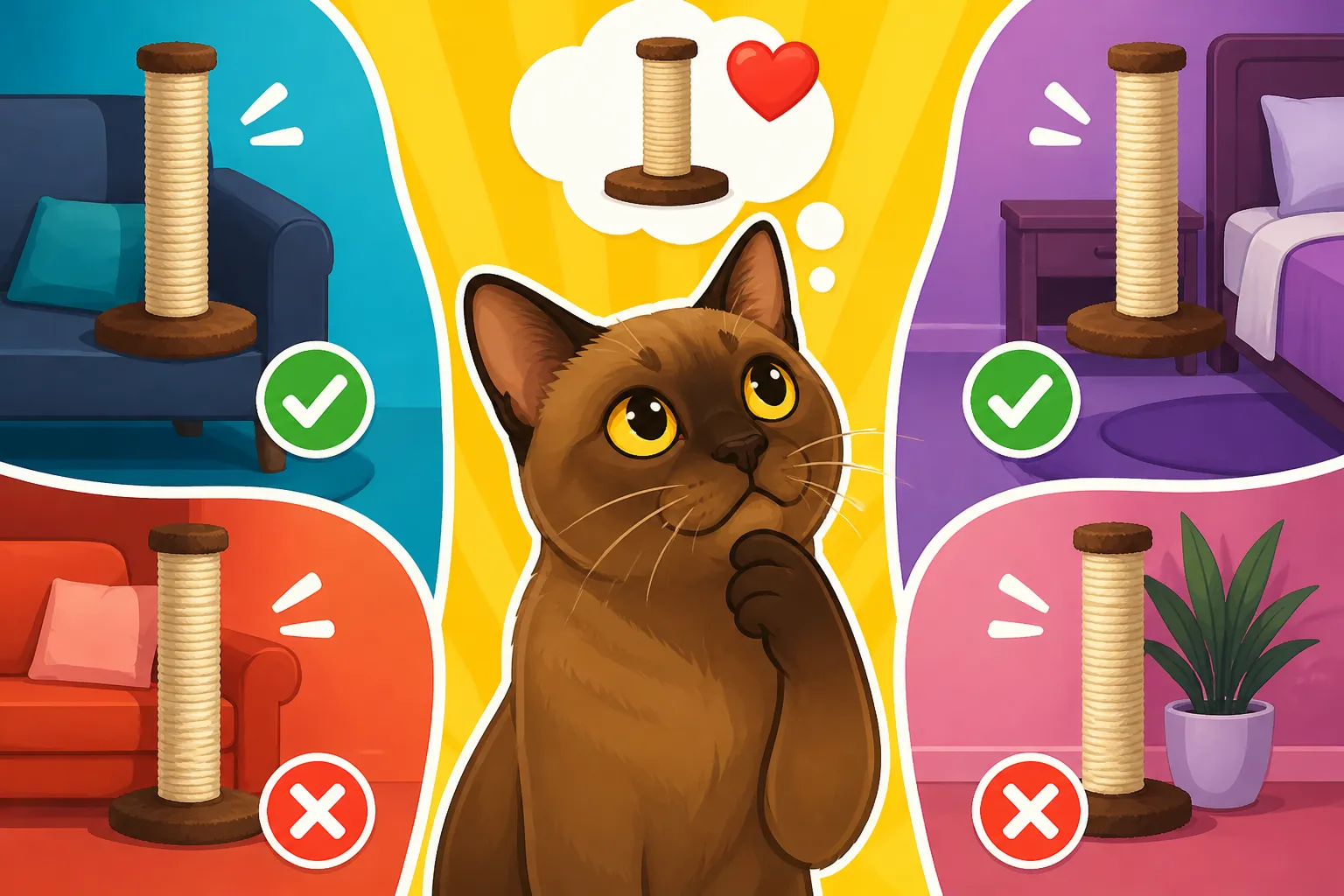
Have you ever noticed how you stretch when you first wake up? Cats do too, and scratching is a big part of their post-nap routine. Your Burmese will likely want to stretch and scratch right after waking up from a cozy nap. This makes placing a scratching post near their favorite sleeping spots absolutely crucial. If your Burmese loves to sleep on your bed, consider a tall vertical scratcher right next to the bed. If they have a favorite cat tree or a sunny window perch, a horizontal scratcher nearby would be ideal.
This also ties into their habit of marking. When they wake up, they might want to "re-mark" their territory as a way of shaking off sleep and asserting their presence. Providing an acceptable outlet immediately accessible makes it far more likely they'll use it instead of the side of your bed or the leg of your nightstand. Remember, your Burmese wants to be near you and involved, even in their stretching and marking rituals.
Redirecting Scratching from Furniture: The "Decoy" Method
If your Burmese has already developed a habit of scratching furniture, you'll need a bit of a strategic intervention. This is where the "decoy" method comes in. Don't remove the furniture they're scratching right away. Instead, place an ideal scratching post directly in front of or immediately next to the offending item. If they're scratching a sofa arm, put a tall, sturdy sisal post right there. If it's the carpet, place a cardboard horizontal scratcher over that exact spot.
The idea is to give them an undeniable, better alternative in the very spot they're looking to scratch. Once they start consistently using the new, acceptable scratcher, you can gradually move it a few inches each day, eventually relocating it to a more permanent, desirable spot in the room. This process takes patience and consistency, but it's often far more effective than simply removing the inappropriate item, which only frustrates your cat without solving the underlying need. Meanwhile, you can make the “forbidden” spot less appealing by covering it with a throw blanket or double-sided sticky tape (available from many pet supply stores) to deter them. This isn't about punishment; it's about making the right choice easy and the wrong choice unattractive.
Encouraging Use and Troubleshooting
Sometimes, even with the perfect post in the perfect spot, your Burmese might need a little encouragement. They're intelligent and affectionate, but also creatures of habit. If they've already gotten into a routine, it might take a bit of persuasion to shift their focus.
Scent and Lure: Making the Post Irresistible
Catnip is your secret weapon here! Most Burmese respond enthusiastically to catnip, and a good sprinkle or spray on a new scratching post can make it instantly more appealing. Rub the catnip into the material, especially on sisal posts, to release its enticing aroma. You can also buy catnip spray, which is great for refreshing an older post. Another option is a catnip-infused toy or dangle toy that you can attach to the post, drawing their attention to it.
Beyond catnip, you can also use pheromone sprays designed to mimic the natural comforting scents cats release. Spraying this on the post can make it feel safer and more inviting, encouraging them to investigate and mark it with their own scent. Positive association is key. When your Burmese uses the post, even for a moment, offer verbal praise, a gentle pat, or a small, healthy treat. This reinforces the idea that using the post is a good thing that makes you happy.
The Multi-Scratcher Approach: Variety is Key
Never rely on just one scratching post, especially if you have a larger home or multiple cats. Think of it like this: would you be happy with just one chair in your entire house? Probably not! The same goes for your Burmese. Having a variety of scratchers, both vertical and horizontal, and in different materials, throughout the house drastically increases the chances they'll use them. Consider placing one near their feeding area, one by a sunny window, one in the main living space, and one in your bedroom.
This multi-scratcher approach addresses all their needs and preferences. One Burmese might prefer a tall sisal post for a full stretch, while another might enjoy a cardboard lounger for a quick scratch after a meal. Or, more likely, your one beloved Burmese will enjoy all of them at different times and for different reasons. Don't be afraid to experiment with different types from retailers like Chewy; what you think they'll like might not be what they actually prefer. The goal is to provide ample, appealing options that are always accessible.
Consistency and Positive Reinforcement
The biggest factor in successfully teaching your Burmese to use their scratching posts is consistency and positive reinforcement. When you see them scratching an inappropriate item, never punish them. Cats don't understand punishment in the way humans do; it only creates fear and anxiety, potentially worsening the behavior. Instead, gently redirect them. Pick them up (if they allow it, and most Burmese are very accepting of this, given Why a Burmese Asks to Be Picked Up) and place them on the appropriate scratching post. Gently move their paws in a scratching motion, or simply stand there and praise them if they start scratching on their own.
Reward every use, no matter how brief, with praise and affection. Over time, your Burmese will associate the scratching post with positive attention and satisfaction, making it their go-to choice. Remember, it's a process, not an overnight fix. Be patient, be consistent, and keep those wonderful scratching opportunities plentiful and visible. Your furniture (and your Burmese!) will thank you for it.
Disclaimer
This article is for general informational purposes only and does not constitute professional advice. Laws, prices and regulations vary by location and change over time. Consult a qualified professional for guidance on your specific situation.