How to Measure a Burmese’s Water Intake
It can be incredibly frustrating to feel like you're missing a key piece of your Burmese cat's health puzzle, especially when it comes to something as fundamental as water intake. They're such playful, affectionate companions, and yet sometimes they can be masters of disguise when it to subtle health changes. This guide will walk you through practical, easy-to-implement methods for accurately measuring your Burmese's daily water consumption, empowering you to keep a closer eye on their well-being.
Why Monitoring Water Intake Is Crucial for Your Burmese
Our beloved Burmese cats are notorious for their affectionate, "dog-like" personalities, but beneath that charming exterior, they can be incredibly stoic when it comes to showing signs of illness. This makes paying attention to subtle indicators, like their drinking habits, even more vital. Tracking how much water your Burmese consumes daily isn't just a quirky habit; it’s a proactive health measure that can literally save their life by catching serious conditions early.
The Silent Threat of Dehydration
Cats, as a species, aren't naturally inclined to drink large quantities of water. Their evolutionary roots trace back to desert-dwelling ancestors who derived most of their necessary moisture from their prey. This innate tendency means that many domestic cats, particularly those on a diet primarily consisting of dry kibble, can easily exist in a state of mild, chronic dehydration without any overt symptoms. For a Burmese, who often hides any discomfort behind their vibrant personality and constant need for connection, this silent threat is exceptionally concerning. You might not notice obvious signs until kidney function is compromised, or they exhibit lethargy, which is often a later-stage indicator.
Mild dehydration can manifest in incredibly subtle ways that are far too easy to overlook in the hustle and bustle of daily life. Perhaps their gloriously shiny, satin coat seems just a touch less lustrous than usual, or their normally boundless energy, which lasts well into their senior years, appears slightly subdued. You might notice their gums feel a little sticky to the touch, or if you gently tent the skin on their back, it doesn't snap back quite as quickly as it should. These aren't usually glaring red flags that scream "ER visit," but for a truly vigilant Burmese owner, these are quiet cues that something isn't quite right beneath the surface. Consistent, regular tracking of their water intake helps you to spot these small, incremental changes before they snowball into more serious health complications. This proactive approach is a cornerstone of responsible Burmese ownership.
Over a prolonged period, even a seemingly minor, chronic state of dehydration can place a substantial and unnecessary strain on your Burmese's internal organs, especially their kidneys. Cats are unfortunately prone to kidney issues as they mature, and ensuring that they maintain adequate hydration throughout their entire lives is undoubtedly one of the most effective preventative measures you can adopt. Think of it as a long-term investment in their health and well-being, where every conscious sip they take contributes to their longevity. It’s all about embracing proactive care rather than waiting to react only when noticeable problems have already taken root.
Early Warning Sign for Diabetes
One of the most compelling and indeed insidious reasons to diligently track your Burmese's water intake is its strong and well-documented correlation with diabetes mellitus. This is a condition our beautiful breed is unfortunately genetically predisposed to, more so than many other breeds. The Burmese Has the Highest Diabetes Rate of Any Cat Breed, and a significant increase in thirst, medically termed polydipsia, is almost invariably one of the earliest and most consistent signs that something might be amiss. A sudden, unexplained, and sustained increase in the volume of water your cat is drinking is a huge, flashing red flag that should never, ever be ignored.
Imagine your typically moderate-drinking Burmese, who usually just sips politely from their bowl, suddenly draining it multiple times throughout the day, or even venturing to seek out unconventional water sources like a dripping faucet, a running shower, or your drinking glass. This isn't just an adorable or quirky new habit they've picked up; it's often their body sending a desperate plea for help. Their kidneys are working overtime, attempting to flush out excess sugar from their bloodstream, and this strenuous process demands a much greater fluid intake. Catching this particular symptom early, ideally before other more obvious signs like unexplained weight loss or dramatic changes in urination patterns become apparent, can make an enormous, life-changing difference in managing the disease and, for some lucky Burmese, even achieving diabetic remission. Why a Burmese Drinking More Needs Testing That Week is not merely advice; it's a critical piece of actionable knowledge that every single Burmese owner must internalize.
Furthermore, consistently tracking your Burmese's water intake provides you with invaluable, quantifiable data to present to your veterinarian. Instead of vaguely stating, "I think he's drinking more water lately," you can confidently and accurately provide precise figures, such as, "He typically drank around 200ml per day, but for the past week, his intake has consistently been between 400-500ml." This kind of specific, objective information empowers your vet to swiftly and accurately assess the situation, narrowing down potential diagnoses and recommending the most appropriate diagnostic tests much faster. This often leads to an earlier diagnosis and, consequently, a significantly better prognosis for managing conditions like diabetes, buying your beloved Burmese more healthy years.
Kidney Health and Beyond
Beyond the serious concern of diabetes, shifts in your Burmese's water intake can be a crucial indicator for a whole host of other underlying health concerns. Kidney disease, for instance, stands out as a prevalent issue. As Burmese cats, like many felines, gracefully age, they can often slowly develop chronic kidney disease (CKD). A classic and early sign of CKD is increased thirst and urination. This occurs because their kidneys are gradually losing their vital ability to concentrate urine efficiently, which then compels the cat to drink considerably more water just to maintain basic hydration levels. Diligent monitoring of these subtle changes can be the key to catching CKD in its nascent, earlier stages, at which point proactive dietary adjustments and medical interventions can significantly slow its progression and improve your cat's quality of life. Understanding How Kidney Disease Arrives in an Old Burmese is vital for any owner caring for a senior cat.
It's not just kidney disease, however. Urinary tract infections (UTIs) or the presence of bladder stones can also trigger noticeable alterations in both thirst and urination patterns. While a typical UTI might manifest as more frequent and often painful trips to the litter box, some cats might instinctively increase their water intake, almost as if trying to "flush out" the infection from their system. Moreover, other metabolic conditions, such as hyperthyroidism – another increasingly common ailment found in our older feline companions – can equally lead to an increase in thirst. The fundamental point here is that your cat's water bowl serves as a remarkably sensitive window into their overall internal health and physiological state. Paying meticulous attention to what transpires there is an undeniably vital component of truly proactive and comprehensive pet care.
And let's be clear, it's not solely about your Burmese drinking more water. A sudden and sustained decrease in their usual water intake can be equally, if not more, concerning. Such a change often points towards underlying nausea, pain, or a general feeling of profound malaise that absolutely warrants an immediate veterinary consultation. Perhaps your typically vigorous and interactive Burmese suddenly seems less interested in their food and water, opting instead to hide away in a quiet, secluded spot. This could potentially signal a wide array of issues, ranging from dental pain making drinking uncomfortable to a more systemic, serious illness. By diligently tracking their normal, established habits, any discernible deviation, whether an increase or a decrease, transforms into a clear, actionable signal for you to investigate further with professional medical advice. For this reason, Why a Burmese's Water Intake Is Worth Tracking cannot be overstated.
Practical Methods for Measuring Water Intake at Home
Measuring your Burmese's water intake might sound like a scientific experiment, but it's actually quite achievable with a little consistency and the right approach. The goal isn't necessarily laboratory-level precision, but rather establishing a reliable baseline and noticing significant deviations from it.
The Simple "Refill and Track" Method
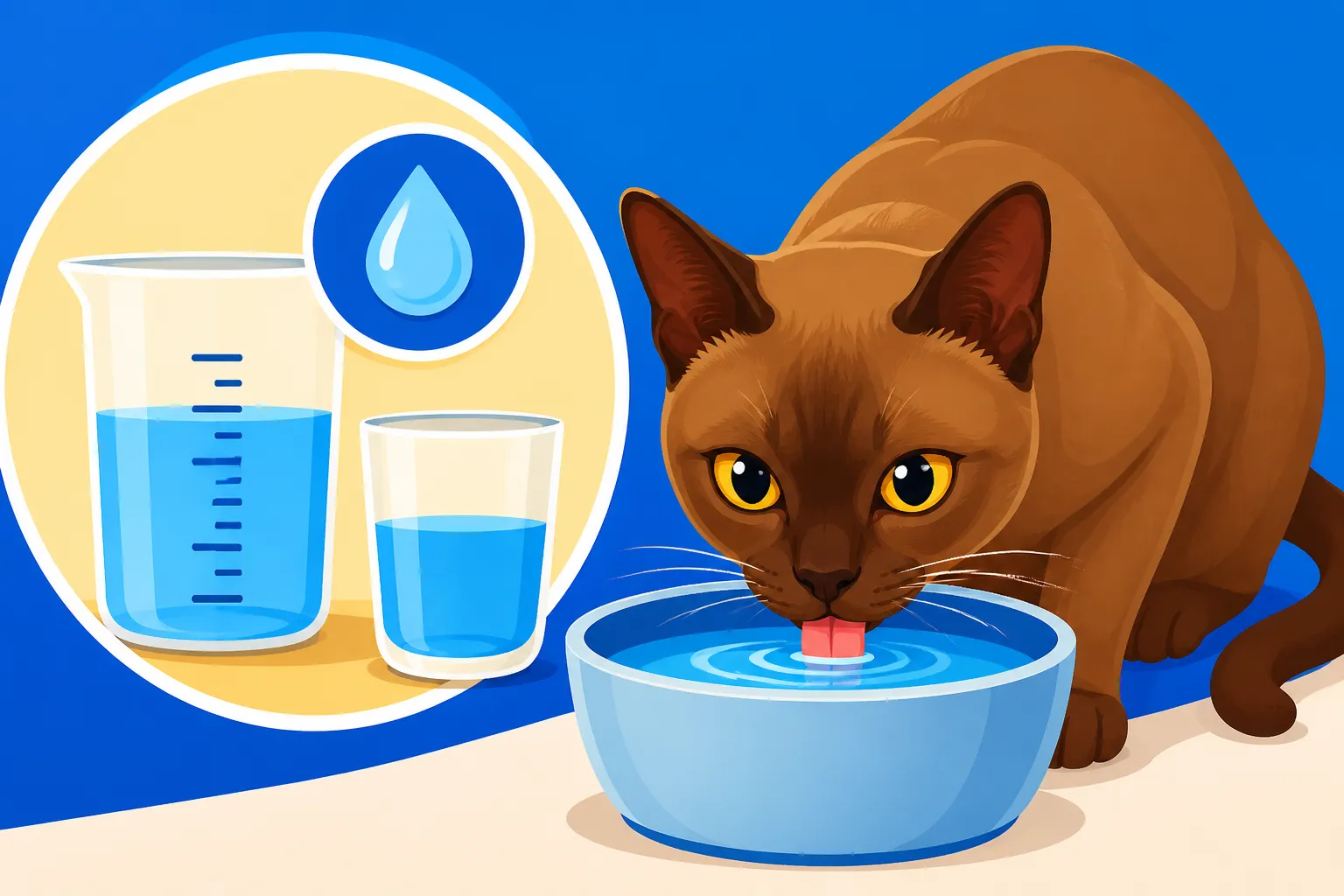
This method is arguably the most straightforward and requires minimal specialized equipment, making it an excellent starting point for any concerned Burmese owner. To implement it effectively, you'll need a dedicated water bowl for your Burmese – ideally one that's both easy to clean and designed to hold a measurable volume. Stainless steel or ceramic bowls are often preferred for hygiene and stability. At the beginning of your chosen 24-hour cycle (many owners find morning best for this), carefully fill the bowl with a precise, measured volume of fresh, clean water. Do not simply eyeball it; use a standard kitchen measuring cup for accurate volume. For instance, you might fill it with exactly 500ml of water.
Throughout the course of the day, as your Burmese drinks, the water level will naturally deplete. If, or when, you find it necessary to refill the bowl, make sure to accurately measure the exact amount of water you add. For example, if the bowl looks low in the afternoon and you pour in another 250ml, meticulously make a note of this additional amount. At the very end of your 24-hour tracking cycle, carefully measure the exact volume of water that remains in the bowl. To calculate the consumed amount, subtract the remaining water from the total volume you initially started with, plus any measured refills. So, if you began with 500ml, added 250ml later (totaling 750ml), and find 300ml remaining, your Burmese consumed 450ml of water. Consistency is paramount for reliable data; endeavor to use the identical bowl and the same measuring technique every single day.
To enhance the precision and potentially reduce mess with this method, consider leveraging a kitchen scale to measure the water by weight rather than volume. Since 1ml of water is approximately 1 gram, this offers a highly accurate alternative. Simply weigh the empty bowl, then weigh the bowl filled with water to determine the exact weight of the water added. Do the same at the end of the cycle. You can find robust, easy-to-clean stainless steel bowls, and accurate kitchen scales, readily available on popular online retailers such as Chewy or Amazon. Remember to account for a small degree of evaporation, particularly if you live in a dry climate or if the bowl is situated near a heat source. While no home method will be perfectly precise, over a consecutive period of several days, you will undoubtedly start to discern consistent and reliable patterns in your Burmese's drinking habits.
Using Water Fountains Effectively
Many Burmese cats are absolutely enchanted by the allure of flowing water. Their curious and playful nature often draws them to moving streams, making pet water fountains an incredibly effective tool for encouraging increased hydration. If you currently use a fountain, or are considering one, tracking their water intake can be a touch more complex than with a static bowl, but it is certainly not impossible. Begin by thoroughly cleaning and filling the fountain with a carefully measured amount of water, making a clear note of the total volume. Many modern fountains feature a clearly marked maximum fill line, which is extremely helpful for consistent measurements.
Similar to the static bowl method, you'll need to diligently monitor how frequently you need to top up the fountain and, crucially, by precisely how much water each time. The primary challenge with fountains, however, lies in accounting for evaporation, which can be significant due to the wider surface area and constant circulation of the water. To gain a more accurate understanding of consumed water versus evaporated water, you might consider running a "control" day. On this day, set up the fountain with a measured amount of water, but restrict your cat's access to it. After 24 hours, measure the remaining water to ascertain the amount lost purely to evaporation. You can then factor this average evaporation rate into your daily calculations when your Burmese is actively drinking. Alternatively, for a more direct approach, you could use a kitchen scale to weigh the entire fountain (including its water content) at both the start and the end of your 24-hour period. Subtracting the final weight from the initial weight will provide a fairly accurate reading of the consumed water, though you'd still need to estimate or adjust for the evaporation rate if you want extreme precision.
It's important to remember that while fountains are fantastic for encouraging drinking, they demand regular and thorough cleaning. This prevents the buildup of biofilm, slime, and other impurities that can make the water unappealing or even unhealthy for your cat. Regular cleaning also naturally resets your measurement period. Reputable brands like PetSafe or Catit, which are widely available on platforms such as Amazon or Chewy, offer a diverse range of fountain designs to suit different preferences. Don't forget to discreetly track any water your Burmese might consume from other unconventional sources, such as a standard backup bowl, a dripping bathroom faucet, or even a shower tray, if they are particularly adventurous or curious.
Incorporating Wet Food into the Equation
This is arguably where a truly holistic understanding of your Burmese's total water intake comes into play, because wet food is an absolutely massive source of hydration for felines. In fact, for a great many cats, the predominant portion of their daily water intake is derived directly from their diet, rather than from their water bowl alone. High-quality wet cat food is typically composed of a remarkable 70-80% water. This is precisely why a focus on Why Low Carbohydrate Food Matters for a Burmese – and wet food inherently aligns much better with these dietary needs than dry kibble – is so incredibly critical for our diabetes-prone Burmese companions.
To truly gain a comprehensive, holistic picture of your Burmese's total daily water intake, you absolutely must factor in the moisture they receive from their meals. Begin by carefully examining the “guaranteed analysis” section prominently displayed on your cat food packaging. This section will explicitly state the maximum moisture percentage contained within the food. For example, if a standard can of cat food lists 78% moisture and you feed your Burmese 100 grams of that particular food, then you can confidently calculate that your cat is directly receiving 78ml of water from that single meal. If you opt for fresh, high-moisture wet food options, you will quickly discover that this dietary source contributes a remarkably significant portion to their overall daily hydration.
Once you have calculated the moisture content from their meals, you then add this dietary moisture figure to the amount of water they have consumed directly from their bowl or fountain. This combined figure provides you with the most accurate and complete picture of their total daily water intake. It's often quite an enlightening experience to observe just how little water a Burmese on an exclusively wet food diet might drink directly from a bowl, especially when compared to a cat whose diet is predominantly dry kibble. This difference isn't necessarily a cause for alarm; rather, it simply indicates that your Burmese is efficiently obtaining their hydration from an excellent, species-appropriate source. This concept underlines why Why Wet Food Beats Kibble for a Burmese is not merely a preference for pickier eaters, but a fundamental decision that directly impacts their hydration and, by extension, their overall health, particularly in managing the risk of diabetes.
What to Do with the Data You Collect
Collecting data on your Burmese's water intake is only the first step. The real power lies in understanding what those numbers mean and how to act on them. This information, combined with your observations, forms a powerful tool for proactive health management.
Understanding Normal vs. Concerning Intake
Once you've diligently collected data for a solid few days, or ideally a full week, you'll successfully establish a personalized baseline for your individual Burmese. It's crucial to understand that there isn't a universally applicable "normal" amount of water that suits every single cat. Various factors play significant roles in determining their hydration needs, including their individual size, their general activity level, their specific diet (is it primarily wet food, dry kibble, or a mix?), and even the ambient temperature of your home. However, as a helpful general guideline for healthy adult cats, a range of 30-50ml of water per kilogram of body weight per day is often cited. So, if your beloved Burmese weighs in at a healthy 5kg (approximately 11 lbs), a typical total daily water intake would likely fall somewhere between 150ml to 250ml. This total must include all water derived from their food. If you're unsure about their ideal weight, checking What an Adult Burmese Should Weigh can help you accurately gauge the appropriate range for this calculation.
The most critical aspect of this entire tracking exercise is not to hit an arbitrary target number, but rather to identify a significant change from your specific cat's established normal baseline. For example, if your 5kg Burmese typically consumes around 200ml of total water per day, and suddenly you start observing consistent readings of 350ml or, even more dramatically, 400ml or more, that represents a substantial and concerning increase. Conversely, a sustained drop from their usual 200ml to consistently below 100ml, without any concurrent change in their diet (e.g., you haven't recently switched them from a dry food diet to an all-wet food diet), is equally a serious cause for concern. These observable deviations, whether they represent an upward surge or a downward dip, are the truly important indicators that demand your closer attention and prompt further investigation.
Make it a habit to keep a detailed log of your observations! A simple notebook dedicated to your cat's health, or even a spreadsheet on your computer, can work wonders in organizing this vital information. Meticulously record the date, the initial amount of water offered, the precise amount consumed from the bowl or fountain, the calculated amount of moisture received from their wet food, and finally, their grand total daily water intake. You can even add a small column for general notes about their behavior or urination frequency. Over time, this consistent record-keeping will empower you to effortlessly spot trends, both subtle and drastic, much more easily than if you were relying solely on memory or guesswork. This data is absolutely invaluable for pinpointing exactly when a change occurred and helps you make an informed decision about whether it’s time to schedule a visit with your veterinarian.
When to Consult Your Vet
As soon as you notice a consistent, undeniable, and unexplained change in your Burmese's water intake – whether it's a significant, sustained increase or a worrisome decrease – it is absolutely imperative that you pick up the phone and call your veterinarian immediately. Do not hesitate, and do not wait for other, more severe symptoms to manifest. When dealing with stealthy conditions like diabetes or chronic kidney disease, which can often progress silently and insidiously, early intervention is always, without exception, your best course of action. You possess a distinct advantage by having actual, quantifiable data, so be fully prepared to share your meticulously kept tracking log with them during the consultation. This objective information will be incredibly helpful to your vet. How a Vet Confirms Diabetes in a Burmese often starts with owner observations.
Your veterinarian will almost certainly inquire about other observable symptoms: have there been any changes in their appetite, their urination frequency or volume (you might notice a fuller litter box), any unexplained weight loss, new instances of lethargy, or indeed any other shifts in their typical behavior? They will likely recommend a series of diagnostic blood tests to thoroughly check kidney function, precise blood glucose levels, and potentially thyroid hormone levels, among other critical markers. A comprehensive urinalysis will also be absolutely crucial for assessing kidney function, ruling out urinary tract infections, and checking for other abnormalities. Remember, this approach isn't about being an alarmist or overreacting; it's about being a responsible, highly proactive pet parent who understands the importance of early detection. For instance, What a Fructosamine Test Shows in a Burmese is a key diagnostic tool vets use for this breed.
It is paramount that you never attempt to self-diagnose your Burmese based solely on your home readings. While an increased thirst is indeed a classic and prominent sign of diabetes, it is also a symptom associated with numerous other underlying medical conditions, some of which are equally serious. Only a qualified and experienced veterinarian possesses the expertise and tools necessary to properly diagnose the root cause through a comprehensive physical examination and appropriate diagnostic testing. Your diligently collected data simply provides them with a critical and invaluable piece of the puzzle, allowing them to hone in on potential issues much faster and more efficiently, ultimately leading to a more accurate diagnosis and a quicker path to treatment.
Adjusting Environment and Diet to Encourage Hydration
If your diligent tracking reveals that your Burmese is not drinking a sufficient amount of water, there are several highly effective steps you can take to actively encourage better hydration. These actions can often be initiated even before a veterinary visit, assuming your cat isn't exhibiting severe signs of acute dehydration (in which case, an emergency vet visit is paramount!). The simplest and most fundamental step is to ensure that fresh, clean water is perpetually available in multiple, easily accessible locations throughout your home. Cats can be notoriously particular about their water sources; some may prefer wide, shallow ceramic bowls, others might favor glass, and some might even have specific preferences regarding the depth or size of the bowl. Experiment with various options to discover what truly appeals most to your individual Burmese. For an older Burmese, ensure water bowls are easily accessible without requiring them to jump or climb, especially if they are starting to show subtle signs of How Arthritis Shows in a Burmese That Still Plays.
One of the most impactful and effective strategies to significantly boost a cat's overall moisture intake is to transition them, either partially or entirely, to an all-wet food diet. As we’ve thoroughly discussed, wet food inherently contains a very high percentage of water, directly contributing to their hydration without them needing to actively drink extra from a bowl. For Burmese cats who are genetically predisposed to diabetes, a diet consisting of low-carbohydrate, high-protein wet food is frequently recommended by veterinarians and can truly make a monumental difference in their long-term health and wellbeing. Indeed, considering Which Diet Puts a Burmese Into Remission frequently highlights the critical role of a moisture-rich diet. This dietary shift goes hand-in-hand with Why Portion Control Is Medical Care in a Burmese to manage their metabolic health.
Consider investing in a high-quality pet water fountain if you don't already own one. The gentle movement, aeration, and constant flow of water can make it significantly more appealing and enticing to many cats, stimulating them to drink more frequently. As an additional enticement, you can try adding a very small splash of unsalted tuna juice (from tuna packed in water, not oil!) or a low-sodium chicken or beef broth to their water bowl. Just a tiny amount can often be sufficient to pique their interest and encourage more enthusiastic drinking. These simple environmental and dietary adjustments can go a long way in promoting optimal hydration for your cherished Burmese.
Daily Water Intake Tracking Log
| Date | Start Water (ml) | Refills (ml) | End Water (ml) | Bowl/Fountain Intake (ml) | Wet Food Moisture (ml) | Total Daily Intake (ml) | Notes (Behavior, Urination) |
|---|---|---|---|---|---|---|---|
| 2024-01-01 | 500 | 0 | 300 | 200 | 150 | 350 | Normal activity, playful |
| 2024-01-02 | 500 | 200 | 250 | 450 | 150 | 600 | Seems more thirsty, active |
| 2024-01-03 | 500 | 300 | 150 | 650 | 150 | 800 | Drinking a lot, frequent urination, slightly subdued |
| 2024-01-04 | 500 | 250 | 200 | 550 | 150 | 700 | Still very thirsty, vet appt booked |
| 2024-01-05 | 500 | 0 | 320 | 180 | 150 | 330 | Back to normal, vet check confirmed no immediate issue (false alarm or minor bug) |
| 2024-01-06 | 500 | 0 | 310 | 190 | 150 | 340 | Normal, playing with toys |
| 2024-01-07 | 500 | 100 | 290 | 310 | 150 | 460 | Slightly higher intake, perhaps due to warmer day |
Disclaimer
This article is for general informational purposes only and does not constitute professional advice. Laws, prices and regulations vary by location and change over time. Consult a qualified professional for guidance on your specific situation.