Why Low Carbohydrate Food Matters for a Burmese
It’s a common scenario for many cat parents: you want the absolute best for your furry family member, but the sheer volume of cat food options and conflicting dietary advice can feel overwhelming. For those of us blessed with the affectionate and vibrant personality of a Burmese cat, this struggle is even more pronounced because their unique genetics mean that the seemingly simple choice of what to put in their bowl is, in fact, a crucial medical decision. This guide will delve deep into why a low-carbohydrate diet isn't just a suggestion for your Burmese, but a fundamental pillar of their health and well-being.
The Burmese Cat's Unique Metabolism and Diabetes Risk
Anyone who has ever lived with a Burmese knows they're special. From their captivating eyes to their demanding cuddles, they truly steal your heart. But beneath that sleek, satin coat lies a metabolic system that requires specific consideration, especially when it comes to diet.
A Genetic Predisposition to Diabetes
It's a stark reality that sets the Burmese apart from many other breeds: they carry a significant genetic predisposition to developing diabetes mellitus. We're not talking about a slight increase in risk; studies have consistently shown that the Burmese has the highest diabetes rate of any cat breed. This isn't just bad luck; it's rooted in their unique genetic makeup. Their bodies process carbohydrates differently, making them incredibly sensitive to the sugar and starch found in many commercial cat foods. This inherited susceptibility means that while any cat can develop diabetes, your Burmese faces an uphill battle if their diet isn't carefully managed. Understanding this underlying vulnerability is the first step in providing them with the best possible care, and it emphasizes why specific dietary choices are paramount. For a deeper dive into this, you might want to read more on why a Burmese is four times more likely to become diabetic.
Carbohydrates and Feline Biology
Cats, regardless of breed, are obligate carnivores. This isn't just a fancy term; it defines their entire digestive system and nutritional requirements. In the wild, their diet consists almost exclusively of protein and fat from prey animals, with very minimal carbohydrates (primarily from the stomach contents of their prey, which is negligible). Their bodies are simply not designed to efficiently process or utilize large amounts of carbohydrates. When a cat consumes a high-carb diet, their pancreas is constantly working overtime to produce insulin to manage blood sugar spikes. Over time, this chronic overstimulation can lead to the exhaustion of the insulin-producing cells and the development of insulin resistance, setting the stage for full-blown diabetes. For a Burmese, whose system is already more prone to this metabolic stress, a high-carb diet acts like pouring fuel on a fire.
The Dangers of High-Carbohydrate Diets for Burmese Cats
The impact of a high-carbohydrate diet on a Burmese cat goes far beyond just a few extra pounds. It's a pathway to serious, life-altering health conditions that can significantly reduce their quality of life and shorten their lifespan.
The Silent Threat of Weight Gain
One of the most immediate and visible consequences of a high-carb diet is weight gain. While a pudgy cat might seem endearing, for a Burmese, it's a critical red flag. Carbohydrates, when consumed in excess, are stored as fat, contributing to obesity. The challenge with Burmese cats is that they are naturally quite muscular, often described as "a brick wrapped in silk." This dense musculature can sometimes mask early signs of weight gain, making it harder for owners to spot a problem until it's more advanced. However, even a moderate increase in weight can drastically increase their diabetes risk. We're talking about a significant correlation here; studies indicate that even a small amount of extra weight can dramatically elevate a Burmese's predisposition. For example, if you're wondering how much weight raises a Burmese's diabetes risk, even a kilogram or two above their ideal healthy weight can tip the scales into the danger zone. Regular weighing and body condition scoring are vital tools in prevention.
Pancreatic Strain and Insulin Resistance
Every time your Burmese eats a meal rich in carbohydrates, their body has to release insulin to process the glucose (sugar) that enters their bloodstream. In a high-carb diet, this becomes a constant cycle of high glucose and high insulin demands. For a cat whose pancreas is already genetically predisposed to struggle, this is an immense strain. Imagine asking a marathon runner to sprint constantly – eventually, they'll wear out. Similarly, the pancreatic cells responsible for insulin production can become exhausted and damaged. This leads to insulin resistance, where the body's cells stop responding effectively to insulin, leaving glucose circulating in the blood at dangerously high levels. This is exactly what we see in Type 2 diabetes, and it's a condition that can be directly exacerbated, and often triggered, by an inappropriate diet for a Burmese. This chronic strain is why feeding a Burmese is a medical decision, not a preference.
What Constitutes a Low-Carbohydrate Diet for a Burmese
Understanding the problem is one thing, but knowing how to implement the solution is key. A low-carbohydrate diet for your Burmese isn't about deprivation; it's about feeding them food that aligns with their biological needs and helps safeguard their health.
Prioritizing Protein and Fat
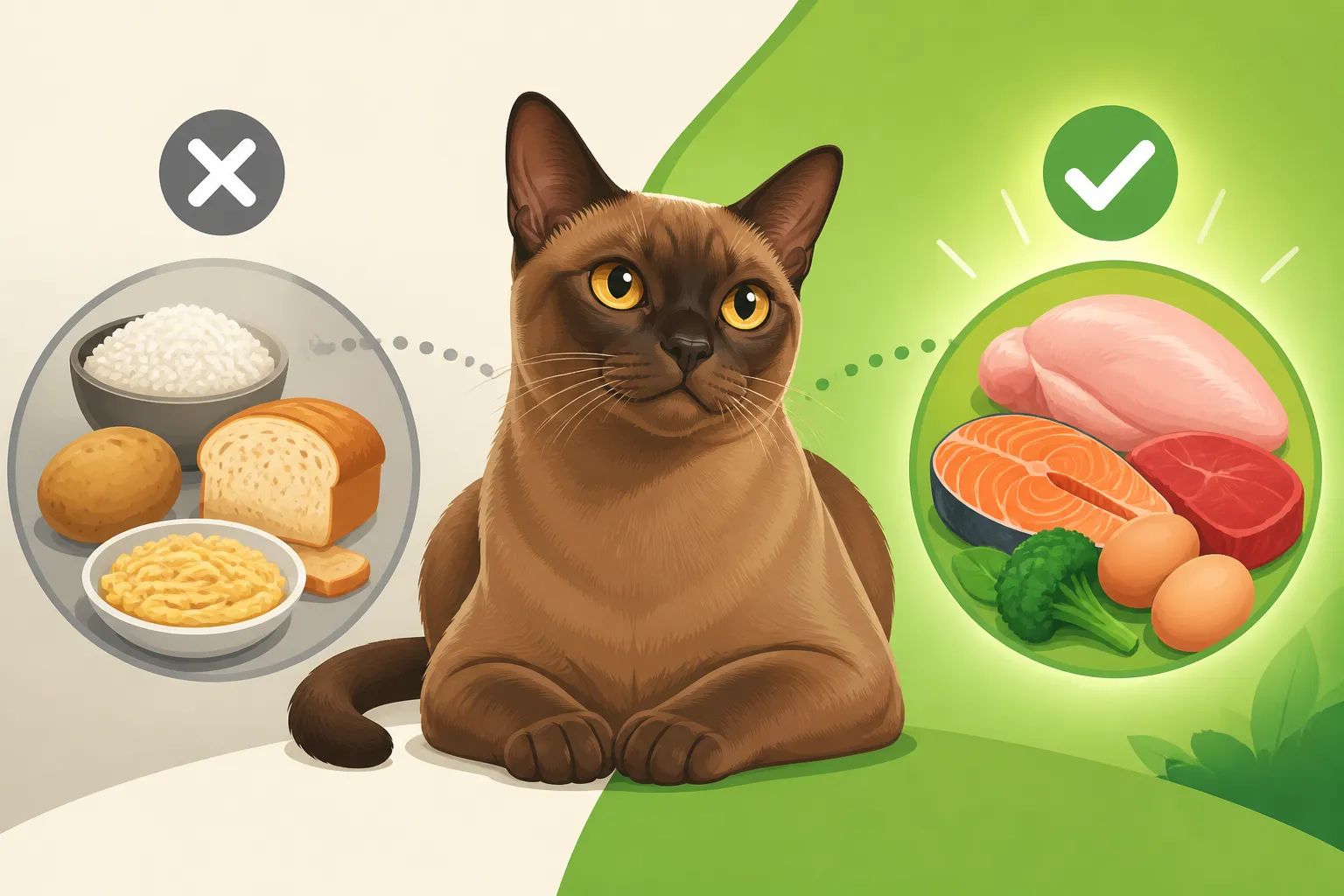
The cornerstone of a healthy Burmese diet is high-quality animal-based protein and moderate healthy fats. This mimics their natural ancestral diet and provides the essential nutrients their carnivorous bodies thrive on. Look for foods where meat is the primary ingredient, not grain fillers or vegetable proteins. The goal is to keep carbohydrates well under 10% on a dry matter basis, and ideally even lower, around 2-5%. This usually means opting for wet food over dry kibble, as kibble often contains significant amounts of starch to hold its shape. Many veterinarians and feline nutritionists recommend completely eliminating dry food for diabetes-prone breeds like the Burmese. Protein fuels their strong muscles and overall vitality, while fat provides a dense source of energy without spiking blood sugar. If you're looking for guidance, what a Burmese kitten should eat also emphasizes high protein and low carbs from the start.
Navigating Food Labels and Ingredients
Reading cat food labels can feel like deciphering a cryptic code, but it's a vital skill for a Burmese owner. Don't be fooled by marketing claims like "grain-free" or "natural" – these don't automatically mean low-carb. Many grain-free foods replace grains with other high-starch ingredients like potatoes, peas, or tapioca, which are just as problematic for a Burmese. You need to look at the guaranteed analysis, often found on the back of the package. It lists crude protein, crude fat, crude fiber, and moisture. The carbohydrate content isn't usually listed directly, so you'll have to do a little math: 100% – (protein + fat + fiber + moisture + ash) = carbohydrates. Aim for that final carbohydrate percentage to be as low as possible. Prioritize whole meat ingredients and avoid anything with corn, wheat, soy, rice, potatoes, or excessive fruit and vegetable matter. Reputable brands that focus on species-appropriate diets will often provide clear nutritional breakdowns.
Implementing a Low-Carb Diet for Your Burmese
Transitioning your Burmese to a new diet requires patience and a strategic approach. Cats, by nature, can be finicky eaters, and a sudden change can lead to refusal or digestive upset.
Transitioning Your Cat Safely
Sudden dietary changes can cause digestive upset, leading to vomiting or diarrhea, and sometimes even a food aversion. The key is a slow, gradual transition over several weeks. Start by mixing a tiny amount of the new low-carb food with their current food, gradually increasing the proportion of the new food while decreasing the old. Monitor their litter box habits and appetite closely. If they show any signs of digestive distress, slow down the transition even further. For particularly fussy eaters, you might need to try different textures or flavors of low-carb wet food. Sometimes warming the new food slightly can make it more appealing. Remember, consistency is key, and while it might take time, the health benefits for your Burmese are immeasurable. You can also explore how to change a Burmese's food without it refusing.
Portion Control and Meal Timing
Beyond what you feed, how much and when you feed your Burmese are equally critical, especially with their diabetes risk. Free-feeding, where food is left out all day, is a definite no-go for a Burmese; why a Burmese should never be free fed is a crucial lesson. It encourages overeating and constant blood sugar fluctuations. Instead, aim for two to three weighed, portion-controlled meals per day. Use a digital kitchen scale to accurately measure each meal; relying on scoops can be inaccurate and lead to overfeeding. Establishing a consistent feeding schedule helps regulate their metabolism and aids in preventing excessive weight gain. If your Burmese is already diabetic and on insulin, strict meal timing around injections becomes even more critical for managing blood glucose levels, so understanding how to feed a Burmese on insulin around its injections is vital.
| Diet Characteristic | High-Carbohydrate Diet | Low-Carbohydrate Diet (Burmese Ideal) |
|---|---|---|
| Primary Ingredients | Grains (corn, wheat, rice), potatoes, peas, plant proteins | High-quality animal protein (meat, poultry, fish) |
| Carbohydrate Content | Typically 25-50%+ (dry matter basis) | Ideally <10%, often 2-5% (dry matter basis) |
| Impact on Pancreas | High strain, constant insulin spikes | Reduced strain, stable blood sugar |
| Weight Management | Contributes to weight gain, obesity risk | Supports healthy weight, lean muscle mass |
| Diabetes Risk | Significantly increases risk | Dramatically lowers risk, aids management |
| Energy Source | Primarily carbohydrates | Primarily protein and fat |
| Typical Format | Often dry kibble | Primarily wet food, some specialized raw/fresh |
| Long-term Health | Higher risk of chronic metabolic diseases | Supports longevity and disease prevention |
The Lifelong Benefits of a Low-Carbohydrate Diet
Adopting a low-carbohydrate diet for your Burmese isn't just a temporary fix; it's a long-term commitment that offers profound benefits, safeguarding their health for years to come.
Preventing and Managing Diabetes
The most significant benefit of a low-carbohydrate diet for a Burmese is its powerful role in both preventing the onset of diabetes and effectively managing it if your cat has already been diagnosed. By minimizing the glycemic load (the impact food has on blood sugar), you significantly reduce the strain on your Burmese's pancreas. This can mean avoiding diabetes entirely for many at-risk cats. For those already diagnosed, a low-carb diet is often the cornerstone of their treatment, helping to stabilize blood glucose levels and reduce the need for insulin. In some remarkable cases, especially with early diagnosis and strict dietary adherence, cats can even achieve diabetic remission, meaning they no longer require insulin injections. Knowing how a Burmese goes into diabetic remission offers immense hope and underscores the power of diet. This proactive approach can literally add years to their life and greatly improve their daily comfort.
Sustaining Overall Health and Vitality
The benefits of a species-appropriate, low-carbohydrate diet extend far beyond diabetes prevention. Because it aligns with their natural physiological needs, it contributes to overall robust health and vitality. You'll likely notice a healthier, shinier coat, more consistent energy levels, and better muscle tone. Digestive issues might resolve, and many owners report that their Burmese seems more content and active. A proper diet also supports their immune system, leading to better resilience against other common feline ailments. Considering that caring for a Burmese past twelve requires extra attention to their health, establishing excellent dietary habits early on provides a solid foundation for their senior years. While proactive care can help, sometimes unexpected health issues arise, and that's when having a reliable pet insurance provider like Healthy Paws can provide peace of mind, helping to cover costs for potential future veterinary care.
Disclaimer
This guide offers general information and recommendations regarding the care and nutrition of Burmese cats. It is not a substitute for professional veterinary advice. Always consult with a qualified veterinarian regarding your cat's specific health concerns, dietary needs, and before making any significant changes to their diet or health regimen.