Where a Burmese Sleeps When the House Is Warm
Many Burmese owners find themselves turning up the thermostat, only to wonder why their heat-seeking feline isn't always found draped across the warmest radiator. Even in a comfortably warm home, these wonderfully affectionate cats have distinct preferences for where they choose to snooze. This guide will explore the fascinating blend of instinct, comfort, and social connection that dictates a Burmese's favorite warm-weather sleep spots, helping you ensure their ultimate contentment.
The Enduring Quest for Warmth: Why a Burmese Still Seeks Heat
Even when your house is perfectly cozy, a Burmese cat’s inherent drive to find warm spots remains strong. It’s not just about warding off a chill; it's about optimizing their comfort and well-being. This behavior is deeply rooted in their physical characteristics and evolutionary history.
The Thinness of the Satin Coat
One of the most distinguishing features of a Burmese is its incredibly short, fine "satin coat." Unlike many other cat breeds that possess a dense, insulating undercoat, the Burmese has very little to no undercoat. This sleek, close-lying fur feels wonderful to touch, almost like polished silk, but it offers less natural insulation than a fluffier coat. This means that even in a house that feels warm to you, your Burmese might still perceive subtle temperature differences more acutely.
Consider a sunny afternoon: a tile floor that feels cool to your bare feet might feel chilly to your Burmese after a long nap, especially if there's a slight draft. They are connoisseurs of microclimates within your home. While you might keep your thermostat at a consistent temperature, factors like sunshine through a window, a tucked-away corner, or even the slight warmth radiating from a piece of furniture can create a mini-environment that offers a few extra degrees of comfort. This isn't about being cold, per se, but about achieving that perfect thermal equilibrium where they can fully relax without their body needing to expend any energy on temperature regulation. This inherent preference for warmth is why you'll often see Why a Short Coated Burmese Seeks Body Heat regardless of the season, consistently searching out that ideal cozy spot.
The Instinct to Conserve Energy
Cats are naturally efficient creatures, and every bit of energy conserved is a biological win. When a Burmese chooses a warm spot for sleeping, it's not merely a preference; it's an instinctual behavior aimed at minimizing the energy their body needs to spend on thermoregulation. If their body doesn't have to work to stay warm, it can dedicate those resources to other essential processes like digestion, immune function, or simply deeper, more restorative sleep.
This drive is subtle but powerful. Even if the house is a comfortable 72 degrees Fahrenheit, a spot bathed in residual warmth from a recently active appliance, a sunbeam, or simply the warmth from a human body provides a slight advantage. This allows them to enter a state of complete relaxation, where every muscle can truly unwind. It's a testament to their innate wisdom and their ability to find the easiest path to ultimate comfort. For a Burmese, a warm sleeping spot isn’t a luxury; it's a strategic choice for optimal rest and energy conservation. It's why Why a Burmese Sleeps on the Radiator isn't just a winter phenomenon, but often sought out even when ambient temperatures are moderate, for that extra boost of warmth.
Social Snoozing: Proximity to Their People (and Other Pets)
The Burmese isn't just a physical heat-seeker; they are also deeply social creatures, often dubbed "Velcro cats" due to their intense attachment to their human companions. This profound need for connection plays a significant role in where they choose to sleep, even in a warm home.
The Velcro Cat Phenomenon
If you own a Burmese, you know they thrive on physical closeness. This isn't just limited to demanding pets or following you from room to room; it extends directly to their sleeping habits. For a Burmese, the warmest, most comfortable spot in the house is very often right next to – or on top of – their favorite human. Your body heat, combined with the reassuring scent and presence, creates an irresistible magnet.
You might find your Burmese nestled firmly in your lap while you read, curled up against your side on the sofa, or even burrowing deep Why a Burmese Gets Under the Duvet with you at night. This behavior persists even when the room is warm because it satisfies both their need for warmth and their intense desire for social interaction and security. It's a tangible expression of their affection and trust. They prioritize being close to you above almost any other factor. Indeed, it's a known fact that Why a Burmese Cares Less About the House Than the People; their loyalty and comfort are deeply intertwined with human presence.
Cuddling with Cohorts
For households with multiple cats, or a Burmese sharing a home with other compatible pets, co-sleeping is incredibly common and cherished. Even in a warm house, you’ll frequently find a pile of Burmese cats (or a Burmese snuggled with a dog) creating a furry, purring heap. This communal sleeping arrangement offers a powerful combination of shared body heat and profound social bonding.
When multiple cats cuddle, they create a small, localized zone of warmth that is often even cozier than the ambient room temperature. This huddling instinct provides security and reinforces their social structure. Why a Burmese Sleeps Against Another Cat is a testament to their sociable nature, and it’s a beautiful sight to behold. They might be draped over each other in a sunny spot on the floor, or all crammed into a single, surprisingly small cat bed. To accommodate this, consider larger, plush beds or multi-level cat trees with ample platforms for shared snoozing, which you can often find on Chewy or Amazon. These platforms give them options for both solitary elevated napping and communal piles, catering to their diverse needs.
Favorite Spots: The Warm House Edition
Beyond their inherent drive for warmth and their social inclinations, the physical environment of your warm home still offers specific spots that cater to a Burmese's unique comfort profile.
Elevated and Enclosed Havens
Even when the house is warm, a Burmese often gravitates towards elevated positions. There's a simple scientific reason for this: heat rises. Therefore, a perch on top of a tall cat tree, a bookshelf, or even a high shelf can offer a slightly warmer, more stable ambient temperature than the floor below. This height also provides them with a secure vantage point, allowing them to survey their domain and feel safe from perceived threats (even if those threats are just curious toddlers or rambunctious dogs).
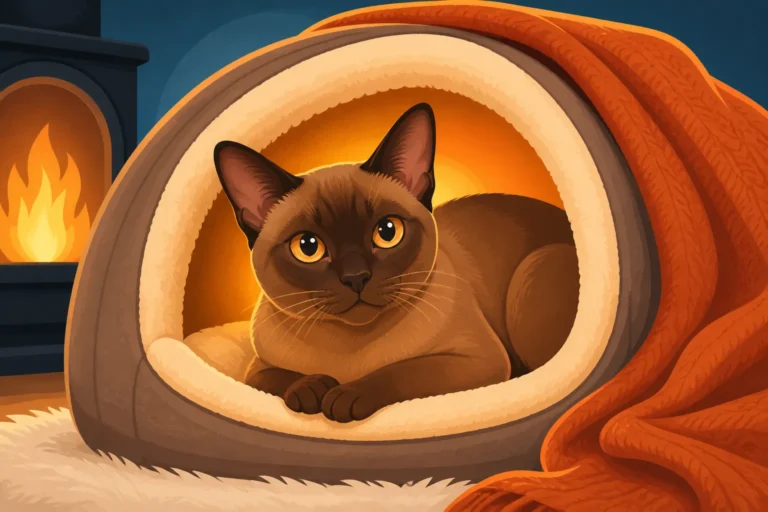
Coupled with elevation, enclosed spaces provide an added layer of comfort and security. Think about an igloo-style cat bed, a cozy cave within a cat tree, or even a simple cardboard box. These spaces trap a bit of their body heat, creating a snug cocoon that appeals to their desire for security and warmth. It’s like having their own private den where they can truly relax without feeling exposed. Placing such structures in a quiet corner of a bustling room or near a window can give them the best of both worlds: inclusion in family life and a private retreat. High-quality cat trees with enclosed sections are readily available on sites like Chewy or Amazon, offering sturdy options that stand up to the Burmese's muscular build and enthusiastic climbing.
Sunbeams and Warm Surfaces
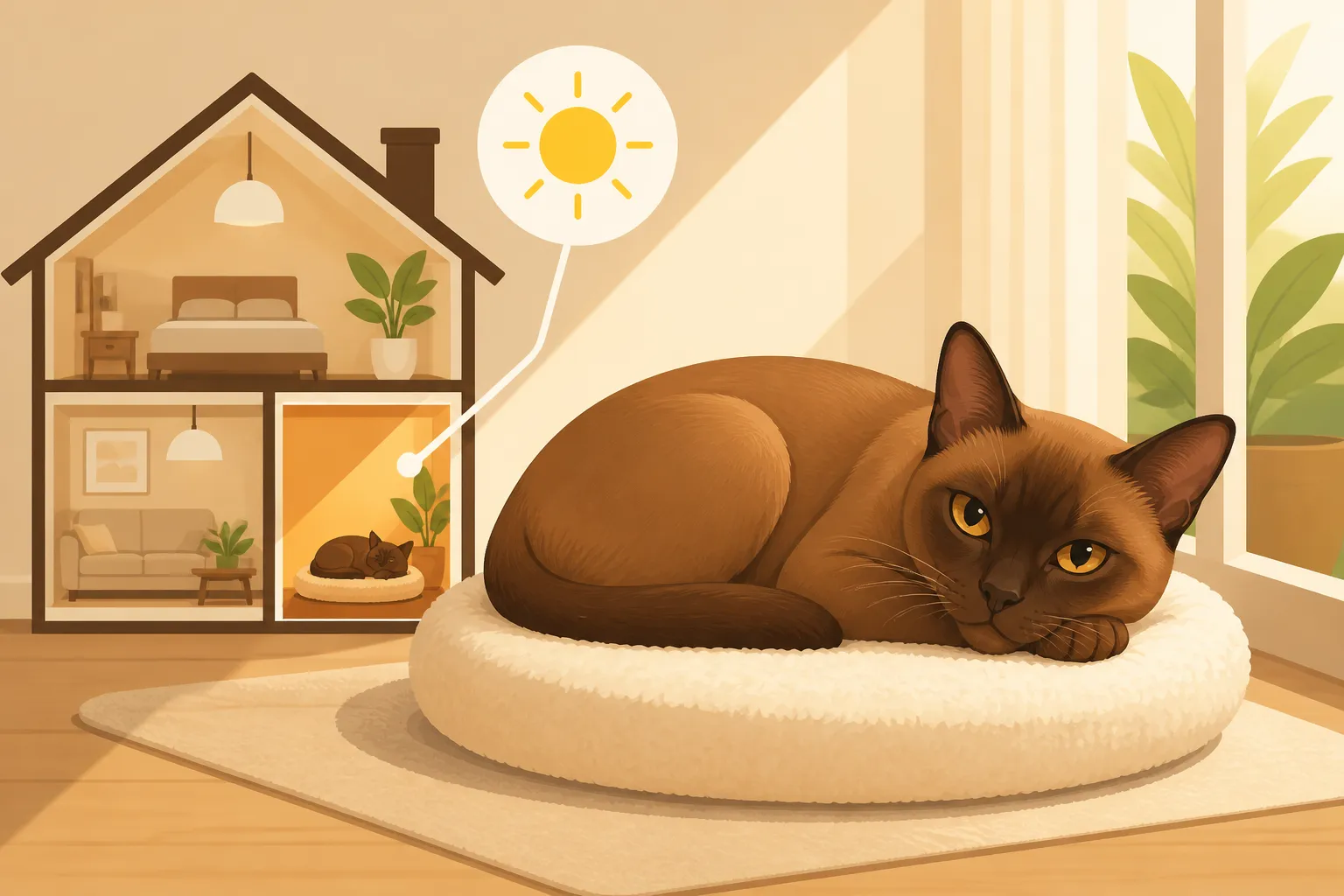
No matter how warm your house is, the allure of a direct sunbeam is almost universally irresistible to a Burmese. These cats will famously follow the sun's path across the floor, relocating their nap spot multiple times throughout the day to maximize their sun exposure. The intense, natural radiant heat from a sunbeam provides a level of warmth and comfort that even the most efficiently heated home cannot quite replicate. It’s their equivalent of a spa treatment.
Beyond sunbeams, any surface that retains or generates a bit of warmth becomes a prime sleeping candidate. This could be a soft blanket fresh out of the dryer, a rug over a radiant floor heating system, or even the top of a warm cable box (though, for safety and device longevity, it's always best to gently redirect them from electronics). The instinct to find and utilize these passive heat sources is strong. This is one of the ways Where a Burmese Sleeps to Stay Warm often involves exploiting environmental warmth.
To enhance their comfort in these favored spots, you can strategically place plush blankets or dedicated cat beds. Look for self-warming pet beds online; these often contain reflective layers that bounce back a cat's own body heat without needing electricity, providing a consistent, gentle warmth that’s safe and appealing.
The Human Bed: A Perennial Favorite
Regardless of how warm your house is or how many dedicated cat beds you provide, your bed remains a consistently high-ranking favorite for many Burmese. It’s a confluence of all their preferred factors: the incredible softness of your blankets and pillows, the lingering scent of their beloved human, and the undeniable potential for shared body warmth. Many Burmese will happily curl up at your feet, by your side, or even burrow deep under the covers, making themselves an integral part of your nighttime routine. This strong preference is why the topic of Why a Burmese Will Not Sleep Anywhere but Your Bed resonates with so many owners.
For most Burmese owners, sharing the bed is simply part of the joyful experience of having such an affectionate cat. To make it comfortable for both of you, ensure your cat's claws are regularly trimmed (an easy task when they're purring on your lap!) and that your bedding can withstand a bit of enthusiastic kneading. If you prefer to have your own space, creating an equally appealing, warm, and soft alternative right next to your bed can sometimes work. A luxurious cat bed on a nightstand, or a specifically designed heated pet mat (always ensuring it's set to a low, safe temperature), might offer enough proximity and comfort to satisfy their need for connection without them fully invading your sleep space. When considering specialized bedding, research thoroughly Whether a Burmese Needs a Heated Bed to ensure it’s safe and suitable for your individual cat.
Tailoring Comfort for Every Stage
A Burmese cat's comfort needs aren't static; they evolve throughout their life. Even in a consistently warm house, recognizing these changes is key to providing optimal care, especially as they age or if they face health challenges.
Adjusting for Senior Burmese
As our cherished Burmese friends grow older, their physiology changes, and their ability to regulate body temperature can diminish. This means that a house temperature that felt perfectly warm to them in their prime might start to feel a bit too cool as they enter their senior years. Their energy levels often decrease, too, making them less inclined to move around to find the "best" warm spot, and they might spend more time resting.
For a senior Burmese, consistent and easily accessible warmth becomes paramount. This could involve placing a soft, well-padded bed with a self-warming insert in their favorite, quiet, and draft-free corner. Arthritis, a common condition in older cats, can make jumping and climbing painful. Therefore, ensuring their preferred sleeping spots are at ground level or easily accessible via ramps or low steps is vital. Caring for a Burmese Past Twelve often means making these thoughtful adjustments to their environment.
Creating a "senior station" – a designated warm, soft area complete with their food, water, and perhaps a low-entry litter box – can significantly improve their quality of life. This minimizes the physical exertion needed to access necessities and maximizes their comfort. Regular body condition scoring, as described in How to Weigh a Burmese Accurately at Home, becomes even more important in senior cats to ensure they maintain healthy muscle mass and body fat, which are crucial for internal warmth and overall vitality.
Addressing Health Considerations
Certain health conditions can profoundly impact a Burmese's temperature regulation and overall comfort needs, even in an otherwise warm home. For example, a Burmese managing diabetes might experience changes in circulation or overall energy, making consistent warmth not just desirable but medically beneficial for their well-being. Their body might be expending more energy managing glucose levels, leaving fewer resources for maintaining optimal body temperature.
If your Burmese is living with a chronic health condition, it's always best to discuss their specific comfort requirements with your veterinarian. They might recommend particular types of bedding, environmental modifications, or even specific temperatures for their resting areas. Subtle behavioral changes, such as your cat seeking out excessive heat even in a very warm room, could sometimes be an indicator of an underlying health issue. For instance, increased lethargy or seeking warmth are among the signs noted in What Diabetes Looks Like in a Burmese.
Ensuring that all bedding is easily cleanable is another practical consideration, especially if your cat experiences incontinence or other issues related to age or illness. Many excellent waterproof and machine-washable pet beds are widely available. These options simplify care while ensuring your beloved Burmese remains comfortable and hygienic throughout their impressive The Sixteen to Eighteen Years a Well Bred Burmese Gets.
Comparing Popular Warm Sleeping Spots for Your Burmese
| Sleeping Spot | Warmth Factor | Social Factor | Accessibility Factor | Notes |
|---|---|---|---|---|
| Human Lap/Body | High (direct body heat) | Very High (ultimate connection) | Variable (depends on human availability) | The ultimate comfort zone for a "Velcro cat." Often chosen even if other warm spots are available. Can be disruptive to human activities. |
| Under the Duvet | Very High (trapped body heat) | High (close proximity, shared space) | High (if allowed, easy to burrow) | Excellent for deep, undisturbed sleep. Can get quite warm, ensuring maximum heat. Why a Burmese Gets Under the Duvet highlights their strong preference for this. |
| Cat Tree/Elevated Perch | Moderate (heat rises, potential sunbeam) | Variable (depends on placement/shared platform) | Moderate (requires jumping/climbing) | Offers a sense of security and a slight thermal advantage from rising heat. Often chosen for observation and quiet naps. Consider sturdy options from Chewy. |
| Direct Sunbeam | Very High (intense radiant heat) | Low (often solitary activity) | High (if sun is available, easy to relocate) | An irresistible draw. Burmese will follow sunbeams across the floor. Can sometimes lead to overheating if they don't move. Provide soft mats for comfort. |
| Heated/Self-Warming Bed | High (targeted heat, consistent) | Low (usually solitary) | High (can be placed anywhere) | A great alternative for consistent warmth without human presence. Whether a Burmese Needs a Heated Bed often depends on individual preference and household temperature. Check safety features. |
| Cuddled with Another Pet | High (shared body heat) | Very High (social bonding) | High (if compatible pets are present) | A fantastic solution for social cats. Provides warmth and security. Ensure sufficient space if providing a shared bed. Why a Burmese Sleeps Against Another Cat is a common sight. |
| Quiet, Enclosed Space | Moderate (trapped ambient heat) | Low (solitary retreat) | High (can be a box, carrier, cat cave) | Offers security and a slightly warmer microclimate. Good for cats who need undisturbed rest. |
Conclusion: Understanding Your Burmese's Warmth Wisdom
It's clear that even when your house is comfortably warm, a Burmese cat's instinctual drive for warmth and connection doesn't simply disappear. They're not just looking for "warm"; they're looking for optimal warmth, coupled with security, comfort, and often, the reassuring presence of their people or other beloved pets.
By understanding their preferences – from their short, satin coats that appreciate a little extra heat to their deep-seated desire to be near you – you can better anticipate their needs and create a home environment that keeps your Burmese happy and well-rested. Whether it's a spot on your lap, a sun-drenched window sill, or a cozy bed sourced from retailers like Amazon, observing your cat's chosen snooze spots will tell you a lot about what truly makes them feel at home and perfectly content. Recognizing these nuanced preferences contributes significantly to their overall well-being throughout their life, ensuring they thrive and feel cherished every day.
Disclaimer
This article is for general informational purposes only and does not constitute professional advice. Laws, prices and regulations vary by location and change over time. Consult a qualified professional for guidance on your specific situation.