Why the Founding Burmese Produced Two Breeds
Have you ever wondered how some of our beloved cat breeds came to be, especially those with such distinctive looks and personalities? The story of the Burmese cat, in particular, is a fascinating journey that started with one special feline, Wong Mau, who didn't just give us one beautiful breed, but actually laid the genetic groundwork for two. This guide will take you through the incredible genetic discovery that unfolded from her unique appearance, forever shaping the cat fancy.
The Enigmatic Arrival of Wong Mau and the Early Puzzles
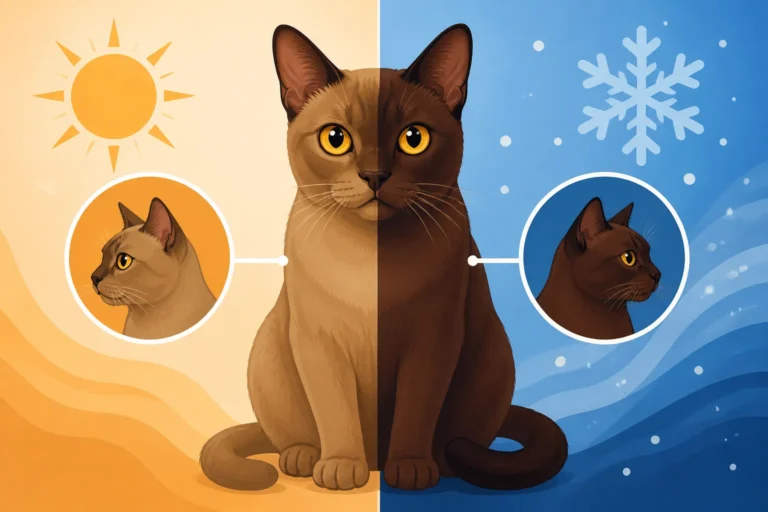
Imagine a time, back in the 1930s, when a mysterious little cat arrived in the bustling port of San Francisco from Burma (now Myanmar). This was Wong Mau, a feline whose appearance was unlike anything American cat fanciers had truly categorized before. She wasn't a sleek, pointed Siamese, nor was she a plain, solid brown cat. She possessed an intriguing blend of traits, a warm, rich brown coat that was darker at her points – her face, ears, legs, and tail – but lighter than a Siamese body. This intermediate coloring sparked immediate curiosity and a good deal of head-scratching.
Breeders and enthusiasts at the time were accustomed to more defined categories. A Siamese was known for its distinct color points and pale body, while solid-colored cats had uniform pigmentation all over. Wong Mau, with her "walnut brown" coat and gold eyes, defied easy classification. Some initially thought she was simply a dark Siamese or a genetic anomaly. However, her specific hue and pattern suggested something deeper, something potentially new and exciting. She was a living puzzle, presenting a challenge to the established understanding of feline genetics and breed standards. Her arrival truly marked a pivotal moment, laying the foundation for a genetic detective story that would soon unfold. Indeed, The Burmese Began With One Cat Called Wong Mau.
Dr. Thompson's Pioneering Breeding Program
Enter Dr. Joseph C. Thompson, a retired U.S. Navy medical officer and an avid cat fancier with a keen scientific mind. Unlike many who might have simply admired Wong Mau's beauty, Dr. Thompson saw an opportunity for scientific discovery. He acquired Wong Mau with a clear objective: to understand the genetic basis of her unique appearance and, potentially, to establish a new breed. His approach was systematic and meticulous, a true scientific endeavor in a field often guided by aesthetics. Dr Joseph Thompson and the Burmese He Bought in 1930.
Dr. Thompson's genius lay in his choice of breeding partner for Wong Mau. He didn't just pair her with any male cat; he strategically chose a seal point Siamese. Why a Siamese? Because Siamese cats are homozygous for the colorpoint gene, meaning they carry two identical copies of the recessive allele that produces their distinctive pointed pattern (cs/cs). By breeding Wong Mau with a known genetic type, Thompson aimed to unravel her own genetic makeup through the phenotypes of her kittens. This was a deliberate experiment designed to reveal recessive traits and the inheritance patterns of her unique coloration. It was a groundbreaking decision in cat breeding, elevating it from art to science. Why the First Burmese Was Bred to a Siamese. He meticulously documented every mating, every birth, and every kitten's appearance, effectively making the Burmese the first cat breed to be studied by geneticists in such a thorough manner. Why the Burmese Was the First Breed Studied by Geneticists.
The Genetic Revelation: More Than a Single Outcome
The results of Wong Mau's initial breeding program were nothing short of revelatory, and they immediately answered many questions while opening doors to new possibilities. When Wong Mau was bred to that Siamese male, her first litter was a genetic jackpot. It didn't just produce one type of kitten; it produced two distinct phenotypes that visibly differed from the parents in fascinating ways. These crucial initial offspring included both pointed kittens, indistinguishable from purebred Siamese, and kittens that strikingly resembled Wong Mau herself, displaying that same intermediate, warm brown coat with subtle darker points. What the First Burmese Litter Told Thompson.
This outcome was incredibly significant. It confirmed that Wong Mau herself was not a true-breeding cat for her visible appearance; she was a genetic hybrid. We now understand that Wong Mau carried two different alleles for color restriction: one copy of the Burmese allele (cb) and one copy of the Siamese allele (cs). This makes her genetic makeup cb/cs, a heterozygous state.
Let's break down what this means with a simple genetic overview:
| Parent 1 (Wong Mau: cb/cs) | Parent 2 (Siamese: cs/cs) | Possible Offspring Genotype | Resulting Phenotype (Appearance) |
|---|---|---|---|
| cb | cs | cb/cs | Intermediate (like Wong Mau) |
| cs | cs | cs/cs | Siamese (pointed) |
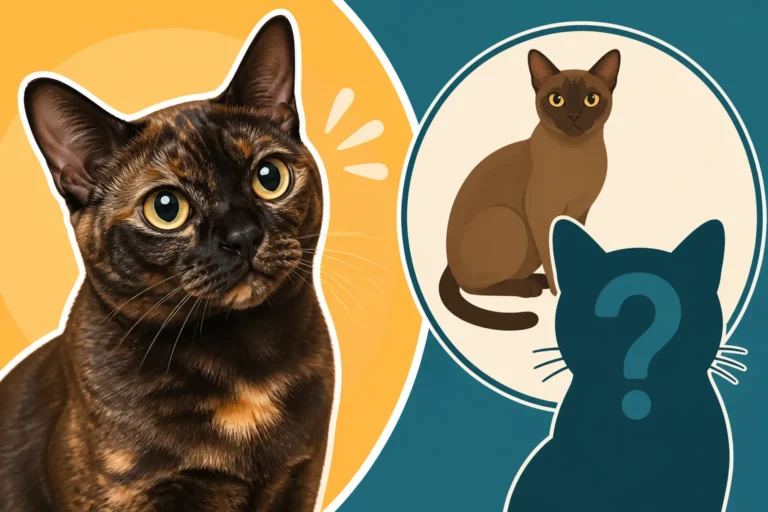
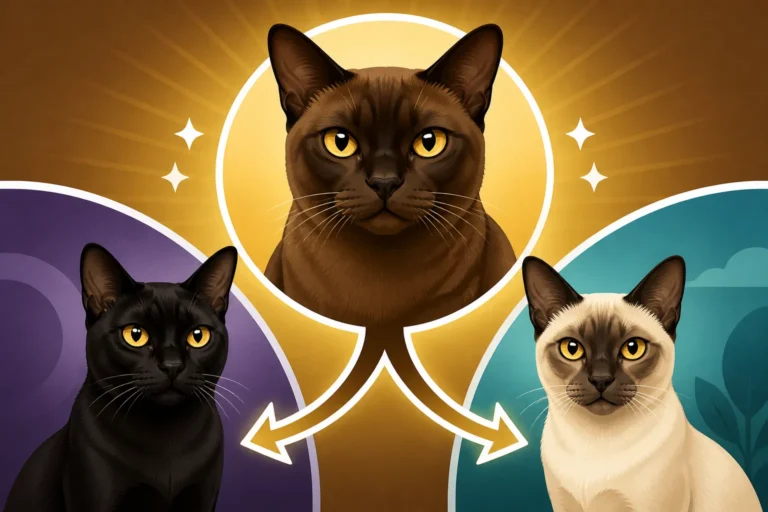
The kittens that looked like Siamese received a cs allele from Wong Mau and a cs allele from the Siamese father, resulting in the cs/cs genotype. These were pure Siamese in appearance. The kittens that resembled Wong Mau inherited a cb allele from her and a cs allele from the Siamese father, making their genotype cb/cs. These intermediate-colored cats are what we now recognize as the Tonkinese phenotype.
What was truly groundbreaking was the understanding that if these intermediate (cb/cs) kittens were then bred to each other or back to another cat carrying the cb allele, they could produce kittens with a third, entirely new phenotype: solid brown cats with the genotype cb/cb. These solid brown cats were the foundation of the true Burmese breed. This discovery, revealing how the cb allele, when present in two copies, produced a richly pigmented, solid brown coat, was monumental. What the cb Allele Does to a Burmese's Color. The Tonkinese, meanwhile, with its unique intermediate coloring, elegantly sits right between the full color restriction of the Siamese and the reduced restriction of the Burmese. Why the Tonkinese Sits Between Burmese and Siamese. This explains precisely why the "founding Burmese" (Wong Mau, a cb/cs cat) effectively produced the genetic blueprint for two distinct breeds: the purebred Burmese (cb/cb) and the Tonkinese (cb/cs).
From Genetic Discovery to Defined Breeds
The revelations from Wong Mau's breeding program led directly to the establishment of not one, but two distinct and beloved cat breeds. With the genetic blueprint now understood, breeders, led by Dr. Thompson, could selectively breed for the desired traits. Their immediate goal was to create a true-breeding cat that expressed the rich, solid brown coat seen in the cb/cb genotype. This meant carefully breeding the intermediate (cb/cs) cats with each other or with other cb/cb cats that emerged from subsequent generations. The result was the formal establishment of the Burmese breed as we know it today, a cat cherished for its compact, muscular body, expressive golden eyes, and its characteristic warm, solid brown coat. What a Burmese Bred to a Siamese Produces. These solid brown cats eventually achieved recognition from major cat registries, including the Cat Fanciers' Association (CFA). When CFA First Recognized the Burmese.
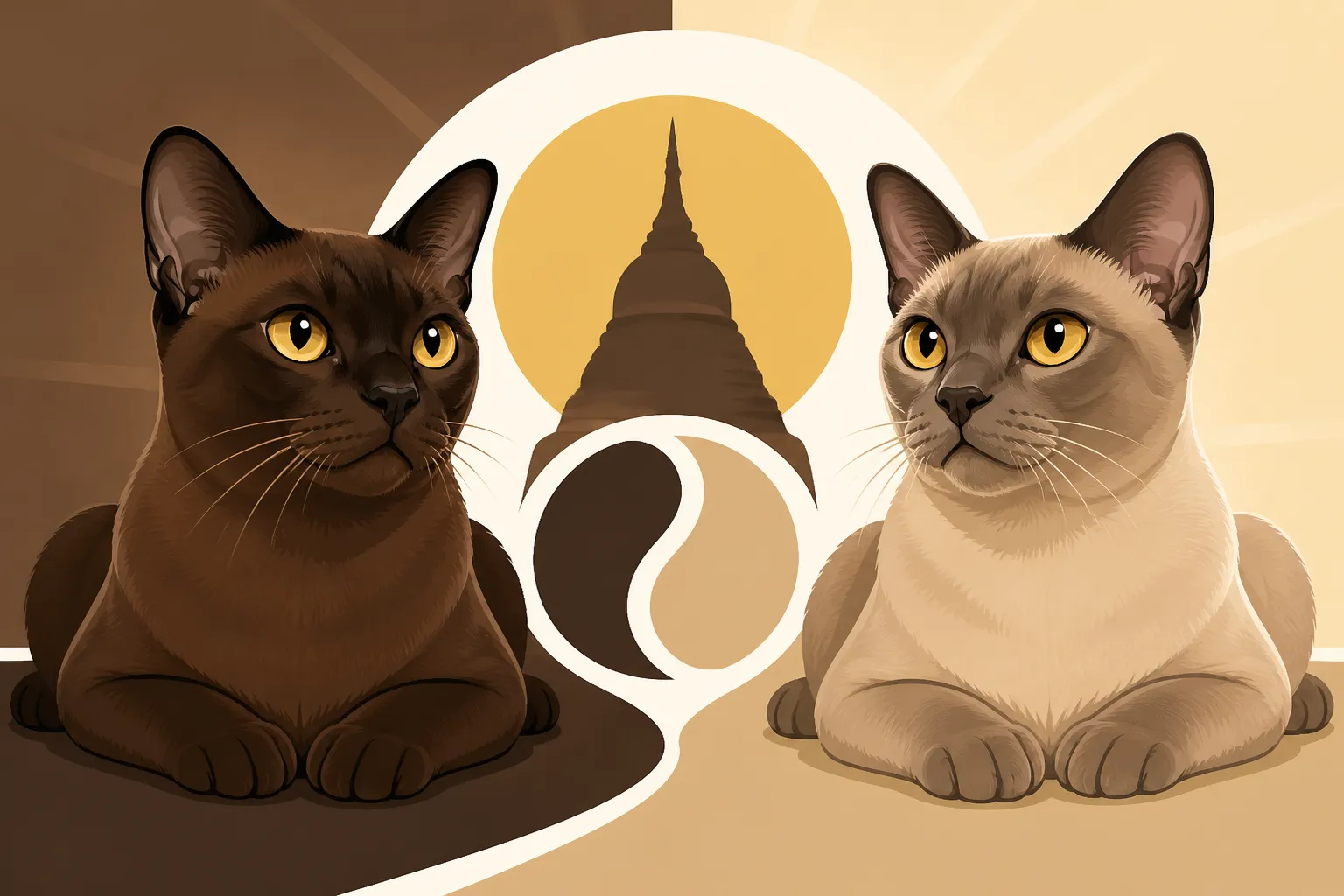
Meanwhile, the beautiful intermediate cats, those with the cb/cs genotype that so closely resembled Wong Mau herself, captivated many with their unique "mink" coloration and delightful personalities. While initially considered hybrids or experimental, their consistent appearance and wonderful temperament led to a strong push for their own breed recognition. Over time, these cats were formally recognized as the Tonkinese breed. This meant that Wong Mau, through her unique genetic makeup, became the maternal ancestor not only of the Burmese but also of the Tonkinese, a testament to the power of deliberate breeding and genetic understanding. How the Tonkinese Was Made From a Burmese. It also clarifies why questions like Whether the First Burmese Was Really a Tonkinese often arise; in terms of genetic expression, Wong Mau's phenotype was indeed that of a Tonkinese. This remarkable genetic legacy from one little cat from Burma forever enriched the cat fancy, giving us two distinct breeds, each with its own charm, but both owing their existence to the foundational wisdom gained from Wong Mau's genetic revelation.
Disclaimer
This article is for general informational purposes only and does not constitute professional advice. Laws, prices and regulations vary by location and change over time. Consult a qualified professional for guidance on your specific situation.