Why a Sable Burmese Is Called Brown in Britain
A British Burmese advertised as brown and an American Burmese described as sable can look almost identical, yet the different labels make buyers wonder whether they are looking at separate colors or even separate cats. This guide explains why the names differ, what the coat color actually looks like, and how to check a cat’s paperwork without getting tripped up by terminology.
Why Britain calls the color brown
Two names for the same Burmese color
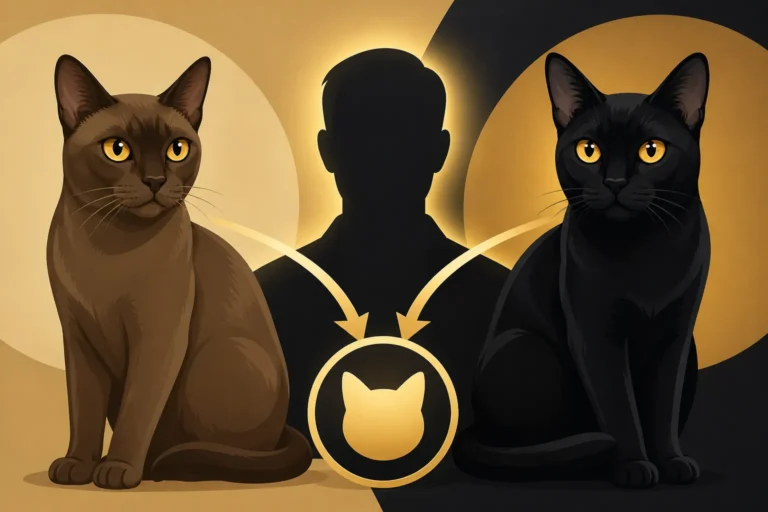
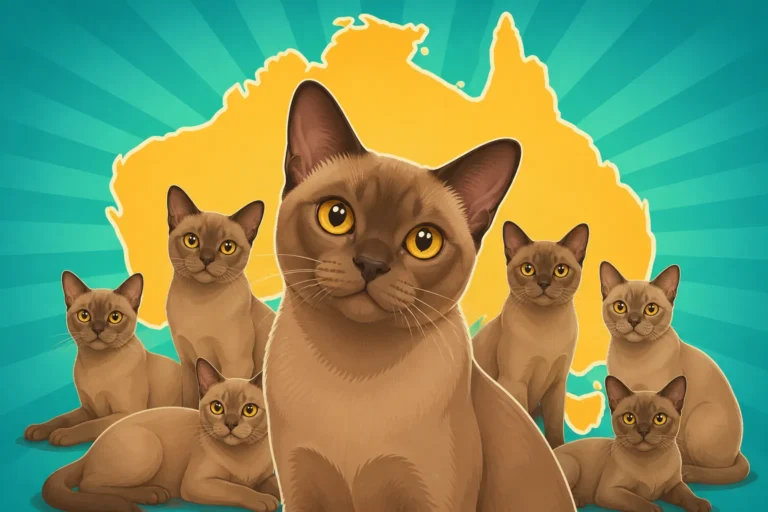
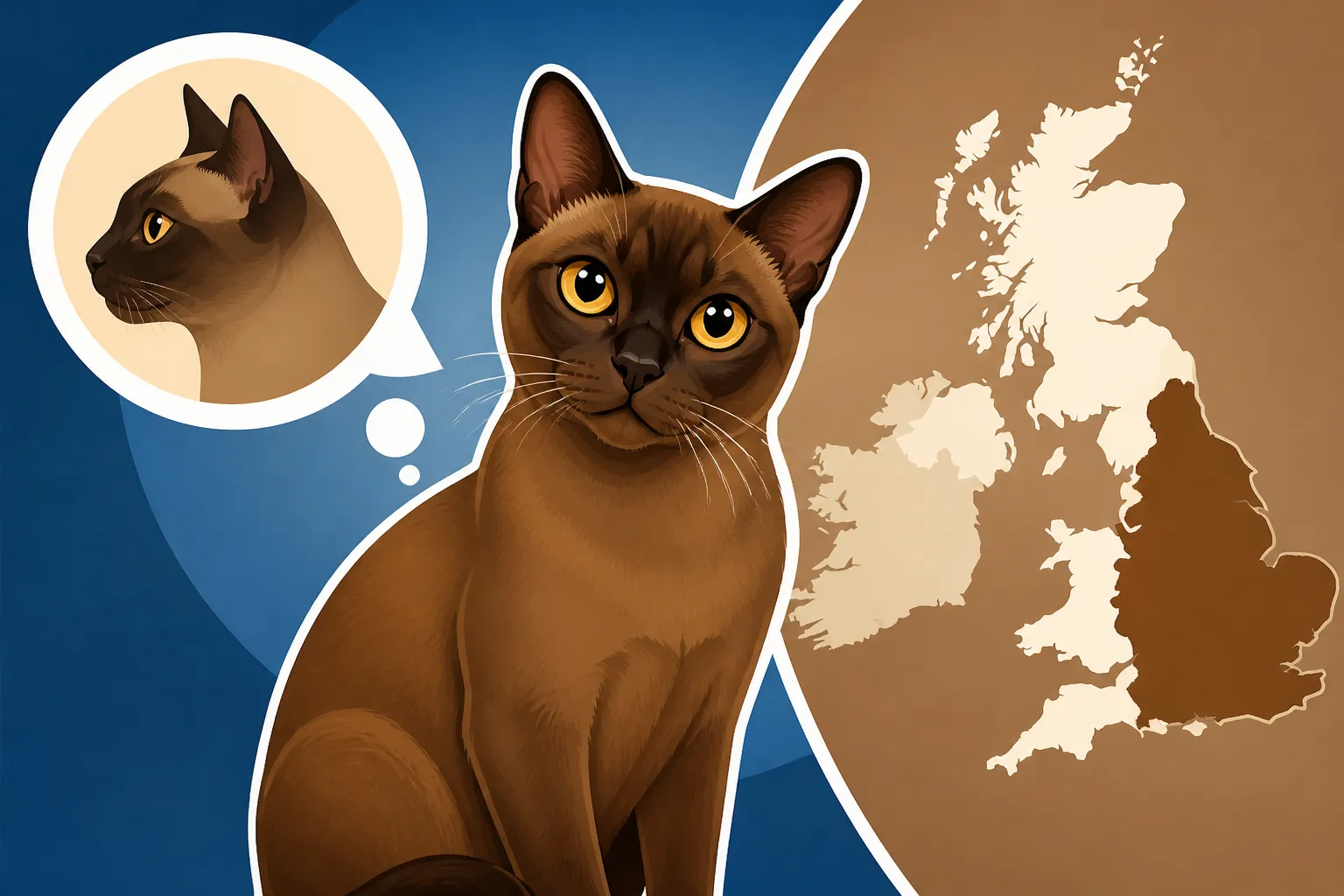
In Britain, the traditional name for the deep brown Burmese coat is brown. In the United States, the Cat Fanciers’ Association uses sable for the corresponding color in the American Burmese. The names come from different breed standards and naming traditions; they do not mean that a British brown cat and an American sable cat have different basic coat colors.
That distinction matters if you are comparing breed descriptions online. A British breed page may list a brown Burmese, while an American breeder’s page calls a kitten sable. A buyer who searches only for one term may miss useful information—or worry that a listing is mislabeled when it is simply using the terminology familiar to its registry and audience.
The names are not always interchangeable in every cat registry or every context, so it is still worth checking the cat’s pedigree and the registry involved. But in ordinary conversation, “brown Burmese” in Britain and “sable Burmese” in the American standard generally point to the same rich, dark brown color family. For a broader look at the colors recognized in the American standard, see The Four Colors a Burmese Comes In.
How breed standards shaped the vocabulary
Cat color names are partly a matter of convention. Breed standards describe the appearance that judges and breeders should look for, and different organizations can choose different terms for a similar-looking coat. That is why one breed may have a color name that sounds unfamiliar across the Atlantic, even when the underlying appearance is not new or unusual.
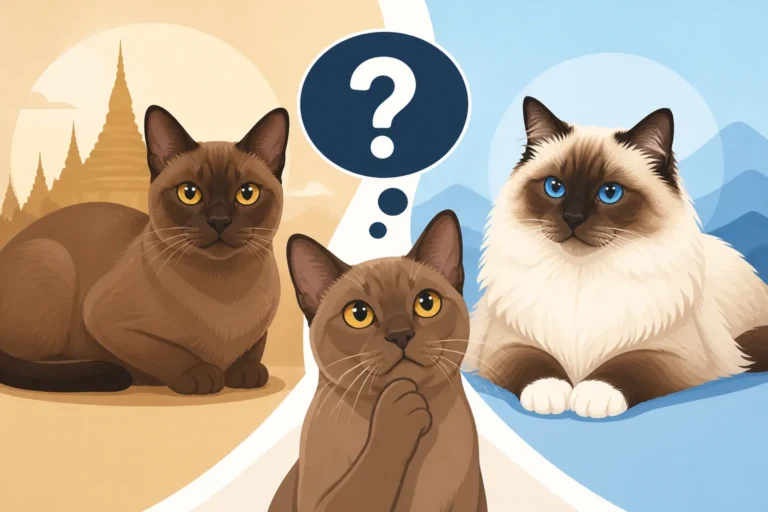
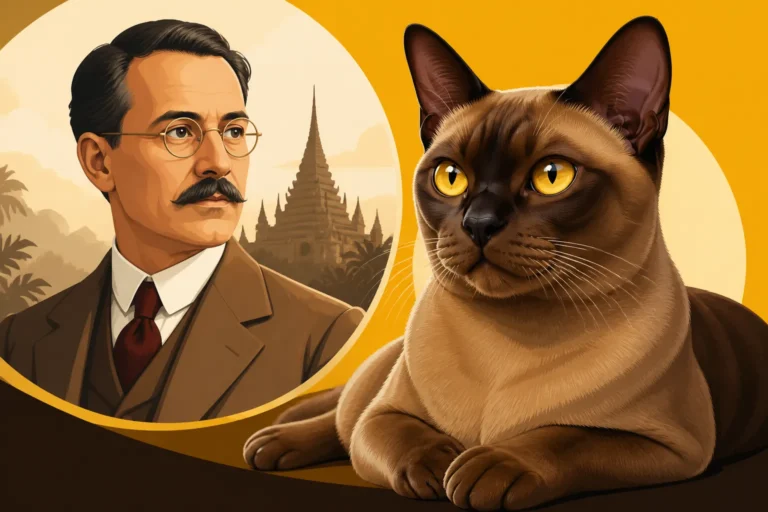
The Burmese developed along separate American and British lines, and the two types are judged under different standards. Their history helps explain why descriptions do not always match word for word. A comparison of those paths is available in How the American and European Burmese Split. The naming difference is one small example of a broader pattern: breed terms can reflect the history of a registry as much as the everyday language of a country.
This does not mean that every brown cat is a Burmese, or that all Burmese standards use “brown” and “sable” in precisely the same way. It means that when you see the two terms attached to Burmese cats, the first thing to check is the standard or registry behind the description—not assume that the cat has a different kind of pigment.
What a brown or sable Burmese coat looks like
A warm brown coat that may deepen at the points
A brown or sable Burmese is not usually a flat, uniform color from nose to tail. The body tends to show a warm, rich brown, while the face, ears, legs, and tail can appear darker. The contrast is often subtle rather than sharply defined, so the cat may look like one smoothly shaded brown rather than a pointed cat with obvious dark “socks” or a mask.
The overall impression can vary from one individual to another. Lighting, age, season, and the coat’s condition can affect how dark or warm the color appears in photographs. A kitten may also look lighter than the adult it will become, so a pale-looking youngster is not necessarily evidence of a different color. The coat often changes as the cat matures.
This gradual shading is part of what makes the Burmese coat distinctive. The breed’s color is affected by a temperature-sensitive form of pigment production: cooler areas of the body can develop darker pigment than warmer areas. That helps explain the darker extremities, although it does not create the crisp pattern associated with some other colorpoint breeds. For more about how this works, see Why a Burmese Is Darker at the Extremities and How a Burmese's Color Gene Reacts to Temperature.
Why photographs can make the color confusing
A brown Burmese photographed in bright daylight may look lighter or more coppery than the same cat in a dim room. Indoor lighting can make the coat appear nearly black, especially if the image has strong shadows or the cat is sitting beside a pale background. Phone cameras may also alter warmth and contrast, so a breeder’s photograph is not always a reliable color reference on its own.
Age adds another layer of confusion. Burmese kittens are often born lighter, and their adult coat color develops over time. A young cat may not yet have the depth of color that people expect from an adult brown or sable Burmese. If you are assessing a kitten, ask the breeder how the coat is expected to develop and look at clear photos of the parents or older relatives, while remembering that family resemblance is not a guarantee of an identical shade.
It can help to compare several descriptions and images from the same registry rather than comparing one British listing with one American listing. The terms may differ even when the coats look similar. A plain-language visual guide to the shade is What a Sable Burmese Looks Like, while Why a Burmese Kitten Darkens as It Grows explains why a youngster’s color can change as it matures.
| Description you see | Where it is commonly used | What it usually refers to in Burmese descriptions |
|---|---|---|
| Brown Burmese | Britain and some European contexts | The traditional rich brown Burmese coat |
| Sable Burmese | American Burmese descriptions, including CFA terminology | The corresponding deep brown color in the American standard |
| Dark brown or seal brown | Informal descriptions and some general breed writing | A visual description, not necessarily an official registry color name |
The table is a guide to common usage, not a substitute for a pedigree. If a listing uses a less familiar term, ask which registry and standard the breeder is following.
How to confirm what a listing means
Start with the registry and the cat’s paperwork
If you are buying or researching a Burmese, look beyond the headline color name. Ask which registry the cat is registered with, whether the breeder describes the cat as an American or European Burmese type, and what color is written on the official paperwork. That information gives you a much firmer answer than a social-media caption or a short sales listing.
A breeder may use “sable” because that is the standard term in their country or registry, while another uses “brown” for the same color category. The difference alone is not a warning sign. What matters is whether the breeder can explain the terminology consistently and provide documentation that matches the cat’s lineage and registration.
If the paperwork uses an unfamiliar label, ask the breeder to clarify it in writing. A careful breeder should be comfortable explaining the name and pointing out the registry or standard that uses it. For a useful overview of how official organizations handle the breed, read Which Registries Separate the Two Burmese Types and How GCCF Registers the Burmese.
Keep color terminology separate from Burmese type
The color name and the type of Burmese are two different questions. “Brown” or “sable” describes the coat color. “American” or “European” describes a breed type shaped by different standards and breeding histories. A cat’s color label does not, by itself, tell you which type it is.
That separation is especially useful when comparing breeders in different countries. A buyer may see “sable Burmese” on an American breeder’s page and “brown Burmese” on a British page, then assume the cats are the same type because the colors correspond. They may be the same color family while belonging to different lines and being judged under different standards.
When you are comparing cats, check the pedigree through the generations and ask the breeder to identify the standard followed. Don’t rely on coat color, head shape, or a casual description alone. The terms and registration practices can be confusing, so Whether the Two Burmese Types Are Separate Breeds offers helpful context on the distinction.
Common questions about brown and sable Burmese cats
Is sable a different color from brown?
In Burmese breed descriptions, sable is the American term for the deep brown color called brown in Britain. A cat described as sable is not automatically a different color from a British brown Burmese. The exact wording depends on the registry and the standard being followed.
Still, use the official paperwork when you need a precise answer about a particular cat. A breeder’s informal description may not match the exact color term used on the registration record. Asking which organization registered the cat will usually clear up the confusion quickly.
Is a sable Burmese always darker than a brown Burmese?
No. The terms do not establish a reliable light-to-dark ranking. Individual coats vary, and photographs can make the same shade look quite different. Age, lighting, and the cat’s natural coloring all affect what you see.
If you are choosing a kitten because you prefer a particular shade, ask to see recent photos taken in natural light and ask how the breeder describes the kitten’s color on its paperwork. Remember that a kitten’s coat can deepen as it grows, so a young cat may not yet show the adult appearance you have in mind.
Does the name affect the cat’s personality or care?
No. The difference between “brown” and “sable” is about naming, not a separate personality type or a special care requirement. A cat’s temperament is shaped by individual traits, socialization, health, and environment—not by whether the color is written as brown or sable.
The label also does not tell you whether a cat is healthy or well bred. If you are assessing a breeder or a particular kitten, focus on the cat’s health records, temperament, living conditions, and clear pedigree information. Color terminology is useful for understanding the description, but it should not replace those checks.
The simplest rule is this: when a British Burmese is called brown and an American Burmese is called sable, the names commonly refer to the same deep brown color family. Check the registry and pedigree for the exact official wording, and treat photos as a guide rather than a guarantee of the adult shade.
Disclaimer
This article is for general informational purposes only and does not constitute professional advice. Laws, prices and regulations vary by location and change over time. Consult a qualified professional for guidance on your specific situation.