What the Suspension Did to Burmese Bloodlines
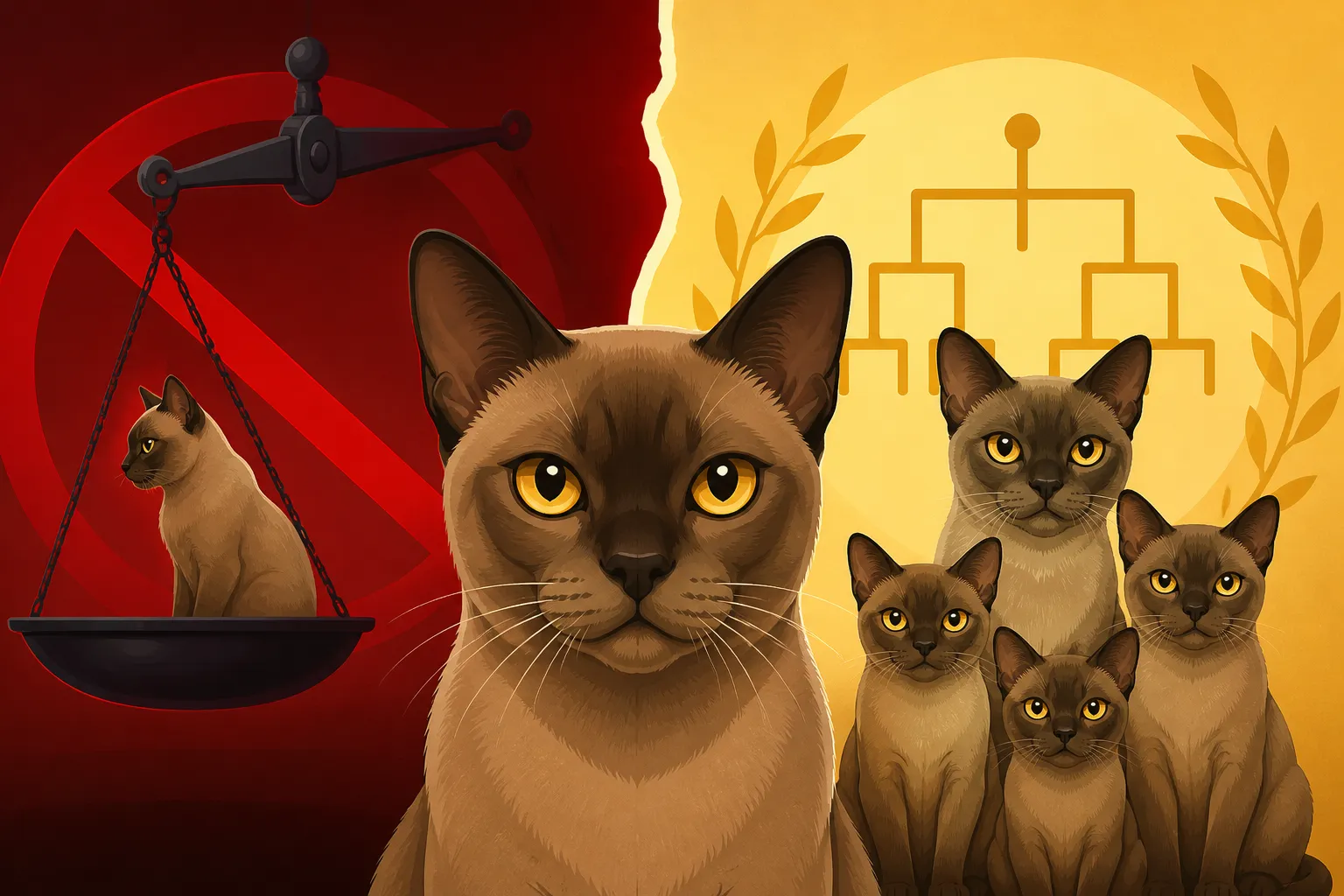
A registry suspension can sound like a simple pause in paperwork, but for the Burmese it became a turning point in the breed’s development. It affected which cats could be registered, how breeders documented ancestry, and how a small group of foundation cats shaped later generations. Here’s what changed—and what the suspension did not mean for Burmese cats today.
Why Burmese registration was suspended
Burmese breeding began with a narrow foundation
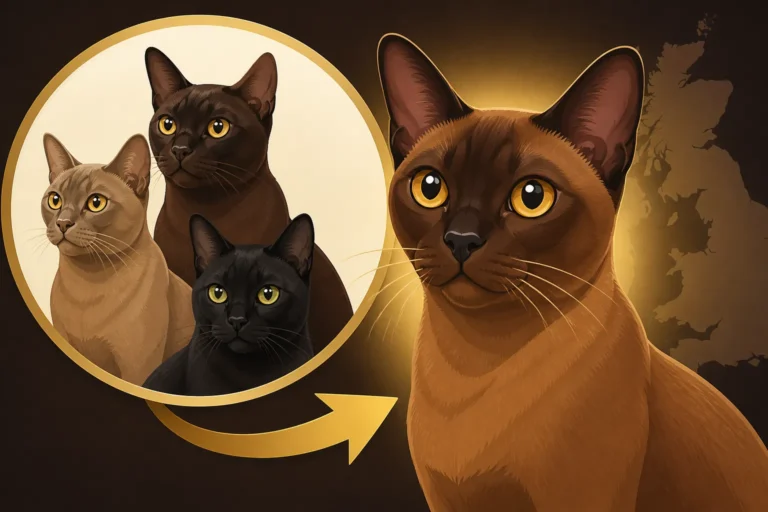
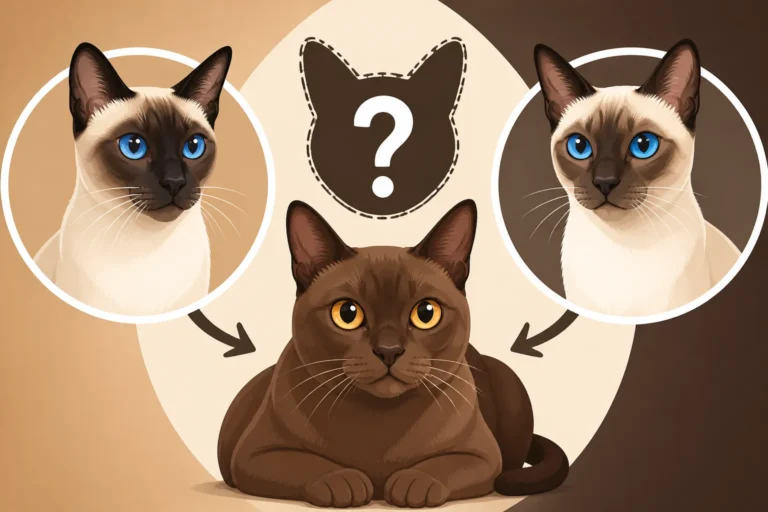
The modern Burmese breed in the United States traces back to Wong Mau, a brown cat brought to San Francisco in 1930. Because breeders had so few cats to work with, early breeding programs paired Burmese cats with Siamese cats. Those matings helped expand the population, but they also produced kittens with different coat patterns and appearances.
Breeders sorted kittens according to their traits and continued developing the Burmese type. This was not unusual in early breed development: a small founding population often requires careful, planned breeding to establish consistent characteristics. But it did mean that, in the breed’s earliest years, a cat’s appearance alone could not always tell registries whether its ancestry was sufficiently Burmese.
For a fuller look at how the breed took shape, see The Burmese Began With One Cat Called Wong Mau. Its early history helps explain why ancestry records became such a sensitive issue.
Siamese crosses made pedigree verification difficult
Early crosses with Siamese cats did not all produce kittens that looked alike. Some offspring showed the darker, solid-looking coat associated with Burmese cats, while others had pointed markings more familiar from Siamese cats. A kitten’s appearance could offer clues, but it could not reliably prove what was in its pedigree.
That distinction mattered to cat registries. They were not simply deciding whether a cat looked Burmese enough. They were deciding whether its documented ancestry met the requirements for registration as a recognized breed. As the number of cats in the breeding pool grew, incomplete or mixed pedigrees made it harder to maintain consistent records.
CFA suspended Burmese registration in 1947 because Siamese ancestry and hybrid matings had complicated the breed’s pedigree records. The decision is explored in Why CFA Suspended Burmese Registration and What CFA Objected To in Burmese Pedigrees in 1947.
The suspension was about registration, not the cats’ existence
A suspension did not mean Burmese cats vanished, nor did it mean breeders stopped caring for or breeding them. It meant that CFA would not continue registering cats as Burmese under the existing conditions. Breeders could still keep and breed cats, but they had to address the registry’s concerns before Burmese registration could resume.
That distinction is easy to miss when reading a short timeline. Registration rules affect official recognition and paperwork; they do not instantly erase living cats or every breeding program. The suspension did, however, put pressure on breeders to show that the cats they presented as Burmese descended from sufficiently documented Burmese lines.
In practical terms, the breed entered a period when careful record-keeping mattered as much as type. The registry needed a way to separate a developing Burmese population from cats whose ancestry included recent Siamese crosses.
What changed for Burmese breeders and pedigrees
Breeders had to rebuild confidence in recorded ancestry
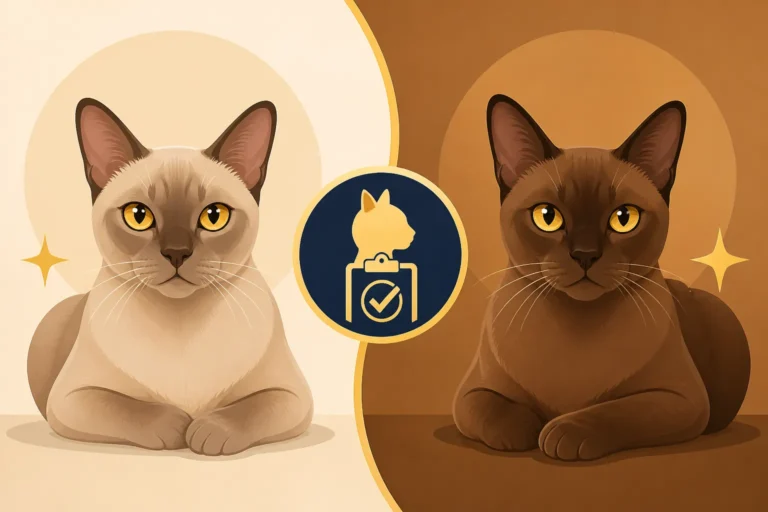
To regain registration, breeders needed to demonstrate a more consistent Burmese ancestry across generations. The requirement commonly associated with the suspension was three generations of pure Burmese breeding. That gave registries a rule they could apply to pedigrees rather than relying only on a cat’s color or body shape.
The phrase “three generations” can sound straightforward, but it depends on records. A breeder needs to know who the parents and grandparents were and whether those cats were accepted as Burmese under the registry’s rules. When records are incomplete, even a cat that looks very much like a Burmese may not meet a formal registration requirement.
This is why the suspension’s effects were felt beyond a single breeding season. Breeders had to work through generations, preserve documentation, and make choices that would produce cats eligible for registration later. Learn more about the standard in What Three Generations Pure Meant for the Burmese.
The breeding pool became more controlled
A registry suspension can narrow the number of cats breeders can use for a recognized program. When a cat’s ancestry is unclear or does not meet the new rules, it may be excluded from the registered breeding population even if it appears healthy and has a Burmese-like coat. That can make the available pool feel smaller and put greater importance on the cats whose pedigrees are accepted.
A smaller pool creates a balancing act. Breeders need to preserve the traits that define the breed while avoiding overly close matings that could increase inherited health risks. The suspension did not invent that challenge, but it made the importance of ancestry and careful selection especially visible.
The result was not that every later Burmese descended from one single line or that every breeder made identical choices. Rather, the suspension encouraged more deliberate documentation and selection among breeders seeking to meet the registry’s standards.
Reinstatement depended on evidence, not a quick reset
Registration did not simply switch back on as if nothing had happened. Breeders had to satisfy the requirements established by the registry, and the path back involved demonstrating acceptable ancestry over multiple generations. The suspension and return to registration are part of the wider story covered in CFA Suspended the Burmese in 1947 and Took It Back and What CFA Required Before Reinstating the Burmese.
| Issue | What it meant for breeders | Why it mattered |
|---|---|---|
| Siamese crosses in early pedigrees | Ancestry had to be reviewed carefully | Appearance alone could not confirm a cat’s pedigree |
| Suspension of registration | CFA paused Burmese registrations | Official recognition depended on meeting registry rules |
| Three-generation requirement | Breeders had to document successive Burmese generations | It created a clearer standard for acceptable ancestry |
| Return to registration | Eligible lines could re-enter the registry’s process | Documentation and selection shaped the breed’s future |
How the suspension shaped Burmese bloodlines
A small number of accepted lines gained importance
When a registry restricts which cats qualify, the cats with clear, accepted pedigrees become especially valuable to a breed’s future. Their offspring can help continue a documented line, and their records make it easier for later breeders to show that kittens meet registration rules.
That does not mean those cats were necessarily the only Burmese cats alive at the time. It means their role in registered breeding became more significant. A cat might be beloved, healthy, and unmistakably Burmese in appearance, yet still be left outside a particular registry’s recognized pedigree program if its ancestry could not be demonstrated in the required way.
For the breed, this put added emphasis on maintaining reliable pedigrees. For breeders, it meant making decisions with the next few generations in mind—not only choosing a promising pair for one litter, but considering what their descendants would mean for the line’s future.
The suspension helped standardize the registered Burmese
A registry’s rules influence which cats are recorded as members of a breed. By requiring documented Burmese ancestry, CFA aimed to make the registered population more consistent and distinguish it from cats produced through recent outcrosses. This helped strengthen the idea of Burmese as a breed with a traceable lineage, rather than simply a coat color or general appearance.
Standardization does not mean every Burmese became identical. Cats still vary in build, head shape, coat shade, and personality. It means that breeders and registries had a firmer framework for deciding which cats belonged in the official breeding population.
Over time, the Burmese developed into a more established breed with clearer registration expectations. The specific cats accepted during the return to registration were part of that process; Which Three Burmese Met the Standard in 1956 looks at one point in that story. The exact milestones matter because they show how recognition was restored through breeding work and documentation, not by erasing the earlier complications.
The episode left a lasting lesson about pedigrees
The suspension is a useful reminder that a breed’s history can be shaped by paperwork as well as by appearance. Pedigrees help registries track ancestry, but they also help breeders understand how lines connect. Without accurate records, it becomes harder to make informed decisions about preserving breed traits and managing genetic diversity.
That lesson still matters when someone is choosing a Burmese kitten or researching a cat’s background. A registration document is not a complete guarantee of health or temperament, but it can clarify how a cat fits into a recognized pedigree. Buyers can ask which registry issued the papers, how the cat’s type is recorded, and whether the breeder can explain the parents’ ancestry. Which Registry Calls It a European Burmese is useful background because registry terminology and breed type can differ.
What the suspension did not do
It did not remove all Siamese ancestry from every Burmese
The suspension addressed registration standards and the documented history of breeding lines. It should not be read as proof that every trace of Siamese ancestry disappeared from every Burmese line. In the breed’s early development, Siamese cats were used in crosses, and the breed’s history reflects that foundation.
What changed was how acceptable ancestry was defined for registration. The three-generation requirement created a boundary that could be documented. It did not rewrite the early history or make the original crosses disappear; it established how later cats could qualify under CFA’s rules.
For more context, see Whether Any Siamese Blood Remains in the Burmese. This distinction helps avoid an overly tidy version of breed history: formal pedigree eligibility and the full ancestry of a breed are related, but they are not exactly the same question.
It did not mean every Burmese outside the registry was unhealthy
A cat’s registration status is not a medical diagnosis. The suspension was a response to questions about ancestry and breed registration, not a declaration that unregistered cats were automatically sick or unsuitable as pets. A family cat can be affectionate, healthy, and well cared for regardless of whether its pedigree meets a particular registry’s requirements.
At the same time, registration papers should not be treated as a substitute for health information. Anyone considering a kitten should ask about veterinary care, known conditions in the line, and what screening the breeder uses. A documented pedigree can help explain ancestry, but it does not tell the whole story of an individual cat’s health.
This is a helpful distinction for prospective owners: the suspension shaped the recognized bloodlines, while responsible care and health decisions remain important for each cat.
It did not create a simple division between “real” and “fake” cats
Breed registration is a formal system, and different registries may use different rules or terminology. A cat outside one registry’s Burmese program is not automatically a fake or an inferior companion. It may simply have ancestry, documentation, or a type that does not fit that registry’s specific requirements.
That is especially relevant when people encounter different Burmese types or records across countries. The safest approach is to ask what the paperwork means in the context of the issuing registry, rather than assuming that every Burmese-looking cat has the same registration status or history.
The suspension’s lasting impact was on the organized breed population: which lines could be registered, how breeders documented ancestry, and how later generations were selected. It was a major chapter in Burmese history, but not a verdict on the worth of any individual cat.
Disclaimer
This article is for general informational purposes only and does not constitute professional advice. Laws, prices and regulations vary by location and change over time. Consult a qualified professional for guidance on your specific situation.