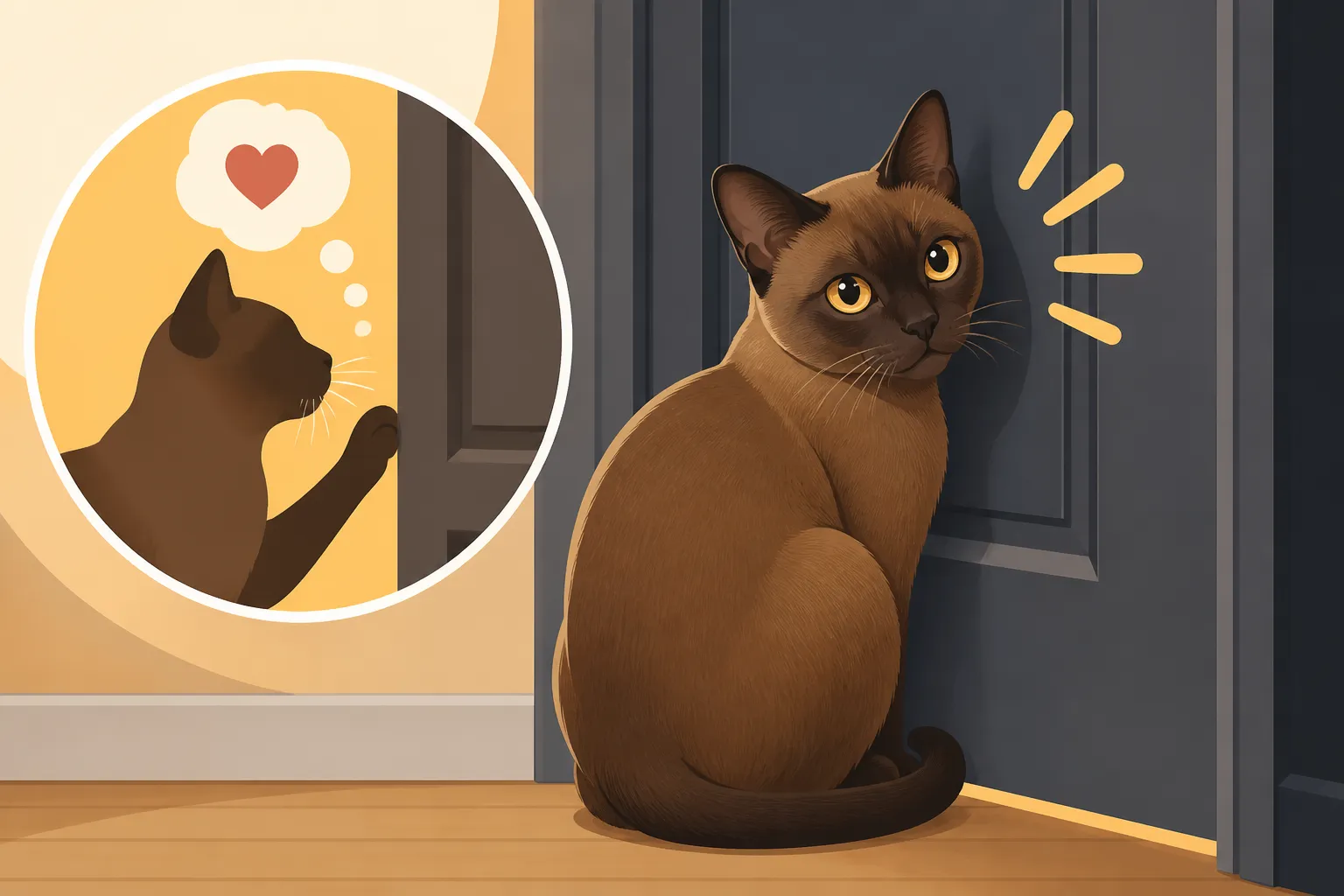
Why a Burmese Sits Against a Closed Door
It’s a scene familiar to almost every Burmese cat owner: you step into a room, gently close the door behind you, and within minutes, there it is – that persistent, unblinking gaze, often accompanied by a low, rumbling murmur, from just outside the door. This isn't just curiosity; it's a deep-seated behavioral trait that can be both endearing and, let's be honest, a little bit demanding. This guide will explore the profound reasons why your Burmese insists on being on the other side of any closed door and offer practical ways to manage this unique aspect of their personality.
The Inherent Burmese Need for Constant Connection
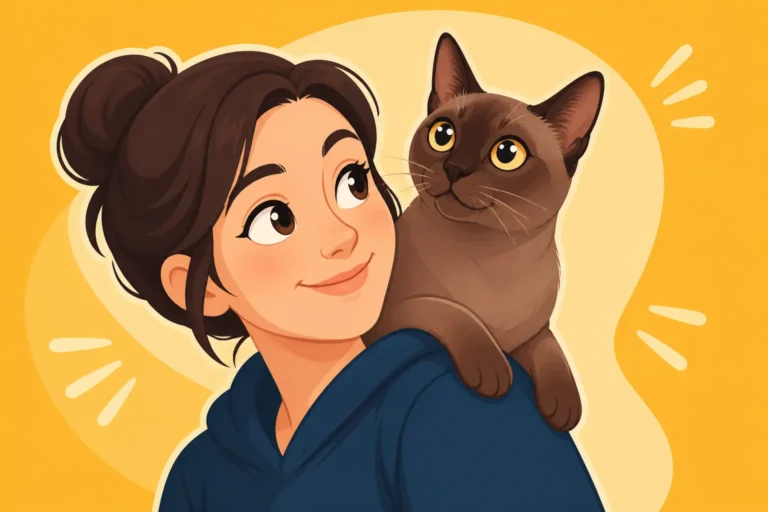
If you own a Burmese, you know they're not just pets; they're your shadow, your confidant, and often, your personal shoulder-rider. Their insistence on being wherever you are isn't a mere preference; it's practically a genetic imperative. They are famously known as the "Velcro cat" of the cat fancy, and that reputation is hard-earned.
They See Themselves as Part of Your Pack
Burmese cats are incredibly social animals, often described as having a "dog-like" personality. This isn't just about affection; it's about a fundamental need for companionship and inclusion. When you close a door, in their world, you're not just separating yourself; you're isolating yourself from the "pack." For a Burmese, this feels unnatural and can even be distressing. They don't understand the concept of personal space or privacy in the human sense. To them, the world is meant to be shared, and if you're in a room, they should be in that room with you, participating in whatever glorious activity you're undertaking—even if that activity is just sitting quietly.
Think about it from their perspective: they thrive on interaction, on being close, on knowing what you're doing. A closed door creates an impenetrable barrier, cutting them off from their primary source of enrichment and security. They don't just want to be near you; they want to be with you. This instinct is so strong that many Burmese owners report their cats will Why a Burmese Cannot Let You Leave the Room, physically blocking exits or making their presence impossible to ignore. It’s their way of reinforcing that you belong together, always.
The Warmth Factor and Secure Spots
Beyond just social connection, Burmese cats have an undeniable love for warmth. With their incredibly short, sleek, and almost undercoat-free satin coats, they can feel the chill more keenly than many other breeds. This often drives them to seek out the warmest spots in the house – which, more often than not, happens to be right next to, or even on, their favorite human. If you've ever found your Burmese tucked right under the duvet with you, you've witnessed this firsthand.
A closed door might signify a warm, cozy space that they're being excluded from. Perhaps you're in a sunny room, or a room with a heater on, or even just under a warm blanket on the couch. Their internal thermostat guides them to these spots, and if you're in one, they assume it's also the best place for them. This combines with their social drive, making the closed-door situation doubly frustrating for them. It's not just that they miss you; they might literally be a little bit cold and instinctively drawn to your comforting warmth.
Decoding Their Door-Side Communication
When your Burmese is sitting by a closed door, they're not just passively waiting. They are actively communicating their needs, often through a fascinating array of vocalizations and body language unique to the breed. Understanding these signals can help you respond appropriately and, perhaps, even find a moment of peace.
The Rasping Rumble: A Signature Plea
Unlike the piercing yowl of a Siamese, a Burmese has a distinctive, rasping rumble. It’s a sound that’s lower, throatier, and often carries an almost conversational quality. When a Burmese sits at a closed door, this rumble is their signature plea. It’s not an angry sound; it’s more like a persistent, gentle complaint, escalating in volume and intensity if ignored. They might start with a soft trill, then move to a more pronounced purr-rumble, and if you're really testing their patience, it might become a deeper, drawn-out "mrrroooow."
This sound is designed to get your attention without being overly aggressive. It's an invitation, a reminder, and a statement: "I know you're in there, and I belong there too." They might also incorporate pawing at the door, or even a soft head-butt if they are feeling particularly insistent. They've learned that these actions often result in the door swinging open, granting them access to their beloved human. What a Burmese Wants When It Rumbles at You delves deeper into these unique vocalizations and what they truly signify.
Curiosity, Routine, and the Fear of Missing Out (FOMO)
Burmese cats are incredibly intelligent and curious creatures. They thrive on routine and are acutely aware of changes in their environment. A closed door represents an unknown, a potential disruption to their established world order. "What's happening in there?" they wonder. "Is there a new smell? A dropped treat? Are they having fun without me?" This potent combination of curiosity and FOMO (Fear Of Missing Out) can make a closed door irresistible to them.
They also connect events. If you always go into the bedroom to get ready for work, they'll associate that closed door with your departure. If you usually take a shower behind a closed bathroom door, they’ll want to be there for the post-shower routine. Breaking these perceived routines by closing a door can genuinely distress them. They might pace, sniff under the door, or even try to squeeze their paws underneath, desperate to re-establish connection and satisfy their inquisitive minds. It’s more than just wanting to play; it’s about their mental map of the household and their place within it.
Here’s a breakdown of common door-side communications and what they might mean:
| Burmese Behavior at Closed Door | Likely Motivation (What they want) | Owner Action / Interpretation |
|---|---|---|
| Soft rumble, insistent purr | "I want to be with you, where are you?" | Acknowledge, offer a few minutes of presence, then gently close. |
| Persistent pawing/scratching | "Open this! I need to know what's inside!" | Redirect with a favorite toy or puzzle feeder. |
| Head-butting the door | "I'm right here! Let me in, please!" | If appropriate, open the door for a brief cuddle. |
| Pacing, sniffing under door | Curiosity, seeking information, establishing presence | Talk to them through the door, offer a calming treat. |
| Silent, unwavering stare | Deep desire for connection, observing | Reflect on how much company they've had recently. |
Managing a Burmese's Door Obsession Without Losing Your Mind
While their devotion is charming, sometimes you just need a moment to yourself. Learning to manage your Burmese's closed-door protests is key to maintaining both your sanity and their happiness. It’s about balance, redirection, and understanding their needs.
Enrichment and Engagement: The Best Distraction
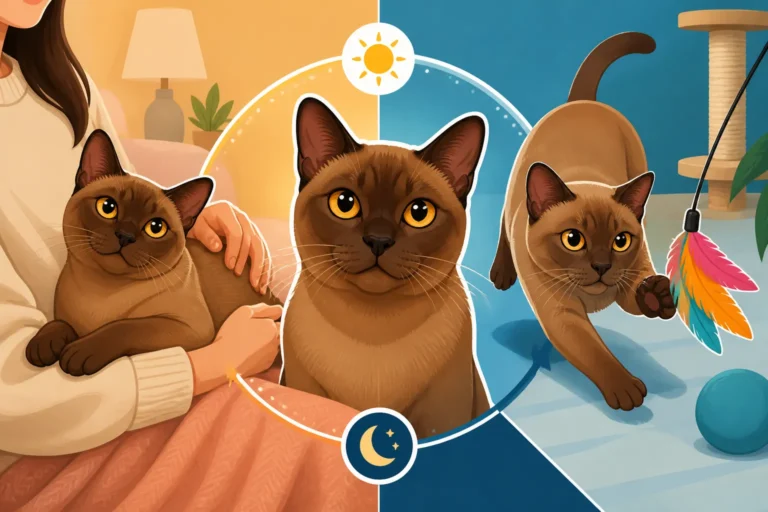
One of the most effective ways to reduce door-related demands is to ensure your Burmese is sufficiently enriched and engaged when you can't be their sole focus. A bored Burmese is often a demanding Burmese. They are incredibly playful and intelligent, even well into old age, with A Burmese Is Still Playing at Fifteen. Providing plenty of mental and physical stimulation can keep their minds off the closed door.
Consider interactive toys that dispense treats, like puzzle feeders. These can occupy them for a good while as they figure out how to get their reward. Tall, sturdy cat trees with multiple levels and scratching posts also provide vertical territory and an outlet for their energy. You can find a wide variety of engaging options on Amazon that cater to their unique play drive. Rotate toys regularly to keep things fresh. A daily dedicated play session with a wand toy can also tire them out and satisfy their predatory instincts, making them more likely to nap peacefully while you’re behind that door. Remember, a tired cat is often a quiet cat.
Gradual Desensitization and Alternative Comforts
You can try to gradually desensitize your Burmese to closed doors, but patience is absolutely vital. Start with very short periods, perhaps just a minute or two, behind a closed door. Re-emerge and offer praise and a treat for quiet behavior. Slowly increase the duration. It’s a slow process and might not eliminate the behavior entirely, but it can help them understand that a closed door isn't a permanent separation.
Providing alternative comfort zones can also help. Ensure they have a warm, comfortable bed or blanket in a room they are allowed to access, ideally one where they can still see you, even if you’re not physically touching them. If you’re closing yourself in an office, make sure they have a plush bed or a cat tree by the window in the adjacent room. Some owners find success with pheromone diffusers, which can create a calming atmosphere and reduce anxiety, making them less frantic about a closed door.
The "Velcro Cat" Needs a Buddy: The Two-Cat Solution
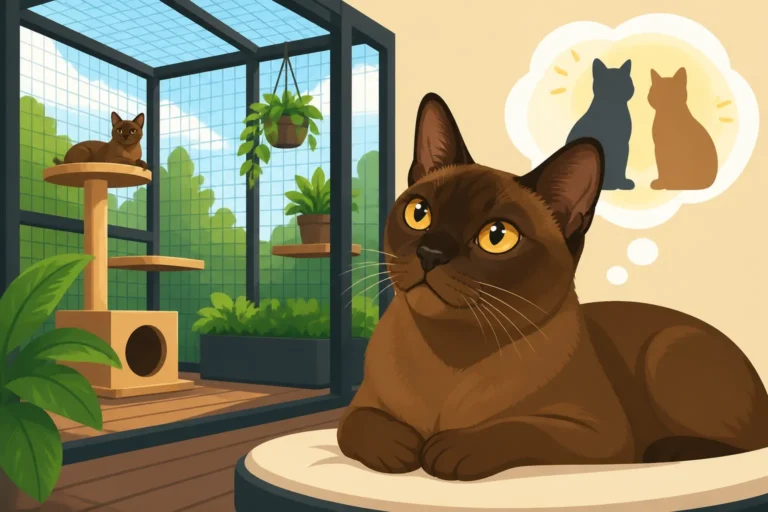
If your Burmese's door obsession is intense and causing significant stress for both of you, it might stem from a deeper need for constant companionship. As incredibly social creatures, many Burmese absolutely thrive when they have another cat to interact with. Often, breeders will recommend buying Burmese in pairs for this very reason. Why Burmese Breeders Sell Them in Pairs is a topic worth exploring if you're considering this.
A second cat, especially another Burmese or a similarly playful and affectionate breed like a Tonkinese, can provide the constant companionship your Burmese craves when you're busy or need privacy. They'll play together, groom each other, and curl up for naps, diverting much of that intense social energy away from constantly demanding your undivided attention. This doesn't mean your Burmese will stop loving you, but it can help them feel less dependent and anxious when you're not immediately available. It’s not a quick fix, but for many Burmese owners, it's the ultimate solution to their cat's relentless need for connection.
When a Closed Door Might Signal a Deeper Concern
While the Burmese's love for company is legendary, sometimes an unusual or escalated obsession with a closed door can be a sign of something more than just their charming clinginess. It's important to differentiate between typical breed behavior and potential underlying issues.
Escalated Anxiety or Stress
If your previously adaptable Burmese suddenly becomes frantic at closed doors, it might be an indicator of increased anxiety or stress. Have there been recent changes in the household? A new pet, a new person, a change in schedule, or even rearranging furniture can be unsettling for a sensitive Burmese. What Separation Anxiety Looks Like in a Burmese describes how this stress can manifest in various ways, and an intensified reaction to closed doors could be one of them.
Observe other behaviors: Are they eating less, grooming excessively, or urinating outside the litter box? Are they more vocal than usual, even when you are present? These could be signs that their perceived "exclusion" is tapping into a deeper sense of insecurity. In such cases, trying to identify and alleviate the source of their stress is paramount. This might involve creating more predictable routines, providing extra safe spaces, or even consulting with your veterinarian or a feline behaviorist.
Environmental or Health Changes Driving the Behavior
Sometimes, a sudden change in how your Burmese reacts to a closed door can be linked to physical comfort or even health. As mentioned, they seek warmth. If a room they previously ignored suddenly becomes a warm, cozy haven (perhaps due to a new sunbeam pattern or a change in your home's heating), they might feel an increased urgency to access it.
More concerningly, a sudden, relentless insistence on being with you, combined with other subtle changes, could be a very early warning sign of discomfort or illness. Burmese cats are notoriously good at hiding pain or illness, often masking symptoms behind their affectionate nature. If your cat is unwell, they might instinctively seek out your presence and comfort even more intensely. For example, if they're suddenly drinking a lot more water and pushing harder to be near you, it could be a sign of something like diabetes, which Burmese are prone to. Why a Burmese Drinking More Needs Testing That Week covers this. Always observe for changes in appetite, litter box habits, energy levels, or any other deviation from their norm. If you notice concerning shifts in behavior alongside the door obsession, a vet visit is always recommended. Your Burmese's unwavering affection, even when expressed through a closed door, often holds deeper meaning.
Disclaimer
This article is for general informational purposes only and does not constitute professional advice. Laws, prices and regulations vary by location and change over time. Consult a qualified professional for guidance on your specific situation.