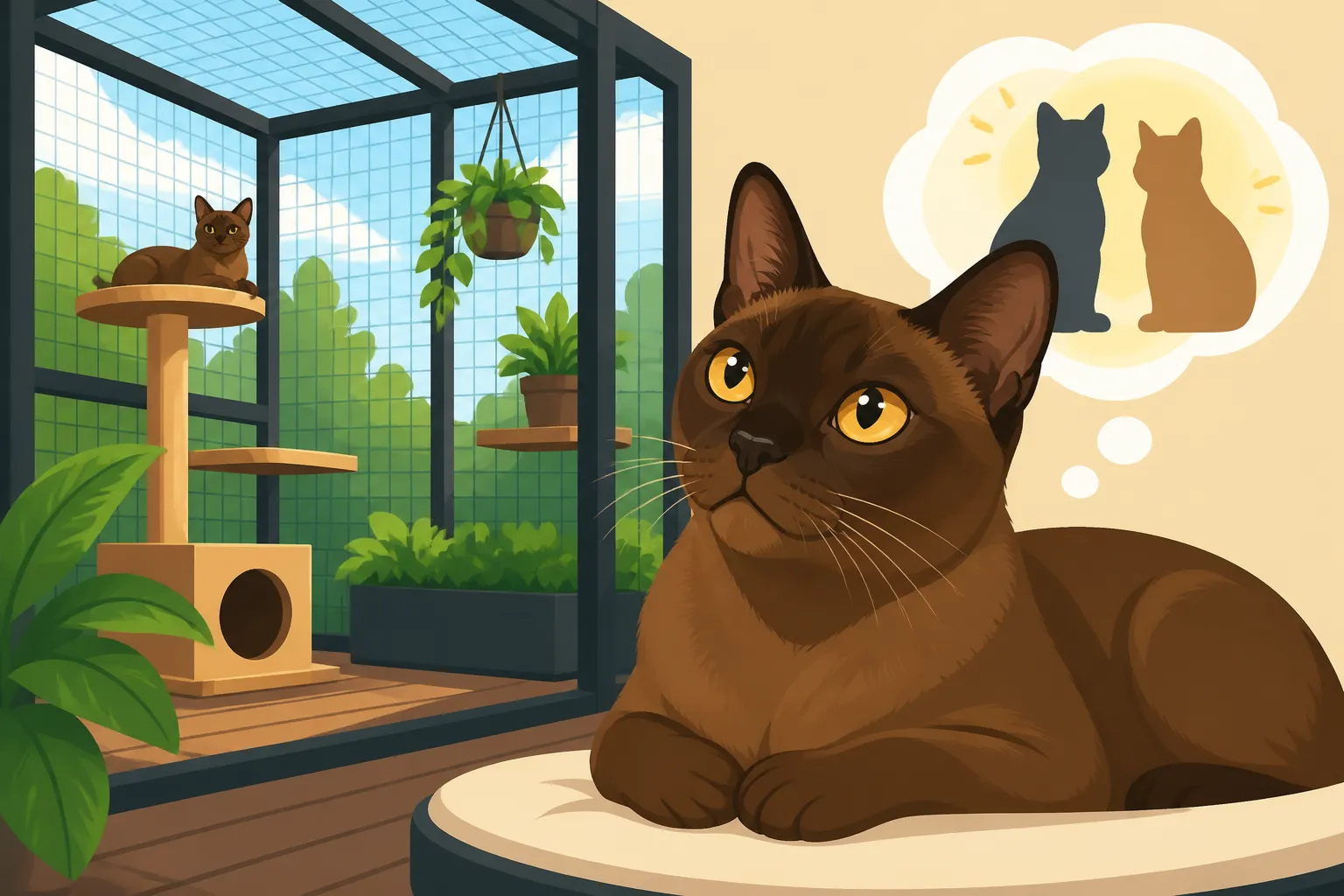
Whether a Catio Is Enough Company for a Burmese
It's a common dilemma for Burmese cat parents: you want to provide your beloved feline with the absolute best life, including the stimulation of the outdoors, but you also know how intensely social and vulnerable these cats can be. A catio, or outdoor cat enclosure, often seems like a brilliant compromise – a safe space for fresh air and bird-watching. But the big question that keeps many of us up at night is whether simply having a catio is enough to truly satisfy the deep need for companionship that defines the Burmese breed. This guide is here to untangle that complex question, diving into the unique social wiring of the Burmese and exploring how a catio fits, or doesn't fit, into their world.
Understanding the Burmese Need for Connection
Burmese cats are unlike many other breeds when it comes to their need for interaction. They're not just aloof creatures who tolerate your presence; they actively seek it out, thrive on it, and can genuinely suffer without it. This intense desire for companionship shapes every aspect of their well-being, from their emotional health to their physical comfort.
The "Velcro Cat" Persona
If you've ever owned a Burmese, you know exactly what I mean by "velcro cat." They are renowned for their unwavering devotion, their insistence on being involved in every single activity, and their uncanny ability to be right there, underfoot or on your shoulder, at all times. They will follow you from room to room, sit on your lap the moment you settle down, and even snuggle under the covers with you at night. This isn't just a cute quirk; it's a fundamental part of their genetic makeup. They form incredibly strong bonds with their human family members, often singling out one person as their absolute favorite, but showering affection on everyone in the household. Their purrs are less a gentle rumble and more a rasping conversation, a constant stream of communication that speaks volumes about their desire to connect. This deep attachment is why we often refer to them as dogs in cat suits; they possess a level of loyalty and participatory companionship that is truly unique in the feline world. It's a joy, but it also means their needs are profound. The Burmese Is the Velcro Cat of the Cat Fancy explores this delightful trait further.
More Than Just Proximity
It's easy to think that if your Burmese is in the same room as you, or even just in a space where they can see you, that's "company." However, for a Burmese, genuine companionship goes far beyond mere proximity. They crave active engagement, physical touch, and reciprocal interaction. It's not enough for them to just observe; they want to participate. This might mean batting at your pen while you work, demanding head scratches while you watch TV, or engaging in a spirited game of fetch. They thrive on conversation, often "answering" your questions with their characteristic throaty rumble. Simply being near you, without interaction, can still leave them feeling isolated. They need to feel connected and valued as part of your immediate social circle. Think of it like a child who needs a parent's active attention, not just to be in the same house. This breed lives for shared experiences, for being touched and talked to and played with. Their emotional cup is filled by these direct, loving interactions.
The Impact of Solitude
Given their intense need for connection, it's no surprise that prolonged solitude can have a devastating impact on a Burmese cat. Unlike some independent breeds that might happily nap through your workday, a Burmese left alone for extended periods can quickly develop significant behavioral and emotional issues. We're not talking about a few hours here and there; we're talking about a regular, all-day absence. Why a Burmese Cannot Be Left Alone All Day explains this in detail. Their natural exuberance and affectionate nature can curdle into anxiety, depression, and destructive behaviors. This might manifest as excessive vocalization, constant pacing, inappropriate urination outside the litter box, or even self-mutilation like pulling out their own fur. What Separation Anxiety Looks Like in a Burmese is a stark reminder of how serious this can be. They're not being "naughty"; they're expressing profound distress at the lack of their cherished companionship. For a Burmese, being alone is not peaceful solitude; it's a terrifying void.
The Catio as a Source of Enrichment
A catio, short for "cat patio," is a fantastic concept designed to provide safe outdoor access for cats. These enclosed spaces can range from small window boxes to elaborate multi-level structures, offering fresh air, sunlight, and a taste of the wild without the dangers of free-roaming. For any cat, they're a wonderful addition to their environment, but how do they measure up for a Burmese?
Benefits of Outdoor Access Safely
There's no denying that catios offer a wealth of benefits for cats, including the Burmese, primarily through providing safe outdoor access. The ability to bask in natural sunlight is invaluable, offering Vitamin D and regulating their circadian rhythms. Watching birds, squirrels, and insects can provide hours of fascinating entertainment, tapping into their natural hunting instincts without endangering local wildlife or themselves. Fresh air circulates, preventing the stale indoor environment from becoming monotonous. Moreover, catios drastically reduce risks associated with unsupervised outdoor roaming, such as traffic accidents, encounters with aggressive animals, exposure to parasites and diseases, or even theft. For a curious and energetic breed like the Burmese, a catio provides a safe outlet for their inherent inquisitiveness and desire to explore. Many owners find peace of mind knowing their cat can enjoy the outdoors without the inherent dangers.
Sensory Stimulation and Activity
One of the greatest strengths of a well-designed catio is the sheer amount of sensory stimulation it provides. Imagine the world from a cat's perspective: the subtle shifts in wind direction, the rustle of leaves, the chirping of birds, the scent of blooming flowers or damp earth, the feeling of sun on their satin coat. These are all experiences that an indoor-only cat misses out on. Catios can be outfitted with various features to maximize this engagement: multi-level perches for climbing and surveying their territory, scratching posts made from natural wood, and even plants (cat-safe, of course) for sniffing and nibbling. Some catios feature tunnels or bridges, encouraging physical activity and exploration. You can even find interactive toys and puzzles designed for outdoor use on sites like Amazon, which can further enhance their time in the enclosure. This constant influx of new sights, sounds, and smells is vital for mental and physical well-being, keeping a Burmese's sharp mind engaged and their athletic body active.
What a Catio Doesn't Provide
However, and this is the crucial point for a Burmese, a catio, no matter how elaborate or stimulating, fundamentally lacks one thing: companionship. It provides environmental enrichment, yes, but it cannot replace the complex, reciprocal social interactions that a Burmese craves. While they might love watching a bird, the bird isn't going to cuddle up with them afterward. While they might enjoy the sun, the sun isn't going to rub against their legs or engage in a game of chase. A catio is a solitary experience, no matter how enriching it might be. It stimulates their senses and provides a safe space, but it does not fill the deep, emotional need for connection with another living, interactive being, whether that's a human or another animal. This distinction is paramount when considering the Burmese, a breed whose definition is literally rooted in its social nature. It's a wonderful amenity, but it's not a friend.
Why a Catio Alone Falls Short on Companionship
For a Burmese, the "company" part of their needs is non-negotiable. A catio provides a distraction, a pastime, but it doesn't provide the interaction they crave. This is where the gap truly widens, leading to potential issues even in the most well-appointed home.
The Social Interaction Gap
The core issue is that catios are inherently non-interactive. A catio provides passive enjoyment. It doesn't offer a lap to knead, a hand to rub against, or a playmate to wrestle with. For a Burmese, these active, physical, and emotional exchanges are not luxuries; they are necessities. Imagine leaving a highly social child in a beautifully decorated room with lots of toys and a TV. They might be entertained for a while, but they would still feel the absence of their family, their friends, the give-and-take of conversation and shared laughter. That's how a Burmese experiences a catio when it's their only form of enrichment during lonely hours. They might enjoy their time there, but when they come back inside, the fundamental yearning for connection remains unfulfilled. The silence of the empty house or the lack of an attentive presence will still weigh heavily on them. How Many Hours Alone a Burmese Tolerates is a critical read for understanding their limits.
The Difference Between Stimulation and Company
This is a distinction often missed, but it's vital for Burmese owners. Stimulation is about engaging the senses, providing novelty, and encouraging physical activity. A catio excels at this. It offers visual interest, scents, sounds, and space to move. Company, however, is about social connection, emotional bonding, and interactive presence. For a Burmese, company means curling up with you on the sofa, purring into your ear, or engaging in a boisterous play session with a feather wand. It means feeling loved and being acknowledged. A catio provides mental and physical stimulation, but it cannot provide the emotional warmth and reciprocal affection that truly defines Burmese companionship. It's a fantastic tool for preventing boredom and encouraging activity, but it's a poor substitute for a living, breathing companion. Without that deeper connection, even the most stimulating environment can feel empty.
Signs a Burmese Needs More Than a Catio
If you rely solely on a catio for your Burmese's enrichment during your absences, you might start seeing signs that it's just not enough. These aren't necessarily signs of a cat that dislikes their catio; rather, they're indicators that their social needs aren't being met. You might notice them greeting you with an almost frantic intensity when you return home, far beyond a normal happy welcome. They may become overly vocal, crying and howling more than their usual "rasping rumble." Destructive behaviors like scratching furniture, chewing on household items, or even pulling out their own fur can emerge as manifestations of stress and anxiety. Why a Lonely Burmese Pulls Its Satin Coat Out delves into these distressing behaviors. Some Burmese might even start to gain weight if they're stressed, as a way to cope, or conversely, lose their appetite if they become depressed. These are not pleas for more time in the catio; they are desperate calls for more genuine, interactive company. What a Burmese Does to a House It Is Left In offers further insights into the consequences of insufficient companionship.
Integrating a Catio into a Holistic Enrichment Plan
The good news is that a catio doesn't have to be an either/or situation. It can be a wonderful component of a larger, more comprehensive plan to ensure your Burmese is happy and well-adjusted. The key is understanding its role: supplemental enrichment, not primary companionship.
Companion Animals as the Primary Solution
For a Burmese, the absolute best way to ensure they have consistent companionship, especially if you work long hours, is to provide them with another animal companion. This is why Why Burmese Breeders Sell Them in Pairs is such common advice. Another cat, particularly another Burmese or a similarly social breed, can provide the constant interaction and physical closeness that a single catio simply cannot. They can play together, groom each other, and nap side-by-side, fulfilling that innate need for a "velcro" buddy. This isn't about simply having "another cat" in the house; it's about providing a genuine social partner. Why Two Burmese Settle Each Other is a testament to this strategy. A compatible canine companion can also work wonders, as many Burmese are famously dog-friendly. Which Cats Are Sociable Enough for a Burmese can help you decide on a suitable friend. While an extra cat means an extra mouth to feed, many owners find the reduction in stress and destructive behaviors in their primary Burmese more than makes up for it. Budgeting for two cats upfront, rather than dealing with the fallout of an anxious single cat, often proves to be a more cost-effective and emotionally sound decision in the long run. Why Two Burmese Cost Less Than One Anxious One is a useful guide for this perspective.
| Feature | Catio Benefits (Stimulation) | Burmese Needs (Companionship) |
|---|---|---|
| Outdoor Access | Safe exploration, fresh air, sunlight | Does not fulfill social interaction |
| Sensory Input | Sights, sounds, smells of nature, wildlife watching | Lacks reciprocal engagement, physical contact |
| Physical Activity | Climbing, jumping, stretching, surveying | No shared play, no interactive grooming |
| Mental Engagement | Observing environment, problem-solving (e.g., puzzles) | No direct communication, no emotional bonding |
| Emotional Support | Provides distraction, reduces boredom | Requires direct affection, reassurance, and social presence |
| Independence | Encourages self-amusement, safe solo time | Thrive on co-dependence, thrive on constant interaction |
Maximizing Human Interaction
Even with a companion animal, your Burmese will still crave your attention. Catios can provide excellent independent entertainment while you're busy, but they shouldn't cut into the quality time you spend with your cat. Make a conscious effort to carve out dedicated play sessions every day, using wand toys, laser pointers (carefully!), or retrieve games. Burmese are often eager learners and can be taught tricks, which offers great mental stimulation and strengthens your bond. Check out resources on sites like Amazon for engaging interactive toys. Cuddle time is non-negotiable for this breed; ensure they get plenty of lap time, petting, and ear scratches. Talk to your Burmese throughout the day, even if you're just narrating your chores. Their affectionate nature means they thrive on being part of your daily routine. If you're home, aim to have them nearby, inviting them onto your lap or into the room you're in. This consistent, loving presence, combined with active interaction, is truly the cornerstone of a happy Burmese life.
Using Catios as Part of a Balanced Life
Ultimately, a catio should be viewed as an excellent supplement to your Burmese's life, not the sole solution for their companionship needs. It's a fantastic way to provide safe outdoor enrichment, allowing them to enjoy the best of both worlds – the safety of indoors with the stimulation of nature. For example, a Burmese with a companion cat might enjoy a few hours in the catio with their buddy, getting fresh air and watching birds, then come inside for a shared nap on the sofa. An owner might set up a puzzle feeder in the catio, found on Amazon, to engage their cat's mind while they enjoy the outdoors. This means they're getting the vital social interaction from their housemate or you, plus the added benefits of the catio. It’s about creating a rich, varied environment that caters to all of their needs – physical, mental, and especially emotional. A well-loved Burmese enjoys a multi-faceted life, and a catio, when used wisely, can absolutely be a part of that vibrant picture, ensuring they live a The Sixteen to Eighteen Years a Well Bred Burmese Gets in full.
Disclaimer
This article is for general informational purposes only and does not constitute professional advice. Laws, prices and regulations vary by location and change over time. Consult a qualified professional for guidance on your specific situation.