Why a Burmese Begs Harder Than Any Other Cat
Burmese cats beg for food persistently due to high metabolisms, dog-like personalities, and strong links between affection and meals.

Burmese cats beg for food persistently due to high metabolisms, dog-like personalities, and strong links between affection and meals.
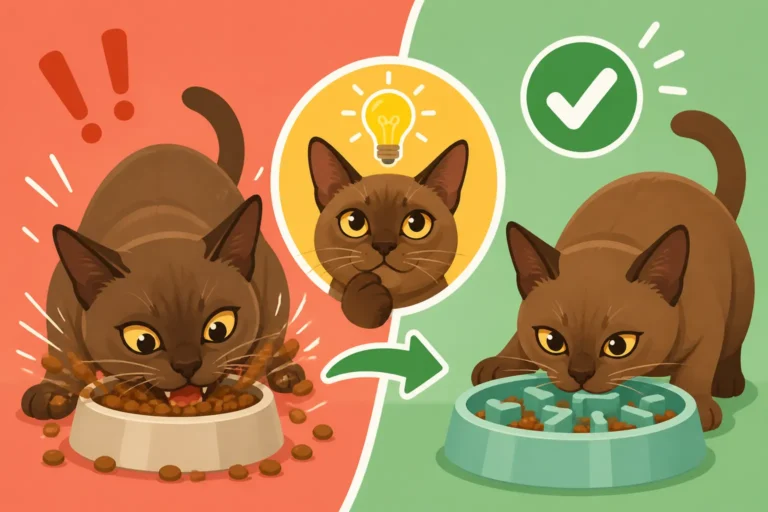
Fast-eating Burmese cats face risks of regurgitation and diabetes, making practical feeding strategies and meal schedules important.
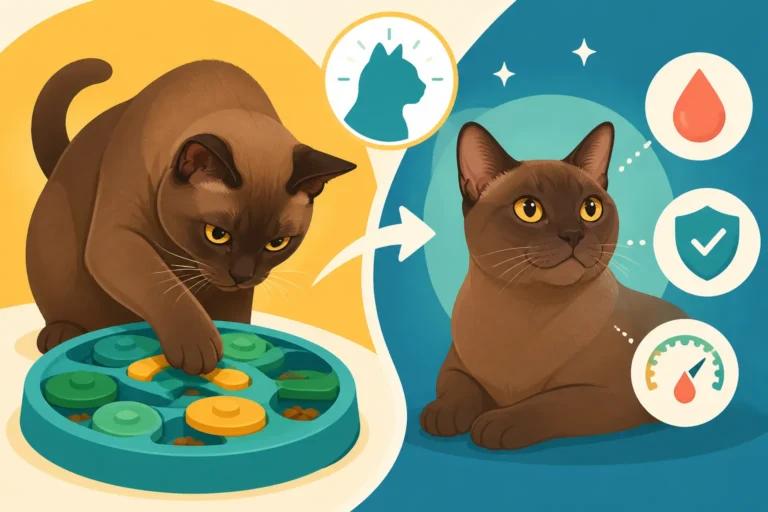
Puzzle feeders slow rapid eating to prevent diabetes and manage weight in genetic risk Burmese cats prone to insulin resistance.

Puzzle feeders slow down greedy Burmese cats, improving digestion and reducing the severe risk of diabetes from rapid eating.

Burmese cat reactions to catnip include frantic zoomies, rubbing, and a relaxed post-party state of affectionate cuddling.
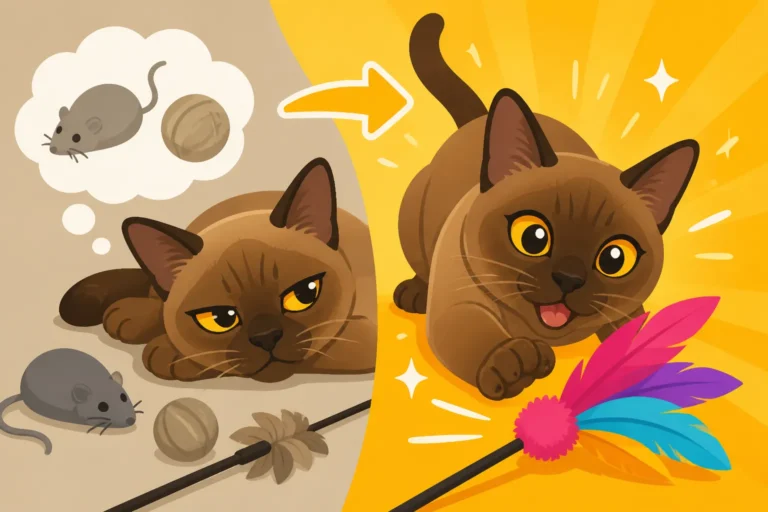
Burmese cats lose interest in toys quickly because their high intelligence solves static items rapidly, requiring interactive play instead.
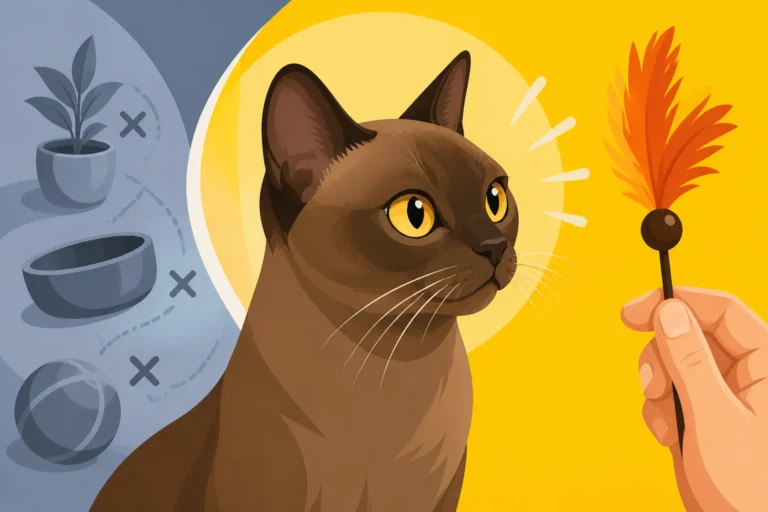
Burmese cat behavior explains why these affectionate pets ignore unattended toys and prefer active human participation during playtime.
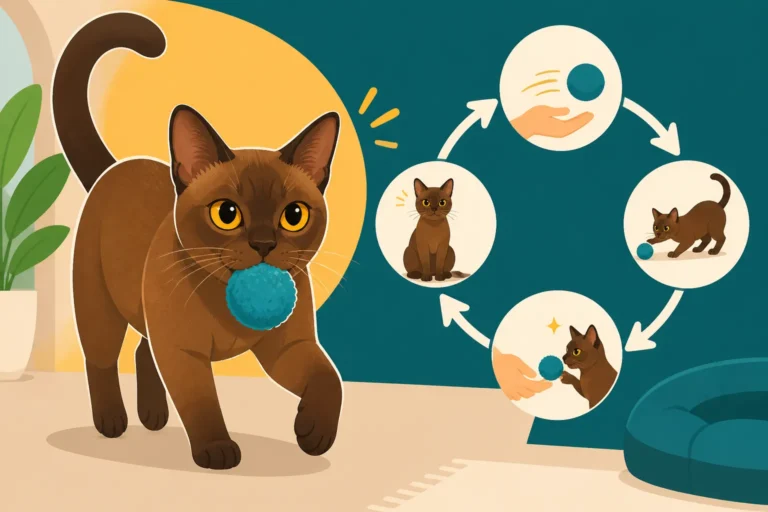
Burmese cat retrieving habits explained through high energy and predatory instincts, establishing a predictable play routine for pets.
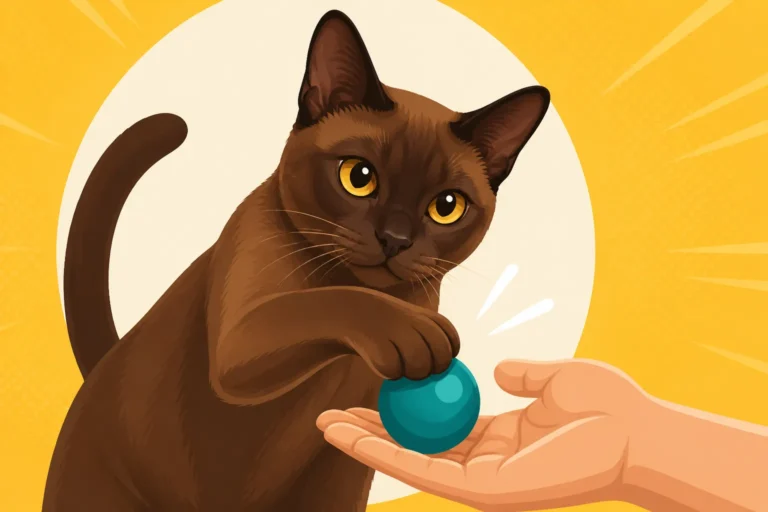
Burmese cat fetch behavior stems from canine-like personality, high intelligence, and a strong desire for human connection.
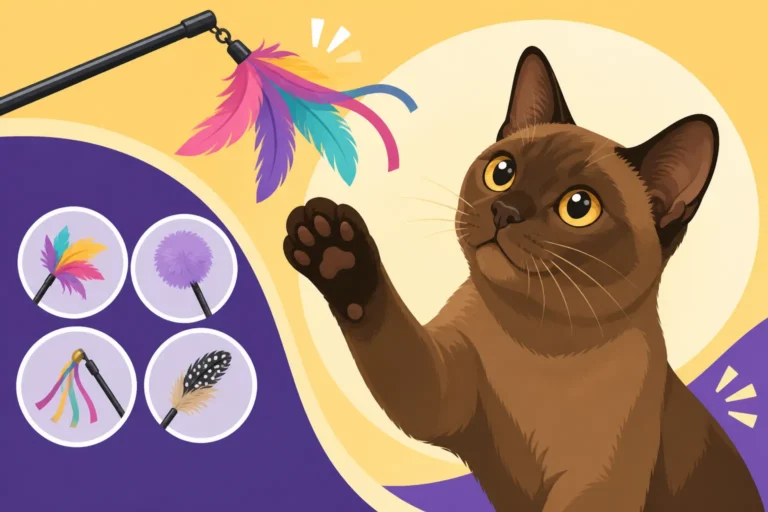
Wand toys provide the mental stimulation and physical exercise that energetic Burmese cats need through interactive play.