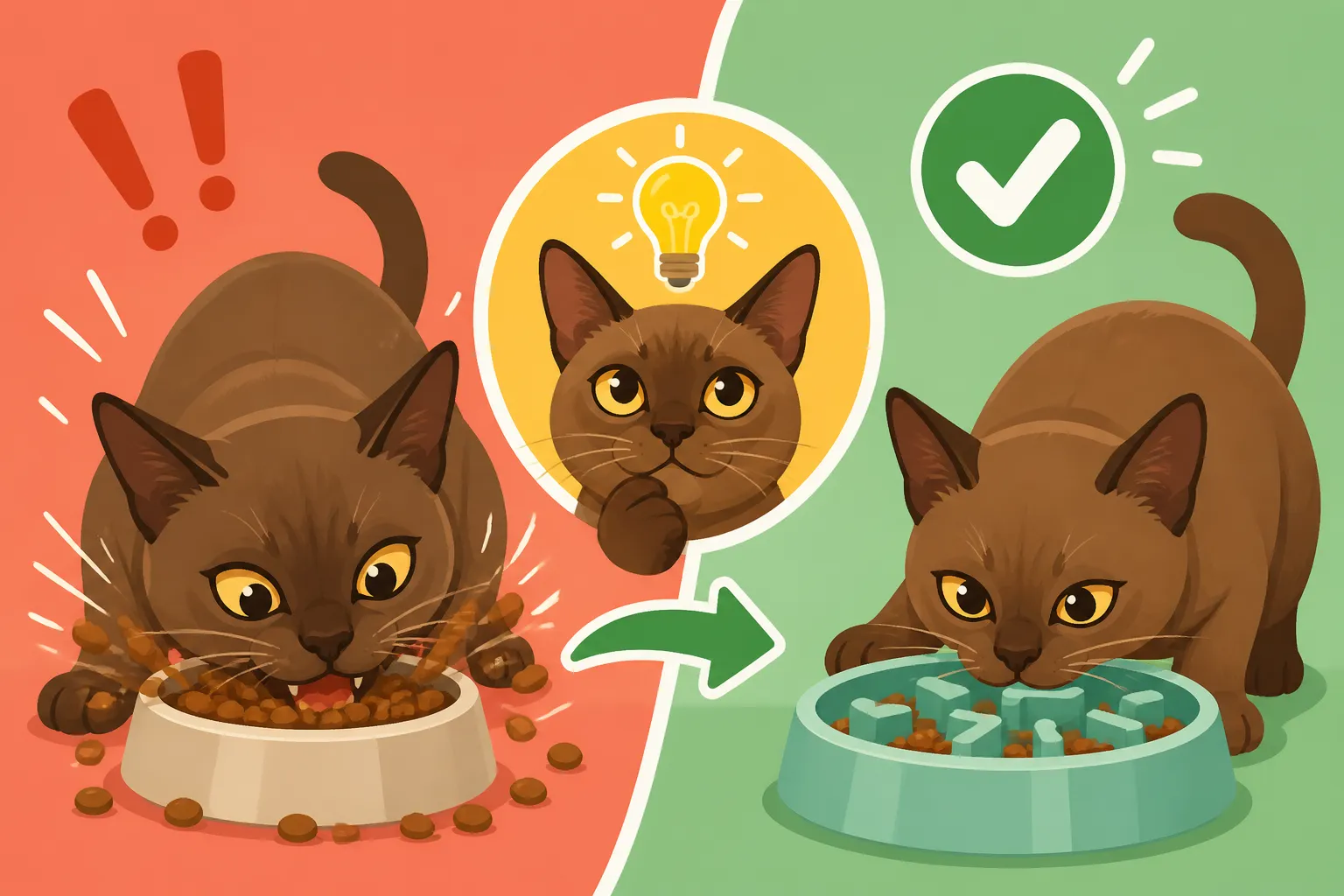
How to Slow a Fast Eating Burmese
It's incredibly frustrating, and often quite worrying, to watch your beloved Burmese scarf down their meals in a flash, gulping and practically inhaling their food. This frantic eating can lead to upset stomachs, regurgitation, and for a breed already prone to diabetes, it presents a significant health concern. This guide will walk you through practical, empathetic strategies to help your fast-eating Burmese slow down, enjoy their food, and ultimately live a healthier, happier life.
Understanding Why Your Burmese Is Such a Fast Eater
Before we dive into solutions, it's helpful to understand why your Burmese might be eating so quickly. It's rarely out of malice or greed; usually, there are underlying instincts or environmental factors at play. Recognizing these can help you choose the most effective strategies.
Instinctual Behavior and Competitive Eating
Cats, by nature, are programmed to eat quickly when they find food. In the wild, a kill might attract other predators or scavengers, so eating efficiently and quickly was a matter of survival. While our domestic Burmese are far removed from the savanna, these ancient instincts can still manifest, especially if they perceive any competition for their food.
Think about it: if you have more than one cat, even if they each have their own bowl, there can be a subtle (or not-so-subtle!) competition. One cat might feel the need to gobble theirs down before another cat attempts to steal a bite, or even just looks at their food with too much interest. This competitive drive can be powerful, even if it's all in their head. Even if your Burmese is an only cat, they might still have that ingrained "eat it now before it's gone" mentality. This instinct often overrides any sense of leisurely dining, leading to fast eating and sometimes, indigestion.
The Role of Diet and Meal Frequency
The type of food you offer and how often you feed your Burmese can significantly impact their eating speed. Many commercial dry kibbles are very calorie-dense but don't provide a lot of volume, which means a cat can consume a lot of calories without feeling full. If a cat feels hungry all the time because their diet isn't satisfying, they're more likely to eat quickly when food is finally presented.
Additionally, if your Burmese is used to free-feeding, where food is available all day, and you suddenly switch to scheduled meals, they might panic and eat quickly at first, fearing the food supply will disappear. Conversely, if meals are too infrequent, say only once a day, your cat might be genuinely starving by mealtime, prompting them to devour their portion rapidly. This makes it crucial to understand Why a Burmese Should Never Be Free Fed and instead establish a consistent meal schedule. A diet too high in carbohydrates, which is common in many dry foods, can also lead to a feeling of not being truly satisfied, even if the stomach is full, contributing to that "always hungry" feeling in a diabetes-prone Burmese.
Health Implications of Fast Eating for a Burmese
While fast eating can cause immediate issues like regurgitation or vomiting, for a Burmese, it carries a more serious, long-term health risk: diabetes. The Burmese breed is unfortunately predisposed to diabetes, and rapid eating, especially of high-carbohydrate foods, can contribute to insulin resistance and the development of the condition. Why Portion Control Is Medical Care in a Burmese is a truth every Burmese owner should internalize.
When a cat eats very quickly, their blood sugar can spike dramatically. Over time, these consistent spikes put a strain on the pancreas, which produces insulin to manage blood sugar. This repeated strain can lead to the cells becoming less responsive to insulin, ultimately paving the way for diabetes. Additionally, eating too fast can mean they're not chewing their food properly (though cats don't chew much anyway), and they might swallow more air, leading to gas and discomfort. It also makes it harder to gauge if they're actually enjoying their meal or just seeing it as a race.
Immediate Strategies to Slow Down Mealtimes
You don't have to overhaul your entire feeding routine overnight. There are several simple, immediate changes you can implement right away to encourage your Burmese to eat more slowly.
Smaller, More Frequent Meals
One of the easiest ways to slow down a fast eater is to give them less food at one time, but more often throughout the day. Instead of two large meals, try three or four smaller meals. This reduces the urgency because your cat knows more food is coming soon, and they won't feel ravenous at each mealtime.
This strategy mimics how cats would naturally eat in the wild – small, frequent catches rather than one big feast. For your Burmese, this can mean a more stable blood sugar level, which is excellent news for their overall health and helps manage their predisposition to diabetes. It also keeps them feeling more satisfied throughout the day, potentially reducing begging behaviors between meals. The key here is to keep the total daily calorie intake the same; you're just dividing it differently.
Spreading Food Out on a Plate
Instead of dumping food into a deep bowl where your Burmese can just scoop it up in large mouthfuls, try using a wide, flat plate or a baking sheet. Spread the food out thinly across the surface. This forces your cat to take smaller bites and move around to get to all the food, naturally slowing them down.
This method works particularly well with wet food, but you can also use it for dry kibble. The increased surface area means they can't just bury their face and inhale. It encourages a more deliberate eating process, as they have to pick up individual pieces or small clusters of food. It's a low-cost, immediate change that can make a surprisingly big difference. Plus, it makes mealtime a bit more of a hunt, engaging their natural foraging instincts.
Using Simple DIY Slow Feeders
You don't need to buy fancy equipment right away. You can create effective slow feeders with items you likely already have around the house. For example, place a clean, heavy, smooth rock or a golf ball in the middle of their regular food bowl. Your Burmese will have to eat around the object, which breaks up their eating pattern and prevents them from taking huge mouthfuls.
Another idea is to use an empty, clean egg carton. Place small portions of kibble in each cup. This requires your cat to 'fish' the food out, one cup at a time. For wet food, you can try spreading it thinly on a silicone lick mat, which has textured surfaces that force them to lick rather than gobble. These DIY solutions are great for immediate relief and to see if your cat responds well to a slower feeding method before investing in specialized products.
Long-Term Solutions and Tools for Slower Eating
Once you've tried some immediate fixes, you might be ready to invest in more permanent solutions designed specifically for slow eating. These tools are often more durable and can integrate seamlessly into your daily routine.
Investing in Puzzle Feeders
Puzzle feeders are fantastic for Burmese cats because they turn mealtime into a mental and physical activity. These feeders require your cat to work to get their food, simulating a hunting experience. They come in many designs, from simple dishes with raised ridges or obstacles to more complex toys that dispense kibble as your cat bats or nudges them. Which Puzzle Feeder Slows a Greedy Burmese Down is a common question, and there's a huge variety available on platforms like Amazon.
For example, a slow-feed bowl might have labyrinthine patterns or raised nubs that prevent your cat from accessing large quantities of food at once. Others might be spherical or cylindrical, requiring your cat to roll or paw at them to release a few pieces of kibble. This not only slows down eating but also provides mental enrichment and can help burn off some energy, which is great for an active breed like the Burmese. Just be sure to start with an easier puzzle feeder and gradually introduce more challenging ones as your cat gets the hang of it. This also ties into Why a Puzzle Feeder Helps a Diabetes Prone Burmese by promoting slower consumption and mental stimulation.
Automated and Timed Feeders
If your schedule makes it difficult to provide multiple small meals throughout the day, an automatic timed feeder can be a game-changer. These devices dispense pre-portioned meals at specific times you set, ensuring consistency and preventing your Burmese from eating too much at once.
Many modern feeders allow you to program several small meals, which is ideal for breaking up large portions into manageable servings. Some even have voice recording features, allowing you to call your cat to their meal, which can add a comforting touch. When choosing one, look for models with multiple compartments or a rotating tray for wet food, and ensure it's sturdy enough that your determined Burmese can't break into it prematurely. This consistency in meal timing is vital, as Why a Burmese's Meals Have to Land at the Same Times is a critical component of managing their metabolism, especially as they get older. You can find a wide range of reliable automatic feeders on Amazon.
Dietary Adjustments and Hydration
Beyond how they eat, what your Burmese eats can also influence their speed and satiety. A low-carbohydrate, high-protein wet food diet is often recommended for Burmese cats, not just to help manage their diabetes risk, but also because wet food tends to be more filling than dry kibble due to its water content. Why Low Carbohydrate Food Matters for a Burmese is a crucial piece of the puzzle here.
Wet food also generally requires a bit more effort to eat, as it can't be simply crunched and swallowed as quickly as kibble. Ensure your cat always has access to fresh, clean water. Good hydration is important for digestion and overall health, and sometimes, cats can mistake thirst for hunger, leading them to eat more quickly to satiate a perceived need. While it might seem counterintuitive, sometimes providing more moisture in their diet through wet food can actually reduce their frantic eating by making them feel more truly nourished and hydrated. This is a critical part of their overall care and nutrition plan.
Monitoring Progress and Adapting Your Approach
Successfully slowing down your Burmese's eating isn't a one-and-done solution; it requires ongoing observation and willingness to adapt.
Observing Eating Behavior and Body Condition
Regularly watch your Burmese during mealtimes. Are they still gulping, or are they taking more measured bites? Are they leaving any food behind, or are they still cleaning the plate instantly? Observe their post-meal behavior – are they still begging for food right away, or do they seem satisfied?
Beyond mealtime, keep a close eye on their body condition. It's easy for a fast-eating cat to become overweight, which exacerbates health risks. Learning How to Score a Burmese's Body Condition can help you determine if your cat is at a healthy weight, too thin, or carrying too much. Gently feeling their ribs and spine will give you a good indication. Regular weighing at home is also beneficial. You can typically find accurate pet scales or even good kitchen scales for smaller cats on Amazon. Understanding How Much Weight Raises a Burmese's Diabetes Risk underscores the importance of this monitoring.
Adjusting Portions and Schedule Based on Results
Based on your observations, be prepared to adjust. If your Burmese is still eating too fast or seems constantly hungry, you might need to:
- Increase meal frequency: Go from three to four meals a day, or even more, while keeping the total daily intake the same.
- Refine portion sizes: Even small adjustments can make a difference. If you know How Many Calories a Diabetes Prone Burmese Should Get, you can fine-tune individual meal portions.
- Switch feeder types: If a simple slow-feed bowl isn't cutting it, try a more complex puzzle feeder. If they're still inhaling, consider a lick mat for wet food.
- Re-evaluate food type: Ensure their diet is truly high-protein, low-carb, and moisture-rich.
- Ensure mental stimulation: Sometimes, fast eating is linked to boredom. More playtime and enrichment outside of meals can help.
The goal is to find a routine that works for both you and your cat, leading to calmer, more leisurely mealtimes and better health. For instance, knowing What a Burmese Weighs at One on a Weighed Ration or What a Burmese Should Weigh at Five can provide benchmarks for healthy weight management as you adjust their feeding strategy. Remember, this is a journey, and patience is key.
Disclaimer
This article is for general informational purposes only and does not constitute professional advice. Laws, prices and regulations vary by location and change over time. Consult a qualified professional for guidance on your specific situation.