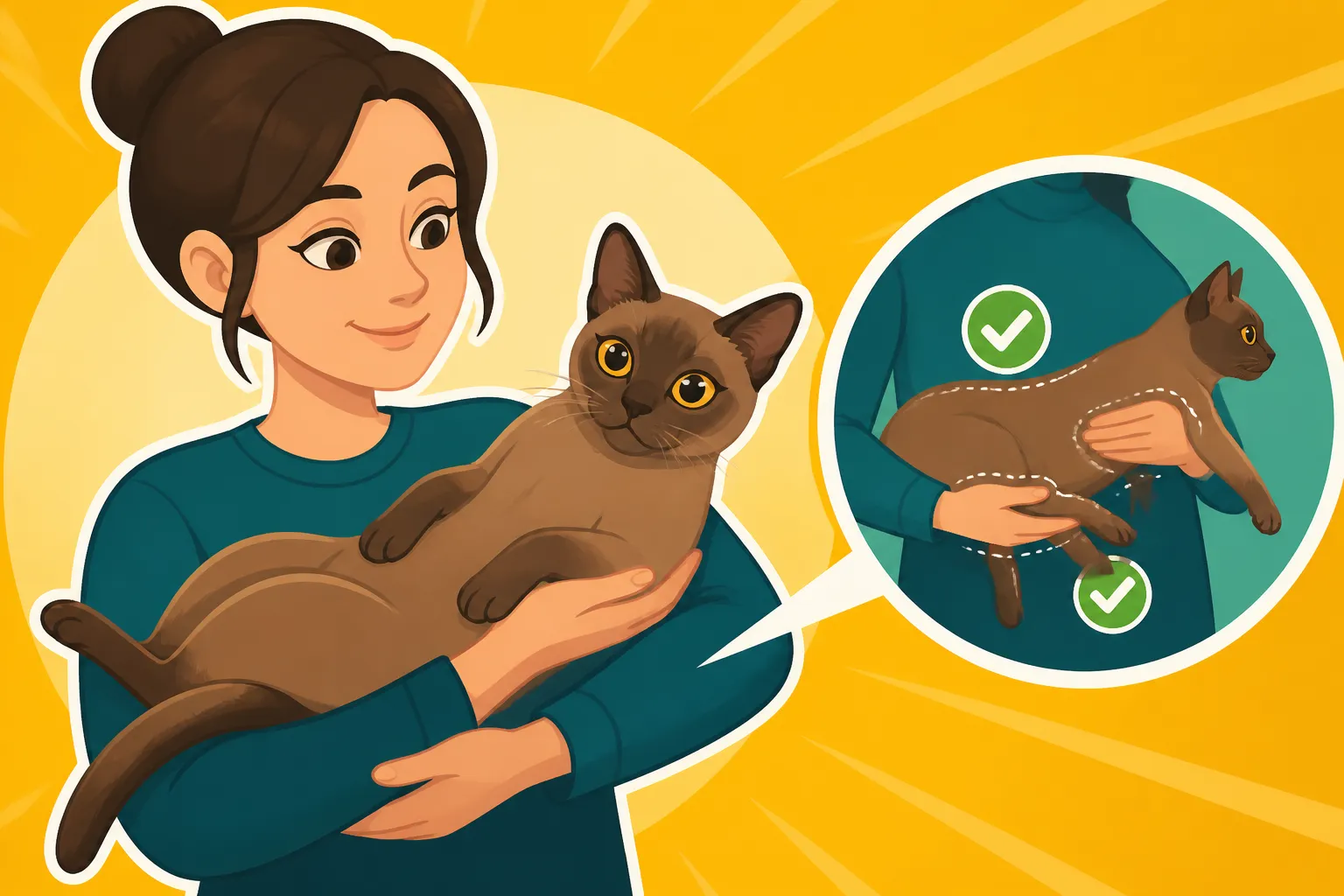
How to Carry a Burmese Around Without Dropping It
Oh, the sheer joy (and occasional minor panic) of trying to scoop up your beloved Burmese! They are such incredibly affectionate cats, always wanting to be right there with you, often on you. They'll climb onto your lap, drape themselves across your shoulders, and even try to ride around like a tiny, furry backpack. But for all their devotion, their unique build and boundless energy can make carrying them a bit of an Olympic sport. Many an owner has felt that tell-tale shift, that sudden wriggle, and the heart-stopping moment their precious kitty seems to transform into a greased-up football ready to hit the floor. This guide is all about mastering the art of the secure carry, so you can enjoy those moments of closeness without the constant worry of an accidental drop.
Understanding the Burmese Build and Temperament
Before we even get to the mechanics of picking them up, it's crucial to understand why carrying a Burmese can feel different from carrying other cats. It's not just their personality; it's their physical makeup, combined with their intense desire for human connection, that makes them both a delight and a challenge to hold.
The "Brick Wrapped in Silk" Reality
One of the first things you notice about a Burmese, especially if you're used to other cat breeds, is how surprisingly heavy they feel for their size. There's a well-known saying in the cat fancy that describes them as "a brick wrapped in silk," and it's absolutely spot-on. They have a compact, muscular body, heavy boning, and a dense, surprisingly weighty feel. What looks like a sleek, elegant cat can suddenly become a solid, dense mass in your arms. This isn't fat; it's pure muscle, which means they have incredible strength and leverage for their relatively small frame. When they decide they want to move, they can put a surprising amount of power into a wriggle or a stretch, making them feel incredibly slippery. You might think you have a good grip, but their muscle density means they can shift their weight dramatically and quickly, often without warning. This is why many owners are initially taken aback when they go to pick up their Burmese – they are just so much heavier than they appear. It's not uncommon to misjudge their weight and find yourself losing your balance a little bit, or feeling like your arms just aren't quite ready for the heft. Why a Burmese Weighs More Than It Looks
Their Need for Closeness
Burmese cats are famous for their utterly devoted, "Velcro cat" personalities. They thrive on human companionship and genuinely want to be part of everything you're doing. This isn't just about being in the same room; it's about physical contact. They will follow you from room to room, sit on your lap the moment you sit down, and often seek out a spot on your shoulder or chest. The Burmese Is the Velcro Cat of the Cat Fancy This intense desire to be close extends naturally to wanting to be picked up and carried. They see it as another opportunity for connection, for purrs, and for receiving head scratches or belly rubs. However, this enthusiasm can sometimes work against a secure hold. Their eagerness to nuzzle, to rub their face against yours, or to simply shift to get more comfortable can cause them to destabilize in your arms. They're not trying to escape you; they're trying to engage with you, and that engagement can involve a lot of movement. They often give a clear signal before they want to climb you, sometimes rubbing against your legs or reaching up with a paw, asking for that connection. The Signal a Burmese Gives Before It Climbs You
How Their Agility Plays a Role
Despite their compact, muscular build, Burmese are remarkably agile. They are natural climbers and jumpers, capable of astonishing feats of athleticism. While they might not be as slender as a Siamese, they possess a strong, flexible spine and powerful hind legs that allow for quick, explosive movements. This agility is a double-edged sword when it comes to carrying them. On one hand, their athletic prowess means they can be very good at adjusting their balance in your arms. On the other hand, it also means they can launch themselves off you with incredible speed and grace if they decide they've had enough, or if they spot something more interesting. They might see a bird outside the window, hear a noise in another room, or simply decide they're ready to explore something new, and with a swift, powerful kick, they're gone. This isn't a clumsy fall; it's a deliberate (and often unexpected) departure. This combination of surprising weight and sudden agility means you need to be constantly aware of their body language and ready to adjust your grip.
The Fundamentals of a Secure Hold
The key to successfully carrying a Burmese isn't brute strength, but proper technique and an understanding of their body mechanics. You want to make them feel safe and supported, which will, in turn, make them more relaxed and less likely to squirm.
Supporting the Whole Body
This is probably the most crucial piece of advice for carrying any cat, but especially a muscular, active Burmese. Never pick up a cat by just their front legs, scruff, or under their armpits alone. This can be uncomfortable, cause anxiety, and potentially injure their spine or shoulders. A truly secure hold involves supporting their entire body weight, from chest to hindquarters. Think of your hands as forming a solid platform for them. One hand should be supporting their chest and front legs, while the other hand (or forearm) is supporting their rump and back legs. This distributes their weight evenly and prevents them from feeling unbalanced or like they're dangling. When their full weight is supported, they feel much more secure and are less inclined to panic or try to wriggle free. Imagine if someone tried to pick you up by only holding your arms – you'd feel vulnerable and probably try to brace yourself or push away. Cats feel the same.
The 'Football Hold' Technique
For a smaller Burmese, or one that's particularly squirmy, the "football hold" can be incredibly effective. This technique provides excellent security and keeps them close to your body, minimizing their ability to wriggle free.
Here’s how to do it:
- Scoop Them Up: Start by placing one hand under their chest, just behind their front legs.
- Support the Rear: Use your other hand to scoop under their hindquarters, supporting their entire lower body.
- Bring Them to Your Side: Gently bring your Burmese to your side, tucking their body against your hip or waist, much like a running back carries a football.
- Arm Over Back: The arm that's supporting their hindquarters should extend along their back, with your hand coming up to support their chest again, or even gently hold their front paws if they're particularly active. This creates a secure "cradle" with your arm along their body.
- Forearm Under Belly: Your other forearm will be under their belly, providing additional support and keeping them snug against you.
This position keeps their body tight against yours, limiting their range of motion for wriggling. Their head can peek out, allowing them to see what's going on, and they often feel quite secure in this position. It also leaves one of your hands relatively free, which can be useful if you need to open a door or grab something quickly.
The 'Shoulder Rider' Adaptation
Burmese cats are famous for wanting to ride on your shoulder. It’s part of their charm, a peculiar habit that endears them to their owners. Why a Burmese Rides on Your Shoulder They often aim for your shoulder rather than just your lap, probably because it gives them a better vantage point and keeps them even closer to your face for nuzzles and purrs. While they might try to leap straight up there, it's safer to facilitate this move, especially if you're concerned about dropping them.
Here's how to manage the shoulder ride:
- Start with a Cradle: Begin by picking them up using the full-body support method, perhaps in a gentle baby cradle hold (more on that later) in front of you.
- Guide Them Up: As they inevitably begin to climb towards your shoulder, guide them with your hands. One hand should still support their hindquarters, pushing them gently upwards as they try to gain purchase on your chest.
- Secure Their Hindquarters: Once they are on your shoulder, don't just let go. Keep one hand gently supporting their hindquarters or under their belly, especially if you're moving around. This prevents them from sliding down your back or losing their footing.
- Offer a "Perch": You can also offer a bent arm for them to perch on, giving them a more stable platform than just the fabric of your shirt. Many Burmese will happily drape themselves across your shoulders and neck, using your arm for extra support.
- Be Mindful of Claws: While Burmese are generally very gentle with their claws, especially with their favorite humans, an accidental slip could mean a momentary digging in. Wear a thicker shirt or be prepared for a quick adjustment if you feel a claw.
Remember, even when they're on your shoulder, maintaining some form of lower body support, particularly if you're walking, can prevent unexpected tumbles. This keeps them safe and allows them to enjoy their elevated view.
Advanced Carrying Techniques for the Agile Burmese
Once you've mastered the basics, you can expand your repertoire of carrying techniques to suit different situations and your Burmese's individual preferences.
The 'Baby Carry' for Affectionate Moments
This is the classic "cradle" position, perfect for those moments when your Burmese just wants to snuggle and be adored. It's fantastic for making them feel loved and secure, and it provides ample opportunity for head butts and purrs.
- Full Body Scoop: As always, start by scooping them up with one hand under their chest and the other under their hindquarters.
- Cradle Them: Gently bring them to your front, turning them so they are lying on their back or side, nestled in the crook of one arm.
- Support the Spine: Your arm should support their entire spine and head. Your hand from that arm can then come up to gently support their chest or front legs.
- Secure the Rear: Your other hand should be supporting their hindquarters, ensuring their back end isn't dangling. This hand can also be used to gently stroke them or give a belly rub.
This position is incredibly comforting for many Burmese. It leaves their face accessible for nuzzles, and they often settle down quickly, purring like tiny engines. It's ideal for carrying them short distances or simply for sitting down and enjoying some quality cuddle time.
Walking While Carrying: The "Human Sling"
Sometimes you need to carry your Burmese for a longer period, perhaps from one end of the house to another, or even just around the living room while you do light chores. This is where you can become a "human sling."
- Secure the Base: Start with a football hold or a firm, full-body scoop. The goal is to keep them securely against your body.
- One Arm, Full Support: Once scooped, you'll shift them to one arm. The forearm of that arm will run along their belly, supporting their entire underside. Your hand will cup their chest.
- The "Hug" Method: Use your other arm to gently "hug" your Burmese into your body, pressing them close to your chest or side. This arm isn't carrying their weight but is providing lateral stability, preventing them from wriggling sideways or backwards.
- Be Mindful of Movement: Take slow, deliberate steps. Avoid sudden turns or jerks. Your Burmese will feel the rhythm of your movement and learn to adjust. This method works well for getting things done while still keeping your Velcro cat close. Why a Burmese Cannot Let You Leave the Room
Anticipating the "Jump-Off"
Burmese cats are intelligent and communicate clearly, if you know how to read them. Part of being a good carrier is knowing when they've had enough and want to be put down. Forcing a carry when they're ready to jump is asking for trouble and a potential fall.
Here are some signs your Burmese might be ready to disembark:
- Tail Twitching: A rapid, irritated tail twitch.
- Body Stiffening: Their body goes rigid, tensing up rather than relaxing into your hold.
- Shifting Weight: They start pushing with their hind legs or shifting their weight, clearly trying to get leverage.
- Vocalization: A low growl, an agitated rumble, or even a soft "mrrrp" that sounds more like a complaint than a greeting.
- Ear Position: Ears flattening slightly or swiveling rapidly, indicating heightened awareness and a desire to move.
When you see these signs, it's time for a gentle, controlled release. Bend down close to the floor, or a stable surface like a couch or table, and let them step off. Don't simply drop them from your height. This shows them you respect their autonomy and builds trust, making future carrying experiences more positive.
Building Trust and Making Carrying a Positive Experience
Carrying your Burmese should be a pleasant experience for both of you. It's a bonding opportunity, not a wrestling match. By building trust and making it positive, you'll find your Burmese is much more amenable to being held.
Starting Early with Kittens
If you're lucky enough to bring home a Burmese kitten, start handling and carrying them from day one. Burmese kittens are naturally curious and often insist on being handled anyway, so it's a great opportunity to establish positive associations. Why a Burmese Kitten Insists on Being Handled
- Gentle and Frequent: Pick them up frequently, but for short periods. Use the full-body support method from the beginning.
- Positive Reinforcement: Immediately follow a successful carry with praise, a gentle stroke, or a tiny, healthy treat.
- Exposure to Movement: Gently carry them around the house, showing them different rooms and introducing them to various sounds and sights while being held. This normalizes the experience.
- Teaching Children: If you have children, teach them how to safely and gently pick up and carry the kitten. Supervise all interactions closely. Teaching a Child to Carry a Burmese on a Shoulder
Consistency in gentle handling from a young age will help your Burmese grow into an adult who trusts being carried and even seeks it out.
The Reward System
Positive reinforcement is powerful with Burmese cats, especially considering their strong food drive. Making carrying a rewarding experience will transform it from something they tolerate into something they actively enjoy.
- Treats: Keep some small, desirable treats handy. Immediately after picking them up and settling them in a secure hold, offer a treat. This creates a direct association: being carried = good things happen. Brands like Amazon offer a wide variety of cat treats, so you can find one your Burmese absolutely adores.
- Praise and Affection: Use a happy, soothing voice, showering them with praise ("Good kitty! What a clever cat!") and gentle strokes or chin rubs while you're holding them.
- Short and Sweet: Don't overdo it, especially in the beginning. End the carrying session on a positive note before they get restless. If they squirm, gently put them down, wait a moment, and try again later rather than making it a struggle.
Over time, your Burmese will learn that being picked up means attention, affection, and often a tasty reward, making them much more willing participants. Their affectionate nature makes them very receptive to this kind of positive interaction. Why a Burmese Pushes Its Face Into Your Palm
Reading Your Burmese's Signals
Every Burmese is an individual, and while they are generally very tolerant and affectionate, they will have their moments or preferences. Learning to read your cat's specific body language is key to ensuring a positive carrying experience.
Signs of Comfort and Enjoyment:
- Relaxed Body: A soft, pliable body that molds into your arms.
- Purring: The ultimate sign of contentment. A Burmese's rasping rumble is famous! The Rasping Rumble a Burmese Uses Instead of a Meow
- Slow Blinks: A sign of trust and relaxation.
- Head Nuzzles/Rubbing: They might rub their head against your face or chest.
- Tail Held High or Curled: A happy, confident tail posture.
Signs of Discomfort or Stress:
- Stiffening Body: As mentioned earlier, a rigid body often means they want down.
- Dilated Pupils: Can indicate fear or anxiety.
- Ears Flattened/Swiveled Back: A sign of irritation or nervousness.
- Rapid Tail Movement: Not a slow wag, but quick, agitated flicks.
- Attempting to Leap: This is the most obvious sign, and you need to respond immediately by safely lowering them.
By being attentive to these signals, you can adjust your carrying method or simply put them down before they feel the need to escape. This builds a strong bond of trust, showing your Burmese that you understand and respect their boundaries, ultimately making them happier to be held and handled.
Below is a table summarizing different carrying techniques and their best use cases:
| Carrying Technique | Best Use Case | Key Support Points | Pros | Cons |
|---|---|---|---|---|
| Football Hold | Transporting, squirmy kittens, short distances | Chest, belly, hindquarters, tucked against hip | Very secure, limits wriggling, one hand free | Can feel awkward for very large Burmese |
| Shoulder Rider | Companion walking, nuzzles, elevated view | Hindquarters/belly (gentle), chest on shoulder | Max contact, natural for Burmese, bonding | Requires vigilance, potential for claws |
| Baby Carry | Cuddling, affection, close interaction | Entire spine, head, chest, hindquarters | Highly comforting, excellent for bonding | Less practical for movement, two hands needed |
| Human Sling | Moving around house, light chores | Entire underside on forearm, hugged to body | Allows movement, constant contact | Less free movement for owner, potential strain |
| Two-Handed Scoop | Initial lift, preparing for another hold | One hand under chest, one hand under hindquarters | Most basic, foundational for all other holds | Not a long-term carry, requires active support |
Remember, your Burmese wants to be with you, and learning to carry them safely and comfortably will only strengthen that incredible bond. It might take a little practice, but soon you'll be navigating your home with your affectionate "brick wrapped in silk" securely in your arms.
Disclaimer
This article is for general informational purposes only and does not constitute professional advice. Laws, prices and regulations vary by location and change over time. Consult a qualified professional for guidance on your specific situation.