Why a Burmese Wants to Be Part of a New Baby’s Routine
Bringing a new baby home is an incredibly exciting, albeit overwhelming, time for any family. Amidst all the joy and preparation, many Burmese cat parents find themselves wrestling with a quiet anxiety: "How will my wonderfully affectionate, utterly clingy Burmese react to this tiny new human?" It’s a very real concern, because Burmese cats are notorious for their deep attachments and desire to be the center of your world. This guide is here to reassure you and provide actionable steps, explaining precisely why your Burmese will likely want to be an integral part of your new baby's routine and how to make that transition smooth and joyful for everyone.
The Burmese's Innate Need for Connection and Company
One of the most defining characteristics of the Burmese cat breed is their profound need for social interaction and constant company. They aren't just pets; they're family members who demand to be involved in every aspect of your life. This intense social drive means that when a new baby enters the home, your Burmese isn't likely to retreat in fear or disinterest. Instead, their natural inclination will be to investigate, integrate, and ultimately, become another devoted member of the baby's inner circle.
Why the Burmese Is a "Velcro Cat"
If you live with a Burmese, you already know they've earned the affectionate nickname "Velcro cat" for a reason. They stick to you, following you from room to room, sitting on your lap, riding on your shoulder, and generally inserting themselves into whatever you're doing. This isn't just a cute quirk; it's a fundamental part of their personality and genetic makeup. They thrive on interaction and physical closeness. For a Burmese, human presence isn't just preferred, it's essential for their well-being. They become deeply bonded to their human companions, often singling out one person as "their" person, but extending their affection to the entire household.
When a new baby arrives, this inherent need for connection doesn't suddenly disappear. In fact, it often intensifies. Your Burmese will notice the shift in attention, the new smells, sounds, and rhythms, and their instinct will be to figure out how they fit into this new dynamic. They don't want to be excluded; they want to understand and participate. Rather than seeing the baby as a rival, many Burmese will view them as a new, interesting, and potentially very cuddly addition to their beloved family unit, which they are inextricably a part of. This deep-seated desire to be close, to understand, and to interact is the driving force behind their ambition to join the baby's routine.
How New Routines Impact a Highly Social Breed
Changes in routine can be unsettling for any animal, but for a highly social breed like the Burmese, they can be particularly impactful. The arrival of a baby irrevocably alters the household's rhythm: new feeding schedules, interrupted sleep, different sounds, and shifts in where and when people spend their time. For a Burmese, who often thrives on predictability and constant companionship, these changes can be a source of curiosity and, if not managed well, potential anxiety.
However, a well-adjusted Burmese generally adapts by trying to incorporate themselves into the new normal. If you're spending more time in the nursery, your Burmese will likely want to be in the nursery with you. If you're sitting on the couch feeding the baby, don't be surprised if your Burmese jumps up to cuddle next to you, perhaps even trying to get a sniff of the little one. Their goal isn't to disrupt; it's to remain connected. They understand that the family unit is changing, and they instinctively seek to remain a central, valued part of it. This means they'll quickly learn the baby's schedule – when they're likely to be fed, when they'll cry, when they'll sleep – and will find ways to weave their presence into these moments. Why a Burmese Cannot Be Left Alone All Day becomes even more poignant here; they genuinely crave that shared existence, and the baby simply represents a new focal point for that shared life.
Understanding the Burmese's Curiosity and Protective Instincts
It's natural to worry about how your cat will react to such a delicate new member of the family, but the Burmese breed often surprises owners with their gentleness and inherent curiosity. They don't typically exhibit aggression or extreme fear towards infants; instead, they approach the unknown with a measured inquisitiveness, often combined with a surprising protective streak.
Curiosity: The Burmese Approach to the Unfamiliar
Burmese cats are incredibly intelligent and naturally inquisitive creatures. They don't shy away from new things; they actively seek them out to investigate. A new baby presents a fascinating array of novel sights, sounds, and most importantly, smells. Their powerful sense of smell will be the primary tool they use to understand this tiny intruder. They'll want to sniff the baby's head, their blankets, and anything else associated with them. This isn't aggression, but simply their way of gathering information and making sense of their changing world.
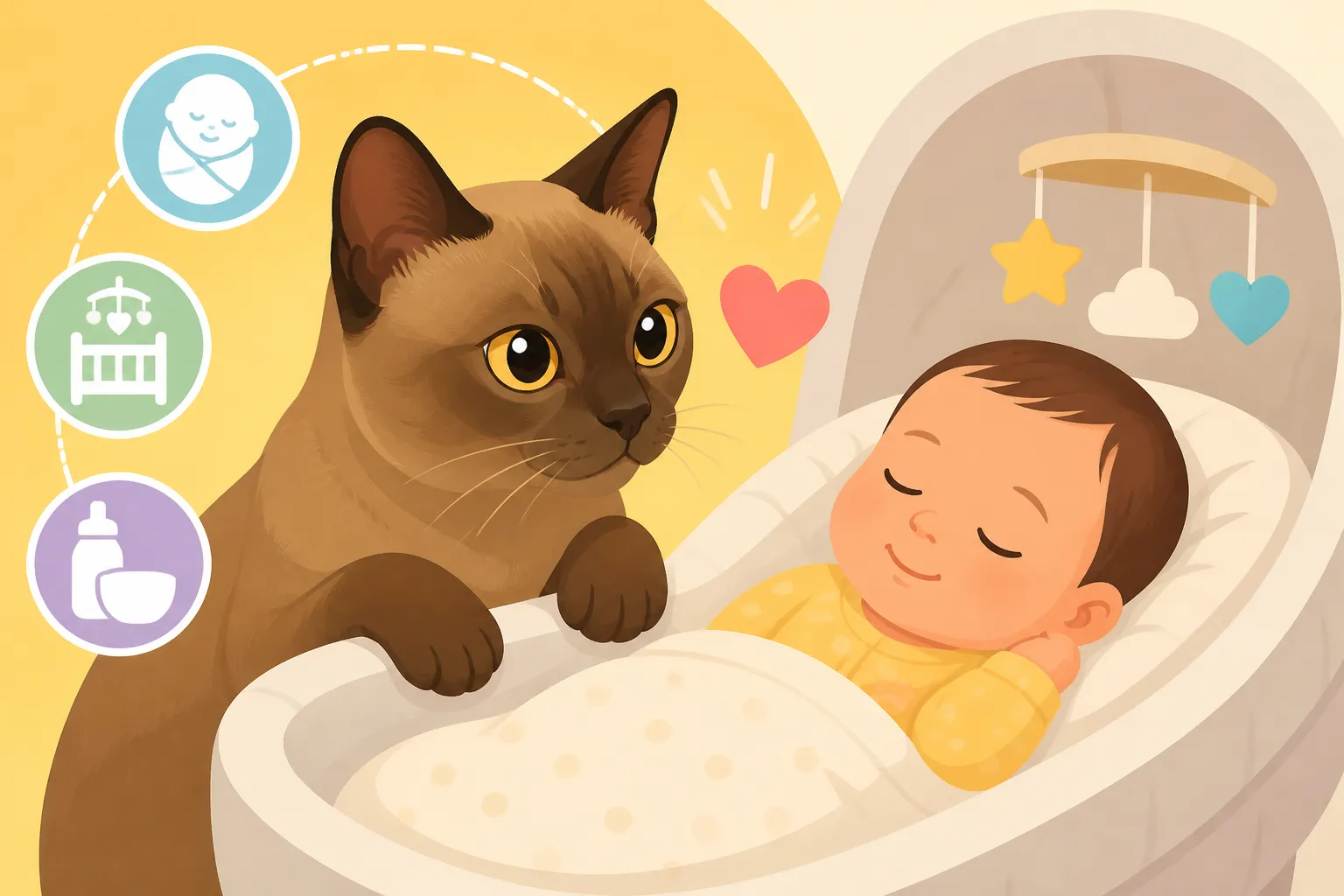
You might notice your Burmese cautiously approaching the bassinet or pram, giving it a good sniff. They might even try to nudge the baby gently with their head, a common sign of affection and bonding within the feline world. This isn't unlike how they might approach a new piece of furniture or an Amazon package that has just arrived—it's something new, and it needs their full attention and approval. Allowing them to explore and satisfy their curiosity in a controlled, supervised manner is crucial. Trying to completely exclude them will only heighten their curiosity and potentially lead to more persistent attempts to get close when you're not around.
Gentle Giants: How Burmese Interact with Small Beings
Despite their muscular, compact build, Burmese cats are renowned for their gentle disposition, especially with children and other animals. They are often described as having the patience of a saint. Many Burmese owners report that their cats treat babies and toddlers with an almost inherent understanding of their fragility, carefully navigating around them and refraining from using their claws even during playful interactions. How Rarely a Burmese Uses Its Claws on Anyone is a testament to their generally mild nature.
This doesn't mean you should ever leave a cat unsupervised with an infant, of course. Common sense and safety precautions are always paramount. However, many Burmese will quickly become a comforting presence, often choosing to nap near the baby, sometimes even "guarding" the crib from a safe distance. They seem to intuitively understand that this tiny human is now part of their cherished family and deserves their gentle attention. I've heard countless stories of Burmese cats becoming the baby's shadow, purring softly whenever the baby cries, or gently nuzzling an outstretched hand. This behavior stems from their deep love for their family and their desire to protect and nurture those they care about.
Practical Steps to Integrate Your Burmese into Baby Life
Successfully integrating your Burmese into life with a new baby is absolutely achievable, and it hinges on thoughtful preparation and consistent effort. It's about respecting your cat's needs while ensuring the safety and comfort of your infant. The key is to introduce changes gradually and to make your Burmese feel secure and cherished throughout the transition.
Gradual Introduction and Scent Acclimation
Preparation begins long before the baby comes home. Start by slowly introducing baby-related items into your home. Set up the nursery, assemble the crib, and bring out new blankets and clothing. Allow your Burmese to explore these new items on their own terms, under your supervision. Their keen sense of smell will be working overtime. When the baby is born, but before they come home, bring a blanket or a piece of clothing that the baby has worn back to the house. Let your Burmese sniff it, associating that new, intriguing scent with something positive, like a treat or a gentle pet.
When the baby first arrives home, keep initial interactions brief and supervised. Allow your Burmese to approach you while you're holding the baby. Speak calmly and reassuringly to your cat. Never force an interaction. Let them sniff at their own pace. You might find your Burmese simply observing from a distance at first, and that's perfectly fine. Reinforce positive associations by offering praise and treats when they are calm and curious around the baby. Remember, the goal isn't immediate best friends, but calm acceptance and integration. Why a Burmese Purrs Through a Vet Examination highlights their capacity for accepting new experiences with the right handling, and this principle applies here too.
Maintaining Your Burmese's Sense of Security
One of the biggest concerns for cat owners is that their beloved pet will feel neglected or replaced once a baby arrives. For a Burmese, whose entire world revolves around human interaction, this feeling can be genuinely distressing. To prevent feelings of jealousy or anxiety, it's crucial to maintain as much of your Burmese's routine as possible, and to dedicate specific, uninterrupted time to them. Even short, consistent play sessions or cuddle times can make a huge difference.
- Dedicated Playtime: Even if it's just 10-15 minutes, make sure your Burmese gets focused playtime with their favorite wand toy or a game of fetch. This helps them burn off energy and reinforces your bond. How Many Play Sessions a Burmese Asks For will give you an idea of their demands.
- Cuddle Sessions: Continue your usual snuggle times. If you used to watch TV with your Burmese on your lap, try to keep that going. They understand that your attention is divided, but knowing they still have their special spot and time with you is invaluable.
- Positive Reinforcement: When the baby is asleep, or during quiet moments, make an extra effort to praise and interact with your Burmese. Show them that they are still a valued member of the family. If they approach the baby gently, reward them with a treat and soft words. This helps create a positive association with the baby's presence.
Creating Safe Spaces for Both Baby and Cat
Safety is non-negotiable. While Burmese cats are generally gentle, any animal with an infant requires supervision. Creating safe, designated spaces for both the baby and your Burmese is vital for a harmonious household.
- For the Baby: The baby's crib or bassinet should always be a cat-free zone. Consider using a screen door or a net cover for the crib, especially when the baby is sleeping unsupervised. There are also clever Amazon products, like mesh crib tents, designed specifically to keep pets out of the sleeping area. This isn't about punishing your cat, but ensuring the baby's safety from accidental overlaying or hair ingestion.
- For the Cat: Ensure your Burmese still has their own high-up perches, beds, and hiding spots where they can retreat if they feel overwhelmed or simply want a quiet nap away from baby sounds. A cat tree in a sunny window or a cozy bed under a table can provide a much-needed sanctuary. Make sure their food, water, and litter boxes are in areas easily accessible to them but out of the baby's reach. This helps reduce stress and prevents potential hygiene issues. If your Burmese gets upset when you close a door on them, you'll need to work on this gently. What a Burmese Does When It Is Shut Out of a Room describes their persistent nature, so training is key here.
Common Challenges and How to Address Them
Even with the best intentions and preparations, bringing a baby home will present its own set of challenges. Knowing what to look out for and how to respond can make all the difference in ensuring a smooth transition for your Burmese and your family.
Managing Over-Excitement or Jealousy
Sometimes, a Burmese's intense curiosity can manifest as over-excitement, especially in a younger cat that still exhibits a lot of kittenish energy. They might be a bit too enthusiastic in their approaches, or they might try to jump into the crib despite your best efforts. Other times, the shift in attention can lead to subtle signs of jealousy or stress. You might notice them acting out, perhaps What Separation Anxiety Looks Like in a Burmese if they are suddenly alone more, or exhibiting behaviors like increased vocalization or even inappropriate elimination.
It’s important to address these behaviors gently but firmly. Redirect any overly boisterous attention with a favorite toy. If your Burmese is trying to jump into the crib, use a firm "no" and immediately redirect them to a more appropriate activity or their own safe space. Never yell or punish your cat, as this can create fear and resentment. Instead, focus on rewarding calm behavior around the baby. If you suspect jealousy, double down on those dedicated one-on-one play and cuddle times. If they are showing signs of anxiety, like excessive grooming or withdrawal, consult your vet. Often, the solution is simply more focused attention and reassurance that their place in the family is secure.
Ensuring Hygiene and Safety for Everyone
Practical concerns like hygiene and safety are paramount when you have both a baby and a cat in the house. While Burmese are generally very clean animals, there are a few considerations to keep in mind.
- Litter Box Maintenance: This is critical. Ensure litter boxes are scooped daily, ideally twice a day. A clean litter box reduces odors and minimizes the risk of bacteria spreading. Consider a covered litter box or one placed in a low-traffic area that is easily accessible to your cat but less so to a curious crawling baby. You can find excellent pet-safe litter box liners and scoopers on Amazon to make this task easier.
- Claw Trimming: Regular claw trimming is a must, even for the gentlest Burmese. While How Rarely a Burmese Uses Its Claws on Anyone is true, accidents can happen, and a sharp claw could unintentionally scratch delicate baby skin. Make it a routine part of your cat's care, perhaps while they are relaxed on your lap.
- Supervision is Key: Never, ever leave your Burmese unsupervised with your baby. Even the most loving and gentle cat can accidentally step on a baby or get spooked by a sudden movement. Always maintain a watchful eye or use physical barriers like baby gates when you can't be in the room. This ensures the safety of your baby and peace of mind for you. Remember, a happy, well-adjusted Burmese will actually embrace the new addition, often surprising you with their gentle nature and protective instincts. They truly want to be part of the family, including the smallest member.
| Integration Checklist for Your Burmese and New Baby |
|---|
| Before Baby Arrives |
| Introduce baby items gradually |
| Allow cat to explore nursery items |
| Maintain normal cat routines (feeding, play) |
| Bring home baby's scent (blanket/clothing) |
| When Baby Arrives |
| Supervise all initial interactions |
| Keep interactions brief and calm |
| Offer praise/treats for calm behavior |
| Ensure dedicated cat-time daily |
| Ongoing Practices |
| Maintain crib as cat-free zone |
| Provide safe retreat spaces for cat |
| Regular litter box cleaning (twice daily) |
| Consistent claw trimming |
| Never leave cat unsupervised with baby |
Bringing a new baby into a home with a Burmese cat can be one of the most rewarding experiences. Your Burmese, with their unparalleled capacity for affection and their desire to be involved in every aspect of family life, will very likely embrace the new arrival with curiosity and a surprising gentleness. By understanding their social needs, preparing them for the changes, and diligently ensuring everyone's safety, you can foster a beautiful bond between your "Velcro cat" and your little one, creating an even richer, more loving household. Your Burmese truly wants to be part of the baby's routine, and with your help, they can become a wonderful, albeit furry, protector and companion.
Disclaimer
This article is for general informational purposes only and does not constitute professional advice. Laws, prices and regulations vary by location and change over time. Consult a qualified professional for guidance on your specific situation.