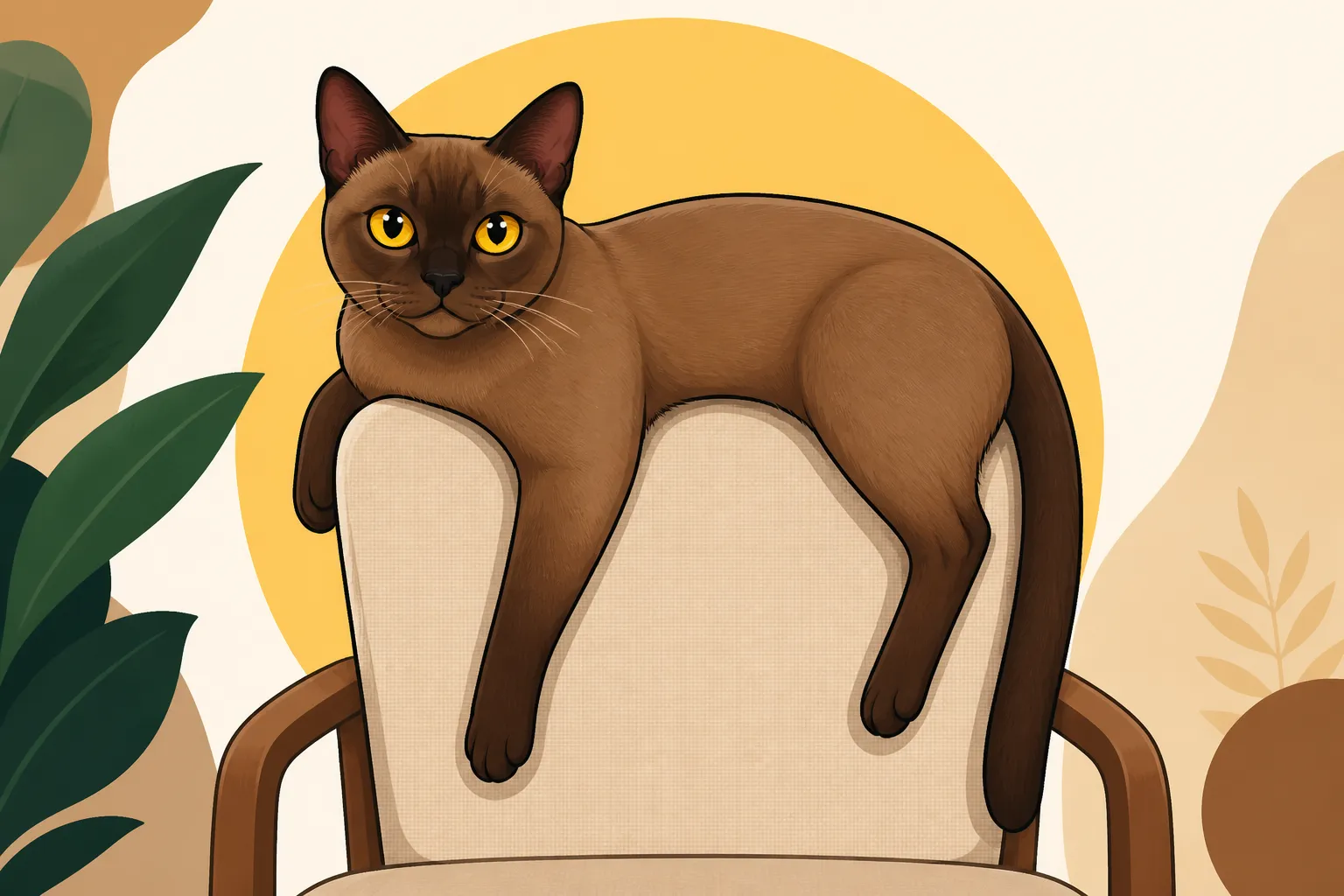
Why a Burmese Drapes Across the Back of a Chair
You've probably seen it a hundred times: your beautiful Burmese cat, a picture of feline elegance, stretched out like a long, liquid scarf across the very top of your armchair or sofa back. It's a classic Burmese pose, isn't it? One minute they're a blur of playful energy, the next they're draped so perfectly, you'd think they were custom-made for that specific piece of furniture. While it might look like just another quirky cat habit, there are some very distinct and understandable reasons why your Burmese finds the back of your chair such an irresistible spot, and understanding these can help you appreciate their unique needs and behaviors even more.
The Burmese's Innate Need for Height and Observation
Our beloved Burmese may be domestic divas, but deep down, they still carry the instincts of their wilder ancestors. Draping across the back of a chair isn't just about looking regal; it’s a deeply ingrained behavior linked to security, observation, and their intelligent nature.
A Vantage Point for Their World
Imagine for a moment being small and living in a world of giants (that's us!). From the floor, the world can feel a bit overwhelming, with feet stomping by and objects appearing and disappearing from view. A chair back offers a superior vantage point, allowing your Burmese to survey their entire domain. They're naturally curious creatures, always wanting to know what's happening, who's coming and going, and what exciting new smells might be wafting through the air. From up high, they can keep tabs on everything without feeling like they're in the thick of it all.
This elevated perch gives them a sense of control over their environment, a feeling of being "on top of things," both literally and figuratively. They can observe family activities, such as you cooking dinner or children playing, from a safe, slightly removed position. It’s like their own personal surveillance station, where they can watch the "goings-on" with a keen, intelligent gaze. It satisfies their active minds, allowing them to engage with their surroundings in a way that simply isn't possible from floor level. They're not just sleeping; often, they're intensely processing everything happening around them.
Mimicking Natural Instincts
In the wild, higher ground offers protection. It allows animals to spot potential threats from a distance, assess the landscape, and choose the best escape route if necessary. While your cozy living room might not have prowling predators, these ancient instincts persist in our domestic cats. Draping over a chair back is a modern interpretation of seeking a high perch in a tree or on a rock outcropping. It feels inherently safer, away from the hustle and bustle of floor traffic.
Even if your home is a peaceful sanctuary, this instinct provides psychological comfort. It can be particularly noticeable if you have other pets, like a dog, or energetic young children. From the chair back, your Burmese can observe their housemates without being constantly engaged. It’s a strategic position that allows them to interact on their own terms, jumping down to play when they feel like it, and retreating to their lofty perch when they need a moment of peace. Think of it as their safe zone, a personal lookout tower where they can relax while still being fully aware of their surroundings.
Seeking Warmth and Comfort in Elevated Spots
Beyond the strategic advantages, there's a simpler, more primal reason your Burmese loves the back of your chair: pure comfort and warmth. These cats are absolute connoisseurs of coziness, and their unique physiology plays a big part in this preference.
The Burmese's Unique Coat and Temperature Sensitivity
If you've ever had the pleasure of petting a Burmese, you know their coat is something truly special. It's incredibly short, fine, and has that signature satin-like sheen. But what makes it so beautiful also makes them a bit more sensitive to temperature than many other breeds. Unlike cats with dense undercoats, the Burmese has very little insulating fluff. This means they feel the cold much more readily, especially in drafty areas or during cooler months.
The back of a chair, particularly one that's frequently occupied by a warm human, becomes a little heat reservoir. It captures and radiates body heat, offering a perfectly toasty spot for your cat to relax. They're like tiny, furry solar panels, constantly seeking out the warmest spot available. This is also why you often find them snuggled deep under the covers with you, or draped over a warm laptop. It's not just a preference; it's a physiological need for them. You'll frequently notice that Why a Short Coated Burmese Seeks Body Heat, making those warm, elevated spots even more appealing.
The Appeal of Soft, Familiar Surfaces
Beyond just warmth, the texture and familiarity of a chair back are highly appealing. The soft upholstery, perhaps worn smooth from years of use, offers a plush surface that conforms to their body. When your Burmese drapes itself, it's often molding itself to the contours, creating a snug little nest. Furthermore, these spots are often infused with the comforting scent of their human family members. Cats are very scent-oriented, and being surrounded by your smell, especially when you're nearby, brings a profound sense of security and contentment.
It’s the ultimate combination: soft, warm, and smells like home. This makes it an ideal location for a deep, satisfying nap or just a relaxed lounge. If you've ever noticed your Burmese kneading the chair back before settling down, that's them essentially "fluffing their nest" and releasing their own comforting scent glands. They're making it perfectly their own, a testament to how truly at ease they feel in that specific, elevated spot. Why a Burmese Sits on the Warmest Person in the Room is closely linked to this desire for heat and proximity, and the chair back offers a similar, if slightly indirect, experience.
The Social Connection: Proximity Without Pressure
Burmese cats are famous for their people-oriented personalities. They're often called "Velcro cats" for a good reason! But even the most affectionate feline needs a little personal space sometimes, and the chair back provides the perfect compromise.
Being Part of the Action, Not Necessarily In It
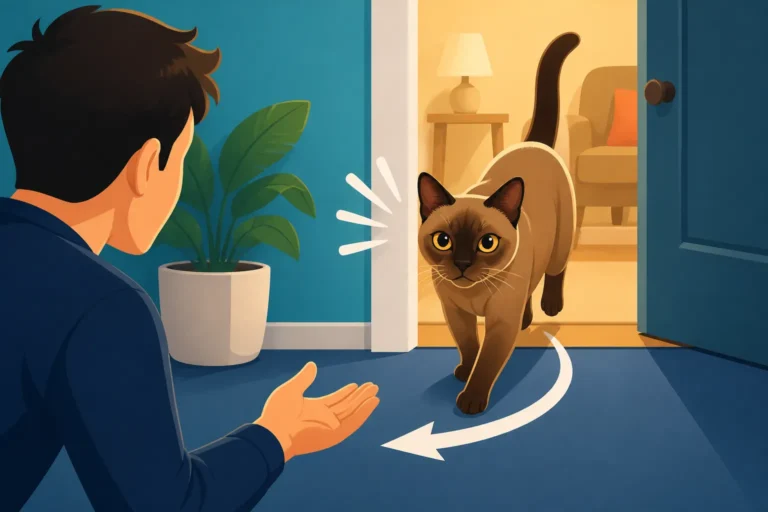
Your Burmese loves to be near you. They want to know what you're doing, and they often want to be a part of it, even if that just means "supervising" from afar. Draping over a chair back allows them to maintain this close proximity without being directly on your lap or constantly in your arms, which can sometimes be too warm or confining, especially if you're moving around. They get to be in the same room, experiencing the same sounds and smells, and feeling connected to your presence.
This position is a great way for them to express their social nature without demanding constant physical interaction. They are inherently curious and will follow you from room to room, and once you settle, they'll often find the nearest chair back to perch on. It's their way of saying, "I'm here with you, I'm comfortable, and I'm happy just being in your orbit." This behavior is a clear indicator of their deep bond with their humans and their desire to always be included. You'll find that Why a Burmese Cannot Let You Leave the Room stems from this same need for constant companionship and awareness of your whereabouts.
The "Velcro Cat" Tendency and Its Nuances
The term "Velcro cat" perfectly describes the Burmese's intense attachment to their human companions. They thrive on interaction and often want to be as close to you as possible. Draping on a chair back is simply another manifestation of this trait. It's a slightly less demanding form of "clinging" than, say, riding on your shoulder, but it still fulfills their need for closeness. They want to feel your presence, hear your voice, and know they're not alone.
Think of it as their strategic social spot. They can observe you, catch your eye, and be ready for a petting session the moment you reach out. It’s a way for them to stay connected and feel like a central part of the family unit. This deeply affectionate nature is one of the most cherished qualities of the breed, and even their quiet perching on a chair back is a testament to how much they adore their people. To learn more about this endearing trait, check out The Burmese Is the Velcro Cat of the Cat Fancy. They are truly unique in their desire for constant human companionship, and even when they seem to be just lounging, they are actively engaging with their environment and you. For instance, How Long a Burmese Will Ride on a Shoulder demonstrates another facet of their desire to be elevated and close to you.
Providing Safe and Stimulating Elevated Spots
Knowing why your Burmese loves to drape across chair backs can help you cater to their needs and even enhance their living environment. It’s not just about tolerating the behavior, but understanding it and offering suitable alternatives.
Understanding Your Burmese's Preferences
Every Burmese has its own quirky preferences, even within their shared breed traits. Take a moment to observe which chairs or spots your cat consistently chooses. Is it always the armchair by the sunny window? The one closest to the kitchen action? Or the sofa back right behind where you typically sit? Noticing these patterns can give you valuable insights. For example, if they always choose the spot near the radiator, it reinforces their need for warmth. If it's the one overlooking the busiest part of the house, it speaks to their observational instincts.
If you find that your chosen furniture pieces are becoming a little too fuzzy, or you simply want to offer more variety, consider creating additional safe, elevated spots. Many cat owners find that investing in a sturdy cat tree or installing wall-mounted cat shelves can provide excellent alternatives. These give your Burmese the height, warmth, and vantage points they crave without necessarily monopolizing your seating. You can often find a wide array of options on platforms like Amazon, from simple scratching posts with platforms to elaborate multi-level cat "condos."
Enhancing Their Environment
Once you've identified their favored spots or decided to create new ones, you can make them even more appealing. For instance, a soft, warm blanket draped over a chair back or placed on a cat tree platform can make it extra inviting, especially if your Burmese is one of those cats that truly feels the chill. Small, unobtrusive heated pads designed for pets can also be a fantastic addition in cooler climates, ensuring they have a consistently cozy spot. Remember, Why a Burmese Needs Somewhere Warm to Sleep is a key factor in their comfort. Always ensure that any added perching spots are stable and secure, so your adventurous climber feels safe.
Strategically placed cat shelves can transform a wall into a vertical playground, offering multiple levels for perching and exploring. You can even find shelves that include soft pads or small enclosed spaces for napping, providing both height and security. These additions can enrich your Burmese's life significantly, satisfying their instinctual needs and providing them with their own dedicated high-up havens. A quick search on Amazon for "cat wall shelves" or "heated cat beds" will show you just how many clever products exist to make your Burmese's world even more comfortable and stimulating.
Here's a quick comparison of popular elevated resting spots for your Burmese:
| Feature | Chair Back | Cat Tree | Wall Shelf |
|---|---|---|---|
| Height | Varies, usually human-seated height | Multi-level, can reach ceiling | Variable, often higher than cat trees |
| Comfort | Soft upholstery, human scent, body warmth | Plush fabric, sometimes hammock/bed inserts | Often comes with soft pads, can add blankets |
| Vantage Point | Good for observing rooms/people | Excellent for entire room overview | Superior for top-down view, out of traffic |
| Space Use | Uses existing furniture | Takes up floor space, can be bulky | Utilizes vertical wall space |
| Warmth | Absorbs human body heat, near radiators | Can be placed near heat, add heated beds | Less direct warmth, needs added insulation |
| Interaction | Close proximity to humans | Can be near or far from human activity | Can be integrated into human-centric areas |
| Cost | Free, uses existing furniture | Moderate to high | Moderate to high (installation needed) |
| Flexibility | Limited to furniture placement | Movable (within limits) | Fixed once installed |
Ultimately, your Burmese draping across the back of a chair is a beautiful blend of instinct, comfort, and their undeniable love for you. By understanding these reasons, you can better appreciate their unique charm and ensure they have plenty of cozy, elevated spots to reign from their satin-coated thrones. It’s just another one of those wonderful quirks that make living with a Burmese such a joy! They may also insist on sleeping in your bed, as Why a Burmese Will Not Sleep Anywhere but Your Bed is another common manifestation of their need for warmth and companionship.
Disclaimer
This article is for general informational purposes only and does not constitute professional advice. Laws, prices and regulations vary by location and change over time. Consult a qualified professional for guidance on your specific situation.