Why a Burmese Has No Road Sense
The heartbreak of a missing cat, or worse, one injured by a car, is a fear that gnaws at the heart of any cat owner. But for those of us who share our homes with a Burmese, that fear can feel particularly sharp because these wonderful, trusting creatures simply don't seem to grasp the dangers of the outside world, especially when it comes to traffic. This guide delves deep into why your beloved Burmese lacks "road sense" and, more importantly, what you can do to protect them.
The Unique Burmese Personality: A Double-Edged Sword for Outdoor Life
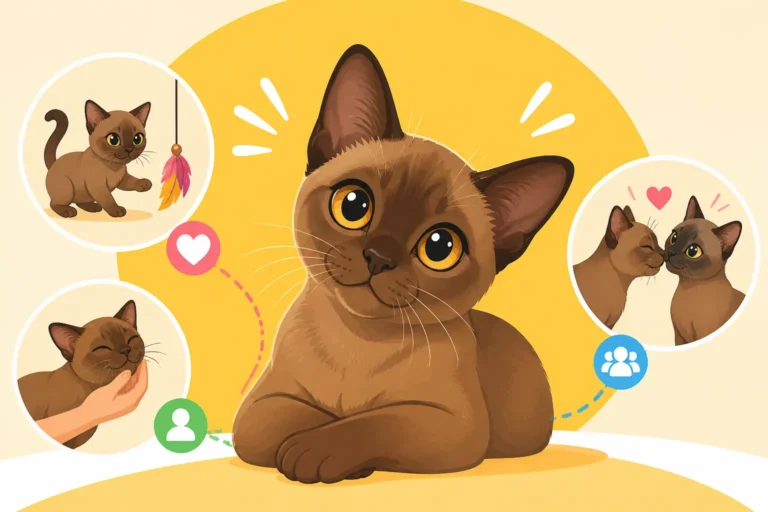
Burmese cats are truly something special. They're often described as "dogs in a cat's body" for a reason, right? They thrive on human interaction, follow us from room to room, and often prefer to be on our laps or shoulders. This intense sociability and unwavering trust are what make them such incredible companions, but these very traits become significant liabilities when they venture into the unpredictable outdoors.
Why Trust Trumps Caution in a Burmese
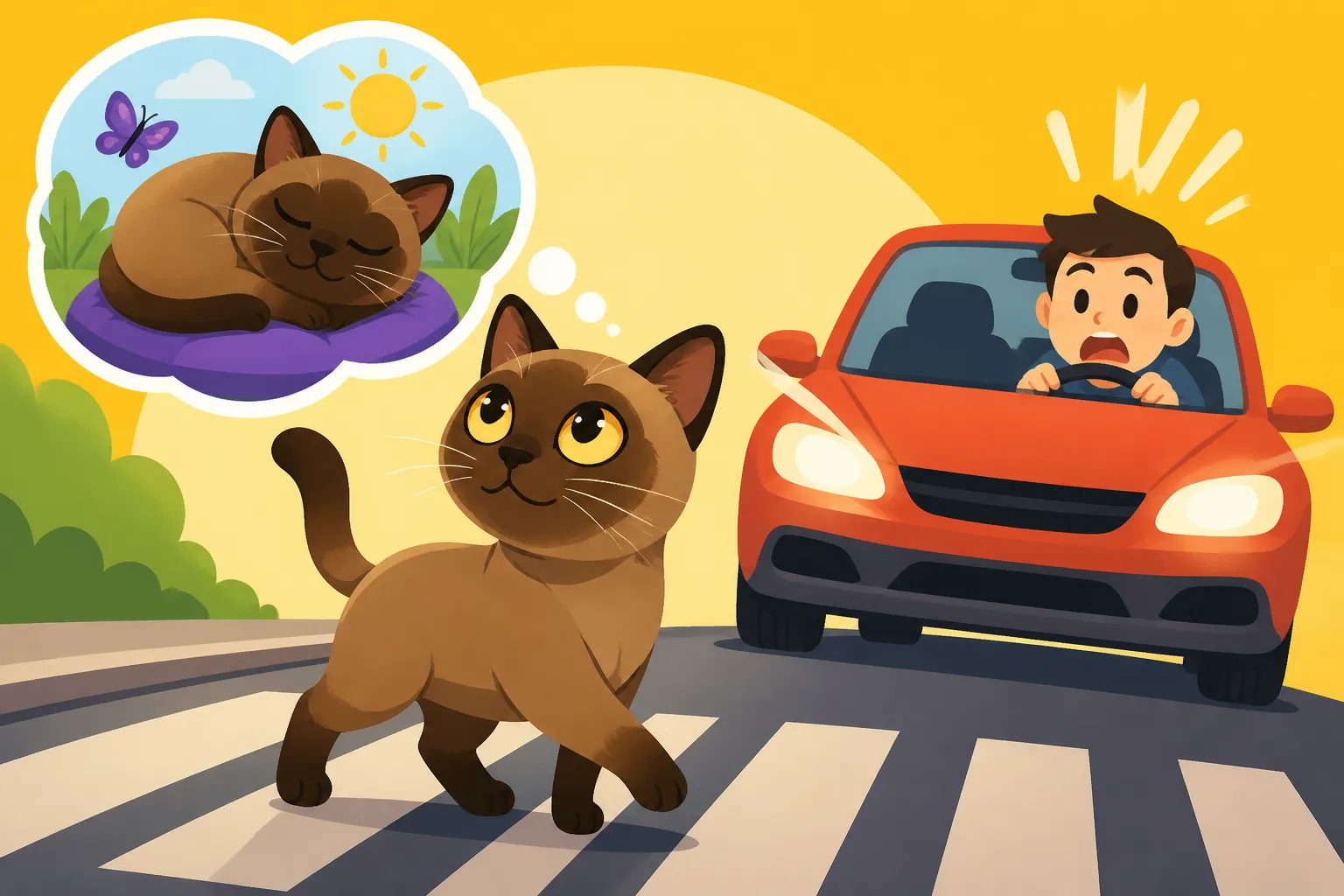
Unlike many other cat breeds that retain a strong sense of primal wariness and an instinct to flee from unknown or perceived threats, the Burmese often seems to lack this innate caution. Their default setting is curiosity and friendliness, even towards strangers. Imagine a typical cat seeing an approaching car – most would bolt, hide, or at least freeze. A Burmese, however, might pause, tilt its head, and even approach the shiny, noisy object out of sheer inquisitiveness. They don't register the car as a large, fast-moving threat in the same way a truly wild animal would.
This extends beyond just vehicles. They’re less likely to be fearful of loud noises, strange people, or even other animals. Their world is generally a safe, loving place, and they project that expectation onto their surroundings. This means they might wander confidently into a busy street, assuming any approaching vehicle will simply acknowledge their presence and stop, much like a human would in a home environment. It's a testament to their sweet nature, but a perilous one outside. This lack of inherent fear means they don't develop the quick, evasive maneuvers necessary to survive in traffic. For more on their trusting nature, check out Why a Burmese Trusts Strangers Too Much to Roam.
Their Social Nature Overrides Self-Preservation
Another facet of the Burmese personality that contributes to their poor road sense is their overwhelming need for company and interaction. A Burmese left alone, even in a garden, might actively seek out human presence. If they hear a noise or see a person down the street, their instinct isn't to hide, but often to investigate or greet. This drive for social connection can lead them directly into harm's way. They might dash across a road to reach a person they spot on the other side, or follow a passerby out of curiosity, completely oblivious to the dangers of the road they’re crossing.
Think about how a Burmese will follow you from kitchen to bathroom to bedroom, always wanting to be near. That same intense focus on human connection means they're less likely to be scanning their environment for dangers and more likely to be scanning for potential interaction. They perceive the world as a giant playground for connection, not a dangerous landscape of fast-moving metal.
Understanding the True Dangers Beyond Traffic
While traffic is often the first thing we think of when discussing "road sense," a Burmese faces a multitude of other dangers outdoors that their trusting nature makes them particularly vulnerable to. It's not just about cars; it's about the entire urban and suburban landscape.
Predators, Human and Animal
For many cats, the biggest outdoor threats are other animals – dogs, coyotes, or even territorial feral cats. While these are certainly risks for a Burmese, their friendly disposition puts them at an even higher risk from humans with ill intentions. A shy cat might hide from a stranger; a Burmese is more likely to rub against their legs, invite a pat, or even hop into an open car door if someone offers attention. This makes them prime targets for theft, especially given their striking appearance and desirable breed status. It's a sad reality, but a trusting nature can be exploited.
Furthermore, even friendly dogs can be a danger. A Burmese might approach a dog out of curiosity, not realizing the dog might react aggressively or become overly excited. Their smaller size and lack of defensive instincts make them vulnerable in such encounters.
The Great Unknown: Poisons, Traps, and Accidents
The outdoor world is full of hidden hazards that a curious cat might investigate. Antifreeze leaks, rat poison, slug pellets, weed killers, and discarded human food can all be toxic. A Burmese, known for its strong appetite and inquisitive nature, is more likely to sample something unfamiliar than a more cautious cat. They don't have the instinct to avoid potentially harmful substances if they smell interesting.
Beyond poisons, there are physical dangers: getting stuck in sheds, garages, or even car engines where they might seek warmth or shelter. Their desire to explore and be close to human activity means they might wander into places where they can become trapped or injured. This is why a cat flap, which allows unsupervised outdoor access, is often seen as entirely inappropriate for a Burmese cat – for more on this, see Why a Cat Flap Is Wrong for a Trusting Burmese.
Protecting Your Precious Companion: Strategies for Safety
Given the inherent risks posed by the Burmese's wonderful but vulnerable personality, responsible ownership often means redefining what "outdoor access" looks like for this breed. It's about providing enrichment and safe exploration without exposing them to unnecessary dangers.
The Safe Haven of an Indoor Life
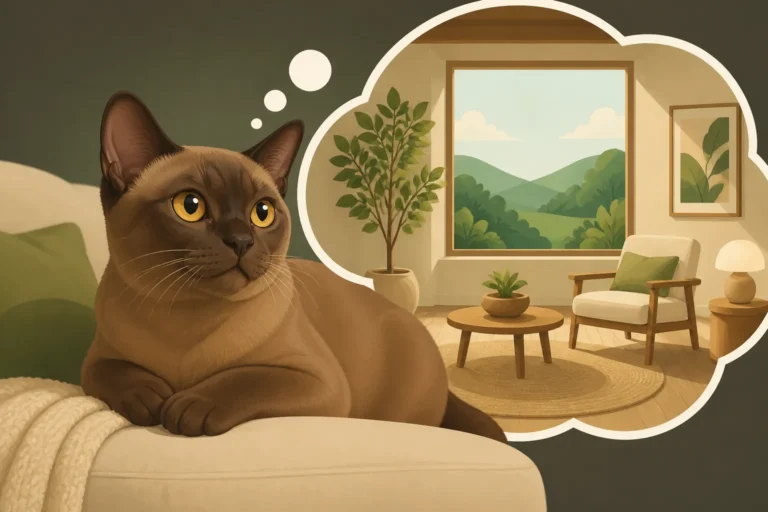
For many Burmese owners, the safest choice is to keep their cats strictly indoors. This eliminates the risk of traffic, predators, poisons, and theft entirely. However, an indoor Burmese needs a stimulating environment to thrive. These are intelligent, playful cats that can become bored or anxious if not given enough attention and opportunity for activity.
Consider vertical space, such as cat trees or shelves, which can provide climbing opportunities and vantage points. Daily interactive play sessions are crucial, as are puzzle feeders to engage their minds. A lonely Burmese can develop behavioral issues, such as pulling out its fur or spraying, if it's not adequately stimulated or given enough company. In fact, many breeders recommend buying Burmese in pairs specifically to address their intense social needs. Why a Burmese Should Never Be an Only Cat explores this further.
Harness Training and Supervised Outings
If you dream of taking your Burmese outdoors, harness training offers a controlled way to do so safely. Start early, when they're kittens, and make the harness a positive experience with treats and praise. Choose a secure, escape-proof harness that fits snugly across their chest, like those often found on Amazon designed for adventurous felines. The key is to introduce it gradually, letting them wear it for short periods inside before attaching a leash.
Once they're comfortable, supervised walks in a quiet, safe area – like a fenced yard or a very secluded park – can be a wonderful enrichment. This allows them to experience new smells and sights without the immediate danger of traffic. Always be vigilant, as even the most well-behaved Burmese can be startled or tempted to dart off. Remember, their curiosity can still get the better of them. You can learn more about how to make this a success in Leash Training a Burmese That Follows You Anyway.
The Enclosed Freedom of a Catio
For those who want to give their Burmese a taste of the outdoors without the risks of free-roaming or the limitations of a leash, a "catio" or enclosed outdoor space is an excellent compromise. Catios can range from small window boxes to elaborate, multi-level structures with ramps, shelves, and scratching posts. They provide fresh air, sunshine, and the sensory stimulation of the outdoors while keeping your cat safely contained.
You can find a variety of catio designs and components on marketplaces like Amazon, from DIY kits to pre-fabricated enclosures. Ensure the catio is robust, secure, and escape-proof, with no gaps or weak points. It should also offer shade, shelter from the elements, and plenty of stimulating features. A catio allows your Burmese to observe the world – birds, squirrels, passing neighbors – from a safe distance, fulfilling their natural curiosity without putting their life at risk. For more on this option, read Whether a Catio Is Enough Company for a Burmese.
Keeping a Watchful Eye: Technology and Routine
Even with the best intentions and safety measures, accidents can happen. Microchipping your Burmese is non-negotiable, as it provides a permanent form of identification if they ever get lost. Consider attaching a GPS tracker to their harness if they do go on supervised outdoor adventures; these small devices, available on sites like Amazon, can offer peace of mind, though they're not a substitute for active supervision.
Establishing a routine for meals, playtime, and vet checks is also vital. A regular schedule helps you notice any subtle changes in your Burmese's behavior or health, which could indicate stress, illness, or an adverse encounter. These cats are masters at hiding illness behind their affectionate demeanor, so paying close attention to their habits is crucial.
Teaching Road Sense to a Cat: An Impossible Task?
It’s important to acknowledge that "teaching" a cat road sense in the human definition is largely impossible. We can train them to come when called, or to walk on a leash, but we cannot instill in them an innate understanding of vehicle speed, traffic laws, or the abstract concept of danger that a car represents. Their brains are wired differently, focused on movement, sound, and scent in ways that don't translate to interpreting human-made hazards like roads.
Instead, our role as Burmese owners is to manage their environment and protect them from their own trusting, curious nature. It's about recognizing that their loving disposition, while a joy, also makes them uniquely vulnerable in a world not designed for their innocent curiosity.
| Outdoor Access Option | Pros for Burmese | Cons for Burmese | Overall Safety Level |
|---|---|---|---|
| Free Roam | Natural exploration, mental stimulation (initially perceived) | High risk of traffic accidents, theft, predators, poisons, getting lost | Very Low |
| Supervised Leash Walks | Controlled exploration, bonding, mental stimulation, fresh air | Requires significant time commitment, still risk from sudden scares/escapes, limited areas | Medium to High |
| Catio / Enclosed Space | Safe outdoor access, fresh air, visual stimulation | Initial cost, requires space, some cats may still desire more freedom | High |
| Strictly Indoors | Zero risk from outdoor hazards | Requires high owner engagement for enrichment, potential for boredom/anxiety if not stimulated | Very High |
The truth is, the very qualities we adore in a Burmese – their boundless affection, their dog-like devotion, their fearless curiosity – are precisely what make them so ill-equipped for the perils of roads and unsupervised outdoor life. It's not a flaw in their character, but a beautiful vulnerability that we, as their guardians, must understand and protect. Choosing to keep them safe means embracing their indoor joy or providing carefully controlled outdoor experiences that honor their need for stimulation without compromising their well-being.
Disclaimer
This article is for general informational purposes only and does not constitute professional advice. Laws, prices and regulations vary by location and change over time. Consult a qualified professional for guidance on your specific situation.