Teaching a Burmese to Come From Another Room
One of the most charming aspects of living with a Burmese cat is their constant desire to be with you, often following you from room to room like a shadow. However, even the most devoted "Velcro cat" can sometimes be out of earshot or deep in slumber in a sunny spot, making it tricky to get their attention when you need them. This comprehensive guide will walk you through proven methods to teach your beloved Burmese to reliably come when called, strengthening your bond and making daily interactions even smoother.
Understanding Your Burmese's Motivation to "Come"
Teaching a cat to "come" might sound like something you'd train a dog to do, but with a Burmese, it's often more about channeling their natural inclination towards you than instilling strict obedience. They are inherently social creatures, deeply connected to their humans, which gives you a fantastic head start.
The Velcro Cat's Innate Desire for Proximity
If you've spent any time with a Burmese, you already know they aren't content to be mere roommates. They want to be involved. They crave your presence, your lap, your shoulder, and generally just want to be wherever you are. This isn't just a cute quirk; it's a fundamental part of their personality. They are truly The Burmese Is the Velcro Cat of the Cat Fancy, and this inherent need for closeness is your biggest asset when teaching them to come when called.
Think of it less as commanding them and more as inviting them to do what they already deeply desire: to be near you. When you call your Burmese, you're not asking them to perform a trick against their will. You're simply giving a formal cue for them to engage in their favorite activity – being with you. This underlying motivation makes the "come" command particularly rewarding for both of you, as it taps directly into their loving nature. It's like asking a fish to swim or a bird to fly; it's what they're built to do, just with a specific signal from you.
Food as a Powerful (But Tricky) Motivator
Let's be real, Burmese cats are notoriously food-motivated. They’re often the first to know when dinner is being prepared, and they won't hesitate to remind you with their distinctive rasping rumble. This strong drive for food can be an incredibly effective tool in training. High-value treats are your secret weapon here. We're not talking about just any old kibble; think tiny pieces of cooked chicken, salmon, or specialized cat treats that your Burmese goes absolutely wild for.
The trick, however, is not to overuse it or make it the only reason they come. If "come" always equals food, they might decide it's not worth the effort unless they're truly hungry. Start with food, absolutely, but gradually introduce other rewards. And be mindful of their notorious tendency to beg. Why a Burmese Begs Harder Than Any Other Cat because they truly love food. Use these treats strategically and sparingly outside of training sessions to keep their value high. You can find a fantastic array of high-value, cat-safe treats on Amazon if your local pet store doesn't have what your discerning feline desires.
Play as an Engaging Incentive
Beyond food, play is another fantastic motivator for a Burmese, especially if you have a younger, more energetic individual. These cats are known for being incredibly playful, often maintaining a kittenish demeanor well into their senior years. A Burmese Is Still Playing at Fifteen, so don't underestimate the power of a good play session as a reward.
For some Burmese, the anticipation of a favorite wand toy or a laser pointer chase might be even more enticing than a treat. If your cat has a particular toy they adore, try incorporating it into your training. When they come to you, immediately engage them in a short, energetic play session. This reinforces the positive association with coming when called, linking it directly to something they genuinely enjoy. It’s not just about a reward; it’s about continuing the interaction that they thrive on. Make sure to tailor the play to their preferences; some love to chase, others prefer to retrieve. How Often a Burmese Needs a New Toy to Notice One, so keep it fresh!
Step-by-Step Guide to Teaching "Come"
Consistency and positive reinforcement are the cornerstones of successful cat training, especially with a breed as intelligent and responsive as the Burmese. Breaking the process down into manageable steps will prevent frustration for both you and your cat.
Starting in Close Quarters: The Foundation
You wouldn't expect a beginner runner to sprint a marathon, right? The same logic applies to your Burmese. Start small, very small, to build a strong foundation.
- Choose Your Cue Word: Pick a clear, short word like "come," "here," or even their name. Consistency is vital, so stick to this word every single time. Your Burmese can certainly learn to recognize their own name, especially when associated with positive outcomes. Whether a Burmese Recognizes Its Own Name is less a question of "if" and more about how much positive reinforcement you associate with it.
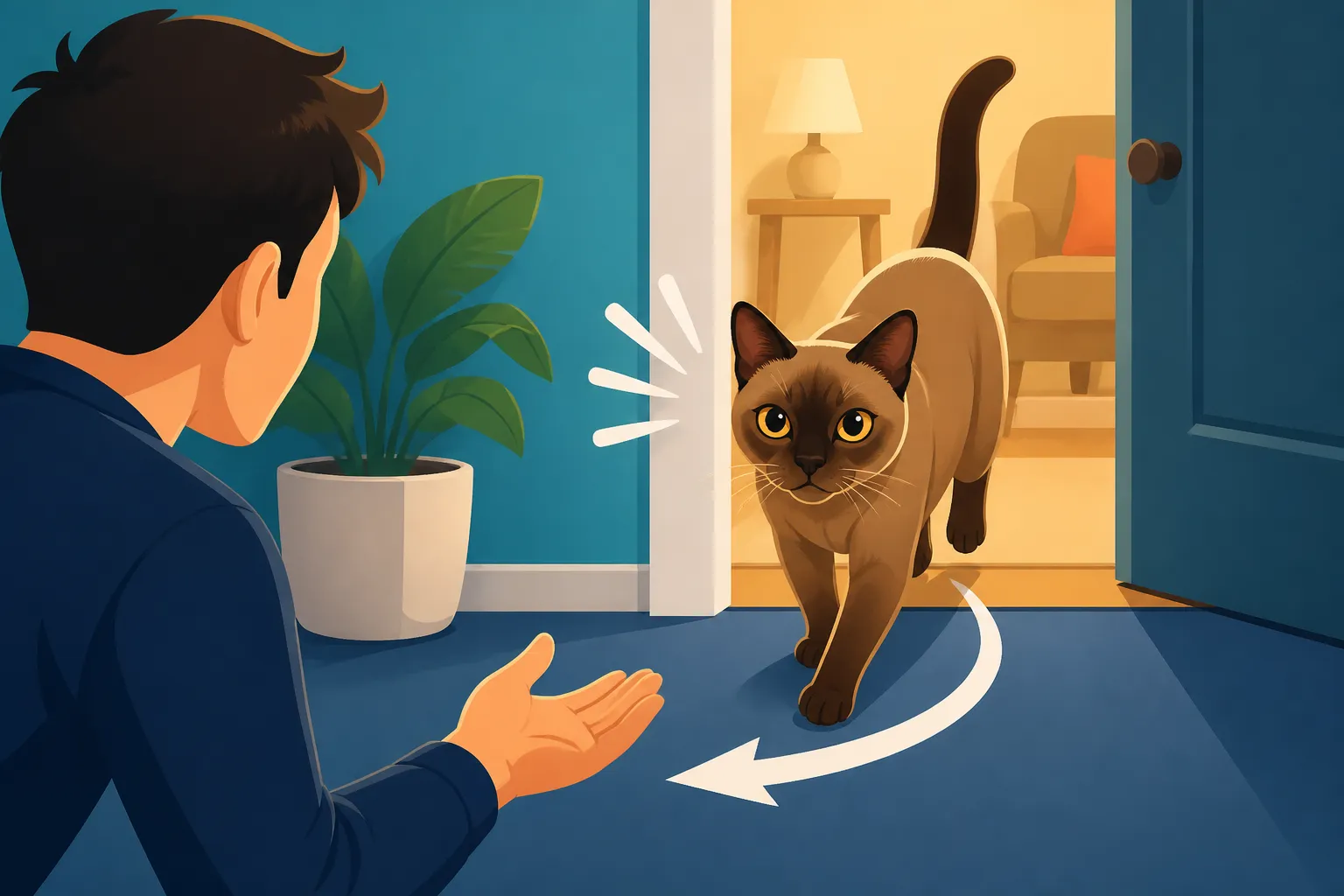
- Initial Setup: Find a quiet room with minimal distractions. Sit or crouch down a short distance (just a few feet) from your Burmese. Make eye contact and use a cheerful, inviting tone when you say your cue word.
- Reward Instantly: The moment your Burmese takes a step or two towards you, even if they don't come all the way, offer a high-value treat or a quick stroke if they prefer. As they get closer, make the reward more immediate and enthusiastic. The goal is for them to associate the sound of your voice and the cue word directly with something wonderful happening.
- Repeat, Repeat, Repeat: Do several short sessions a day (5-10 minutes each). Keep it positive, keep it fun, and always end on a high note. If your cat seems bored or distracted, end the session and try again later. Never force it.
This initial stage is about building a rock-solid understanding of what "come" means in a controlled, low-stress environment. The clearer you make this connection, the easier the next steps will be.
Gradual Distance and Distraction Management
Once your Burmese is reliably coming to you from a few feet away, it's time to slowly increase the challenge. This is where patience truly becomes a virtue.
- Increase Distance Incrementally: Gradually move further away. Start from across the room, then from just outside the doorway. The key is to add distance slowly, ensuring success at each new step. If your cat hesitates or fails to respond, go back to the previous successful distance and practice there a few more times before trying to stretch it again.
- Introduce Mild Distractions: Once they're good with distance, start adding tiny, predictable distractions. Maybe a favorite toy is nearby but not being actively played with, or a soft radio in the background. If they get distracted, don't get frustrated. Just go back to a less distracting environment.
- Vary Locations: Begin practicing in different rooms of your home. A new environment, even if it's just the living room instead of the bedroom, presents new sights, sounds, and smells that can be distracting. This helps your Burmese generalize the command.
- Practice When They're Not Already Engaged: It's easy to call a cat when they're already looking at you. The real test is calling them when they're grooming, napping, or staring out the window. These are the moments you're building towards, making the command truly useful.
Remember, a "fail" isn't a failure on your part or your cat's. It's just information that you need to make the task a little easier next time. Always make it easy for your Burmese to succeed.
Consistency, Repetition, and Positive Reinforcement
These three elements are the backbone of any successful training endeavor with a Burmese. Their intelligence means they pick things up quickly, but their independent nature means they need constant, positive motivation to perform.
- Consistent Cues: Always use the same word, the same tone, and the same body language when calling your cat. If you use "come here, Mittens!" one time and "kitty, time to eat!" another, it dilutes the meaning of your chosen cue. Your Burmese understands words and tones, but also relies heavily on routine. What a Burmese Wants When It Rumbles at You and they will often tell you with their voice.
- Daily Short Sessions: Little and often is far more effective than long, infrequent sessions. Five to ten minutes, two to three times a day, is ideal. This keeps them engaged and prevents boredom or frustration.
- Unwavering Positive Reinforcement: Every single time your Burmese comes to you when called, they should receive a reward. This doesn't always have to be food! It can be a favorite toy, a cuddle session, or even just enthusiastic praise. The key is that the experience of coming to you is always pleasant. Never call your cat to do something they dislike, like take medication or go into the carrier for a vet visit, unless you absolutely have to and are prepared to follow up with an even bigger positive reward. This risks associating "come" with negative experiences, undoing all your hard work.
- Clicker Training: For many Burmese owners, a clicker can be an invaluable tool. The clicker marks the exact moment your cat performs the desired behavior, followed immediately by a treat. This precision helps them understand much faster. Why a Burmese Is the Easiest Cat to Clicker Train is not an exaggeration; their intelligence and food drive make them prime candidates for clicker training. Many affordable clickers are available on Amazon.
Common Challenges and Troubleshooting
Even with the most enthusiastic Burmese, training can hit a snag. Don't worry, it's normal! Understanding why your cat might not be responding is the first step to getting back on track.
When Your Burmese Ignores You: Re-evaluating Motivation
Sometimes, you might call your Burmese, and they'll just glance at you, maybe twitch an ear, and then go right back to whatever they were doing. It's not usually defiance; it's often a sign that your incentive isn't strong enough in that moment.
- Is Your Reward High-Value Enough? Go back to basics. If you've been using regular kibble, switch to something truly irresistible. Cooked chicken, tuna, or freeze-dried meat treats often do the trick. Remember, Why Food Motivates a Burmese Too Well means you have a powerful tool, use it!
- Are They Truly Hungry? If you’re free-feeding, your cat might not be motivated by food. Consider moving to scheduled meals, at least for a period, to increase their hunger drive during training sessions.
- Are You Too Predictable? If "come" always means food, they might only respond when their stomach growls. Vary your rewards. Sometimes it's food, sometimes it's play, sometimes it's just a loving pat.
- Are They Unwell? A sudden disinterest in food or play, especially for a Burmese, can be a subtle sign of illness. If your usually food-motivated cat suddenly ignores a high-value treat, it might be worth a vet check. Burmese cats are stoic and can hide discomfort surprisingly well.
Distractions and Environmental Factors
A busy household or an interesting outdoor view can be far more captivating than your voice. Managing distractions is crucial as you expand your training.
- Start in a Quiet Place: When first introducing "come" or troubleshooting issues, always retreat to a calm, quiet room with minimal visual or auditory distractions.
- Gradually Introduce Noise/Activity: Once they're consistent in a quiet space, slowly add background noise or activity. Start with something subtle like music or conversation in another room, then move to the sound of children playing or a television.
- Remove Visual Distractions: If your cat is obsessed with watching birds outside the window, try to practice in a room without such a view, or at a time of day when outdoor activity is low.
- Focus on the Reward: Ensure your reward is compelling enough to pull their attention away from the distraction. This often means increasing the value of the treat or the intensity of the play.
- Understand Their World: Remember, Why a Burmese Cares Less About the House Than the People. Their primary focus is often you and the interactions they have, which can be an advantage. But a sudden noise or a flash of movement can still grab their attention more strongly than your voice initially.
The Difference Between Not Understanding and Choosing Not to Respond
It’s important to differentiate between a cat who genuinely doesn’t understand what you’re asking and one who understands perfectly well but has decided, in that moment, that coming isn't worth their while.
- Lack of Understanding: If your cat consistently looks confused, doesn't even orient towards you, or offers a different behavior (like purring and rubbing on furniture), they likely haven't made the strong association between your cue and the desired action. Go back to basics: shorter distances, higher value rewards, and more repetitions in a distraction-free zone. Use your clicker if you have one to pinpoint the exact moment of success.
- Choosing Not to Respond: This happens! Cats are not robots. If your Burmese glances at you, maybe shifts their weight, then continues sunbathing or grooming, they likely understand but are weighing their options. This is where the overall positive association with "come" comes into play. If 99% of the time, coming to you is a wonderfully rewarding experience, they're more likely to choose it.
- Don't Punish: Never punish your cat for not coming. This will only teach them to avoid you, especially when called.
- Re-evaluate the Reward: Is the reward compelling enough in that moment to override their current activity?
- Try Again Later: If they're clearly not interested, just walk over to them, give them a gentle pet, and end the "session" without judgment. Try again a bit later, perhaps with a different type of reward or when they are naturally more amenable to interaction.
- Keep it Positive: The goal is for them to want to come to you because it's always associated with good things.
Integrating "Come" into Daily Life
Once your Burmese has a solid grasp of the "come" command, the real magic happens as you weave it into the fabric of your everyday routine. This not only reinforces the training but also makes your life together more harmonious and safe.
Making "Come" a Part of Routine
The more you integrate "come" into predictable, positive daily events, the stronger the command becomes. It stops being just a "trick" and becomes a natural part of their day.
- Meal Times: This is perhaps the easiest and most effective way to reinforce "come." Before putting down their meal, call your Burmese. When they arrive, reward them with their food bowl. This builds a powerful association.
- Cuddle and Play Sessions: Before you settle down for a cuddle or initiate a play session, call your cat. When they come, immediately launch into their desired interaction. This makes "come" synonymous with affection and fun.
- Vet Visits and Grooming Prep: While you should never call them only for unpleasant things, occasionally using "come" before a gentle grooming session (like a quick brush or ear check) and following it with a reward can desensitize them. Many Burmese actually enjoy being handled, which is a huge advantage for vet visits. Why Vets Like Handling a Burmese is a common sentiment among veterinary staff.
- Checking In: Simply call your Burmese for a quick pat and a treat, even if you don't need anything specific from them. These random positive reinforcements keep the command fresh and valuable.
Consistency in these routine applications helps generalize the command, meaning your Burmese will respond reliably in a variety of situations, not just during formal training sessions.
Expanding Beyond Just One Room
A truly useful "come" command works throughout your home, regardless of where your cat happens to be.
- Room-to-Room Progression: Once your Burmese is reliable in one room, gradually expand to calling them from an adjacent room, then from further away. Start with rooms they frequent and are comfortable in.
- Different Family Members: Encourage other members of your household to use the "come" command as well. This helps your Burmese generalize the command to different voices and people. Since a Burmese will often attach strongly to whoever is home most, Why a Burmese Attaches to Whoever Is Home Most, ensure everyone uses the same cue word and reward system. This will make the command robust regardless of who is calling them.
- Outdoor Enclosures (Catios): If your Burmese enjoys a supervised catio, practice calling them back inside. This is a great way to ensure they come when it's time to bring them in, without having to chase them. Remember, Burmese cats have virtually no road sense and are far too trusting, so they should never be allowed to roam freely outdoors. Why a Burmese Trusts Strangers Too Much to Roam is a crucial safety consideration.
Safety Benefits of a Reliable "Come"
Beyond the convenience and strengthened bond, a reliable "come" command can genuinely be a lifesaver for your beloved Burmese.
- Emergency Situations: Imagine if there's a fire, a gas leak, or an unexpected visitor who leaves a door ajar. Being able to call your cat to you instantly can prevent them from getting lost, injured, or running outside into danger.
- Quick Location: Sometimes you just need to find your cat quickly – maybe you're leaving for work and need to check on them, or a repair person is coming. A reliable "come" eliminates frantic searching and ensures you can locate them swiftly.
- Medication or Health Checks: If your Burmese needs medication, or you need to quickly check an injury, being able to call them to you for this can reduce stress for both of you. While giving insulin can be challenging, a well-trained Burmese can learn to accept these procedures with minimal fuss, especially if they associate coming to you with positive outcomes. Teaching a Burmese to Sit Still for a Glucose Check is much easier if they are already reliably coming to you.
- Guest Management: When guests arrive, especially those unfamiliar with cats or who might accidentally leave doors open, you can easily call your Burmese to a safe room to manage the situation.
Teaching your Burmese to come when called is an investment in their safety, your peace of mind, and the wonderful, interactive life you share. It's a testament to their intelligence and your patient dedication, making your "Velcro cat" even more delightfully connected to you.
Disclaimer
This article is for general informational purposes only and does not constitute professional advice. Laws, prices and regulations vary by location and change over time. Consult a qualified professional for guidance on your specific situation.