Why an Anxious Burmese Sprays
Finding that tell-tale spray in your home, especially from a usually fastidious Burmese, can be incredibly disheartening and frankly, infuriating. It feels like a betrayal, doesn't it? But before you despair or get angry, understand that spraying isn't spite; it's a desperate cry for help from an anxious cat. This comprehensive guide will walk you through the many reasons why your beloved Burmese might resort to spraying and, more importantly, what you can do to soothe their worried little heart and get your home back.
Understanding the Roots of Anxiety in Your Burmese
Burmese cats are renowned for their incredibly loving, social, and intelligent personalities. They truly are "dogs in cats' bodies," often following their humans from room to room, seeking out every bit of attention they can get. This deep bond is what makes them such cherished companions, but it also makes them uniquely vulnerable to certain types of stress. When a Burmese feels anxious, they often don't withdraw or become aggressive; instead, they might turn to behaviors that seem inexplicable to us, like spraying.
The Deep-Seated Need for Company
One of the most defining characteristics of the Burmese breed is their profound need for companionship. These aren't independent, aloof cats that are happy to entertain themselves all day while you're at work. Oh no, a Burmese thrives on interaction, conversation, and physical closeness. They are often described as "Velcro cats" because they want to be stuck to you, preferably on your shoulder, under your duvet, or nestled right next to you on the couch.
When this fundamental need for company isn't met, anxiety can quickly set in. Imagine being a small, highly social creature who suddenly finds themselves alone for hours on end, day after day. It's truly distressing for them. This isn't just about boredom; it's about a deep, instinctual requirement for social interaction that, when denied, can lead to significant emotional distress. If you've ever wondered Why a Burmese Cannot Be Left Alone All Day, this is precisely why. Their very nature demands a bustling household or, at the very least, another companion.
Environmental Triggers and Sensitivities
Beyond just a lack of company, Burmese cats are highly sensitive to changes in their environment. Their intelligence means they pick up on subtle shifts that other breeds might ignore. Anything that disrupts their perceived sense of security and routine can become an anxiety trigger, leading to spraying.
Think about common household changes:
- New People or Pets: A new baby, a houseguest, a new dog, or even another cat can throw a sensitive Burmese into a tailspin. They might feel their territory is being invaded or that their place in the hierarchy is threatened.
- Moving House: This is a huge stressor for any cat, but especially a Burmese who relies on familiar scents and surroundings for comfort.
- Changes in Routine: Even subtle shifts, like your work hours changing, a different feeding schedule, or new furniture, can be unsettling.
- Loud Noises or Construction: Persistent loud noises, whether from outside or inside the home, can create an environment of constant stress.
- Dirty Litter Boxes: While not always about anxiety, a cat's aversion to a dirty litter box can contribute to overall stress and lead to spraying as they seek a "cleaner" way to mark their territory, even if it's not truly about cleanliness for them.
These changes, minor as they may seem to us, can make a Burmese feel vulnerable and unsafe. Their response often isn't aggression, but rather an attempt to reinforce their presence and security through scent marking, which is what spraying fundamentally is.
Medical Concerns Masquerading as Anxiety
This is absolutely crucial: before you assume any spraying behavior is purely behavioral, you must rule out medical causes. Cats are masters at hiding illness, and a Burmese, with their affectionate nature, might try even harder to mask discomfort. They might rub against you, purr, and seek attention even while in pain. This is why Why a Burmese Hides Illness Behind Its Affection is something every owner needs to understand.
Several medical conditions can cause inappropriate urination or spraying, which can be easily mistaken for anxiety:
- Urinary Tract Infections (UTIs): These are painful and can make a cat associate their litter box with discomfort, leading them to seek other places.
- Feline Idiopathic Cystitis (FIC): A stress-related bladder inflammation that causes pain and frequent urges to urinate. This is very common in sensitive cats.
- Kidney Disease: Can cause increased urination and discomfort.
- Diabetes: Another common issue in Burmese cats, diabetes leads to excessive thirst and urination, and can sometimes contribute to spraying if the cat feels unwell or confused.
- Arthritis or Mobility Issues: An older Burmese might find it painful to get into a litter box, especially if it has high sides, leading them to spray on more accessible surfaces.
A trip to the vet is always the first step. They can perform tests, check urine samples, and thoroughly examine your cat to ensure there isn't an underlying physical reason for the spraying. Only once medical issues are completely ruled out should you dive deep into behavioral solutions.
Why a Burmese Chooses to Spray When Anxious
It can be hard to wrap our heads around why a cat would deliberately "misbehave" in such an unsanitary way. But remember, your Burmese isn't doing it to spite you. It's a deeply ingrained instinctual behavior, amplified by their unique personality and sensitivities.
Spraying as a Communication Tool
Think of spraying not as a defiance, but as a loud, clear message written in scent. Your anxious Burmese is trying to communicate something vital about their state of mind or their environment. They're telling you, in the most primal way they know, that something is wrong.
What are they communicating?
- "I'm Stressed!": This is often the primary message. They feel overwhelmed, unsafe, or confused by changes around them. The act of spraying releases pheromones that are meant to soothe them by marking their territory as "safe" and familiar.
- "This is My Space!": In a multi-cat household, or when new pets/people arrive, a Burmese might feel the need to reassert their territorial boundaries. Spraying is a way of saying, "I'm here, and this belongs to me," especially if they feel their resources (food, toys, your attention) are threatened.
- "I Need More Attention!": Sometimes, particularly with the highly social Burmese, spraying can be a desperate plea for more interaction. If they feel neglected or lonely, even if you don't intend it, they might learn (unconsciously) that spraying gets a quick, albeit negative, response from you. Any attention, even a shout, is still attention in their minds.
- "Something Has Changed!": When something new is introduced – a new piece of furniture, a new pet's scent, or even a different cleaning product – a Burmese might spray on it to "neutralize" the new scent with their own, making it feel more familiar and therefore, safer.
Understanding that this is a distress signal, not an act of malice, is the first step toward finding a solution. Your Burmese is vulnerable and trying to cope.
The Difference Between Urination and Spraying
It's important to distinguish between a cat squatting and urinating outside the litter box and true spraying, though both can be stress-related.
- Urination outside the box: This often involves the cat squatting and releasing a larger volume of urine on horizontal surfaces like rugs, laundry piles, or floors. While it can be due to anxiety (e.g., aversion to a dirty litter box, fear of another pet ambushing them at the box), it's also a primary indicator of medical issues like UTIs or diabetes.
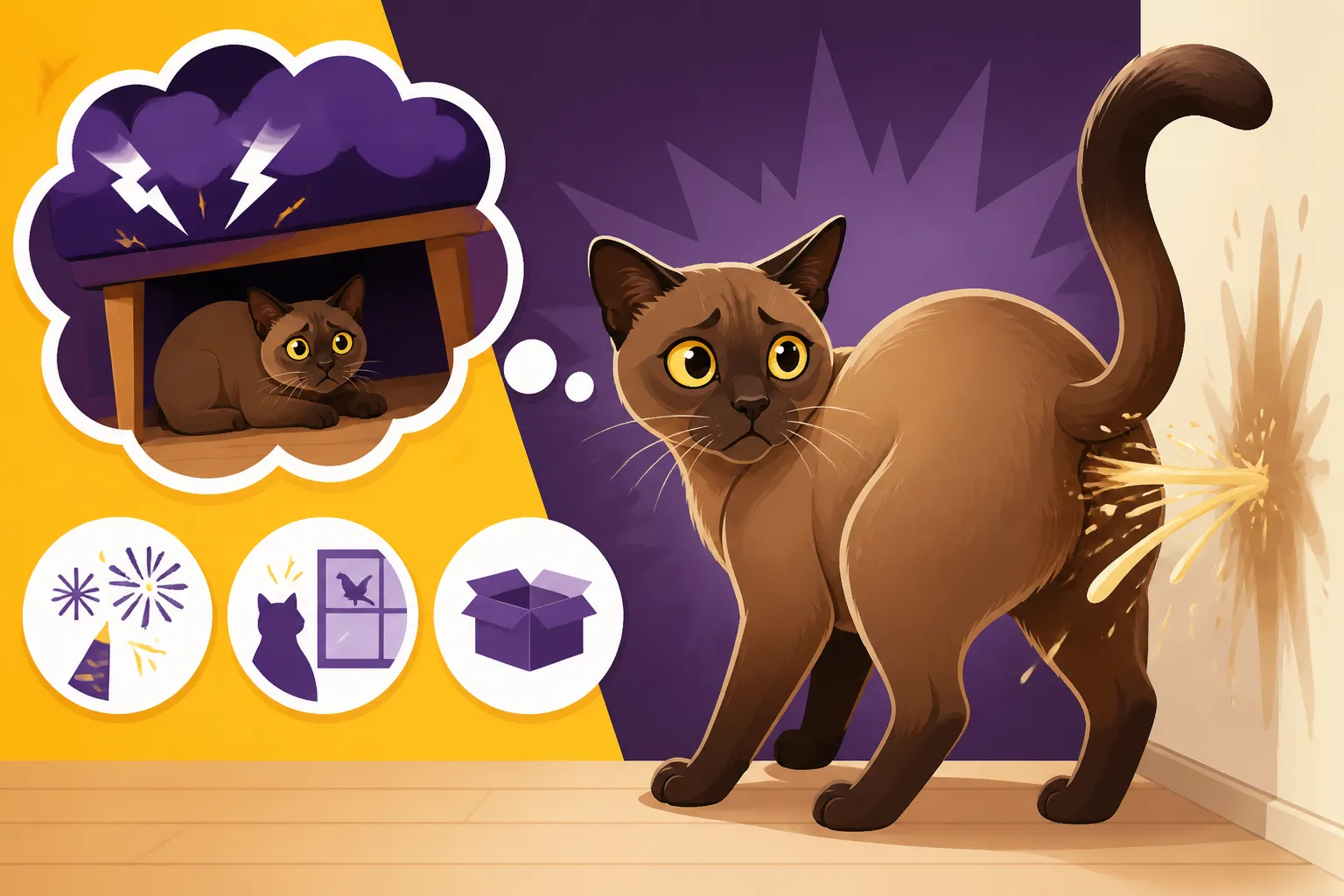
- Spraying: This is a distinct behavior. The cat will usually stand upright, often backing up against a vertical surface like a wall, doorframe, curtain, or even furniture legs. Their tail will often quiver, and they will release a relatively small amount of strong-smelling urine. This is almost always a territorial or anxiety-driven marking behavior. They are literally leaving a "calling card" to communicate.
If you're seeing the vertical marking with the quivering tail, you're almost certainly dealing with anxiety-induced spraying, and the solutions will focus heavily on environmental enrichment and stress reduction.
The Impact of Punishment
It's natural to feel frustrated when you discover spraying, but it's vital to resist the urge to punish your Burmese. Yelling, scolding, or physically punishing your cat will only make the problem worse, not better. Why? Because punishment escalates their anxiety.
When your Burmese is spraying out of fear or stress, your negative reaction confirms their worst fears – that their environment is indeed unsafe, and now even you, their primary source of security, are unpredictable and scary. They won't connect your anger to the spraying; they'll simply become more frightened and insecure. This increased anxiety will likely lead to more spraying, not less, as they try even harder to self-soothe by marking. It also damages the deep bond you share, which is the foundation of their happiness and security.
Instead of punishment, your focus needs to be on identifying the source of their anxiety and providing solutions that help them feel safe and loved again.
Practical Steps to Alleviate Spraying from Anxiety
Addressing spraying in a Burmese requires a multi-faceted approach, tackling both the immediate symptoms and the underlying causes of anxiety. Remember, patience is key.
Enriching Their Environment and Routine
A secure, predictable, and stimulating environment is paramount for a sensitive Burmese.
- Consistency is King: Establish a strict daily routine for feeding, playtime, and cuddle sessions. Cats thrive on predictability, and for a Burmese, this is even more critical. Knowing what to expect reduces uncertainty and anxiety.
- Vertical Space: Provide cat trees, shelves, or wall-mounted perches where your Burmese can survey their territory from a safe height. This gives them a sense of control and security. Where a Burmese Wants Its Scratching Post is also important to consider; proper scratching outlets help them feel grounded and release stress.
- Puzzle Feeders: Since Burmese cats are highly intelligent and often very food-motivated, puzzle feeders can provide mental stimulation and slow down eating, which is beneficial for their overall health, including preventing obesity, a risk factor for diabetes. You can find a wide variety of engaging options on Amazon.
- Litter Box Logistics: Ensure you have enough litter boxes (the general rule is one per cat plus one extra) and keep them impeccably clean. Scoop at least once, preferably twice, daily. Consider the type of litter – many cats have strong preferences. Place boxes in quiet, accessible locations where your cat won't feel trapped or ambushed. For an anxious cat, a covered box might feel more secure, but some prefer open boxes to feel less confined. Experiment to see what your Burmese prefers.
Increasing Social Interaction and Companionship
For a breed as profoundly social as the Burmese, increased interaction is often the most direct route to reducing anxiety.
- Dedicated Play Sessions: Engage in active play daily using wand toys, laser pointers, or even crumpled paper balls. Aim for at least two 15-20 minute sessions. This burns off energy, provides mental stimulation, and reinforces your bond. Your Burmese thrives on interactive play; it's a huge stress reliever.
- Quality Cuddle Time: Spend time simply being present with your cat. Pet them, talk to them, let them ride on your shoulder or curl up on your lap. This constant reassurance is vital. A Burmese truly cannot get enough of your company; Why a Burmese Cannot Let You Leave the Room highlights their need to always be near you.
- Consider a Companion: If your Burmese is consistently alone for long stretches, a companion can make an enormous difference. Another Burmese is often the ideal choice because they share the same intense social needs. This is why many Why a Burmese Breeder Recommends Buying a Pair from the start. They will provide each other with constant companionship and play, which can dramatically reduce separation anxiety and spraying. Even a compatible, calm dog can be a good friend for a Burmese. You can also explore options for automatic toys on Amazon to keep them engaged when you can't be there, though these are never a substitute for direct interaction.
Addressing the Root Cause with Professional Help
Sometimes, behavioral issues are complex and require expert intervention.
- Veterinary Consult (Again!): Even if you've had a vet check recently, if spraying persists, another visit to rule out subtle medical issues or to discuss anti-anxiety medications might be necessary. Your vet can also advise on specific nutritional supplements designed to aid in calming.
- Feline Behaviorist: For persistent or severe cases, a certified feline behaviorist can be invaluable. They can assess your home environment, your cat's specific triggers, and develop a tailored plan. They understand cat communication in a way that goes beyond general advice.
- Pheromone Diffusers: Products like Feliway, which release synthetic feline facial pheromones, can help create a calmer environment. Cats use these pheromones to mark things as safe and familiar. Plugging a diffuser into areas where your Burmese spends a lot of time, or near where they've sprayed, can help reduce stress. You can often find these easily on Amazon.
- Anti-Anxiety Medication: In some severe cases, under veterinary guidance, short-term or long-term anti-anxiety medication may be considered to help your Burmese break the cycle of anxiety and allow behavioral modifications to take effect. This is usually a last resort, but can be life-changing for some cats.
Cleaning Up Effectively
This might seem secondary, but proper cleanup is critical. If your Burmese can still smell their own spray, they're more likely to return to that spot to re-mark it.
- Enzymatic Cleaners: These are non-negotiable. Standard household cleaners might mask the scent for humans, but they don't break down the proteins in cat urine that cats can still detect. Enzymatic cleaners digest these proteins, effectively eliminating the scent markers that encourage repeat spraying.
- Thoroughness: Don't just clean the visible stain. Cat urine can wick into carpets, subflooring, and baseboards. You might need to use a black light to identify all affected areas and treat them thoroughly.
Living with a Recovering Anxious Burmese
The journey to resolving anxiety-induced spraying isn't always linear, and it requires commitment.
Patience and Consistency Are Key
It took time for your Burmese to develop this anxious behavior, and it will take time for them to unlearn it. Don't expect immediate results. There will be good days and bad days. The most important thing is to remain patient, consistent with your efforts, and never give up. Celebrate the small victories – a day without spraying, a longer play session, a calmer demeanor. Your calm and consistent approach will be a huge source of comfort and security for your cat.
Remember, your Burmese is profoundly attached to you and wants to please you. Their spraying is a desperate attempt to communicate, not to annoy. By understanding their needs and consistently providing a safe, stimulating, and loving environment, you can help them feel secure again. You might even find that when they are left alone too long, they might start Why an Anxious Burmese Pulls Its Own Fur Out, which is another sign of significant stress. These behaviors are all connected to their emotional state.
Monitoring for Relapse and Continued Support
Even after significant improvement, it's wise to remain vigilant. Stressful events, even minor ones, can sometimes trigger a relapse. If you notice a return of spraying, don't despair. Re-evaluate any recent changes in your home, routine, or your Burmese's health.
- Re-examine Triggers: Did something new happen? Did you change litter? Did a new neighbor move in?
- Increase Enrichment: Double down on playtime and cuddle sessions.
- Revisit Vet/Behaviorist: Don't hesitate to reach out to your vet or behaviorist if you feel things are spiraling. They are there to support you and your cat.
By maintaining the consistent care, enrichment, and understanding you've established, you can provide your sensitive Burmese with the lifelong security and happiness they deserve, ensuring your home remains spray-free and full of purrs.
Disclaimer
This article is for general informational purposes only and does not constitute professional advice. Laws, prices and regulations vary by location and change over time. Consult a qualified professional for guidance on your specific situation.